Posted on

Friday Poem – A Psalm for the Scaffolders

A Psalm for the Scaffolders Kim Moore The Art of Falling

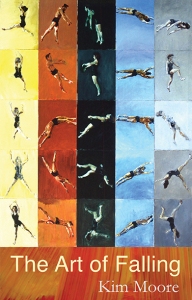
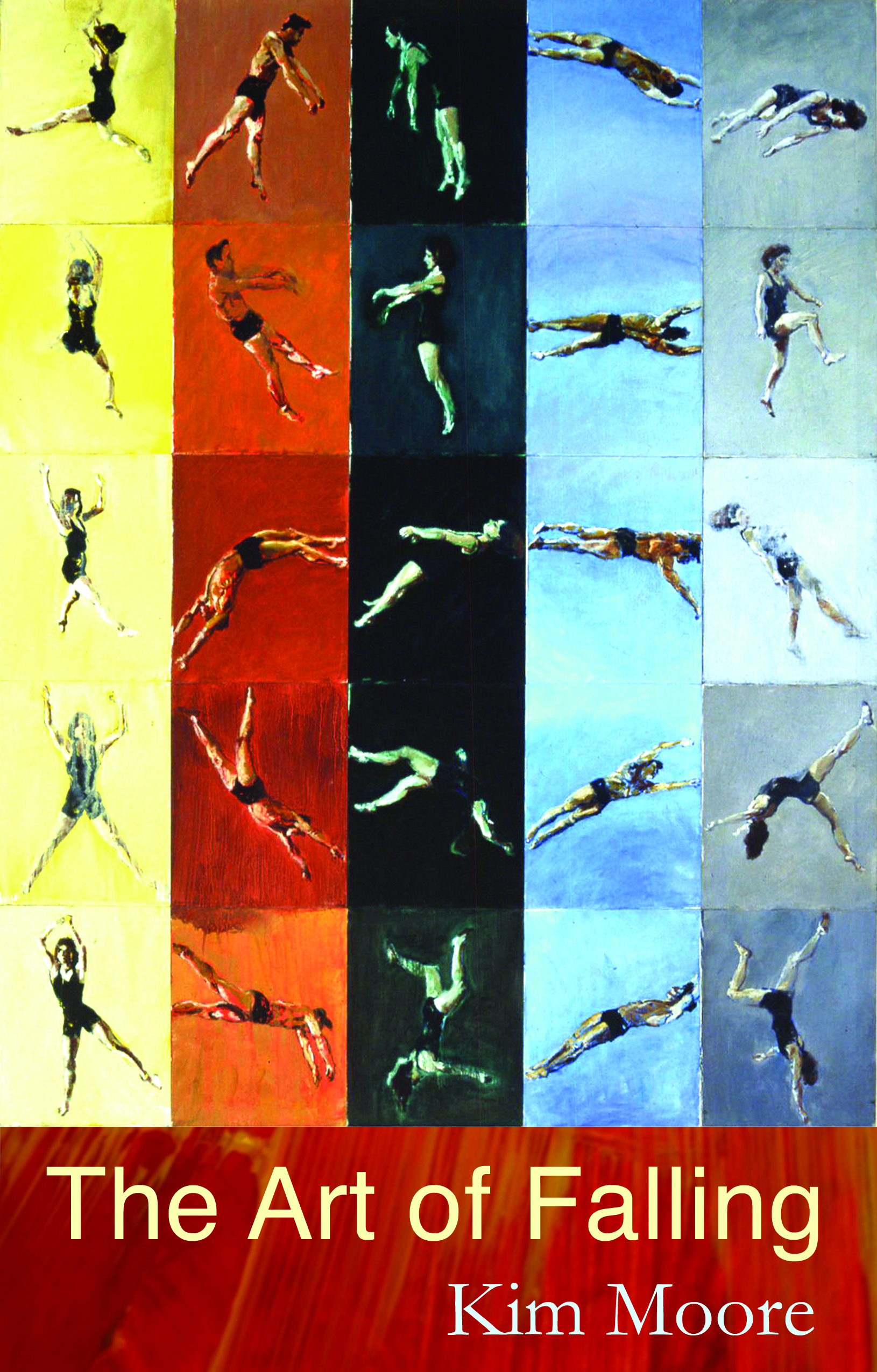
This week’s Friday Poem – published on Father’s Day weekend – is from Kim Moore’s lively debut poetry collection, The Art of Falling.

Kim sets out her stall firmly in the North amongst ‘My People’: “who swear without knowing they are swearing… scaffolders and plasterers and shoemakers and carers…”. ‘A Psalm for the Scaffolders’ is a hymn for her father’s profession.


A Psalm for the Scaffolders
who balanced like tightrope walkers,
who could run up the bracing
faster than you or I could climb
a ladder, who wore red shorts
and worked bare-chested,
who cut their safety vests in half,
a psalm for the scaffolders
and their vans, their steel
toe-capped boots, their coffee mugs,
a psalm for those who learnt
to put up a scaffold standing
on just one board, a psalm
for the scaffolder who could put
a six-inch nail in a piece of wood
with just his palm, a psalm
for those who don’t like rules
or things taking too long, who now
mustn’t go to work uncovered,
who mustn’t cut their safety vests
or climb without ladders, who must
use three boards at all times,
a psalm for the scaffolders
who fall with a harness on,
who have ten minutes to be rescued,
a psalm for the scaffolder who fell
in a clear area, a tube giving way,
that long slow fall, a psalm for him,
who fell thirty feet and survived,
a psalm for the scaffolder
who saw him fall, a psalm for those
at the top of buildings, the wind whistling
in their ears, the sky in their voices,
for those who lift and carry
and shout and swear, for those
who can recite the lengths of boards
and tubes like a song, a psalm for them,
the ones who don’t like heights
but spent their whole life hiding it,
a psalm for those who work too long,
a psalm for my father, a psalm for him.


Buy your copy of The Art of Falling from our website. Sign up to be a Seren Book Club member to claim 20% off.


Posted on

St Ives Residential Course 2017

Kim Moore David Tait poetry course 2017

Kim Moore: St Ives Residential Poetry Course 2017

“After a sell-out course in 2016 in St Ives, I’m really pleased to announce that I’ll be co-tutoring another residential poetry course at Treloyhan Manor Hotel in St Ives, from the 20th-26th February 2017.  I’m very excited to announce that my co-tutor this year will be the fabulous poet David Tait.…”

Find out more about the St Ives poetry course on Kim Moore’s blog.


Source: St Ives Residential Course 2017

Posted on

Friday Poem – A Psalm for the Scaffolders

A Psalm for the Scaffolders Kim Moore The Art of Falling

This week’s Friday Poem comes from Kim Moore’s acclaimed debut, The Art of Falling.

The Art of Falling Kim MooreThese are poems that confront the reader, steeped in realism, they are not designed to soothe or beguile. They are not designed with careful overlays of irony and although frequently clever, they are not pretentious but vigorously alive and often quite funny.

Already a winner of multiple prizes, such as the Northern Promise Award (2014), Moore writes poems that are both moving and memorable.


A Psalm for the Scaffolders

who balanced like tightrope walkers,
who could run up the bracing
faster than you or I could climb
a ladder, who wore red shorts
and worked bare-chested,
who cut their safety vests in half,
a psalm for the scaffolders
and their vans, their steel
toe-capped boots, their coffee mugs,
a psalm for those who learnt
to put up a scaffold standing
on just one board, a psalm
for the scaffolder who could put
a six-inch nail in a piece of wood
with just his palm, a psalm
for those who don’t like rules
or things taking too long, who now
mustn’t go to work uncovered,
who mustn’t cut their safety vests
or climb without ladders, who must
use three boards at all times,
a psalm for the scaffolders
who fall with a harness on,
who have ten minutes to be rescued,
a psalm for the scaffolder who fell
in a clear area, a tube giving way,
that long slow fall, a psalm for him,
who fell thirty feet and survived,
a psalm for the scaffolder
who saw him fall, a psalm for those
at the top of buildings, the wind whistling
in their ears, the sky in their voices,
for those who lift and carry
and shout and swear, for those
who can recite the lengths of boards
and tubes like a song, a psalm for them,
the ones who don’t like heights
but spent their whole life hiding it,
a psalm for those who work too long,
a psalm for my father, a psalm for him.

Buy your copy now.

Posted on

Santa Baby, Slip a Story Under the Tree

Christmas is on its way, and we have some recommendations for you whether you’re looking for a present for someone else, or you’re looking for something to ask Santa for this Christmas!

santagif

For Thriller Lovers:

ttt

If you or someone you know loves a good crime story, why not try Jo Mazelis’ Jerwood Fiction Uncovered Prize-winning Significance, or Anne Lauppe-Dunbar’s debut Dark Mermaids?

For Historical Fiction Lovers:

ttt (1)

Francesca Rhydderch’s debut, The Rice Paper Diaries, which won the 2014 Wales Book of the Year Award and Tiffany Murray’s chilling Sugar Hall are perfect for readers who like their stories old school. So old school they’re practically history.

For Sci-Fi/Fantasy Lovers:

ttt (4)

If you’re after something weird and wonderful for you or a friend this festive season, then you can’t go wrong with one of our New Stories from The Mabinogion; The Meat Tree is a brilliantly bizarre sci-fi retelling of the Blodeuwedd myth, perfect for readers who love stories that are literally out of this world. But if you’re after something a little closer to home, why not pick up a copy of Mary-Ann Constantine’s fable-esque debut, Star-Shot? This novel is a real treat for readers who are familiar with Cardiff.

For Short Story Lovers:

ttt (4)

For lovers of the oft forgotten art form that is the short story, why not pick up New Welsh Short Stories, an anthology featuring a wide range of Welsh authors from Carys Davies to Jo Mazelis, or Graham Mort’s latest collection, Terroir. These two look quite charming together, so if I were you I’d get both.

eldoradogif

For Non-Fiction Lovers:

ttt (3)

Jasmine Donahaye’s memoir, Losing Israel, has been stunning readers since its publication earlier this year; part memoir, part travel writing, part nature writing, it’s the perfect gift for any non-fiction connoisseur. Mike Rees’ Men Who Played the Game is the ideal book for any sports fan, and as we commemorate one hundred years since the First World War there’s no better time to read it than right now.

For Poetry Lovers:

ttt (5)

Here at Seren we’d be nothing without our poetry, so why not pick up a copy of Kim Moore’s hugely popular debut collection, The Art of Falling, or Jonathan Edwards’ Costa Award-winning debut collection, My Family and Other Superheroes – we promise they won’t disappoint you! Or if someone you know likes to keep on top of the latest poetry, a subscription to Poetry Wales magazine would make for a fine Christmas present, if you ask me. And I suppose you must be asking me if you’re reading this…

You can find all these books and more on our website, so treat the readers you know to some well-chosen words this Christmas!

homealone


Posted on

Friday Poem – How I Abandoned My Body To His Keeping

The Art of Falling Kim Moore

This week’s poem is from Kim Moore’s debut collection, The Art of Falling, released earlier this year.

Kim Moore, in her lively debut poetry collection, The Art of Falling, sets out her stall in the opening poems, firmly in the North amongst ‘My People’: “who swear without knowing they are swearing… scaffolders and plasterers and shoemakers and carers…”. ‘A Psalm for the Scaffolders’ is a hymn for her father’s profession.

The title poem riffs on the many sorts of falling “so close to failing or to falter or to fill”. The poet’s voice is direct, rhythmic, compelling. These are poems that confront the reader, steeped in realism, they are not designed to soothe or beguile. They are not designed with careful overlays of irony and although frequently clever, they are not pretentious but vigorously alive and often quite funny. In the first section there is: a visit to a Hartley street spiritualist, a train trip from Barrow to Sheffield, a Tuesday at Wetherspoons.

The author’s experience as a peripatetic brass teacher sparks several poems. The lives of others also feature throughout, including a quietly devastating central sequence, ‘How I Abandoned My Body To His Keeping’: is the story of a woman embroiled in a relationship marked by coercion and violence. These are close-to-the-bone pieces, harrowing and exact.

The final section includes beautifully imagined character portraits of John Lennon and Wallace Hartley (the violinist on the Titanic), as well as Jazz trumpeter Chet Baker and the poet Shelley and other poems on: suffragettes, a tattoo inspired by Virginia Woolf’s A Room of One’s Own, and a poetic letter addressed to a ‘Dear Mr Gove’.

How I Abandoned My Body To His Keeping

What happened sits in my heart like a stone.
You told me I’d be writing about it
all my life, when I asked
how to stop saying these things to the moon.
I told you how writing it makes the dark
lift and then settle again like a flock of birds.

You said that thinking of the past like birds
who circle each year will make the stone
in my chest heavy, that the dark
that settles inside me will pass. You say it
is over, you say that even the moon
can’t know all of what happened, that to ask

to forget is to miss the point. I should ask
to remember. I should open myself to the birds
who sing for their lives. I should tell the moon
how his skin was like smoke, his hand a stone
that fell from a great height. It
was not what I deserved. The year was dark

because he was there and my eyes were dark
and I fell to not speaking. If I asked
him to leave he would smile. Nothing in it
was sacred. And I didn’t look up. The birds
could have fallen from the sky like stones
and I wouldn’t have noticed. The moon

was there that night in the snow. The moon
was waiting the day the dark
crept into my mouth and left me stone
silent, stone dumb, when all I could ask
was for him to stop, please stop. The birds
fled to the trees and stayed there. It

wasn’t their fault. It was nobody’s fault. It
happened because I was still. The moon
sung something he couldn’t hear. The bird
in my heart silent for a year in the dark.
This is the way it is now, asking
for nothing but to forget his name, a stone

that I carry. It cools in my mouth in the dark
and the moon sails on overhead. You ask
about birds, but all I can talk of is stones.

Order The Art of Falling from our website.

Posted on

Dear Mr Gove

The Art of Falling Kim Moore

A special political poetry broadcast from Kim Moore’s The Art of Falling. Don’t forget to vote in today’s general election. You can listen to Kim read Dear Mr Gove here.

Dear Mr Gove

dear Mr Gove today I taught the children not to sit like bags of small
potatoes in their chairs I taught them how to breathe with their bellies
like babies do when they are sleeping we pretended we were balloons
of different colours filling up with air dear Mr Gove we played long note
beat that we looked up who holds the world record for the longest note
it was a clarinet player who managed to play for one minute and thir–
teen seconds without taking a breath we held our notes as if we were
monks singing a drone in a cathedral where the roof rises like a giant
wing against the sky dear Mr Gove today the whole class played hot
cross buns we talked about the great height of the note E we held thin
blue straws between our lips and some of us went on to play an E
and some of us fell towards a low A with its ledger line hovering above
it and another piercing its poor head dear Mr Gove we are brilliant at
trying some of us know what crotchets and minims are and we will
know this all our lives but some of us still call them black and white
notes we make up sayings to help us read like Elephants Go Bananas
Doing Flips like Electric Green Brains Dance Forever we play the riff
to Eye of the Tiger and sing along in the voices of tigers if tigers had
voices like ours today Mrs Johnson forgot how to play a D and Harry
told her which valves to press I do not know how to measure this Mr
Gove please send help and there is also the problem of Matthew who
cannot read or write too well but who can play Mary Had A Little
Lamb with perfect pitch there is the problem of his smile afterwards
and how we write this down today we watched the muppets singing
Bohemian Rhapsody for no good reason other than that it was fun and
while I am confessing small transgressions last week we watched Mr
Bean play an invisible drum kit the children have been playing an invis–
ible drum kit in the playground dear Mr Gove I did not stop them
today we talked about the muscles in the lip and tongue we did not
know we had control of so many muscles we tried to look like musi–
cians Mr Gove please help us

Posted on

Friday Poem – A Psalm for the Scaffolders

Today’s poem is from Kim Moore’s debut collection, The Art of Falling. Check out our interview with Kim here.

Kim Moore lives in Barrow, Cumbria. She has an MA from Manchester Metropolitan University. Her poems have been published in the TLS, Poetry Review, Poetry London, and elsewhere. She regularly appears at festivals and events, her prize-winning pamphlet, If We Could Speak Like Wolves (Smith-Doorstop) was chosen as an Independent Book of the Year in 2012 and was shortlisted for other prizes. Moore won an Eric Gregory Award in 2011 and the Geoffrey Dearmer Prize in 2010. In 2014 she won a Northern Promise award. She writes a thoughtful blog and has a wide social media following. The Art of Falling (Seren 2015) is her debut collection.

A Psalm for the Scaffolders

who balanced like tightrope walkers,
who could run up the bracing
faster than you or I could climb
a ladder, who wore red shoes
and worked bare-chested,
who cut their safety vests in half,
a psalm for the scaffolders
and their vans, their steel
toe-capped boots, their coffee mugs,
a psalm for those who learnt
to put up a scaffold standing
on just one board, a psalm
for the scaffolder who could put
a six-inch nail in a piece of wood
with just his palm, a psalm
for those who don’t like rules
or things taking too long, who now
mustn’t go to work uncovered,
who mustn’t cut their safety vests
or climb without ladders, who must
use three boards at all times,
a psalm for the scaffolders
who fall with a harness on,
who have ten minutes to be rescued,
a psalm for the scaffolder who fell
in a clear area, a tube giving way,
that long slow fall, a psalm for him,
who fell thirty feet and survived,
a psalm for the scaffolder
who saw him fall, a psalm for those
at the top of the buildings, the wind whistling
in their ears, the sky in their voices,
for those who lift and carry
and shout and swear, for those
who can recite the lengths of the boards
and tubes like a song, a psalm for them,
the ones who don’t like heights
but spent their whole life hiding it,
a psalm for those who work too long,
a psalm for my father, a psalm for him.

Order The Art of Falling from our website.
Posted on

An Interview with Kim Moore

Today we’re talking to poet Kim Moore about her debut collection, The Art of Falling, which you can order from our website here.

Kim Moore lives in Barrow, Cumbria. She has an MA from Manchester Metropolitan University. Her poems have been published in the TLS, Poetry Review, Poetry London, and elsewhere. She regularly appears at festivals and events, her prize-winning pamphlet, If We Could Speak Like Wolves (Smith-Doorstop) was chosen as an Independent Book of the Year in 2012 and was shortlisted for other prizes. Moore won an Eric Gregory Award in 2011 and the Geoffrey Dearmer Prize in 2010. In 2014 she won a Northern Promise award. She writes a thoughtful blog and has a wide social media following. The Art of Falling (Seren 2015) is her debut collection.

Has the idea of falling, be it literally or metaphorically, always fascinated you, or did you find yourself writing about the many ways in which we fall purely for this collection?

The short answer is no, not consciously, but unconsciously. I think the concept of falling must have been something that has always been in the background. My father is a scaffolder and has had two serious falls – once when my twin sister and I were born and then again when I was twenty-one when he fell thirty feet from scaffolding and was lucky to survive. However, I didn’t realise I was writing about falling a lot until I wrote the title poem of the collection – and I only wrote that because David Tait, a good friend and wonderful poet set me a challenge to write a poem about falling. We used to take it in turns to do this – to set each other challenges – I didn’t even think at the time to ask him why, or what type of falling he meant. I actually forgot all about it and didn’t write the poem until six months later but looking back, the seed was definitely planted in that moment. Once I’d written the poem I realised that there were lots of poems about different types of falling throughout the collection – the book was maybe three quarters done by this point, so maybe I was just being very slow on the uptake.

In poems such as ‘My People’ and ‘A Psalm for the Scaffolders’ there’s a real sense of proud, working-class history. Is it fair to say you have a fondness for writing about the ‘every day’ hero?

‘My People’ is one of the poems I feel most guilty about writing because as well as hopefully communicating my pride, love and admiration for the people and background I came from, I’m being quite critical as well. It was an exhilarating poem to write, but it was also quite nerve-wracking. My people are ‘the type of people who would argue with their teacher if the child has detention’. Now I’m a teacher so I see it from both sides, of course. I actually wrote it when my husband started tracing his family tree and got quite far back and I realised I couldn’t. The poem was a way of finding out who my people were.

As for ‘A Psalm for the Scaffolders’ I definitely have a fondness for writing about my poor old dad! I think he likes it though – and to me it is really interesting because his life and the way he has worked, doing the same job since he left school is a way of working that is dying out, I think. I have a lot of admiration for that, for the physical hard graft of doing the same job for forty odd years.

I couldn’t help noticing the recurring animal imagery throughout The Art of Falling. There are plenty of wolves amongst your poems – ‘And the Soul’; ‘If We Could Speak Like Wolves’; ‘How Wolves Change Rivers’ – and also the incredibly powerful poems ‘The Language of Insects’ and ‘When I Was a Thing with Feathers’. In what way do animals help you to explore human nature through your writing?

I have never managed to answer this question about what the wolves mean in my poems, so I will skip over that one. Part of me also wants to duck out of answering it – I don’t really want to know. I like that they wander in and out of my poems when they feel like it though.

Halfway through writing the sequence which makes up the central sequence of this book, I got lost. I couldn’t find a way of saying what I wanted to say. I didn’t want to write a narrative sequence, with a beginning, a middle and an end. I started reading Ovid’s Metamorphoses and that is when everything shifted for me and I was able to carry on writing. The poems have a lot of animals in them, but perhaps more importantly, they have a lot of transformation in them, which was a way I found of writing about violence and the loss of not just identity, but of speech.

You play the trumpet, so I imagine there must be many musicians you admire. What is it about John Lennon and Wallace Hartley that made you want to write about them in particular?

It is actually obsessive people in general that I like writing about – and most musicians are obsessive – you have to be to practice enough to be good.

I actually wrote the John Lennon poem to take part in a competition to write a poem about John Lennon. It is what I call a research poem – I went to the library and read as many books about John Lennon as I could find and then wrote the poem, putting together the things that I read that interested me.

As for Wallace Hartley, I was helping to put together a project as part of my work as a music teacher. I read that he was found with his violin still with him and it was this that made me want to write something about him.

Congratulations on the publication of your debut collection! What are your future plans for your writing?

Thank you! My future plans are pretty simple – just to keep writing, and to always read more than I write. In September, I’ll only be working 2 days as a music teacher so this will hopefully give me a little bit more time. I haven’t written for the last six months – basically since I handed in the final proofs of the book, and then I’ve just started writing again last week, strangely coinciding with the book being delivered. I’ve started writing a few poems about scaffolding and a few poems about running which is my new obsession at the minute so I’m planning on carrying on with those.

Order The Art of Falling from our website.