Posted on

Friday Poem – The Red Aeroplane

house of small absences

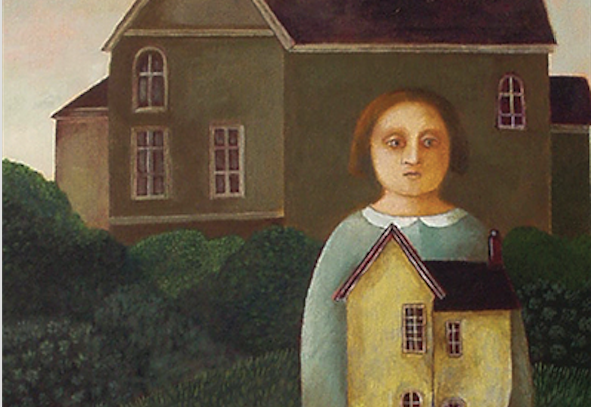
Our first Friday Poem of 2016 is from Anne-Marie Fyfe’s new collection, House of Small Absences. We hope you enjoy it, and happy New Year!

Anne-Marie Fyfe’s poems have long dwelt on the role that the spaces we inhabit, the places in which we find security, play in our lives: House of Small Absences is an observation window into strange, unsettling spaces—a deserted stage-set, our own personalised ‘museum’, a Piedmont albergo, underground cities, Midtown roof-gardens, convent orchards, houseboats, a foldaway circus, a Romanian sleeper-carriage—the familiar rendered uncanny through the distorting lenses of distance and life’s exigencies, its inevitable lettings-go…

The book opens with ‘The Red Aeroplane’ where witnessing an apparent plane crash sparks a vertiginous sequence of image and memory. We will follow the author in exploring not just specific places and memories but the ‘exponential function of tangents’, all that is implied and suggested.

The Red Aeroplane

From the oratory window I witness
mid-air doom, a slew of concentric
swirls, a trail of forge-sparks,
and that’s it. A vermilion two-seater
stagger-wing loops earthbound,
so much depending upon centrifugal
drive. Slivers of toughened glass
spangle the outer stone sill,
the vacant co-pilot seat
is plummeted deep in rosebed mulch.

I question now if the red bi-plane
ever was, the way sureties tilt
and untangle from any one freezeframe
to its sequel. Maybe I was glimpsing
that two-seater red pedal car
– injection-moulded plastic –
collected one Christmas Eve night
for a fevered child? Or conflating
the replica cherry-red sixty-three
we’d toyed with, tinkered with, briefly
on a tinsmith’s covered stall
that drenched Saturday?
What can’t be
cast in any doubt is the wreckage,
a fragmentary scattering,
the mangledness on the far side
of glass. And how a Galway blue
skyscape proves ineluctably
the exponential function of tangents.

Order Anne-Marie Fyfe’s House of Small Absences from our website.

Posted on

Dear Mr Gove

The Art of Falling Kim Moore

A special political poetry broadcast from Kim Moore’s The Art of Falling. Don’t forget to vote in today’s general election. You can listen to Kim read Dear Mr Gove here.

Dear Mr Gove

dear Mr Gove today I taught the children not to sit like bags of small
potatoes in their chairs I taught them how to breathe with their bellies
like babies do when they are sleeping we pretended we were balloons
of different colours filling up with air dear Mr Gove we played long note
beat that we looked up who holds the world record for the longest note
it was a clarinet player who managed to play for one minute and thir–
teen seconds without taking a breath we held our notes as if we were
monks singing a drone in a cathedral where the roof rises like a giant
wing against the sky dear Mr Gove today the whole class played hot
cross buns we talked about the great height of the note E we held thin
blue straws between our lips and some of us went on to play an E
and some of us fell towards a low A with its ledger line hovering above
it and another piercing its poor head dear Mr Gove we are brilliant at
trying some of us know what crotchets and minims are and we will
know this all our lives but some of us still call them black and white
notes we make up sayings to help us read like Elephants Go Bananas
Doing Flips like Electric Green Brains Dance Forever we play the riff
to Eye of the Tiger and sing along in the voices of tigers if tigers had
voices like ours today Mrs Johnson forgot how to play a D and Harry
told her which valves to press I do not know how to measure this Mr
Gove please send help and there is also the problem of Matthew who
cannot read or write too well but who can play Mary Had A Little
Lamb with perfect pitch there is the problem of his smile afterwards
and how we write this down today we watched the muppets singing
Bohemian Rhapsody for no good reason other than that it was fun and
while I am confessing small transgressions last week we watched Mr
Bean play an invisible drum kit the children have been playing an invis–
ible drum kit in the playground dear Mr Gove I did not stop them
today we talked about the muscles in the lip and tongue we did not
know we had control of so many muscles we tried to look like musi–
cians Mr Gove please help us

Posted on

Friday Poem – Corpus

An Easter themed poem  for this week’s installment. ‘Corpus’ comes from Damian Walford Davies’ latest collection, Judas.

A shattered Judas Iscariot – that byword for betrayal – tells his own story in Damian Walford Davies’ compelling and finely wrought new collection from Seren.

We follow Judas over the course of five days as he moves through first-century Jerusalem trying to make sense of the bewildering events surrounding the life and execution of Jesus. But this is a man for whom the future is as real as his anguished and traumatized present, and for whom the Arab-Israeli conflict is as urgent as the tension between the Romans and Jews. Emphasising our compulsion to create, and challenge, gospel truths, Judas gives voice to man caught up in the promise and violence of history.

In short-lined, intensely suggestive dramatic monologues, Damian Walford Davies vividly summons moments of fear and swagger, doubt and passion, despair and nonchalance as an outlaw Judas finds himself haunted by his chequered and extraordinary past. Familiar stories are rendered strange and uncanny as the reader is caught in multiple ironies. As striking as the unnerving images on the news loops of our TV and computer screens, these poems locate us on the hazardous streets of a divided city with a companion-guide who shares with us his own troubling and troubled version of history.

Drawing on conflicting representations of Judas spanning twenty centuries, this chain of poems sets out to challenge orthodoxies and easy pieties. Judas offers an imaginative map of ancient enmities – and dares to hint at resolutions – in the form of a dramatic autobiography of the man whose most famous act (they say) was a kiss in the dark.

Corpus

What can I say? I wasn’t there:
neither ready to relieve him
of the transom’s heft

at Via Dolorosa, Station number five;
nor standing with his mother
on the quarry’s scree

to watch his wrists
spiked expertly
between electric nerve

and bone, and hear him
gurgle, drowning in the liquor
of his lungs. I could have tracked

the trail of blood
from here to where the last gob
hit the ground. The morning

had an air of perfect
commonplace. I howled,
so silently I know he heard.

Order Judas from our website.

Posted on

Friday Poem – The Love Songs of Davy Blackrock

Boy Running, Paul Henry

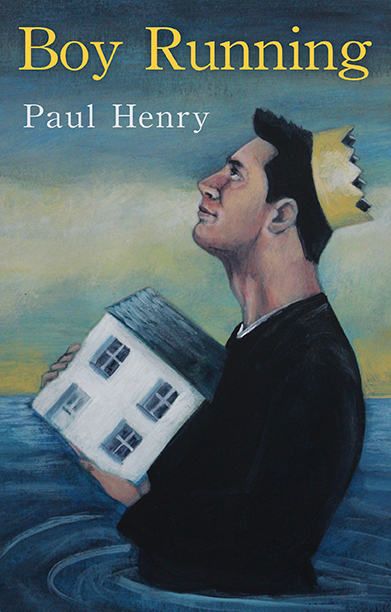
Today’s poem is from Paul Henry’s latest collection, Boy Running, published last month.

Paul Henry has gained a reputation as one of of the best poets in the UK. Boy Running is his beautiful sixth collection and the first to follow ‘The Brittle Sea: New and Selected Poems’. We begin in a ‘Studio Flat’. Cut adrift by marital break-up, the poet must sort through the emotional fallout and the various ‘chattels’ left behind; a sea of characteristic props: tables, lamps, metronomes, pianos, guitars. The poet’s sons are at the heart of this section where pathos is balanced by humour amidst the characters of a small country town.

A second section moves to the Welsh coastal town of Henry’s childhood, Aberystywth, opening with a long poem, ‘Kicking the Stone’ set in the summer of 1969. Also in this section are some familiar characters from earlier poems such as Brown Helen and Catrin Sands.

In the final sequence we meet ‘Davy Blackrock’: washed-up songwriter and modern day alter ego of Dafydd y Garreg Wen (David of the White Rock), alias David Owen (1720-1749), the blind, 18th century harpist and composer who fell asleep on a hill and dreamt the famous song which bears his name. In contrast to David of the White Rock, Davy Blackrock, ‘star of an ashen town’, drags his guitar from street to hotel to bedsit, an unsettled ghost who dreams of the perfect song.

The Love Songs of Davy Blackrock

  “The songs I had are withered
   Or vanished clean,
   Yet there are bright tracks
   Where I have been,”

                         Ivor Gurney – ‘The Songs I Had’

Few remembered them
but by the end
it was enough
that they’d brought love,
some good friends.
What was ambition
after all but the drum
of rain on a glass room,
a distraction from the moon?

He’d sit late for hours, Davy
in those final days,
inventing new chords
in his conservatory,
oblivious to the news,
worrying less about words
than the melody,
trusting his ear,
not counting the bars

and, between downpours
keeping one eye on the stars.

Paul will be launching Boy Running on 27th March at the bear in Crickhowell. Find out more or book tickets here.

Order Boy Running from our website.

Posted on

Friday Poem – A Birthmother’s Catechism

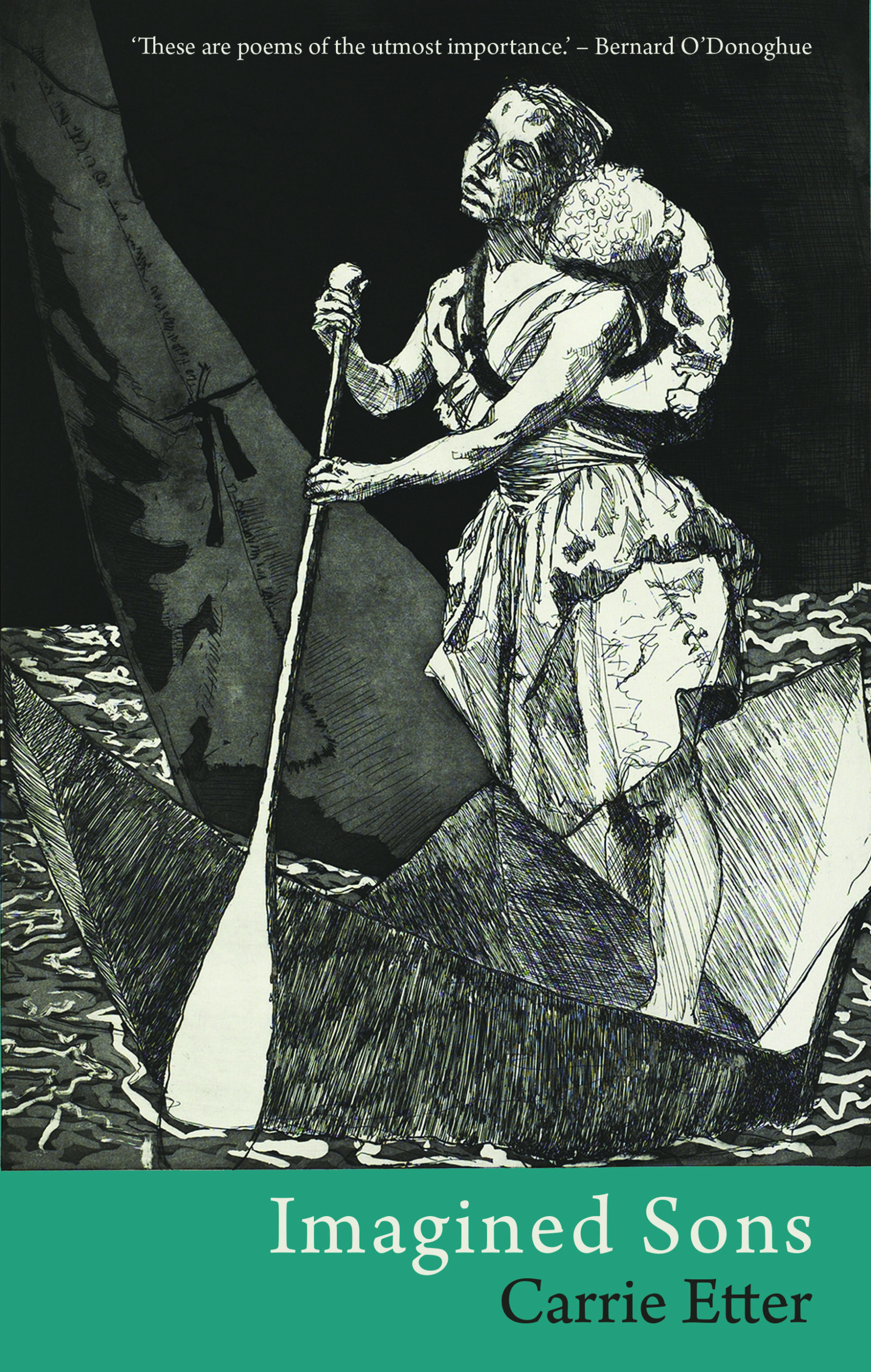
This week’s poem is from Carrie Etter’s Imagined Sons, first published in 2014, which has been shortlisted for the 2014 Ted Hughes Award for New Work in Poetry.

In Imagined Sons  Carrie Etter has written a book of vivid, heartbreaking poems on the experience of giving up a child for adoption. A prize-winning author, lecturer, critic and popular blogger, Etter imagines the possible destinies for the child and presents us with various scenarios from the tragic to the absurd. That the child’s birthday is also Sept. 11th adds a layer of irony and pathos, ‘What is the anniversary of loss?’ – asks the narrator in one of the ‘Birthmother’s Catechism’ poems. A pamphlet containing some of these poems was a Poetry Book Society Choice.

A Birthmother’s Catechism

How did you let him go?

With black ink and legalese

How did you let him go?

It’d be another year before I could vote

How did you let him go?

With altruism, tears, and self-loathing

How did you let him go?

A nurse brought pills for drying up breast milk

How did you let him go?

Who hangs a birdhouse from a sapling?

Order a copy of Imagined Sons from our website.

Posted on

An Interview with Damian Walford Davies

Today we’re chatting to poet Damian Walford Davies about his latest collection, Judas, which you can pre-order from our website here.

Damian is a poet, writer and librettist. He is the author of three Seren collections – Suit of Lights (2009), Witch (2012) and Judas (2015), together with the pamphlet Alabaster Girls (Rack Press, 2015) and the co-written volume, Whiteout (Parthian, 2006). He is Head of the School of English, Communication & Philosophy at Cardiff University, where he specialises in Romanticism, the two literatures of Wales, and Creative Writing.

Had you always wanted to write about Judas, whether it was Judas the man or Judas the metaphor, or did the poems in this collection quietly creep up on you?

Judas creeps up on you, certainly. I’ve always found him (or ‘it’ – Judas is a phenomenon, a problem, a crux (‘cross’), a paradox, a sore point) compelling. (The same with Lazarus, by the way, but that’s another, if related, story . . .) He is contradictorily represented in the canonical gospels, and that’s before we come to the second-century AD gnostic Gospel of Judas, where he is Christ’s confidant. There are a myriad of historical, theological, political and psychological arguments as to why Judas did what he did (if he did). To accept the historicity of Judas – which many scholars of first-century Palestine and early Christianity do not – means recognising him as an elusive figure. He is a no-man as well as a knot of contradictory representations, built up over twenty ideological centuries. (See Susan Gubar’s excellent 2009 biography of Judas.) This is the guy with the dark halo.

What is it you enjoy most about exploring history through poetry?

I like to write against big accepted narratives, intervene in them at personal, psychological levels, offer case studies of emotional quandaries, reveal terror on local, personal scales. I use the dramatic monologue for this, aiming for an imaginative inhabitation of voice and situation, aware at the same time that ventriloquising others has an ethics attached. This is Judas’s speaking platform, throughout. My previous Seren collection, Witch, did similar things, exploring how a witch is ‘made’ in the tense atmosphere of 1640s Suffolk. In Judas, I’m constantly negotiating suggestive gaps in the canonical gospel accounts. One has to be nuanced here, as well as bold. I made the decision from the outset to play with timescales, and so Judas is encountered during the week after the crucifixion, wandering through first-century Jerusalem one minute, but then clocking two women air kissing in the contemporary city’s Sheraton Hotel the next. Judas quotes Bob Dylan. Time is spliced; the Arab-Israeli conflict is as real to him as the Roman occupation. He is disturbed by a history that hasn’t yet happened. So I enjoy querying dogmatic versions of history, indulging in counterfactuals (which is more than a parlour game – it’s a way of changing the future). History always happens somewhere, and (like religion) is in many aspects terrifying. All this is not to say that the collection is iconoclastic, or without belief/faith, or blandly ‘materialist’. Quite the opposite. Multiple ironies mean that there are no final, fixed positions in this collection.

Throughout the collection you play around with many biblical images, such as the ‘thorns’ in ‘Annunciation 1’ and the ‘silver coins’ in ‘Denominations’. I imagine it would be difficult to write a poetry collection titled Judas without them! But did you ever worry about finding a new way to use imagery that has been around for centuries?

I saw it as an opportunity – to inflect, defamiliarise, and recontextualise these ‘core’ images. Judas is a collection in which all these images exist (I hope) in a complex, kinetic, shifting relationship. Did I worry about this? All the time. Poets must always be on edge, edgy. Poetry is about edgework. Judas is published at a time of political-religious crisis and horror. The collection is a reflection on fundamentalism, belief, faith, history, knowing, unknowing, violence, intolerance and human beings as agents and casualties of history. And (of course) beauty, friendship, love, worlds of spice.

You paint a very vivid picture of Jerusalem throughout the collection, picking out places like Yad Vashem in ‘In Vino’ and Ben Yehuda Street in ‘Siloam Pool’. Was giving your poems a specific setting important to you while writing the collection?

It was crucial. I was lucky enough to be able to visit Jerusalem in April 2012, and parts of the volume were written there in a hostel room under the muezzin’s recorded call to prayer and on the hostel’s roof, from which I could see the Al-Aqsa mosque to the east, the Church of the Holy Sepulchre to the west, and a sea of satellite dishes in between. And so the journeys that the shattered Judas takes through the old city are the ones I myself took through the narrow streets – full of managed but mangy colonies of cats – and souqs, around the Baths of Bethesda (a place of deep peace), down to the Garden of Gethsemane (from which I phoned my 93-year-old grandmother, who quite understandably asked ‘How big is it?’), back up to the ‘tufted wall’ of the Temple and through the four quarters of the divided (and machine-gun-patrolled) town. Judas is a map. Gethsemane, by the way, is tiny.

What, if anything, have you learned about Judas and the idea of evil through writing this collection?

He wants answers as much as we do. He’s still waiting.

Pre-order Judas from Seren’s website.

Posted on

Friday Poem – The Sound of a Diamond Planet

Short Days Log Shadows Sheenagh Pugh

The Sound of a Diamond Planet comes from Sheenagh Pugh’s collection Short Days, Long Shadows, published in 2014.

In this, her twelfth collection, noted poet Sheenagh Pugh steps into a new, northern landscape, the Shetland Islands, with poems steeped in the wilder weathers and views of rugged coastlines, sweeping sea-vistas and the hardy historical characters who have inhabited these lands. There is a lovely pared-down spareness, and elegiac formality to poems like ‘Travelling with Ashes’, ‘Staying’, and ‘Trondheim: January’ where the inhabitants appear lost in a ‘strange pink daylight’, and in ‘Gardening’ where ‘White stones are shaped like hearts’. The author’s characteristic dry humour emerges elsewhere as in ‘Extremeophiles’, a paean to bacteria – ‘chancers’ who live without sun. A poet who considers ‘too accessible’ to be the best sort of compliment, Sheenagh Pugh’s work has as much to offer the general reader as it does the specialist, who will admire her artful use of traditional forms.

Sheenagh will be reading at the Stanza Festival on the 5th March. For more information check out our website!

The Sound of a Diamond Planet

I seem to be surrounded
by things not quite there,

like the fieldmice munching
unseen inside my walls,

the spit of sand
uncovered at low tide,

the slick rock waiting to be
a waterfall again.

A planet, they say,
made all of diamond

resonates in its orbit,
light years beyond

human hearing, its brittle sound
broadcast in space.

Order Short Days, Long Shadows from Seren’s website.

Posted on

Friday Poem – The Tall Thin Tenor

God Loves You

The Tall Thin Tenor comes from Kathryn Maris’s collection God Loves You published in 2013.

Kathryn Maris borrows rhythms, vocabulary and themes from the Bible in this collection of poems. The result is more than artful parody, although a sly wit is in evidence. It is an approach that accommodates large themes, unravelling them in new ways.

The first section, ‘What will the neighbours think?, is a kaleidoscopic view of the sins and sinners of the modern city and opens, appropriately enough, with a vision of a flood to rival Noah’s. The poems feature domestic discord, gossip, suicide, celebrity and anxiety about the safety and behaviour of children and spouses. It says much about this poet’s meticulous poise and tone that we are lured into these scenarios with our sympathies fully engaged.

The following sections subvert scripture more directly. A mock-prayer opens: ‘My father, who art in heaven,/ sits under an umbrella that is his firmament’; a sonnet begins: ‘Kyrie eleison! I said it in the pub.’ Such burlesque moments mask poignant themes of praise or blame, as well as being funny. A skilful use of form is characteristic, as in the sestina ‘Darling, Will You Please Pick up those Books?’ Other pieces are set out in the numbered style of psalms or parables but have an entirely contemporary edge.

The Tall Thin Tenor

The tall thin tenor sings
The tall thin tenor sings to the young soprano
The young soprano sings the part of Poppea
The young woman Poppea has seduced the king
The tall thin tenor is king
The young soprano Poppea becomes the new young queen
The young soprano replaces the old queen Ottavia
The old queen Ottavia sings of replacement

The tall thin tenor sings over the soprano
The tall thin tenor sings over her to his small thin wife
His small thin wife holds a child in the stalls
His thin wife holds their quiet daughter
His small wife sings quietly to their daughter
The small wife is quiet when the queen sings

Kathryn will be reading at the Stanza Poetry Festival alongside fellow poets Carolyn Jess-Cooke and Hollie McNish on Friday 6th March. Find out more on our website here.

Order God Loves You from Seren’s website.

Posted on

Friday Poem – Studio Flat

Boy Running, Paul Henry

Studio Flat comes from Paul Henry’s sixth collection, Boy Running, available February 2015.

Boy Running has three distinct sections:

Recently reeling after a marital break up, poems such as Studio Flat deal with the aftermath of divorce. The poet is left to sift through the emotional fallout and the physical reminders of a shared life left behind: tables, lamps, metronomes, pianos, guitars. The poet’s sons are at the heart of this section where pathos is balanced by humour amidst the characters of a small country town.

A second section moves to the Welsh coastal town of Henry’s childhood, Aberystwyth, and the summer of 1969

In the final sequence we meet Davy Blackrock, a washed-up songwriter and modern day alter ego of Dafydd y Garreg Wen (David of the White Rock), the blind 18th century harpist and composer who fell asleep on a hill and dreamt the famous song which bears his name. In contrast to David of the White Rock, Davy Blackrock, ‘star of an ashen town’, drags his guitar from street to hotel to bedsit, an unsettled ghost who dreams of the perfect song.

Studio Flat

Socks hang like bats from a skylight.
They may be dry in time for the moon.
The camp site owner’s water-feature
drains more blood from the sun.

Cars queue for the narrow bridge.
Birds catch their pulses and fly.
I am suddenly old. What’s an attic
but a bungalow in the sky.

And where are you, my sons?
I heard your voices in the bells
of snowdrops pulled by the wind.
These tulips have lost their smell.

Perhaps I could tell you, one day
where the snowdrops went, why old men
dry their socks on the moon, and what
darkened the skylight, just then.

Pre order Boy Running from Seren’s website.

Posted on

Friday Poem – Holes

Disturbance – Ivy Alvarez

Ivy Alvarez’ collection Disturbance is a gripping novel in verse that chronicles a multiple homicide, a tragic case of domestic violence, where a family was gunned down by the husband and father, the one person who promised to protect them.

The book features poems in a kaleidoscope of voices from all the characters involved. We first meet the family itself and witness how the father’s controlling attitude gradually escalates into violence. Then we get the aftermath: the authorities, police and neighbours, who all might have helped to prevent this tragedy. This is a very dark book, but a courageous one, ultimately about evil and its presence in our everyday lives.

Holes captures the immense anguish and heartbreak of a mother who was helpless to protect her son in this tragic case.

Holes

I pressed the button. No-one came. The police could not find me in the dark. They were also afraid of death… it might come for them instead. They waited behind a screen of trees, for the moon to uncover itself, silver the edges of their sirens, their dark cars. The pale pebbles in the driveway, left to imagine the river that used to wet them—they must tire of always staring up, sightless and at the mercy of everything. The police step on them. They creep only so close, but no closer. My son is dead on the ground. Someone close his eyes. But I am ignored in this as I have been with so many other things. His blood is cold now, blackening, drying up, stiffening the fabric of his jacket, soaking into the soil. There are holes in him I know nothing about, nothing to do with the boy I delivered to the world, my gift, small and pure. The dark is blue and cold. The trees conceal susurrations in their high skirts, branches uplifted like arms, wailing whispers… Black cars, old scars, my son’s open mouth, empty shotgun shells whistling smoke white dancing up and out