Posted on

Friday Poem – White Clover

friday poem white clover lynne hjelmgaard

This week our Friday Poem is taken from Lynne Hjelmgaard’s new collection, A Boat Called Annalise.

A Boat Called Annalise Lynne HjelmgaardLynne Hjelmgaard was born in New York and has lived in Denmark, Rome, Paris and London. Her collection, A Boat Called Annalise, records the years she and her husband spent sailing on a boat to the Caribbean and back. The author beautifully evokes life at sea, the dream-like nature of the tropics, and the halcyon days of a marriage.
Hjelmgaard moves from scenes of risk and turbulence, of wild beauty on the open water, to visions of their dream-like destination in the West Indies. The author’s clear-eyed and tender observations are as insightful about the paradox of paradise: tropical splendor amidst local poverty, as they are about the challenges of relationships at close quarters.


White Clover
For Dannie
white clover lynne hjelmgaard annalise


Buy your copy now.


Posted on

Friday Poem – April

the visitations kathryn simmonds april friday poem

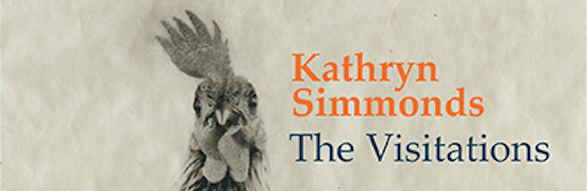
This week our Friday Poem is from The Visitations by Kathryn Simmonds.

the visitations kathryn simmonds april poemThe Visitations is the follow-up to Kathryn’s Forward Prize-winning debut, Sunday at the Skin Launderette. As with her previous collection, an appealing voice prevails, though this simplicity is something of a veil, through which the author, with subtle shifts of language and perspective, manages to imply darker themes and worlds unseen. The tone is often simultaneously satirical and elegiac and the collection abounds with sudden moments of strange illumination: a lime tree strikes up a conversation; a life coach finds an old passport; an infant teeters on the brink of speech. Here are poems where the physical and metaphysical meet, where questions of new motherhood are set against those of faith, and the larger conundrum of how to live.


April

April Kathryn Simmonds


Buy your copy now.


Posted on

Friday Poem – Yellow Dahlias

The Way the Crocodile Taught Me Katrina Naomi

Yesterday saw us at the Admiral Benbow in Penzance for the launch of Katrina Naomi’s The Way the Crocodile Taught Me, and so this week’s Friday Poem is taken from this gorgeous new collection. If you missed Katrina in Penzance, you have another chance to hear her read on 17 May, when we will be at The Yorkshire Grey, London, for a second launch event. You can find the full details on our website.

The Way the Crocodile Taught Me Penzance launch
Katrina Naomi’s book launch, Admiral Benbow, 14 April

the way the crocodile taught meThe Way the Crocodile Taught Me is a heartfelt and tragi-comic portrayal of a fraught childhood and adolescence. Central to the book are two sequences: one about an awful stepfather, and the other about a kindly but also comically old-fashioned grandmother. A mother appears, distant, glamorous as a film star. An absent father is also a dream: “After my father left, I grew/ a battery of hearts,/ felt each of them beat,/ like doves in a casket/”. These family poems are both heartbreaking and often hilarious, sometimes both at once.


Yellow Dahlias

This is the image that sticks:
my married mother, her costume cut
low and high, one foot below

the impossible blue of a honeymoon pool,
the other poised on the metal step;
her face, fresh of make-up,

brows plucked in static surprise,
eyes wide with the rubber pull
of yellow dahlias, her new ring and bracelet.

A triumph. My mother emerging
from the water as I’d never seen her before.
Her head, a belisha beacon of hope.

Posted on

Friday Poem – Spring ’72

To celebrate the coming of spring, our Friday Poem this week is from Sheenagh Pugh’s Selected Poems and is entitled ‘Spring ’72’. This poem is the first Sheenagh ever had published, in one of the 1972 issues of Poetry Wales.

Sheenagh Pugh's Selected PoemsPublished in 1990, Sheenagh Pugh’s Selected Poems is the best of her early work: a generous and wide-ranging selection from her first four collections, together with two dozen previously unpublished pieces. Notable inclusions are the prize-winning ‘M.S.A’ and ‘Intercity Lullaby’, and the much-anthologised ‘Sometimes.’ Throughout, a lively and enquiring mind is brought to bear on how we live and die, and how we might live more equitably. Sheenagh Pugh approaches her subject unpredictably, through Norse saga and snooker, apartheid and falling tortoises, in a poetry of invention and conviction.

Spring ’72

Now open flowers on the shirts of boys;
now mica glistens, asphalt’s morning dew,
from pavements up. Now all the girls look pregnant,
and small red sports cars blossom on the streets.

Now all birds are not sparrows; now all women
unwrap their shapes from winter. Now the man
who thought it might be fun to walk to work
find all sight aches, all touch troubles his blood.

Now all the state of opening, upspring, bud’s
soft burst, a green grenade, scrapes at his grief;
now all the many dead dress him in black
for what they had and what he cannot keep. 

Buy your copy now.

Posted on

Friday Poem – Flamingos

my family and other superheroes

Our Friday poem is from the Costa Award-winning book of poetry, My Family and Other Superheroes, by Jonathan Edwards. It is titled ‘Flamingos’ and is being turned into a dance! The humor of the poem makes for an ideal April Fools’ Day piece for all to enjoy.

Screenshot 2016-04-01 15.13.43My Family and Other Superheroes introduces a vibrant and unique new voice from Wales. The superheroes in question are a motley crew. Evel Knievel, Sophia Loren, Ian Rush, Marty McFly, a bicycling nun and a recalcitrant hippo – all leap from these pages and jostle for position, alongside valleys mams, dads and bamps, described with great warmth. Other poems focus on the crammed terraces and abandoned high streets where a working-class and Welsh nationalist politics is hammered out. This is a post-industrial valleys upbringing re-imagined through the prism of pop culture and surrealism.


Flamingos

Who spray-painted the swans? You dilly–dally, 
       shilly-shally in the shallow end
on Meccano legs, your day a foot massage, 
       curve your neck into a clothes hanger
            for your rose-hue tutu and your feather boa.
You’re every little girl’s dream, a shock, a flock 
       of neon signs, advertising candyfloss.
Why do you blush so much? Each time you eat,
       you have to kiss the you-shaped bird who floats
            in the lake surface, steal food from its throat.
February. Outside’s a place of grey
       line managers, timetabled rain, the bus.
But with your silly-billy,Vegas waitress, 
       camouflage-for-a-world-of-joy body,
            Fuck that, you say, let’s all be fabulous.


Buy your copy now.
Posted on

Friday Poem – Denominations

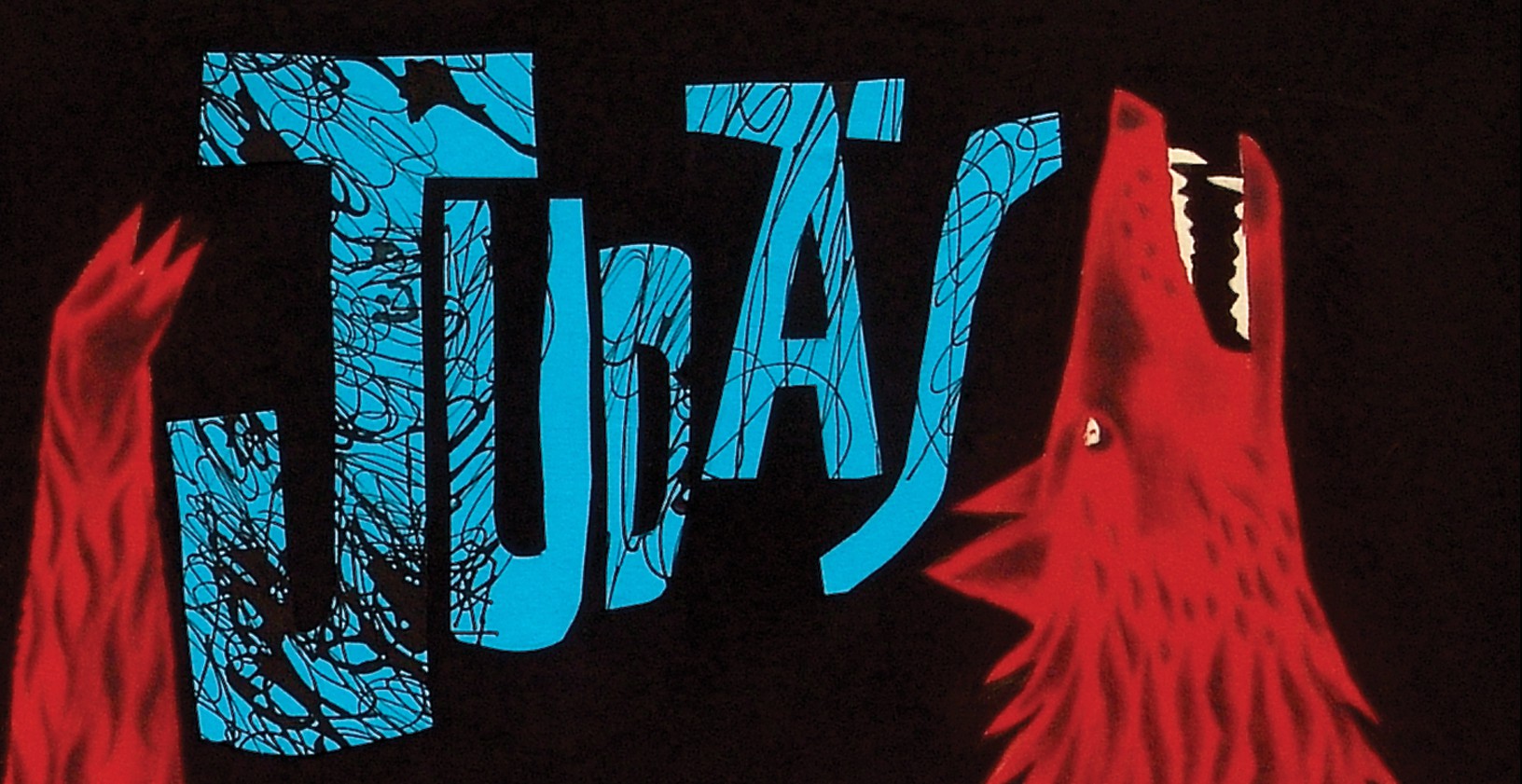
As we are now approaching Easter, our Friday poem this week will be from Damian Walford-Davies’ Judas.

judas cover rgbIn short-lined, intensely suggestive dramatic monologues, Damian Walford-Davies vividly summons moments of fear and swagger, doubt and passion, despair and nonchalance as an outlaw Judas finds himself haunted by his chequered and extraordinary past. Familiar stories are rendered strange and uncanny as the reader is caught in multiple ironies. As striking as the unnerving images on the news loops of our TV and computer screens, these poems locate us on the hazardous streets of a divided city with a companion-guide who shares with us his own troubling and troubled version of history.

Drawing on conflicting representations of Judas spanning twenty centuries, this chain of poems sets out to challenge orthodoxies and easy pieties. Judas offers an imaginative map of ancient enmities – and dares to hint at resolutions – in the form of a dramatic autobiography of the man whose most famous act (they say) was a kiss in the dark.

Denominations

You’ll paint me gross – 
gripping my shins, 
retching silver coins.

Let me put you straight. 
All I’ve got’s loose change 
for late-night kofta stands

outside the Lions’ Gate, 
where tote-bag tourists 
sip tart tamarind

from paper cups.
On Friday night I saw the city 
wane and wax to pixels

on the screens of untold 
mobile phones. From unbuilt 
minarets, muezzins hoist

the pale Passover moon 
above the gospel
 of the Separation Wall.

Buy your copy now.


Posted on

Friday Poem – ‘Campbell’ by Siobhán Campbell

cross-talk siobhan campbell

St Patrick’s Day has just passed and fittingly, our Friday Poem this week comes from Irish poet Siobhán Campbell’s collection, Cross-Talk.

cross-talk by Siobhán CampbellAcerbic, cool, controlled, this is poetry with attitude. Many of the stories in this collection start in Ireland and although the cadences are sweetly lyrical, the narratives are otherwise. Politics here is intrinsic to the tales of the sly, the warped, the landlady “Mean as Ireland in the 50’s”. Nature is deftly invoked as a counterpoint to human illusions. The apparently personal poems here are cast in a more tender, yet characteristically unsentimental light. Campbell brings the lyric close to the conflicts that spur our passions, both personal and political. While full of wit, this collection challenges the reader by dealing with fundamental questions of borders, identity, violence and responsibility.

Siobhán’s poem ‘Framed’ has just won the Oxford Brookes International Poetry Competition 2016, and ‘The same people living in the same place’ was just the featured reading at the launch of The Stinging Fly’s In the Wake of the Rising edition, edited by Sean O’Reilly.

Campbell

“I shall never deny those who came to this gnarled coast
with a skinful of sopped hope and started with their brood
this trail that would become the family you call yours.

You know in Ulster Scots they don’t use the word ‘lane’
but have to say ‘wee road’. The laming of a tongue
will map it out of mind unless it has a name.

Raymond, Ursula, the two Hughs, who laid on betting sheets,
knew when to settle odds and how to be discreet,
paid blind to the sidelong flutter of small groups.

They each made one more shift from anything that marked,
though wondered through two wars what way to stream a lay
for those who come home in droves from fights that were not ours.

I am the last.

Though you are from the south, you need to find the will
to hold a vowel too long. Tell people by their heed
and know who must be paid. Keep always your own name.
It takes a softened tongue to fill a twisted mouth.”

Buy your copy now.

Posted on

Friday Poem | My Father’s Wardrobe

My Father's Wardrobe Pascale Petit

This week, our Friday Poem is ‘My Father’s Wardrobe’, from Pascale Petit’s Fauverie, which was shortlisted for the T.S. Eliot Prize 2014.

Pascale Petit, FauverieThe Fauverie of this book is the big-cat house in the Jardin des Plantes zoo. But the word also evokes the Fauves, ‘primitive’ painters who used raw colour straight from the tube. Like The Zoo Father, Petit’s acclaimed second collection, this volume has childhood trauma and a dying father at its heart, while Paris takes centre stage – a city savage as the Amazon, haunted by Aramis the black jaguar and a menagerie of wild animals. Transforming childhood horrors to ultimately mourn a lost parent, Fauverie redeems the darker forces of human nature while celebrating the ferocity and grace of endangered species. Five poems from Fauverie won the 2013 Manchester Poetry Prize and the manuscript in progress was awarded an Arts Council England Grant for the Arts.


My Father’s Wardrobe
after Peter Redgrove

In the late afternoon he begins his toilette –
he has limestone pyjamas threaded with fossils,
a nightshirt of catacombs through which his dreams drip.
He has a dressing gown woven with petrol fumes, between its folds
echo car-horns and the murmur of tourists.
He tries on the long rail of awakening suits.
He dresses from the quarries that built Paris.
He wears a cathedral cloak with chimera eyes.
His raincoat is stuccoed with spouting gargoyles.
He has trousers that are stained-glass windows,
casting shadows like candied fruit as he walks.
His cravat is a knotted métro train,
one tie is an escalator, another a fountain
with Saint-Michel fighting Satan.
A carousel turns silently between his knees
and in it a boy is singing on a lacquered foal.
He has a shirt of hotel fronts
and a waistcoat of bridges under which bateaux mouches glide.
He emerges from the trapdoors of nightclubs
in a wedding suit of pavements that steam in the sun
and in it he marries the dawn.
He has a jacket made of wind-blown newspapers
and a cocktail suit of cigarette smoke
with balconies for pockets. Sometimes
he wears a suit of ash that scatters when he moves.

Buy your copy now.

Pascale Petit will be at Tŷ Newydd Writing Centre, March 14-19, along with Robert Minhinnick for Writing the Wild: A Poetry Course. To book tickets, visit the Tŷ Newydd website.

Posted on

International Women’s Day: celebrating Seren’s female poets

International Women’s Day 2016 has arrived. We celebrate this year by highlighting just a few of the talented women we’ve been fortunate enough to publish. There will always be more names to mention and more works to appreciate, and you can find countless gorgeous books written by women on our website. But none-the-less, we hope you enjoy hearing about just a few of the Seren women writers and their achievements.

In this blog post, the first of two, we focus on the Seren female poets. Poetry Editor Amy Wack has been with us at Seren for over twenty years, publishing countless collections by women. The gender balance of most UK publishers favours men but in our case, with Amy at the helm, the balance is far more even.

Amy: Seren has a very good record for promoting, and bringing forth women writers and we owe this both to the Seren Board, and the forward-looking people at the Welsh Books Council, as well as the skill of my co-commissioner: Fiction Editor at Seren, Penny Thomas.

women's work 2016Women’s Work, edited by Eva Salzman and Amy Wack
March 2016, £14.99
Featuring over 100 poets, Women’s Work: Women Poets Writing in English, has been re-printed.  The 2016 edition features a revised introduction and updated author biographies.
Women’s Work contains classic poems by famous poets as well as lesser-known works. Editor Eva Salzman has provided an opening essay that artfully picks apart the statistics involving women’s work in anthologies and points out, with her characteristically vigorous wit,  just who gets to choose the canon, and why. Along with co-Editor Amy Wack (Seren poetry editor), they’ve both ranged broadly over the English-speaking world, and aimed to represent women of colour as well as those from the more esoteric wings of the style spectrum.

Poets published by Seren included in Women’s Work:

Kate Bingham
Jean Earle
Carrie Etter
Catherine Fisher
Hilary Menos
Deryn Rees-Jones
Vuylwa Carlin
Pascale Petit
Carolyn Jess-Cooke
Anne-Marie Fyfe
Kathryn Gray
Siobhan Campbell
Kathryn Maris
Anne Cluysenaar
Hilary Llewellyn-Williams
Tamar Yoseloff
Kathryn Simmonds
Zoe Skoulding
Christine Evans
Sarah Corbett
Carol Rumens
The Art of Falling Kim Moore Tamar_quicksand cover the man at the corner table rosie shepperd playing house katherine stansfield


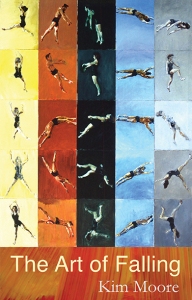
Collections published in the last few years include Kim Moore’s critically acclaimed debut The Art of Falling, Tamar Yoseloff’s A Formula for Night: New and Selected Poems, Rosie Shepperd’s The Man at the Corner Table, and Katherine Stansfield’s debut, Playing House.

Elterwater Rain Crowd Sensations Judy BrownA Boat Called Annalise


Hot off the press, we have Crowd Sensations by Judy Brown, which is a Poetry Book Society Recommendation, and Lynne Hjelmgaard’s A Boat Called Annalise, which recalls a journey the author took with her late husband on a sailboat, to the Caribbean and back.

The-Dogs-That-Chase-Bicycle-Wheels-rgbthe way the crocodile taught meanimal people


You can look forward to many more collections by female poets, and on the horizon we have Mslexia Poetry Pamphlet Competition winner The Dogs that Chase Bicycle Wheels by Ilse Pedler (available to pre-order), Katrina Naomi’s hard-hitting The Way the Crocodile Taught Me (April), and Animal People by Carol Rumens (April).

Posted on

Friday Poem – Different Water

Boom! Carolyn Jess-Cooke

Happy Friday one and all. This week’s Friday Poem is an exploration of the significance and power of motherhood, taken from Carolyn Jess-Cooke’s collection, Boom!, as a little early celebration of Mother’s Day this coming Sunday.

Boom! Carolyn Jess-Cooke‘Becoming a mother changed me in every single way,’ says the author, ‘my first child – born in October 2006 – just about knocked me sideways. There were many reasons for this, but here’s the biggest one: I could not believe how public and political the (hugely personal) experience of motherhood was.’

Jess-Cooke found, as many parents do, that the juggling act required to raise young children and continue a professional and creative life, is both exhausting and fulfilling. Viewing motherhood from a multiplicity of artful angles, the author says, ‘Coupled with all this was the love I had for my children. It completely and utterly blew me away, how much I could love another human being.’

Different Water

When a girl becomes a mother there is no fanfare.
No government re-elections, no erupting volcanoes.
The baby mops up the praise. But quietly
there are earthquakes, realigning planets.
When you ask to hold her newborn you are
addressing someone who just became a tiger,
so be careful.When she soothes the child that has
shrieked for three hours she is the Matador,
sunlit with relief. Sometimes, at around 2am,
she is the only woman ever to have given birth.
At the supermarket she is a calm strong oak
dragging a thrashing child past the strawberries.
At the school gates she’s autumn weeping leaves
of every hue for the loss of summer. Often
she spies the girl she once was and thinks, wimp.
Like grass trees after fire, like crops in new weather,
like a river clasping different water, there is
no fanfare when a girl becomes a mother.

Buy your copy here.