We’re giving away a signed copy of Wild Places, Iolo Williams’ stunning new guide to Wales’ best wildlife and nature sites. All you have to do to win is head to Twitter and tell us your top nature place.
Follow us (@SerenBooks) and use the hashtag #WildPlacesWales to tell us where you think tops the list of Wales’ best wild places. Add a photo if you can! We’ll pick the winner on 16th December – our favourite comment will take the prize.
We’ve already had some great responses – here are a few of the places chosen so far…
Can you think of an even better wild place in Wales? If so, tell us now and you’ll be in the running to win this fantastic new book, signed by the author.
Entries close 16/12/16. Winner will be chosen from all Twitter comments. Prize cannot be exchanged or substituted.
Enjoy this extract from Bethany W. Pope’s debut novel, Masque, now available from serenbooks.com (or your local bookshop!)
About Masque: Masque is a richly gothic retelling of Gaston Leroux’s The Phantom of the Opera. Centre stage is would-be opera singer Christine, who, despite being devoted to her art, attracts the attention of both the Phantom, and rich theatre owner Raoul. The resulting mix of love, rage, art and murderous intent, is explosive.
This extract begins on p.11 of the novel and is our first introduction to The Phantom – Erik – a deformed and complex character, both monstrous and kind. Unlike Leroux’s original The Phantom of the Opera story, Masque is told from the perspective of the three main characters, so we see directly into the mind of the much-maligned Phantom, and can judge him as we see fit…
ERIK
1.
My father was a master mason. I never met the man but I
spent the first decade of my life inside the house he built
and so I feel I know him. The lathes of the attic communicated
with me as much through their shape (he was
exacting when he laid out the angles of the eaves) as did
the notations he left in pencil on the undersides of the
unfinished, unpainted struts which supported the ceiling. I
inherited the crabbed handwriting he used to mark out his
measurements, though I am far more articulate than he ever
was in artistry, architecture, or print.
Although he was skilled with the trowel and could lay
travertine so tightly that its texture was more like marble
than limestone, he was more renowned for the beauty of
his person that the skill of his hands. He won my mother
with his looks and he left her a sad ghost of the gay girl he
married, haunting the house that he built on Rue Rouge.
I learned about him through the letters he left to my
mother, retained by her in memory of their apparently passionate
courtship.They were bound by a blue ribbon, an
appropriate memento of an innocent girl. One envelope
contained a bright lock of hair that must have been his,
since mother’s was as dark as a sewer rat’s. The letters were
naïve, almost innocently crude. They were full of phrases
about the things that he wished that he could do to her
body and peppered with prayers for many years of marital
bliss. They were written in the kind of cheap ink that an
uneducated man would favour. He did not expect them to
last, or be held on to.The sepia was grainy and badly mixed,
this combined with his handwriting in such a way that it
seemed as though his words were written out by a sexually
precocious child with a fondness for experimenting with
matchsticks. As I said, my handwriting is no better, but at
least the ink I use is superior.
I always thought that writing was a bit like the telepathy
those spiritualists in the paper are always talking about. It
makes sense, if you think about it; one mind communicates
to another through a series of black blotches which transmit
thoughts directly into another’s brain. You, reading this,
whoever you are, can hear my voice (a sweet, trained tenor)
without ever having to worry about viewing the flesh that
produces it.This is lucky for you: all my gifts are internal.
In any case, my current habitations remind me of my
childhood home. These damp vaults are rather like the basement
where my mother moved my crib once the
neighbours complained that my cries disrupted their business.
The house my father built was tall and narrow, the
walls of dark grey granite, polished to the high shine of
gravestones. He meant his home to be a living monument
to his skill and a permanent advertisement for his services.
The roof was tiled with slabs of greenish slate, and the
windows were small and imperfectly glassed. When I was
older, I replaced them as a gift for my mother. I spent a
whole afternoon removing the warped and watery panes,
replacing them with sheets I’d poured myself. I learned the
art of glazing, sneaking every night to the factory down the
street. When the time came that I had spent enough hours
watching the midnight production shift pouring the sheets
of reddish molten sand into the mould, I tried my hand at
it myself. I waited until the Michaelmas holiday and stole
the machinery (I provided my own materials, lugging bags
of silicone that I’d found in the cellars among the unopened
bottles of wine and the skeletons of rodents). I love the look
of glass as it is being poured. It is honest, then, about itself.
Cooled, it only seems a solid. It never fully hardens. Over
centuries, window glass will melt.
There is no such thing as stasis.
In any case, my mother loved the finished product; windows
that let the light in without warping what she saw on
the street. She was so thrilled she squeezed my upper arm
through the thick fabric of my jacket. I swear she almost
hugged me. In any case, for once she did not shudder at my
smell or flinch away from the feel of my corpselike body.
The houses on either side of ours were dedicated, in their
own way, to music. Dancing girls and cabaret, absinthe and
cheap champagne that the likes of those poets who styled
themselves ‘Romantic’ drank themselves to death in. My
widowed mother hired men to refurbish the attic into a
series of rooms that she furnished with sticks she’d bought
from brothels, closed in raids by the province governor the
previous summer. She did not sleep on them and rarely
bothered to change the sheets, so she didn’t have to worry
about bedbugs. She made a good living, I must say, giving
the drunks who seethed from her neighbours in the early
morning a bed off of the streets.
For my fifth birthday she made me my first (and for a
long time only) birthday present; a mask cut from a length
of chamois that she bought from a glover. It was more like
a loose sack with holes cut for eyes than a proper garment
but it did its job well. The sight of me ceased bothering her.
As I grew older, she let me come up more frequently –
although once she had a steady stream of lodgers I never
had the run of the attic again – my father’s writing was long
since buried behind plaster. I wore the mask without complaint
– it was far from uncomfortable and it had a nice smell,
as did the sachets of mint and violet that she sewed into my
clothing. If she almost never touched me, she did love me as
best as she was able, being young and easily frightened.
After a few years of proving my capacity with panes of
glass and basic home repairs, she hired a blind tutor to teach
me letters, music, mathematics. He would come and sit for
hours in my basement room, complaining of the effect of the
chill on his bones and making me memorise many disparate
packets of learning. When I surpassed his ability to teach, as
I soon did, I had many books close at hand and I turned to
them to expand my knowledge. I read everything from
Archimedes to fairy stories. As I recall, I had a special affection
for La Belle et la Bête. My mother bought me as many books
as she could afford through mail-order – often secondhand.
She resold them after I had squeezed them of their nutrients,
though I demanded permission to keep the fairy tales. They
were a balm to me, with their stories of transformation. They
provided me with a sharp and dangerous hope.
Book buying can be a bit of an addiction, but now we all have the perfect excuse to go out and treat ourselves to a new title – it’s National Book Lovers’ Day.
Here are our editors’ top ten picks. If you haven’t read them yet, then what are you waiting for?
1. Masque, Bethany W. Pope A richly gothic retelling of Gaston Leroux’s phantom of the opera story by debut novelist Bethany W. Pope. Centre stage is promising young singer Christine, who, despite being devoted to her art, attracts the attention of both the Phantom (Erik), and rich Parisian theatre owner Raoul.
The intensely ambitious Christine finds herself caught between the twin evils of the Phantom’s murderous pursuit of artistic perfection and Raoul’s ‘romantic’ vision of her as a bourgeois wife. Her own desire to follow her operatic career becomes her guiding light, but none of the three leading characters can control the directions in which their passions lead them, while the beautiful masked skull of the opera house itself looms large over their respective fates. The resulting mix of love, rage, art and murderous intent, is explosive.
Love, lust, adventure, romance, and the monstrous nature of unfulfilled creativity await you here.
Everyone wears a mask. Look beneath it, if you dare.
2. Crowd Sensations, Judy Brown Crowd Sensations is a worthy follow-up to Brown’s Forward Prize-nominated debut, Loudness. Brown is a poet of dazzling contrasts, of thoughtful paradox, intimate confidences and precise evocations. Her titles and first lines both draw you right into a poem and then quite often surprise you with a narrative that you hadn’t quite expected. ‘The Things She Burned Last Year’ references a past both remote and near, like multiple reflections seen in a mirror. Brown is a poet of profoundly unsettling domesticity as in ‘The Dehumidifier’, which unravels the metaphysics of damp and ‘This is Not a Garden’, which is a cool summation of a failed marriage. We frequently imagine an uncomfortable intimacy: ‘Poem in Which I am Not Short-sighted’, or are given a scary anecdote like: ‘The Post Box in the Wall’. There are serious poems that lure you with humorous titles: ‘Poem in the Voice of a Dead Cockroach’.
3. Sugar Hall, Tiffany Murray Easter 1955. As Lilia Sugar scrapes the ice from the inside of the windows and the rust from the locks in Sugar Hall, she knows there are pasts she cannot erase. On the very edge of the English/Welsh border, the red gardens of Sugar Hall hold a secret, and as Britain prepares for its last hanging, Lilia and her children must confront a history that has been buried but not forgotten.
Based on the stories of the slave boy that surround Littledean Hall in the Forest of Dean, this is a superbly chilling ghost story from Tiffany Murray.
4. Ritual 1969, Jo Mazelis What are little girls made of? What will they become? Will they run away to the circus or become dressmakers, teachers or servants? From the playground to adulthood the path is beset with misunderstandings, missed dates and hidden traps for the unwary.
This darkly gothic collection of stories explores the unsettling borderland between reality and the supernatural. Ranging from early twentieth-century France to 1960s South Wales and contemporary Europe, Jo Mazelis’ singular vision and poetic language creates characters caught up in events and feelings they do not fully understand or control, giving the book its uncanny focus. Not all is as it seems in a world where first impressions may only conceal disguises and false trails – and there’s no going back.
5. Dark Mermaids, Anne Lauppe-Dunbar It is the Olympic summer so what better time to read Anne Lauppe-Dunbar’s gripping thriller, Dark Mermaids, which tells a shocking yet enduringly familiar story of the horrors of a political system that doped its youngsters to sporting superhero status, and then left them to fend for themselves. Dark Mermaids follows West Berlin police officer Sophia as she is called to investigate the murder of her childhood friend Käthe. The search for Käthe’s killer draws Sophia back into her abusive past as a child swimming star in the former GDR, and as the web of half-remembered horrors starts to unravel, those close to Sophia begin to take notice. There are some who still have much to hide, and they will go to great lengths to stop their secrets from surfacing. Dark Mermaids was shortlisted for the Cross Sports Book Awards, 2016.
6. Star-Shot, Mary-Ann Constantine Part fable, part mystery, Star-Shot is a stylish debut novel set in and around Cardiff’s National Museum in a time that is almost, but not quite, our own. As their paths cross in a circumscribed world of benches, parks and galleries, a handful of characters reveal their stories of obsession, loss and recovery, creating a fragile network of relationships which will help to resist the inexorable channels of silence eating into the city.
A brittle young woman sits on a bench in Gorsedd park, conscious of the powerful building behind her; a tall man carries a box full of a strange organic substance up the entrance steps; a young father explains the formation of stars to his tiny son. As university researchers try to map and understand the destructive silence snaking around them, it becomes clear that the linked lives of these and other marginal characters offer ways of countering its effects. Poignant and humorous,Star-Shot is an exploration of how objects and images can focus our grief and desire; it is also a meditation on the regenerative power of garden ponds, and the cosmic significance of frogs..
7. The Dogs That Chase Bicycle Wheels, Ilse Pedler Beautifully evocative of life on a sailboat, Lynne Hjelmgaard’s poems trace a journey this much-travelled author took on a sailboat to the Caribbean and back to Europe with her husband.
The couple’s relationship is poised on tensions, beautifully observed, as masculine/ feminine, the need to assert and/or withdraw in the face of the turbulent seascape. The paradise-like destination is reached and later we learn that life goes on, there is illness and loss, and in the final section, the tone becomes movingly elegiac.
Hjelmgaard’s poems are beautifully poised, full of clear-eyed and frequently humorous observations. Her work is full of sentiment without being sentimental. We hope you enjoy your trip on A Boat Called Annalise.
8. Murder at the Star:Who Killed Thomas Thomas?, Steve Adams The murder of God-fearing, bible-quoting, partially deaf Thomas Thomas at the branch of Star Stores he managed in Garnant, South Wales has remained an unsolved mystery since it happened in 1921. His body was found on the morning of Sunday February 13th, his head smashed, his throat cut and with a stab wound to the stomach, any of which could have killed him. Over £126 was missing from the store safe, yet there were oddities about the attack which suggested this was more than a robbery that went tragically wrong: Thomas had been gagged with cheese, and there was no tear in his trousers, shirt and waistcoat above the stab wound. What circumstances could explain these things?
Garnant was in shock, and Scotland Yard arrived in the form of DI George Nicholls. A number of suspects were identified but none seemed to have the telling combination of motive and opportunity. Despite the expertise of Nicholls the case was eventually abandoned and the killer’s secret died with him.
Until now. In classic cold case fashion journalist Steve Adams’s extensive researches have finally identified the killer, who is revealed at the end of the book, after a thorough reconstruction of the murder and the subsequent investigation.
9. The Way the Crocodile Taught Me, Katrina Naomi Katrina Naomi’s new poetry collection, The Way the Crocodile Taught Me, is a heartfelt and tragi-comic portrayal of a fraught childhood and adolescence. Central to the book are two sequences: one about an awful stepfather, and the other about a kindly but also comically old-fashioned grandmother. A mother appears, distant, glamorous as a film star. An absent father is also a dream: “After my father left, I grew/ a battery of hearts,/ felt each of them beat,/ like doves in a casket/”. These family poems are both heartbreaking and often hilarious, sometimes both at once as in ‘Portrait of my Stepfather as a Xmas Tree’.
10. The World, The Lizard and Me, Gil Courtemanche A novel of testament to the children caught up in the civil wars of Central Africa, The World, the Lizard and Me follows criminal investigator Claude Tremblay as he pursues a warlord charged with creating child soldiers in the Congo.
Defeated in court by a legal technicality, Claude abandons his usual professional detachment and decides to act alone. He finds himself in the growing chaos of the mining town of Bunia, searching for more evidence and eventually encountering Kabanga. Pitched from distant observation into the grim reality of an African power struggle, he is confronted by a form of justice different from any he has experienced before. He also encounters at first hand the results of the inhumanity of the lives of child soldiers, and is forced to reconsider the nature of love and the notion of normality.
If you prefer to read digitally, then why not check out Seren eBooks? See our full eBook list on Kobo or search by title on Amazon.
About Masque: Masque is a richly gothic and psychological retelling of Gaston Leroux’s classic, The Phantom of the Opera. Centre-stage is promising young singer Christine who, despite being devoted to her art, attracts the attention of both the Phantom (Erik), and rich Parisian theatre owner Raoul. The intensely ambitious Christine finds herself caught between the twin evils of the Phantom’s murderous pursuit of artistic perfection and Raoul’s ‘romantic’ vision of her as a bourgeois wife. Control slips away as the three characters are led onwards by the intensity of their passions, and the beautiful masked skull of the opera house itself looms large over their respective fates. The resulting mix of love, rage, art and murderous intent, is explosive.
The winner of this giveaway will be chosen at random from all our email newsletter subscribers on 1st August 2016, so if you haven’t already, hurry and sign up for our newsletter before the end of the month if you want it to be you!
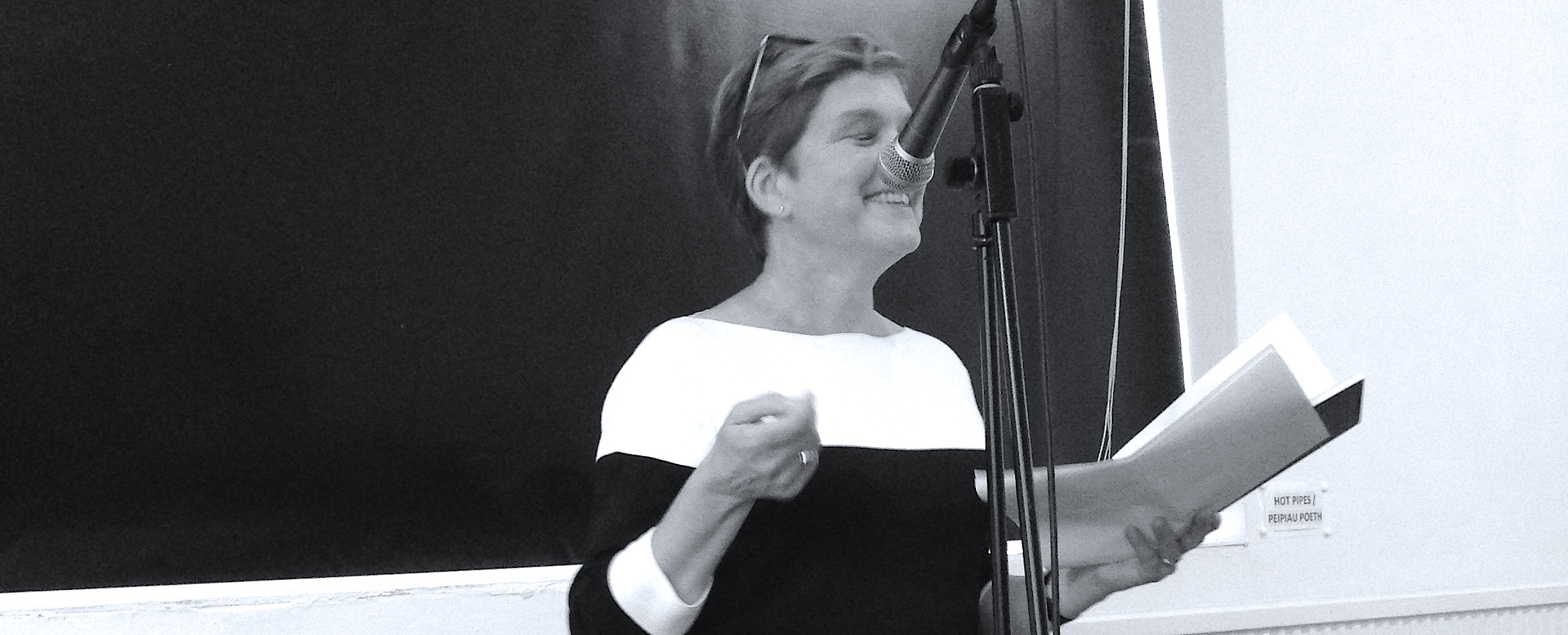
Last night saw us at Chapter, Cardiff, for July’s First Thursday event and among the readers was Caroline Smith with her new collection, The Immigration Handbook. This week we have a treat for you – you can listen to the Friday Poem being read by the author. Look below for the video, and accompanying poem text.
The strikingly moving poems in Caroline Smith’s The Immigration Handbook are the fruit of the author’s career as an Immigration Caseworker for one of the most diverse inner-city areas in London. Her characters are careful composites of people she’s observed. They step vividly off the page, as if out of the headlines. Written over a period of years, as layered and infused with experience as the documents she discusses: letters folded and refolded, creased with time, Caroline Smith’s poems are a moving record of global people movement, the story of our time.
The Scarlet Lizard
Nothing moves
except the evening light
crossing the Judge’s room.
The lawyers’ skeleton arguments
lay piled on his desk.
They seemed to him brittle
as bleached poppies,
tapped of their seeds.
He longed to see the quick movement
of a scarlet lizard weaving unexpectedly
through the parched, cracked hexagons
of a legal phrase, to hear the snapped stick
fritter away from a hiding place;
to feel the cold, diaphanous weed grip
in the black current of a border crossing.
He needed to sense some quiver of
indecision, an odd detail
that would open the truth of their words;
chinks of light shining
through shuttered doors.
The winners of the Poetry, Non-Fiction and Fiction Categories, and the overall Wales Book of the Year Winner, will be announced in just two weeks. Seren have two titles in the running for the awards, and before we find out the results, we thought you might enjoy reading an extract from each of our nominated books. Look below and you’ll find an extract fromBoy Runningby Paul Henry (shortlisted for the Open University in Wales Creative Non-Fiction Award).
Studio Flat
Socks hang like bats from a skylight.
They may be dry in time for the moon.
The camp site owner’s water-feature
drains more blood from the sun.
Cars queue for the narrow bridge.
Birds catch their pulses and fly.
I am suddenly old. What’s an attic
but a bungalow in the sky.
And where are you, my sons?
I heard your voices in the bells
of snowdrops pulled by the wind.
These tulips have lost their smell.
Perhaps I could tell you, one day
where the snowdrops went, why old men
dry their socks on the moon, and what
darkened the skylight, just then.
Ring
I can’t get the ring out of my finger. How long till it disappears this ghost ring, twenty years deep? I’m branded. Is it the same with you? Your fingers were slenderer than mine.
We hope you enjoyed reading this free extract fromBoy Runningby Paul Henry. Keep an eye on the Seren blog, as we will be announcing the Wales Book of the Year Awards results in just over two weeks time.
About Boy Running: Paul Henry has gained a reputation as one of of the best poets in the UK. Boy Running is his beautiful sixth collection and the first to follow The Brittle Sea: New and Selected Poems. Also a singer-songwriter, Henry is known for his precise lyricism, intimate tone and a cast of characters inspired (like Dylan Thomas) by his childhood by the sea in Aberystwyth, West Wales.
The coming months will see the commemoration of one of the most notorious battles in history. The Battle of the Somme, fought between July 1st and November 18th 1916, has left an indelible mark on the history of the twentieth century and, for Britain in particular, it symbolises the horrors of modern warfare.
One hundred and forty one days of horror. The casualties are well documented: the first day alone saw 57,470 British casualties, 19,240 of whom were killed. The second day, with 30,000 British casualties, was not much better. Add to that the French and German losses and you have total losses of dead and injured easily exceeding 1,000,000.
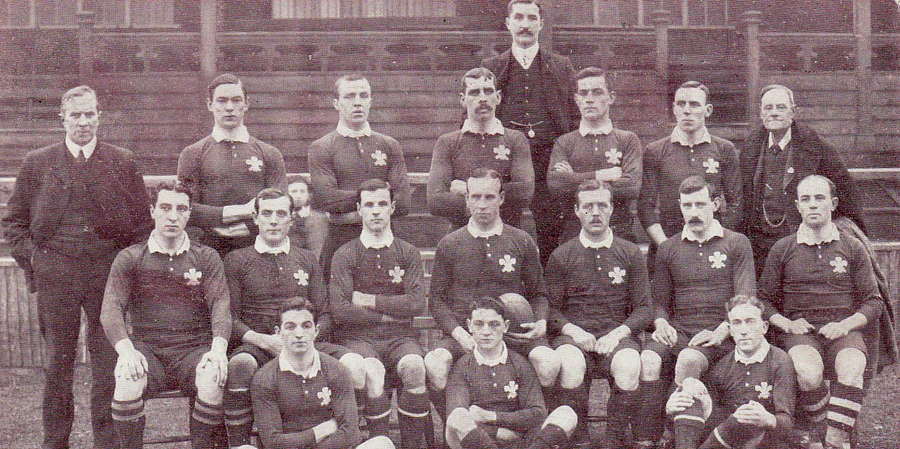
It was inevitable that many British sportsmen would be among the dead. Heart of Midlothian, Scotland’s table topping football team, lost 3 players on the first day while English cricket saw 3 notable all-rounders, Booth, Jeeves and Burns make the ultimate sacrifice. Welsh goalkeeper Leigh Roose, English footballers Evelyn Lintott and Donald Bell VC and England rugby captain Lance Slocock met the same fate. But what of Welsh rugby? What sacrifices were made by this small nation, a nation which was just at the close of its first rugby ‘Golden Era’? The answer is stark. The total number of Welsh rugby internationals to die as a result of the Great War was 13, 14 if one includes ‘Hop’ Maddock who died in December 1921 as a result of illness which had its roots in the battlefields of the Somme. No less than 5 of these unlucky and brave young men met their death on the Somme.
Charles Meyrick Pritchard
The first to appear in Mike Rees’ book, Men Who Played the Game: Sportsmen who gave their life in the Great War, is a true man of Newport, Charles Meyrick Pritchard. Charlie was the son of John Pritchard, a founder member of the Newport Rugby Club and part of a family that ran a wine and spirit business. Following an education at Newport Intermediate School and Long Ashton, Bristol, Charlie joined Newport RFC and by 1904 this twenty two year old, thirteen stone, six foot tall version of the modern backrow forward was in the Welsh team. A year later he was taking his place on the field to decide the unofficial championship of the world. The New Zealand All Blacks arrived in Cardiff unbeaten to be challenged by a strong Welsh team and Charlie was to play a huge part in what many regard as the most important match in rugby history. Wales deservedly won a thrilling, controversial match 3-0 but, although it was Teddy Morgan who scored the try, Charlie was the inspiration. Fellow players had no doubt in telling anybody who was not too excited to listen that Charlie had played a key role, “knocking ‘em down like ninepins” according to George Travers, a fellow hero and club colleague. Others talked of his willingness to be in the thick of the fight, disrupting the hitherto invincible All Blacks with his devastating tackling. Following this victory Charlie’s fame was assured but his career didn’t end there. In 1906 he was made captain of Newport, a position that he held for 3 years. On the international field he won a further 10 caps, (14 in all), a figure that would have been higher but for injury. He played in the championship winning Wales team of 1906 and in the first Grand Slam success in 1908. After missing out on a second Grand Slam in 1909, Charlie played his last game for Wales in 1910.
With the outbreak of war Charlie was quick to enlist. He joined the South Wales Borderers as a temporary Second Lieutenant in May 1915, was promoted to lieutenant at the end of July and was made a captain in the 12th Battalion the following October. Following a period of training, Charlie arrived on the Western Front in June 1916 in time for the Somme offensive and was quickly into the action. He and his men had been forced to take cover in the long grass from their own bombs and struggled to avoid the German searchlights. On the night of 12th/13th August Charlie was instructed to lead a raiding party on the German trenches with a view to taking as many prisoners as possible. He led his men into the trenches showing exceptional bravery in the process and, despite being wounded in the wrist, continued to encourage and lead his men in what was to prove to be a successful raid. He took one of the enemy prisoner but was wounded once again, taken back to the British front line and then to No1 Casualty Clearing Station shortly before dawn on the wet morning of August 13th. Here his concern for the success of the raid and his devotion to duty came to the fore asking, “Have they got the Hun?” “Yes” he was told, “Well I have done my bit,” Charlie replied, the last words that he was known to speak. He died, without ever leaving the Clearing Station, on August 14th 1916.
His commanding officer, Lieutenant Colonel Alexander, wrote to the family describing Charlie as being “as brave as a lion” and talking about how his death had “cast a gloom” over the whole Battalion. Others spoke of the deep affection in which he was held, the fine example that he set as to what a sportsman should be and his “private tenderness” who was “loved by all who came into contact with him”. Attempts to grant him the Distinguished Order failed, as only living soldiers were eligible, although he was given a Mention in Dispatches. Charlie was buried in Choeques Military Cemetery, one of 86 members of Newport Athletic Club who lost their lives in The Great War and remembered on the Memorial Gates at Rodney Parade. The thirty two year old left in Llwynderi Road, Newport, a grieving widow with two young children and the legacy of a true Welsh rugby hero.
John Lewis Williams
A second significant Welsh rugby player with Newport connections had already died on the Somme. John Lewis Williams is quite properly remembered as a prolific wing for both Cardiff and Wales, the most capped Welsh international to die in the conflict. However Johnnie Williams began his career at Newport in 1899 after leaving Cowbridge Grammar School. Born in Whitchurch in March 1882, Johnnie had an illustrious rugby career. After winning his first cap against the 1906 Springboks he went on to score a record seventeen tries in seventeen internationals, a record that was later equalled by Ken Jones and beaten by both Gerald Davies and Gareth Edwards in 1976. Illustrious company indeed! Noted for his swerve and sidestep, Johnnie was an integral part of three Wales Grand Slam winning teams in 1908, 1909 and 1911, one of the handful of Welsh players to achieve such a feat. Unsurprisingly, Johnnie also toured with the British Isles team which visited Australia and New Zealand in the summer of 1908 where he played in two of the three tests, scoring twelve tries on the trip. While making the long sea journey to the Southern Hemisphere, Johnnie earned himself a supplement to his two shillings a day out of pocket expenses by writing articles for the South Wales Daily News and the South Wales Echo. A well-educated man who earned his living as a principal clerk in a coal exporters based in Cardiff Coal Exchange, Johnnie was given the captaincy of his country for the game against France in Paris in 1911 due to his ability to speak French at the post match dinner. A couple of weeks later he played his seventeenth and final match for Wales in the victory over Ireland. His record was impressive with only two defeats in his Wales international career.
On the outbreak of war Johnnie joined the 16th Battalion of the Royal Welch Regiment and was, by July 1916, in the thick of the action on the Somme, in particular at Mametz Wood, a place synonymous with the Welsh losses in the Great War. The action which took place at Mametz between 7th and 12th July 1916 saw the 16th Royal Welch and the 11th South Wales Borderers suffer the most appalling losses. Johnnie went over the top on 7th July but heavy machine gun fire cut them down. Johnnie was severely wounded and his left leg was amputated. Infection set in and, although he was able to write to his wife Mabel that he was in good spirits, Johnnie died of wounds on 12th July. He was one of 190 officers and 3,803 other ranks who were casualties at Mametz. He had fought in distinguished company – the poets Siegfried Sassoon, Robert Graves and David Jones as well as the writers Frank Richards and Llewellyn Wyn Griffith all fought at Mametz but, unlike Johnnie, they survived to commit their experiences to paper. Johnnie was not so lucky. He left his wife of a mere eighteen months a widow in their Penarth home. His reputation as one of the great Welsh wings, however, remains firmly intact.
Dick Thomas
Alongside Johnnie, another Welsh international rugby player also made the supreme sacrifice. Born in Ferndale in October 1883, Dick Thomas had spent his early years working underground as a collier before joining the police force based in Mountain Ash. Dick, by now playing for Mountain Ash after short spells with Penygraig and Cardiff, had made his debut for Wales in the same game as Johnnie made his international bow. Although on the losing side against South Africa, Dick went on to win three more caps and contributed to victories in each of the 1908 and 1909 Grand Slam seasons. Only illness prevented him from winning more caps and possibly becoming a regular in the Welsh pack of this ‘Golden Era’. Dick was known as a tough uncompromising forward, who was also a Glamorgan Police heavyweight boxing champion. Never one to shirk a challenge, he went over the top on 7th July. His body was never found and he is remembered on the Thiepval Memorial, one of the 72,195 names on that ‘memorial to the missing’.
David ‘Dai’ Watts
Dick Thomas is not the only Welsh international named on the Thiepval Memorial. One week after Dick was lost and just three days after Johnnie Williams succumbed to his wounds, Dai Watts, a tough forward born in Maesteg in March 1886, was killed in action at Bazentin Ridge on 14th July. After a career spent playing for smaller valley clubs, Dai joined his hometown club, Maesteg where he became the first player from this club to be capped. Following impressive games for the Glamorgan League and then Glamorgan County, Dai was picked for the first international of 1914 against England. Wales lost this game 10-9, a match they should have won due to the supremacy of their forwards. England went on to win the Grand Slam under the captaincy of Ronnie Poulton, the glamorous young England centre who was killed in 1915, while the Welsh pack remained unchanged for their three subsequent victories and cement their reputation as ‘The Terrible Eight’. A long rugby career at international level appeared to be Dai’s destiny.
It was not to be. In the autumn of 1914 Dai joined the 7th (Service) Battalion, The King’s (Shropshire Light Infantry). In July 1916 they were involved in the Battle of Bazentin Bridge. At 3.25am on 14th July the KSLI were ordered to attack. Confronted by uncut wire they became easy targets and Dai was one of the 171 who lost their lives in this attack. There are no records of how this toughest of forwards met his end, only that his body was never recovered and that he left a widow and two children.
The third and final Welsh international named on the Thiepval Memorial is a player of a very different type to the tough, uncompromising miners, the forwards Dick Thomas and Dai Watts. Horace Wyndham Thomas was an outside half educated at Monmouth School and Cambridge University where he was a choral scholar. Born in Pentyrch near Cardiff in 1890, he originally attended Bridgend Grammar School before winning a scholarship at Monmouth. Both at Monmouth and Cambridge Wyndham excelled in a range of sports. Injury and choral duties prevented him gaining his ‘Blue’ but he finally achieved this in 1912 when he played his part in a Cambridge victory. Four days later this brilliant and elusive outside half made his debut for Wales in the match against the Springboks, a game which he nearly won for Wales with a late drop goal attempt which sailed narrowly wide. Many who saw this effort were adamant that the ball had actually gone through the posts and that Wales were ‘robbed’. He kept his place for the game against England a few weeks later but, although he played in this match, Wyndham had been offered a job with a firm of shipping agents in Calcutta. Immediately after the game Wyndham sailed to India to fulfil a five year contract, a huge loss to Welsh rugby. It was expected that Wyndham would be the Welsh outside half for years to come.
When war broke out Wyndham resigned his job and headed home to join the 14th (Reserve) Rifle Brigade. In August he was to be found on the Somme and on 3rd September he was attempting to capture trenches above the Ancre. The assault resulted in over 400 casualties, one of whom was Second Lieutenant Horace Wyndham Thomas. His body was never found and his name joined those fellow players on the Thiepval Memorial. Of all the Welsh internationals killed in the Great War perhaps Wyndham Thomas was the player whose potential was greatest and unfulfilled. Lost to rugby far too soon, Wyndham, with all his brilliance and talent, perfectly represents the sacrifices made by that generation of rugby players one hundred years ago.
The stories of these players, (with the exception of Dai Watts), are included in Men Who Played the Game. Mike Rees has included the contributions of sportsmen in The Great War from all corners of Britain and the wider Empire but, during this summer of 2016, none of the stories have greater significance than those of the Welsh rugby heroes on the Somme. It is fitting that we now remember their sacrifice made a century ago.
The winners of the Poetry, Non-Fiction and Fiction Categories, and the overall Wales Book of the Year Winner, will be announced in just under a month. Seren have two titles in the running for the awards, and before we find out the results, we thought you might enjoy reading an extract from each of our nominated books. Look below and you’ll find an extract fromLosing Israelby Jasmine Donahaye (shortlisted for the Open University in Wales Creative Non-Fiction Award).
1 – Motherland
It is the year of clogs and flared skirts, of shiny striped shirts with big collars, the year the PLO infiltrates by boat on the coast north of Tel Aviv and takes a bus-load of passengers hostage. It is spring, 1978 and I am ten years old. Security at El Al Airlines is high. I know the names Abu Nidal and Abu Jihad and Leila Khaled – Leila Khaled, that woman who is somehow not really a woman, but a terrorist.
Israel is an impression of barbed wire and rusting yellow warning signs on the beaches, the scent of orange blossom and the stink of sewage, hot nights and ruins – and a huge sprawling network of strangers who are relatives. It is my mother’s first return home after fifteen years of self-imposed exile, and it opens in me a wound I can never heal – a longing to come home to a place that can’t be home.
Now whenever I return, it is the long straight road through the valley to the kibbutz that catches at me – after Afula, that dusty way-station; after the last turnings, where it straightens out into the old Roman road that runs through the Jezreel Valley or the Plain of Esdraelon or Marj Ibn Amer, depending on your political orientation, or language, or biblical inclination. ‘The Ruler Road’ my mother called it, that first time we went back in 1978. The mass of Mount Gilboa rises on your right, and far off in the distance there’s a shimmering above the road where the border lies, some twenty kilometres away. Beyond it rise the Jordanian mountains, the mountains of Gilad or Gilead, after which my grand-father Yair named himself and my family – Hagiladi, a man of that place. On either side of the road stretch the fishponds, where you can see white-fronted blue and chestnut Smyrna kingfishers, and pied kingfishers and black-winged stilts; and then, looming up under Gilboa, the complex of the prison moves into sight, watchtowers and barbed wire topping the long external wall, which runs alongside the dusty road. A short distance beyond the prison a trilingual green metal sign points out the left turning to the kibbutz.
Through every return, the kibbutz lies like a magnet at the centre, exerting a force that pulls each journey into a curve inward to its core. Even now, after I have learned its other story, it exerts its pull. This is where my mother is from, and so I have always felt that this is in some way where I am from, too. No matter what I learn about its history, what I feel about its government’s acts, its citizens’ electoral choices, what I think about its political foundations and exclusions, Israel is inextricably caught up with my mother – my inaccessible, elusive mother, who left her community and her country, but inwardly never left, who carried her home all the years of my childhood not in a book, as some anti-Zionists will say the ‘true’ Jew does, but in the locked chamber of her heart.
We hope you enjoyed reading this free extract from Losing Israel by Jasmine Donahaye. Keep an eye on the Seren blog, because next week we will be publishing an extract from Paul Henry’s gorgeous poetry collection, Boy Running, which is shortlisted in the Wales Book of the Year, Roland Mathias Poetry Award category.
About Losing Israel: In Losing Israel the search for her family’s past and the part her forebears played in the newly created Israel reveals unsettling knowledge about kibbutzim and land clearances in northern Israel. Challenged by this new and unwonted information, Donahaye’s notion of history and her understanding of Israel, of her grandparents and of her identity is completely transformed.
Set aside thirty minutes to watch author Richard Collins’ honest, moving and sometimes humorous video about his experience of suffering from Parkinson’s disease. About the video, he says: ‘I hope that it will give people a better understanding of this entertaining illness.’
Collins’ diagnosis in 2006 led to some years of extensive travelling, in the Himalayas, the Andes, the Middle East and North Africa, which he recorded in The Road to Zagora (Seren, 2015), a wonderful combination of travel and memoir. But a decade later Richard’s situation has worsened and he has moved from writing to making this video in which horizons have closed in and he has become more reliant on himself, and others. This is a revealing glimpse into a world we seldom see in person. You’ll learn about Mr Parkinson (as Collins calls his condition), about Richard’s enduring left-fielded take on life and, quite possibly, a little about yourself.
The warm weather has arrived so here at Seren we’ve been thinking about books for your summer break. Which titles do we recommend stuffing into your suitcase? Read on to find out our top picks.
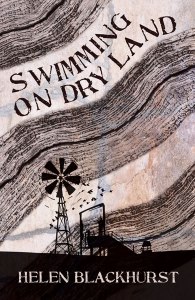
1. Swimming on Dry Land, Helen Blackhurst Set in the blistering Australian outback, Blackhurst’s writing is so vivid that even if (like us) you’re experiencing mild Welsh weather, you might start to feel the prickling heat she conjures. Swimming on Dry Landtells the story of the Harvey family, who move to the fictional mining town of Akarula in outback Australia in search of paradise, and instead find deceit, mystery and superstition. Georgie, the youngest, is missing – and she’s not the first to vanish into the landscape. As the family searches for their lost daughter, their dream-like vision of life in Akarula collapses around them. And as the history of the landscape unfolds, new possibilities and answers to the mysterious disappearances slowly suggest themselves.
2. The Road to Zagora, Richard Collins After he is diagnosed with Parkinson’s Disease, Richard Collins decides to see as much of the world as possible while he still can. India, Nepal, Turkey, Morocco, Peru, Equador and even our very own Wales – Collins travels to them all, taking each day as it comes, accompanied by his partner Flic, as well as ‘Mr Parkinson’. Leaving the tourist trails, they visit places of extremes: the Himalayas, rainforests, deserts. The difficulties of rough terrain, altitude, extremes of climate for a person with Collins’ condition are an ongoing strand of his narrative; but although the hardships aren’t ignored, any sentiment or self-pity is denied through Collins’s resolute and independent-mindedness. The Road to Zagora is dramatic, honest, and at times humerous too. Collins has written a memorable journey around the world, and the self.
3. The Man at the Corner Table, Rosie Shepperd In these poems the voice is one of urban sophistication; it has a merciless charm that teases and tempts us with sensual evocations of food and place.
Tastes, scents, colours and textures surprise and entice, and there is a winning insistence on detail offered with an irony that blends into satire.
Comedy, grief and loss combine like the distinct yet complimentary flavours in a dish – these poems are exquisite meals, to be devoured amidst surprising intimacies.
4. Foreign Bodies, Candy Neubert Fresh from the UK and on an idyllic holiday in the Phillippines, Emma thinks she has fallen in love with a place, a person, and pursues the man of her dreams with a colonial zeal. But for all her poetic sensibilities, she seems unaware of the destruction she is capable of leaving in her wake.
A beautifully written first novel, Foreign Bodies explores the spaces between people, and the nature of encounters in romantic idylls on the other side of the world.
5. Dark Mermaids, Anne Lauppe-Dunbar It is the Olympic summer so what better time to read Anne Lauppe-Dunbar’s gripping thriller, Dark Mermaids, which tells a shocking yet enduringly familiar story of the horrors of a political system that doped its youngsters to sporting superhero status, and then left them to fend for themselves. Dark Mermaids follows West Berlin police officer Sophia as she is called to investigate the murder of her childhood friend Käthe. The search for Käthe’s killer draws Sophia back into her abusive past as a child swimming star in the former GDR, and as the web of half-remembered horrors starts to unravel, those close to Sophia begin to take notice. There are some who still have much to hide, and they will go to great lengths to stop their secrets from surfacing. Dark Mermaids was shortlisted for the Cross Sports Book Awards, 2016.
6. The Roots of Rock, Peter Finch From 1950s Cardiff suburbia to modern-day America and beyond, Peter Finch follows the trail of twentieth century popular music. The Roots of Rock: from Cardiff to Mississippi and Back mixes musical autobiography with an exploration of the physical places from which this music comes.
Finch gives us sharp-eyed accounts of gigs from Champion Jack Dupree to the Garth Mountain Boys, muses on the importance of the Dansette record player, ponders why Elvis never came to Wales (except multiply in Porthcawl’s legendary Elvis Festival), visits musical shrines and theme parks, and even recalls his own attempt to start a band. You’ll find all kinds of music here – everyone from Ray Charles to Taylor Swift – and each chapter is accompanied by a multi-track playlist, making this the perfect book for anyone who loves music, history, and culture.
7. A Boat Called Annalise, Lynne Hjelmgaard Beautifully evocative of life on a sailboat, Lynne Hjelmgaard’s poems trace a journey this much-travelled author took on a sailboat to the Caribbean and back to Europe with her husband.
The couple’s relationship is poised on tensions, beautifully observed, as masculine/ feminine, the need to assert and/or withdraw in the face of the turbulent seascape. The paradise-like destination is reached and later we learn that life goes on, there is illness and loss, and in the final section, the tone becomes movingly elegiac.
Hjelmgaard’s poems are beautifully poised, full of clear-eyed and frequently humorous observations. Her work is full of sentiment without being sentimental. We hope you enjoy your trip on A Boat Called Annalise.
We hope you like our summer selections. And if you’re struggling to fit all the books that have caught your eye into your suitcase, why not explore our range of eBooks? Whether you have a Kindle, a Kobo or any other e-reader, we have a whole host of books you can download instantly. See below for the latest digital additions to our list…
Losing Israel, Jasmine Donahaye Amazon: £10.00 Kobo: £7.19 In Losing Israel the search for her family’s past and the part her forebears played in the newly created Israel reveals unsettling knowledge about kibbutzim and land clearances in northern Israel. Challenged by this new and unwonted information, Donahaye’s notion of history and her understanding of Israel, of her grandparents and of her identity is completely transformed.
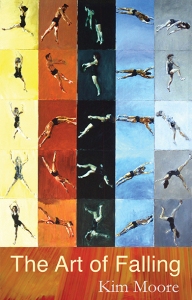
The Art of Falling, Kim Moore Amazon: £9.48 Kobo: £7.19
“The poems of The Art of Falling are fearless. There are more good poems filling Kim Moore’s first collection than many poets will produce in a lifetime.” – Alison Brackenbury
In this startling debut, Kim Moore writes with a compelling directness and power about her life and the lives of others.
The World, the Lizard and Me, Gil Courtemanche Amazon: £9.48 Kobo: £7.19
A novel of testament to the children caught up in the civil wars of Central Africa, The World, the Lizard and Me follows criminal invetigator Claude Tremblay as he pursues a warlord charged with creating child soldiers in the Congo.
Want to see more Seren eBooks? See our full eBook list on Kobo or search by title on Amazon.














 The Art of Falling, Kim Moore
 The World, the Lizard and Me, Gil Courtemanche


