Posted on

Friday Poem – Autumn, 1939

This week’s poem comes from the Collected Poems of WW2 writer Alun Lewis, whose centenary we are celebrating throughout the year, to mark the Autumn equinox which occurred earlier this week.

Alun Lewis (1915-1944), the remarkable poet and story writer, died, aged 28, in Burma during the Second World War. Some critics see him as the last of the great Romantic poets, a twentieth century Keats. Others view him as the bridge between pre-war poets like Auden and Yeats to post-war poets such as Hughes and Gunn. He was born and raised in Depression-struck south Wales and, following degrees in history at Aberystwyth and Manchester, became a teacher there. Early in 1940, despite his pacifist inclinations he enlisted and, after long periods of training, joined the war in India.

Becoming a soldier galvanised Lewis’s writing. By 1944 he had written two collections of poems and one of short stories, all published to considerable acclaim. Firmly established with Keith Douglas as the leading writer of the Second World War, Lewis’s death in an accident while on active service was huge loss to English literature. This Collected Poems comprises a body of work which has endured and which transcends the label ‘war poetry’; it is complete in itself and full of promise of greater things.

Autumn, 1939

The beech boles whiten in the swollen stream;
Their red leaves, shaken from the creaking boughs,
Float down the flooded meadow, half in dream
Seen in a mirror cracked by broken vows,
Water-logged, slower, deeper, swirling down
Between the indifferent hills who also saw
Old jaundiced knights job listlessly to town
To fight for love in some unreal war.

Black leaves are piled against the roaring weir;
Dark closes round the manor and the hut;
The dead knight moulders on his rotting bier,
And one by one the warped old casements shut.

Order Collected Poems from our website.

Posted on

What’s a Book Worth?

What's a Book Worth-

At the beginning of the month, the launch of writer and historian Mathew Lyons’ campaign What’s a Book Worth? was announced.

The aim of the campaign is to look beyond the monetary worth of the books we own and love, and instead is asking readers to film themselves talking about the books that mean the most to them and to share their video on Twitter using the hashtag #WhatsABookWorth on Monday 28th September. If you’re a little camera shy, then an alternative way to spread the love is to write a short blurb for a book you love instead, and share it on social media.

If you want to know a little more about the campaign then check out this article on The Bookseller, the What’s a Book Worth? website and follow @WhatsABookWorth on Twitter! We’ll be keeping an eye on the hashtag on Monday, and we can’t wait to see some of your favourite books – we may even share some of our own!

Posted on

Emily Hinshelwood’s Stories of Change

Emily Hinshelwood (On Becoming a Fish) is collaborating with Canolfan Maerdy and the University of South Wales’ George Ewart Centre for Storytelling to kick off a series of five free writing workshops throughout October and into November.
There will be five workshops in total from Thursday 1st October through to Thursday 5th November, during which Emily will be using fun and informal exercises to encourage participants to transform their memories, anecdotes, newscuttings and photographs into a book of stories, poems and scripts that will then be released before Christmas this year. The aim of the project, Stories of Change, is to produce a book in which writers explore their connection with the Ammanford and Swansea Valleys area through whichever form they prefer, whether their inclination is towards poetry or prose. No previous writing experience is necessary to take part – only enthusiasm!
Refreshments will be provided at the workshops, and there is also a creche available for any participants with children. For more information, or to book a place on one of the workshops, email Emily at [email protected] or telephone Canolfan Maerdy on 01269 826893.

Posted on

Friday Poem – Requiem for a Requiem Shark

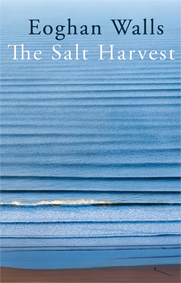
This week’s poem is from Eoghan Walls’ debut collection, The Salt Harvest, shortlisted for the 2012 DLR Strong Award.

Dark and evocative, these poems involve rich, multi-layered descriptions of the natural world, and cast a sardonic and tender eye on the human condition. All the climates of his native Ireland inspire both the muscular imagery and the complex forms of work such as ‘Star of the Sea’, ‘Cockles’ and the title poem; each line has been ‘packed with ore’. Also apparent is an ambivalent, often deeply ironic attitude towards a culture once steeped in religion, as in ‘Myrrh’ and ‘Confessions to the Southwest’. Threads of humour run throughout, an imaginative playfulness evident in ‘Martin Healey’s War on God and Ireland’, ‘Frog’ and ‘Star Matter’.

Requiem for a Requiem Shark

The necropsy left no doubt; this was a miracle of death.
Unpeeled from her womb lay the body of the christpup,

teeth crusting out its mouth, with a dorsel fin the breadth
of a thumbnail, tipped in black. The finprint of its makeup,

said Dr. Chapman, proved the non-existence of a father.
Angelsharks burrowed deeper into the ocean bottom.

There was no rising afterwards. Lights above the water
were only torches held by men from the aquarium.

Order The Salt Harvest from our website.

Posted on

An Interview with Anne Lauppe-Dunbar

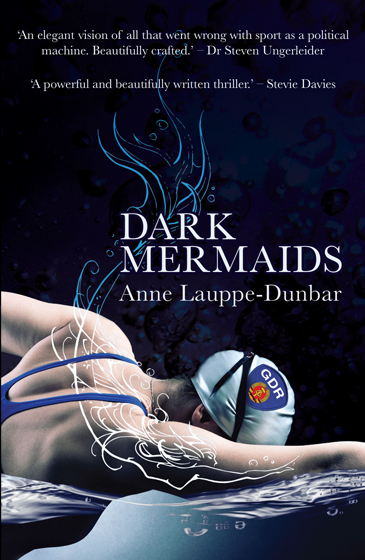
We had a chat with Anne Lauppe-Dunbar about her debut novel, Dark Mermaids, which is out today!

Anne Lauppe-Dunbar is a Creative Writing tutor at Swansea University, where she also studied for her PhD. She had a short story published in Sing Sorrow Sorrow (ed. Gwen Davies) and has had stories, essays, papers and poems published with Cinnamon Press, Seventh Quarry and New Welsh Review. Dark Mermaids is her first novel.

Dark_Mermaids_Web72

A shocking story of the horrors of a political system that doped its youngsters to sporting superhero status, and then left them to fend for themselves. Shortlisted for the Impress and Cinnamon First Novel Prize, this East German noir thriller is set in 1990, a year after the fall of the Berlin Wall.

Unhappy West Berlin police officer Sophia is called on to investigate the murder of her childhood friend Kathe, after her beaten body is discovered in Sophia’s local park. Sophia is forced to return to the hometown she fled as a teenager with her enigmatic father Petrus, and Mia – a frightened child who turned up on her doorstep. She must investigate Kathe’s murder and care for a mother she believed abandoned her. As she reluctantly delves into the sordid Stasi secrets of those she grew up with, Sophia uncovers a web of horrors about her own abusive past as a child-swimming star in the former GDR. But her hunt for the truth has not gone unnoticed by those close to her, people who still have too much to hide.

How did you become so interested in the East German doping scandal? What about it compelled you to write?

I was researching my mother’s family in the former GDR. The family were wealthy but lost everything under the communist regime. My mother managed cross over the border over ‘no man’s land’ in 1949. I was looking at maps when I stumbled across something called ‘Complex 08’, and clicked on the link to reveal a monster named ‘State Theme 14.25’. The more I read, the more complex and vile a beast I saw. I knew then I simply had to write about the GDR Doping Scam Theme 14.25. But I needed a fictitious angle, a way in which to tell the story, and that’s when I created Sophia and Mia because I wanted more than a hunt for clues. I wanted a story about a woman finding out who she was by going back and claiming her true self.

You must have done a lot of research while writing the novel. Did you ever worry that it was going to turn into non-fiction or did you achieve a healthy balance of fact and fiction from an early stage of the writing process?

I became completely obsessed with detail and research. I have boxes of Stasi files ordered from the Ungeleider Archive in the University of Austin, Texas. Fascinating reading, as they list the drugs given to each athlete, the side effects, the results. I found myself absorbed reading about clandestine meetings between informers, doping doctors, sport coaches and the Stasi. My knowledge of medicine is basic, so I read up on what steroids might do, how, why, and what were the worst scenarios – all proven by further reading and research: bones not holding muscle, liver failure, children born with clubbed feet, reminiscent of the thalidomide horror, former athletes in pain from chronic muscle fatigue, sex changes. The more I read, the more I had to write.

I went to Berlin and walked around the area where I wanted Sophia to live, so that I could really know her. I drew from my research into my mother’s East German home town and wove the story around solid fact. I tried to speak with former athletes and found silence. Finally I was permitted to visit Kienbaum, a sports training camp outside Berlin. Here I began to live my protagonist’s life. I have never been as electrified by research as I was over those three days. I wrote and found myself entering Sophia’s mind, her broken heart, her longing for escape and something other than the sum of swimming, drugs, sex, winning.

I fixated on how a swimmer would swim. How she might be the water, and become a thing that lived inside water – a mermaid, fierce, loyal to a fault, yet mistrusting. All of the research, the mermaids, the Stasi meetings, how to move hands to swim faster, how to breathe, stopped narrative flow. All those careful (utterly precious) lists I’d thought vital, were boggy research, not needed. So I had to let it go. Gillian Slovo told a group of us, at a long ago Cheltenham Literary festival, how research must be a gossamer curtain, so pale it can hardly be seen, yet key to the landscape of the novel. Stevie Davies put it in a nutshell: ‘Mermaids are secondary. Narrative is primary’.

Nowadays there are so many more women – authors and characters – in the crime/thriller genre, from Kate Atkinson to Gillian Flynn to our very own Jo Mazelis. What is it that attracted you to the genre? 

I love thrillers that grab you by the throat and don’t let go, yet far better are those rare thrillers that do all of that, but so much more. They teach you something about a specialized world, or portion of history. Take Boyd’s novel Restless. A book that uncovers a past we would never dream of. Fiction? Thriller? Yes, but so much more. In every spy story, every thriller, then is an element of truth. From Larsson’s, The Girl with the Dragon Tattoo, to Brown’s, The Da Vinci Code. All stories create (to a greater or lesser extent) a believability through their characters quest for truth, riches, revenge. I loved having the freedom to write about something dark. A Minotaur lurking is frightening, ugly, yet so beautiful. The hardest thing I found was to write Sophia’s truth, not to focus on a thriller that withheld every reveal to a pre-plotted reveal. The trend now is for plot to be a frontal device. I knew if I manipulated Sophia to perform in a pre-plotted narrative I would have a puppet, not true character (like each one of us) who is a complexity of contradiction. I followed, allowing her to find and search. To anguish over things half remembered, to fall in love with a child when she was unable to love herself. I think this was the hardest of things, as the idea of a literary historical/thriller is difficult to sell.

Were you wary of writing about an unhappy police officer in a genre that seems to be brimming with miserable detectives? What is it about Sophia that made you want to tell her story?

I was in Berlin to see a screening of Katharina Bullin, ‘And I Thought I was The Greatest’, followed by a panel of German experts on doping and the court case the athletes brought against the state that harmed them. The film was about a former GDR volleyball player. Katharina was there. As the audience fired rapid questions at a panel after the viewing, I watched her. How she sat, moved, whispered to her companion: the film maker and director Marcus Welsch. She wore a flat felt cap, pale blue with a brim. Her clothes were army fatigues – dark soft green. Men’s clothes. She was tall, built like a man, gentle and rough at the same time. We went for a beer. Katharina refused to speak with me, even though Marcus introduced us, and then I had her – my character. Sophia is fragmented by her past. If that means she is miserable, so be it. She’d been taught to be grateful for a chance to be noticed, trained, and fed with fresh produce – hard to get in the GDR. Her parents would have had a car, a TV, holidays that not many were permitted. She had to be tough. Perfect. A winner. And then the people who’d made her turned their backs on her and would have preferred if she’d died. Getting her to open up was hard. The more I wrote her, the more enigmatic she became, until I couldn’t see her. She was, I realized later, a version of me. Difficult, at times. A perfectionist, a loner who needed people but was never truly easy in her own skin. I had to find her again, and I did this by allowing Mia into her life, and by allowing Sophia to recognize and let slip that she did care, feel pain and longing, even though she does her best to pretend she does not. By allowing her to be broken, a woman who lives only a portion of her life in the real world; I give her the possibility joy, a chance at living inside her skin and feeling her way into a new future.

What will you be working on next?

I am writing a novel, a thriller if you like, about Hitler’s ‘tears of the wolf diamonds’ and the child terrorists he named Werewolves. A German musician is searching for these diamonds in Germany, as he has (supposedly) been able to decode the music sheet on which the runic signs tell where these diamonds are hidden. My story is in two timelines. Aachen 2015; the city in which the Mayor (post WW2) was assassinated by a group of young werewolves. The second story line is set in April 1945 as the Russians and Americans began their assault near the Elbe into what would become the GDR. There are two protagonists. Kat is thirteen when her mother is raped and murdered by Russian soldiers. Sasha is twenty-five and living in the shadow of her own mother’s death. Both deaths are linked to the diamonds and the werewolf movement.

Finally, what’s the best book you’ve read so far this year? We’re always on the lookout for recommendations!

Anna Funder, All That I Am
Douglas Botting, In The Ruins Of The Reich
Murial Spark, Loitering With Intent
Stevie Davies, Awakening
Petra Hammesfahr, Die Mutter
Elena Ferrante, My Brilliant Friend

Books I love:
Barbara Kingsolver, The Poisonwood Bible
Annie Proulx, The Shipping News
Anna Applebaum, The Gulag
Mark Roseman, The Past In Hiding
Steven Ungerleider, Faust’s Gold
Kristin Carshore, Bitterblue
Anne Michaels, Fugitive Pieces
And many many more…

Order Dark Mermaids from our website.

Posted on

Alun Lewis and Welsh War Poetry at the David Jones Centre’s 4th Annual Conference

Aberystwyth University is no stranger to Alun Lewis; when Alun was 17 years old he won a scholarship to study History there and now, in the year of the centenary of his birth, he’s returning to the place where he spent his years as an undergraduate student.
The David Jones Centre at Aberystwyth University supports research on the history and impact of Modernism in Wales. The Centre hosts an annual conference and this year, it’s 4th, the subject is none other than Alun himself: Alun Lewis and Welsh War Poetry.
The one day conference will be held at Y Drwm in the National Library of Wales on Wednesday 23rd September and all are welcome! The event will include papers by Alan Vaughan Jones, Peter Morgan, Nerys Williams and a keynote address by Lewis biographer, John Pikoulis whose latest book, Alun, Gweno & Freda is currently available to order from our website.
Tickets are £15 (£8 for students) and can be booked here or by calling: 01970 632548.
For any queries about the conference, email [email protected]

Posted on

Friday Poem – How I Abandoned My Body To His Keeping

The Art of Falling Kim Moore

This week’s poem is from Kim Moore’s debut collection, The Art of Falling, released earlier this year.

Kim Moore, in her lively debut poetry collection, The Art of Falling, sets out her stall in the opening poems, firmly in the North amongst ‘My People’: “who swear without knowing they are swearing… scaffolders and plasterers and shoemakers and carers…”. ‘A Psalm for the Scaffolders’ is a hymn for her father’s profession.

The title poem riffs on the many sorts of falling “so close to failing or to falter or to fill”. The poet’s voice is direct, rhythmic, compelling. These are poems that confront the reader, steeped in realism, they are not designed to soothe or beguile. They are not designed with careful overlays of irony and although frequently clever, they are not pretentious but vigorously alive and often quite funny. In the first section there is: a visit to a Hartley street spiritualist, a train trip from Barrow to Sheffield, a Tuesday at Wetherspoons.

The author’s experience as a peripatetic brass teacher sparks several poems. The lives of others also feature throughout, including a quietly devastating central sequence, ‘How I Abandoned My Body To His Keeping’: is the story of a woman embroiled in a relationship marked by coercion and violence. These are close-to-the-bone pieces, harrowing and exact.

The final section includes beautifully imagined character portraits of John Lennon and Wallace Hartley (the violinist on the Titanic), as well as Jazz trumpeter Chet Baker and the poet Shelley and other poems on: suffragettes, a tattoo inspired by Virginia Woolf’s A Room of One’s Own, and a poetic letter addressed to a ‘Dear Mr Gove’.

How I Abandoned My Body To His Keeping

What happened sits in my heart like a stone.
You told me I’d be writing about it
all my life, when I asked
how to stop saying these things to the moon.
I told you how writing it makes the dark
lift and then settle again like a flock of birds.

You said that thinking of the past like birds
who circle each year will make the stone
in my chest heavy, that the dark
that settles inside me will pass. You say it
is over, you say that even the moon
can’t know all of what happened, that to ask

to forget is to miss the point. I should ask
to remember. I should open myself to the birds
who sing for their lives. I should tell the moon
how his skin was like smoke, his hand a stone
that fell from a great height. It
was not what I deserved. The year was dark

because he was there and my eyes were dark
and I fell to not speaking. If I asked
him to leave he would smile. Nothing in it
was sacred. And I didn’t look up. The birds
could have fallen from the sky like stones
and I wouldn’t have noticed. The moon

was there that night in the snow. The moon
was waiting the day the dark
crept into my mouth and left me stone
silent, stone dumb, when all I could ask
was for him to stop, please stop. The birds
fled to the trees and stayed there. It

wasn’t their fault. It was nobody’s fault. It
happened because I was still. The moon
sung something he couldn’t hear. The bird
in my heart silent for a year in the dark.
This is the way it is now, asking
for nothing but to forget his name, a stone

that I carry. It cools in my mouth in the dark
and the moon sails on overhead. You ask
about birds, but all I can talk of is stones.

Order The Art of Falling from our website.

Posted on

The Road to Zagora | Travelling with Mr Parkinson

In 2006, author Richard Collins was diagnosed with Parkinson’s disease. Spurred on by news of his illness, Richard and his partner Flic resolved to seize life by the horns and see more of the world. The Road to Zagora tells the story of their subsequent adventures.

the road to zagora by richard collins

Here at Seren we’ve been eagerly awaiting the arrival of The Road to Zagora, a unique sort of travel memoir in which the author explores the good, the not-so-good and the surprisingly funny aspects of travelling with Parkinson’s disease. We thought we’d give you a sneak preview of the book to wet your appetites – so read on to hear about the adventures of Richard, Flic, and Mr Parkinson.

A is for Aqaba (Jordan)

Travelling enriches your life and changes your understanding
of quite a few things. Home is a different place on your
return. You are a different person, having travelled. I have had
some preconceptions of other people and places quietly
overturned. I spend a lot of my time at home now because of
my poor health and have the opportunity to reflect on these
things. Or I do something daft like make an A to Z of place
names, each from a different country, and write a little
anecdote about each one. I once spent a couple of rainy days
doing this, starting with Aqaba in Jordan:

Forget Lawrence of Arabia arriving in Aqaba on camelback at
the head of a Bedouin army: we crossed the desert by bus, in
comfort, with wi-fi and air-con and reclining seats.

Aqaba is a port but also a seaside resort, a holiday destination
for Jordanians. We were at the beach on a Friday, the
Muslim holy day, and found that it wasn’t wall-to-wall joylessness
as Sunday is in some parts of Christendom (we once saw
a children’s playground in the west of Scotland with a sign
Closed on Sundays). People may have been to the mosque in
the morning but now they were having fun. Women were
dressed conservatively, some in long black robes, but it didn’t
stop them from going into the sea, snorkelling or messing
about on inflatable plastic ducks.

We had already had our preconceptions of Islamic society
challenged in the first Jordanian town we visited. The shoe
shop proudly displayed in their window a number of pairs of hi-heeled thigh-high leather boots in a choice of colours, red or
black. Did the women we passed on the street wear these under
their long robes? In what other context, we wondered, would
they be worn? I really can’t imagine.
The people of Jordan are renowned for their hospitality,
friendliness and sense of humour.

The Road to Zagora, Richard Collins


Richard Collins


I hope you enjoyed this cheeky preview of The Road to Zagora! If you did, then good news – you can find the book in our store here, and get a 20% discount through our store.

Posted on

Short Story of the Month | ‘Like Lizards Ride Water’ by Maggie Harris

Welcome to the return of Seren’s short story of the month after a summer break. This September we bring you a new story ‘Like Lizards Ride Water’ by Maggie Harris.

maggie new photoMaggie was born in Guyana and now lives in Wales, performing her work frequently with Cardigan’s Cellar Bards. A poet, prose writer and memoirist, she won the Guyana Prize for Literature for her first collection, Limbolands, 2000, and was Regional Winner of The Commonwealth Short Story Prize, 2014. Her latest collection of poetry is Sixty Years of Loving, (Cane Arrow Press), and short stories, In Margate by Lunchtime, (Cultured Llama Press).

‘Like Lizards Ride Water’ is the story of one man’s flight from his own war-torn country towards the apparent safety of Europe.


Like Lizards Ride Water

There was a moment when the men were assaulting the girls that Isxaaq almost intervened. His fists were clenched and he had almost risen to his feet. It was the old man who stopped him. He had put out his hand and stilled him. Isxaaq felt his wrist being pinned to the ground.

Afterwards, he was angry with himself, and angry with the man who had prevented him from rising; prevented him from defending the honour of the girls, who all night were staggering out from the back of the truck in tears.  Isxaaq wanted to believe that if one of his sisters had been amongst them, that someone would have stood up for her. After all they were not prisoners. They were not here by force. They had paid their way. They had each one of them made sacrifices to be here. Isxaaq thought of his father’s pinched face, his mother’s tears; uncles and aunts selling cattle, mortgaging their houses, trading labour, time, and honour to raise the cost of Isxaaq’s journey. ‘Walk good, my son’.

When, in the morning, they had been herded into new trucks, amid dry laugher from men who casually leaned their rifles over their shoulders, Isxaaq had no doubt that anyone who had attempted to stop them would have been shot. As the engines started, bodies bumped against each other, and Isxaaq found himself locking eyes momentarily with the old man. He didn’t know what he was doing here. Almost everyone else was young.

Isxaaq had walked one hundred miles. He had walked through the desert at night, slept in the shade of rocks. Sometimes he thought he saw others walking too, either before him, or behind him, but he could never trust his eyes. ‘Trust no-one’ was the last thing his father had said. When he got to the meeting point, others bled out of the hazy morning, young men and girls, eyeing each other warily.

They sat and waited outside the village with no name. In the distance goats bleated and villagers stumbled out of half-built houses. The morning had brought camels and trucks stirring up clouds of dust. When the truck pulled up and two men jumped out, Isxaaq was surprised to see that they carried guns. Fear rose in his heart then and he wanted to turn back. Was it really so bad, the life he was leaving? Then the faces of his lost friends appeared before him: their battered faces and broken knees, their disappearances.  He stood in the shade of the truck as the men walked between them, taking the parcels of money produced from the folds of their clothing. Sacrificial bundles. Bundles born of blood and tears, dust and hope. They shouted hurry up, get in the back! This was not what he had expected, this intimidation. He had expected it would be like riding on a bus. He pushed to the back of his mind the boy who had returned with his mind half-gone, telling tales of deception and robbery, of being abandoned in the desert. He stood wavering between a past and a future that seemed to offer equal despair. Then the face of his mother and the caress of her hand on his face seven nights ago: ‘Be brave my son, Abu crossed safely. So will you.’

 —

He had climbed up into that first truck with the memory of her words, taking comfort from the fact that his cousin had already done this journey, two years ago. Had crossed into Europe; sent money now for his family. Isxaaq held his chin up. He met the eyes of one of the girls, her head wrapped in a scarf decorated with lizards. She glanced away.

They had travelled for days; over unmade roads, which jerked the bones of their bodies, snapped them against each other like sticks. They reached into the small parcels they carried for snacks – biscuits, bread. Shared a diminishing flagon of water. They stopped at night to relieve themselves. First men, then women, by the side of the road. Isxaaq had felt discomfort relieving himself in proximity to women. The women grouped around each other for protection. The laughter of the men in charge unnerved him.

Other times they slowed to a stop; heard voices. Sat stiff with fear. They did not breathe. Isxaaq had no idea where they were but he knew there were checkpoints. He relaxed when he heard laughter. Sometimes he slid the tarpaulin apart. A flash of daylight cut into his eyes. The shapes of men interrupted his blindness. Guns. Forearms. Money. He breathed slowly and let the tarpaulin fall.

The roar of traffic woke him from a distracted sleep. They were on a highway. Isxaaq was ashamed to find his head had drooped onto the shoulders of the old man. The man had looked at him kindly, his eyes saying all that needed to be said. Heat was an unwanted passenger between them; the smell of sweat and body odour composting through underarms and clothing, settling in nostrils, on tongues. Car horns and the roaring of engines accompanied the loud beating of Isxaaq’s heart.

They stopped sometime in the middle of the day. The men banged on the side of the truck, shouting words that Isxaaq did not recognise. The tarpaulin was raised then, and the group looked out onto a crossroads. The countryside was bleached earth; crops had not grown here for a long time. Mountains undulated in the distance. The men shouted again, waving their rifles, and the group scrambled to their feet, their limbs slow to obey. They dropped one by one onto an unmade road.

They waited in the shade of an acacia tree, its canopy filtering the harsh sun. There was no breeze. Nothing but a lizard stirred. Isxaaq didn’t know what they were waiting for. The men had produced a plastic container of water and this they passed lip to lip, not caring that the water was as warm as the sweat on their skin.  There was no food.

Out of the rippling wave of heat on the highway a vehicle approached. Two vehicles. Four by fours. They came to stop by the acacia tree. Four men jumped out. They too

held guns. Isxaaq could not stop the fear that rolled over him again and again. He watched the men closely. They stood together, sharing the bundles of money out between them. Isxaaq thought of his sister’s bondage to the merchant in his village. Three years of unpaid labour, so that he, Isxaaq, could be where he was right now. What was to stop these men turning their guns on each and every one of them, and disposing of their bodies in this scant countryside? The image of the mad boy, the one who had returned, came into his mind. He tried to quell his panic through reason. Why would they want to stop this lucrative trade? Word would soon get out. He preferred to think of Abu, the money he sent.

The men were clapping each other on their shoulders now. The first group looked back and gave a wave, a mock salute. They climbed into the truck and headed back the way they had come.

The new men approached them, counting them, and running their eyes over the women. One of them spoke, a mix of English, Italian and dialect.

‘I trust you have been well treated,’ he said. ‘We have a long journey ahead, some four days before we reach the sea. Here, we have food, eat and relax. We leave when it is dark.’

But they didn’t leave when it was dark. When it was dark, they told them that the money they paid was not enough for this dangerous journey. They said they themselves would be in trouble if they were caught. They said that others were more ruthless and would hold them whilst they sent messages to their family for more money. But, not them, they did not have time to spare. That’s when they had looked at the women. They told them they were fortunate that being women, they were able to get everyone out of this predicament.

The women had begun to scream and shout, rising to their feet and gathering more closely to each other. That is when one of the men raised his gun and shot it into the acacia tree. A branch splintered and hung, its shadow bleeding on the earth.

The man’s quiet voice warned them that no-one was going to be harmed. This was just a business arrangement.

Isxaaq and the men were told to sit beneath the tree and relax.  The women sat apart from them, their heads in their palms, their cries rising like the remembered cries of birds. But there were no birds here, only the staggered passage of moonlight through the leaves.  Isxaaq took himself back home in his mind, whilst the women were taken one by one into the back of the trucks.

It was dawn before they left. Split between the new vehicles, again under cover. The road rolled away beneath the wheels, beneath their bodies once again in enforced intimacy, the aroma of skin and fear, and now shame. They did not speak.

The smell of the sea came to them at night, long before they arrived. It was cooler, sending a breeze to greet them, rinse them, cleanse them. The cries of seabirds too, entered the world they shared beneath the tarpaulin, like messengers. But when they clambered down, they didn’t see the port they had imagined, bristling with ships. Isxaaq did not know what he had imagined. But what he saw was the mouth of a muddy river and some sort of craft that did not resemble anything like a ship. What he also saw was a moving body that reminded him of termites. As he approached he saw that it was people. He and the other men turned and raised their voices to those who had brought them here. All their voices rose as if in unison, their fists too. But the men turned the trucks around and drove away.

Isxaaq tried to stay as close to the edge of the craft as possible. He refused to be pressed towards the centre. One of the girls who had travelled with him was close by. He recognised the headscarf she wore. He wished she had sat somewhere else. There was barely enough room for anyone to sit side by side.

He could not forget he had not tried to save her.

As they moved out to sea, he began to dream of the life he would live. He knew there would be difficulties. They were heading for the Italian coast. He did not know what would become of them there. He did not want to live there. His cousin Abu had made it to England. That’s where he wanted to go. He tried to relax and imagine a life there. He was good with motorbikes. Maybe he could learn to be a mechanic. He imagined his meeting with Abu. He had memorised his mobile number. That was the first thing he would say, when they questioned him. ‘I have a cousin, Abu, in London, here is his telephone number.’ He knew Abu would back him up; tell the stories of kidnap and torture.

He must have been smiling to himself, as the girl said: ‘Are you happy we are almost there?’

He turned to look at her, his shame returning. She had such large eyes. Beautiful and brown. They did not rebuke him. Next to her, a woman was attempting to hold on to her baby who wanted to crawl, who lifted his arms and stretched his body out in rigid protest. All around him were women and children, young men. He wondered what happened to the old man who had almost certainly saved his life. What was he doing, making this journey anyway? Did he not have children to look after him? Isxaaq looked at the baby and smiled. He would like to have a child like that someday. When he had reached London, become a mechanic, had somewhere nice to live. Someone started to sing a song. It was not one he knew. But it had a lulling quality that led him again to think of his mother and his childhood, just yesterday, close to her knees as she baked injera on the open stove.

He never knew if the wind had turned, or if the engine for some reason had stopped. He never knew if water had rushed in all of a sudden or whether the weight of them all had started the procedure which informed his brain that the sea suddenly appeared to be leaning dangerously above them. The whole crowd of passengers whom he had only just been looking at, the mothers and babies, young men with their hopeful grins and leather jackets that gave them some assurance, the crawling, fretful baby, his exasperated mother – they all of a sudden changed direction, some sailing right over his head. All of a sudden bodies were plummeting into each other with force, knees and elbows and foreheads cracking together with the finality of bone, clothing becoming heavy with water, flesh an upturned cart of market produce in a sudden up-pour of rain.

Isxaaq was lifted away in a large wave of water. He felt himself risen up and then dropped down in turn. Water filled his ears and eyes, his mouth. He tried to beat at the water with his hands.

He did not know how to swim; there were no rivers back home. But his fingers were strong and found something to hang onto. Some fragment of wood and iron wrenched from the craft. But more and more fingers were rising up from the water like fish: Isxaaq fought to keep his grip as others scrambled for a hold, pushing his hand away, coiling with slippery determination around a loin of timber. The waves slapped against all their faces with insistent anger. All around him cries rose like seabirds circling. A child’s body floated past, held up by a buoyant plastic diaper.

Lizards were dancing on the water. He was becoming delusional. He was watching his mother pound maize, watching a lizard just an inch away from him on the wall. So still. Basking in the sun, raising one leg and then the other. But these were swimming, they were rising up and down on the water. The girl’s head broke the surface; her hand reaching out to join the fists that had already formed there, cupped tight; fighting for space alongside Isxaaq’s. He could feel her legs touch his under the water, frantic. Her large eyes filled her face as she recognised him. He felt her hand slip then, lose her grip on the makeshift raft that was holding its own against the battering waves.

With a certainty that had not been present at any time since he had begun his journey, at any time through all the plans of the past two years, through the farewells, his mother’s tears, the acknowledgement of debts and futures, through these weeks of driving closer to hope, through the tension of that night at the crossroads: a certainty arose that made him grasp her hand and pin it beneath his.

He could feel himself losing the sensation of his fingers, the oiled slipperiness that was greasing his body, greasing all their bodies. His fingers slipping. Oil from the boat. The girl’s scarf came in his vision again, like a flag, almost jolly as it surfed the surges of water, lifting a little with the wind. Isxaaq let go his right hand and grabbed it, with some effort wrapping it round and round the wrist of the girl on to the makeshift raft, bracing his body, using his teeth to knot it securely. His heart was lightening, the fear that had accompanied him disappearing. He managed to say to her, ‘Hold on’, watched the ‘o’ of her mouth mirror the roundness of her eyes  before he slipped away, her gaze holding his, absolving him, lifting the terror away from him, lighting his journey downwards.


Afternote

‘I wrote this story last year, moved by the drownings that began to occur in the Mediterranean. The numbers overwhelmed me, and I wanted to focus on an individual journey, and explore what it might be like for someone to move from hope for a better life to get caught up in such a terrible experience. I did some research on the migrants, where they came from, and why, and was appalled to find out how big a scale the exodus was approaching, and how trafficking had suddenly, it seemed, become big business, aided by politics, extremism and corruption.
Since I wrote this story, the problems as we know have grown much much worse, nevertheless I believe that empathy with the individual is something we must never lose sight of.’

Maggie Harris

Posted on

Friday Poem – Sound Archive

Sound Archive

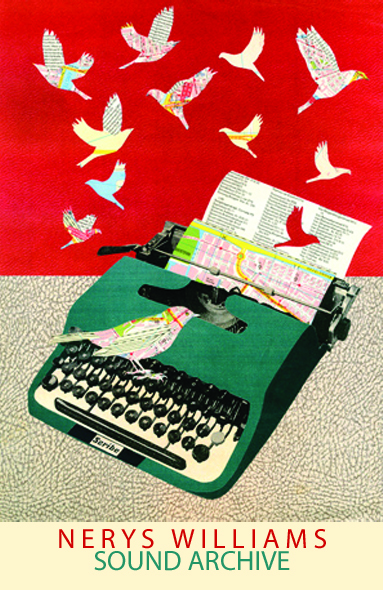
This week’s poem is from Nerys Williams’ debut collection, Sound Archive, which won the 2012 DLR Strong Award.

Sound Archive is the strikingly original first collection of poems from Nerys Williams. Using formal strategies similar to modernist painting: abstraction, dislocation, surrealist juxtaposition, the poet conjures a complex music, intriguing narratives, and poems full of atmosphere that query identity, gender, and the dream of art as a vehicle for emotion and meaning. There is a playful lightness of touch and tone and for every serious inquisition like ‘An Anatomy of Arguments’ or ‘Conversations with Cocteau’, there is a poem that will muse on ‘Canter’s Starstruck Diner, L.A.’ or on the ‘artifacts’ left by Marilyn Monroe, in ‘Marilyn’s Auction House’. Williams confronts our preconceptions about what it might mean to be a woman writing against the background of two formidable traditions: that of Welsh-speaking Wales and of English literature. A thoughtful, subtle and fascinating first collection.

Sound Archive
for Cliff Anderson

It takes patience this piecing
of noise in an archive for voices.

Chronicled on my silver-silicon
a focus of of gravity gone, scene unset.

Tempos in the unthreading
of flight beating.

Misremembered movement
the voice still says:

Do not package me
as an afterthought or a bulletin.

Though I have never been to Spain
I understand attachment theory
and have been told of thanatology.

Raise your glass to this last flourish
as I switch from Andante to Largo

I toast Dubrovnik, Elvis and Chopin
free the slaves of my imagination.

I will wear boaters in the rain
and fill one room with flowers.

I will raise hell in remaining chapels
never searching for injunctions nor pardons.

I will be the sage on the hill
filling in for memorial towers.

I will finish that string quartet
begun at twenty-five.

I will flirt with the ladies at the till
and get my groceries free.

I will smoke over the baby grand
turning to my right for a tumbler of gin.

I will mark a map of all colours felt
frame them into a continent.

There will be methods to my madness
which I will name kinetic imbalance.

On this day
thought is blown over the wall
over trees to the road,

jazzed up and jiving
a bouquet of spectral dandelions
for you to hold.

Order Sound Archive from our website.