Posted on

What is Literary Fiction?

Our Marketing Assistant, Jess, has a little chat about the difference between literary and genre fiction.

Here at Seren we primarily publish literary fiction as opposed to genre fiction, and many a time I’ve been asked what the difference is. This is a fair question – I didn’t know the answer myself until I went to university!

The simple answer is that literary fiction is much more focused on the quality of the writing style – on the way the book is written – rather than on the plot and the way the plot satisfies a certain genre. Genre fiction is full of fast page-turners and plots that try to blow your socks off, whereas literary fiction tends to be a little slower, a little quieter, but no less enjoyable.

In the realms of literary fiction we’re more likely to regularly encounter characters who feel like people we might pass in the street, rather than characters who fit a mould; crime fiction is brimming with grumpy detectives, each with their own dark and dangerous past – even Sherlock Holmes isn’t squeaky clean! In literary fiction, on the other hand, we’re just as likely to encounter the next Patrick Bateman as we are the next Atticus Finch. 

Literary fiction isn’t ‘better’ than genre fiction in much the same way that genre fiction isn’t ‘better’ than literary fiction. There’s no need for competition here, because if you’re a reader – whether you read regularly or sit back with a handful of books each year – you’ll have already read both types of fiction, and chances are you’ll have liked and disliked books in both categories in equal measure.

So if literary fiction and genre fiction are equally valid, why is our focus on literary fiction?

First and foremost, it’s writing we want to promote and celebrate. We want a good story – of course we do! – but if we had to choose between an action-packed story written in a mediocre fashion or a subtle, stunningly written story, I’m sure you can guess which story we’d pick every time.

Not only that, but literary fiction gives us a lot of freedom. Something I’ve yet to mention is that literary fiction and genre fiction are not entirely separate from one another; it’s common for a book to be considered literary fiction while also fitting into a particular genre. That’s one of the reasons we love literary fiction so much!

Francesca Rhydderch’s award-winning debut The Rice Paper Diaries is literary fiction, but it’s historical fiction, too; Jo Mazelis’ prize-winning debut Significance is literary fiction, but it’s also a thriller; Tiffany Murray’s haunting Sugar Hall is literary fiction, but it’s also a ghost story. We are able to publish a wide variety of fiction by a plethora of authors, all because we love stories that are beautifully told.

That’s why we love literary fiction, and that’s why we publish it.

Posted on

Festivals Galore!

September has arrived, autumn is on its way, and so many of our authors are gearing up to participate in some exciting events all over the world through September and beyond!
In September alone Ivy Alvarez will be at the Brisbane Writers Festival, Kim Moore will be at the Carlisle Book Festival, and Jo Mazelis and Steve Adams will be at this year’s PENfro Book Festival. Rosie Shepperd will be running a poetry course with The Poetry School from September through to November, while Tony Curtis will be leading poetry walks through the National Trust’s Dyffryn Gardens as part of his residency.
For all of these events and more, check out our events page!

Posted on

Friday Poem – About my Daughter

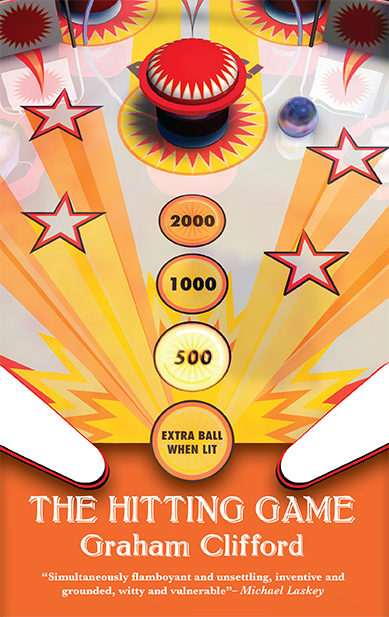
This week’s poem is from Graham Clifford’s debut collection, The Hitting Game, published in 2014.

The Hitting Game is the first collection of poems by the London-based poet Graham Clifford. The vibrancy of the poet’s voice and the immediacy of his claims  upon our attention are clear.

Characters first appear as ‘you’ in ‘Obvious Constellations’, ‘Amazing’ and ‘Trying’, as if we’ve arrived in the middle of a conversation. Incidents are approached from disarmingly intimate and also entertainingly oblique angles, as in ‘Shorn’. These are urban poems where nature appears like a strange intrusion: a flock of swallows ‘flick about dusk like black flames’. There is also a gentleness and empathy, particularly in regards to children, as in ‘About my Daughter’ where the word ‘echoes: ‘the er-ing sound of doubt/mixed with ought.’ There is humour and pathos as in the poem about a chimp and her keeper.

These are poems full of unexpected dramas and fresh enchantments, they provoke as well as delight.

About my Daughter

How right the word seems,
so drawn out,
the er?-ing sound of doubt
abutting ought.

I stand in the dark
taking heat from you
spasming to slip my grip
full of voodoo, my daughter
a little scarecrow stuffed with eels
curling and flipping to get away.

Used light from cars
queasily slides across the wall,
shards and slices identically rearrange
with such recurring precision –
this long trapezoid, that misty rhombus
locked into the same move as tomorrow,
then its tomorrow.
A deadlocked endgame.

Doubt: ought; her. Daughter.
At last loose in my arms,
I lay you as if broken
into sleep’s black mouth.

Order The Hitting Game from our website.

Posted on

Celebrating Significance!

jfu

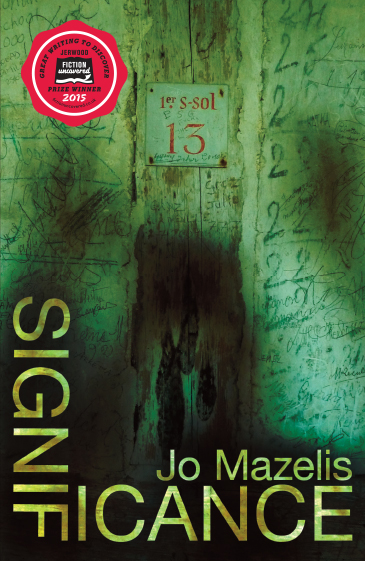
Jo Mazelis’ fantastic debut novel Significance, described by Cathy Galvin as “A must read for anyone who loves literary fiction and believes they would never read a crime novel”, was one of the eight winners of the 2015 Jerwood Fiction Uncovered Prize earlier this year.

Throughout the summer, Jerwood Fiction Uncovered have been celebrating one of its winners, and this week it’s Significance‘s turn!

significance_reprint_72dpi

Lucy Swann is trying on a new life. She’s cut and dyed her hair and bought new clothes, but she’s only got as far as a small town in northern France when her flight is violently cut short. When Inspector Vivier and his handsome assistant Sabine Pelat begin their investigation the chance encounters of her last days take on a new significance.

Lucy’s death, like a stone thrown into a pool, sends out far-reaching ripples, altering the lives of people who never knew her as well as those of her loved ones back home.

Head on over to the Jerwood Fiction Uncovered website this week and you’ll be able to read the first chapter of Significance and take a peek at some reviews that will make you want to read the rest of it, if you haven’t already! 

Don’t forget to head on over to Twitter where you can follow us @SerenBooks, Jo Mazelis @JoMazelis, and Jerwood Fiction Uncovered @FictUncovered and keep up to date with all of the celebrations.

Order Significance from our website.

Posted on

Celebrating Significance with Jerwood Fiction Uncovered

Throughout the summer Jerwood Fiction Uncovered have been celebrating the eight winners of their 2015 prize, and this week it’s Significance’s turn!
Read the first chapter of Mazelis’ absorbing debut novel here, and keep your eye on the Jerwood Fiction Uncovered website for more updates. Don’t forget to look out for a copy of Significance in your local WHSmith Travel store, or order a copy from our website!

Posted on

Friday Poem – A Horse in the Dark

This week’s poem is from Meirion Jordan’s debut collection, Moonrise, published in 2008.

Finely held moods and moments resonate throughout this unusually accomplished first book. The rich, complex history of Wales often crops up in expected, as in the post industrial imagery of ‘A Camera at Senghenydd Pit’, and then, in often unexpected contexts: ‘The New World’ is a vision, a cross between ‘Under Milk Wood’ and an early J.G. Ballard novel, of post-global warming Wales, with a polyglot population: “Ronaldinho Davies/wowing the crowds at the Millennium Stadium” and swamped by tropical vegetation: “cobalt lizards and coral snakes/swallowing the cottages an Llandinam/ the mahoganies uprooting Carno’s hearths”.Another apocalyptic scenario prevails in ‘Pirate Music’ where a typical weekend in the binge-drinking culture unravels vividly as one of Dante’s circles of Hell.

Such inversions of myth are rife in this book. There is a freshness with which classical motifs echo in thoroughly modern contexts. A girl on a motorbike: “you fly your hair like a flag” is a glimpse of a goddess at speed. ‘The Head of an Athlete in an Ionian shipwreck’ is the past as ghost: “his smile as white as alum”. What starts as portraiture sometimes veers off in darkly mysterious incantatory digressions as in ‘The Magdalen College Chef’ whose “souffles bloom from a dipped fork./Upstairs his ragouts seethe under the grins of dons and demons”.

There are also clever, out and out satires like ‘The Nuclear Disaster Appreciation Society’ where “We love to watch/the palm trees beating in the thorium breeze…” and ‘Blockbuster Season’ where the protagonist is bizarrely ensared by the cliché plots and B-list actors of the cinema “Darth Vader using my Ford Fiesta to escape from Colditz…”. The plot twists and clever inversions available in these poems often recall science fiction writers like Philip K. Dick. Engaging, musically deft, an intelligence that wears its learning lightly, this is a sparkling debut from one of the most promising young poets Wales has seen in some time.

A Horse in the Dark

Quiet, quiet; do not dream
it is the owl parting fronds
of starlight, the water
muttering in abandoned mines.

It is the stillness falling
and pooling, drop
after drop

it is the clouds spooling past on wires.

Soon you will hear oaks
pushing their mouths to the soil’s tap,
the rushes drinking
far down the hill.

The lidless quartz blinks
at the snap of a twig’s shadow;

a nothing so breathless.
It champs at a giant sky.

Order Moonrise from our website.

Posted on

Friday Poem – South Shore House, Long Island

the man at the corner table rosie shepperd

This week’s poem is from Rosie Shepperd’s debut collection, The Man at the Corner Table.

The Man at the Corner Table crackles with the unexpected. The voice is one of urban sophistication; a merciless charm that teases and tempts us with sensual evocations of food and place. The reader is surprised with tastes, scents, colours and textures. There is a winning insistence on detail offered with an irony that blends into satire.

The poems adopt a deadly seriousness to the business of comedy.  In‘It isn’t just the under-floor heating that makes me lie down in the kitchen’, the poem explores the ineffable by sending it up in a domestic setting that subverts as it disconcerts.

The gorgeous place settings of these poems are not just carefully delineated backdrops. They toy with our interpretations of ‘at table’. As in a Dutch master ‘tablescape’, they become symbolic of our relation to ourselves, to others and the world.

These poems are exquisite meals, to be devoured amidst surprising intimacies, like the search for solace that is edging towards something more in ‘Balthazar Bakery, Spring Street, NY. Others explore troubling scenarios of grief and loss, such as the heartbreak in ‘You all have lied…’. Sometimes the poems appear like postcards from beautifully observed moments of exile, as in ‘Chorinho’ – where the author is hounded and haunted by unease. As in Elizabeth Bishop’s ‘Questions of Travel’ there is artfulness in this unease, and an obligation to close observation that resolutely refuses to moralize.

South Shore House, Long Island

Now the man who does the garden
has stopped gardening. Each Thursday he drifts
through the hothouse, composting silence.
His cash-in-hand drips home to Peru to feed
his sister and her children, Ana and round Amparo.
The youngest lives in an iron bed
on the longest, thinnest tubercular ward.
He will see them next year and waits without complaint,
sleeping his lunch hour in the coolness of the arbor
while the filthy cleaner flicks about your desk.
There’ll be ash under your chair and white musk
between the cushions. She checks empty
drawers and drops damp family secrets.
I pick them off and forget them.

The foxes are back tonight
savaging the trash, nosing the scent of bones.
Perhaps the ribcage of a roast.
Egg boxes, sticky with protein.
They find nothing, but I hear
their icy sex and cannot shake them.
One is injured; his eye reflects
a single bulb from the not quite busted light.
Rime hangs on his breath.
Lightly, he lifts a front leg. Up.
Slowly down. Up. I watch the dark space
between us, feel the fog
settle back. We are again separate.
I am not afraid of being alone.
I am alone because I am not afraid.

Order The Man at the Corner Table from our website.

Posted on

The 2015 Timothy Corsellis Prize

ypn

The Young Poets Network have brought back the Timothy Corsellis Prize after a very successful year in 2014, and this year Alun Lewis has a small part to play!

Lewis is one of six WW2 poets – the others being Keith Douglas, Sidney Keyes, John Jarmain, Henry Reed, and Timothy Corsellis himself – whose life and/or work poets from ages 14-25 are encouraged to respond.

Timothy Corsellis was a young pilot, and poet, who was killed in 1941 when the plane he was piloting stalled and crashed. He was only 20 years old. The Timothy Corsellis Prize has been set up in his name, with the support of his family, to encourage people to read the work of the lesser-known poets of the Second World War.

This year there is also a Young Critics Prize, for short essays of 500-1,500 words discussing which of the poets are most likely to be read in 20 year’s time and why.

The deadline is Sunday 6th September, so why not get involved? You can find out everything you need to know about entering, and more information about the prize, here!

Posted on

Friday Poem – The woman in the sun, a letter

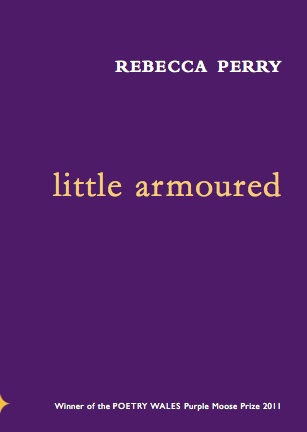
This week’s poem is from Rebecca Perry’s collection little armoured, winner of the 2011 Poetry Wales Purple Moose Prize.

little armoured is a brilliant book, which emits light and heat like the electric heater one of its poems describes as

a humming like a bee in the corner
of the room, its orangeness
brighter than your eyes expect.

Its miniatures and transforming images sometimes recall Elizabeth Bishop, its tonally various sequences Paul Muldoon, but this is a young poet who already discovered her own voice in these exact and tender, smart and moving poems.“

– John McAuliffe

The woman in the sun, a letter

I want my feet to tingle with cold again.
I want to be cold with you.
I want you to put your hands between my thighs in bed,
and I would clench them tight for you,
like daisies in a flower press.
I want to press my nipples onto your shoulder blades,
and leave tiny licks of saliva on your back, cold as skis.

I am full of tears.
All day they roll out of my eyes
and fizz to nothing by my feet.
They splash my breasts and for a second it is dark there,
then no. I am dry. I am a pillar of salt.

My body is warmed from the inside out.
My stomach is molten inside my body,
my lungs bubble from the heat of it,
my heart in your hand would be like
taking a potato straight from the oven,
my bones are the wood of a campfire,
my skin is bed sheets slept in for a day and night.

Order little armoured from our website.

Posted on

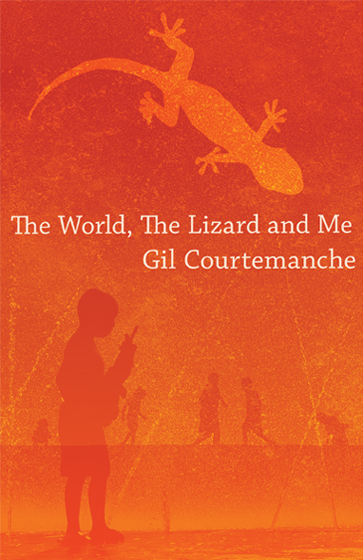
The World, the Lizard and Me – Incoming Autumn Reads

The World, The Lizard and Me - Gil Courtemanche

I know, I know – summer has hardly begun! But here at Seren, we’re already excited about our forthcoming Autumn books.  Top of my reading list is The World, The Lizard and Me.  Which of these titles are you most excited for?

You can find all these upcoming releases on our website.

The World, The Lizard and Me - Gil CourtemancheThe World, The Lizard and Me
by Gil Courtemanche

Gil Courtemanche (1943-2011) found worldwide acclaim for his first novel, A Sunday at the Pool in Kigali (2000), which dealt with Rwandan genocide and the AIDS crisis whilst immersing the reader in a bittersweet love story.
The World, The Lizard and Me was first published in 2009 and we are proud to bring you the first English translation of this enthralling story.

The World, The Lizard and Me follows the life of French Canadian Claude Tremblay who, since he was eleven has sought justice for the voiceless victims of war. His passion for justice has taken him to a job at the International Criminal Court in The Hague, where he pursues the conviction of Thomas Kabanga, a Congolese warlord charged with creating child soldiers in the civil war there.
Defeated in court due to a legal technicality, Tremblay finds himself at a moral crossroads and travels to Congo to gather more evidence. Moral boundaries blur in a culture Claude thought he understood, and a different sort of justice is formulated and executed.

The novel is informed my Courtemanche’s own experiences of reporting in Africa, and his depiction of the region is highly evocative, bringing into question the nature of evil and the effects and consequences of childhood.

The World, The Lizard and Me is out in October 2015, and you can read a more detailed description of the book here.

dark mermaids, anne lauppe-dunbarDark Mermaids
by Anne Lauppe-Dunbar

Doping in sport is an incredibly current issue, raising questions of morality and responsibility.

In Dark Mermaids, Anne Lauppe-Dunbar depicts a political system that shockingly doped its youngsters to sporting superhero status, and then left them to fend for themselves.

Shortlisted for the Impress and Cinnamon First Novel Prize, this East German noir thriller is set in 1990, a year after the fall of the Berlin Wall.

Unhappy West Berlin police officer Sophia is called on to investigate the murder of her childhood friend Kathe, after her beaten body is discovered in Sophia’s local park. As she reluctantly delves into the sordid Stasi secrets of those she grew up with, Sophia uncovers a web of horrors about her own abusive past as a child-swimming star in the former GDR. But her hunt for the truth has not gone unnoticed by those close to her, people who still have too much to hide.

Anne says of her novel: ‘I wrote Dark Mermaids as my refugee mother’s daughter: a child of the GDR who fled westwards carrying arcane knowledge of a country in which secrets and lies were endemic.’ In writing the novel Anne has extensively researched what is known of athletes doping and training in the area of East Germany she writes about.

Dark Mermaids will be available in September, and you can find out more about the book here.

Star-Shot_72rgbStar-Shot
by Mary-Ann Constantine

This mysterious, captivating tale weaves together stories of four people whose paths cross outside Cardiff Museum, which is only a stone’s throw away from us here in Bridgend.

Both fable and mystery, Star-Shot is set in a small world of parks and galleries around Cardiff’s National Museum, in a time not quite our own. As their paths cross, characters reveal stories of obsession, loss and recovery, creating a fragile network of relationships that resist the inexorable channels of silence eating into the city.

Poignant and humorous, Star-Shot is an exploration of how objects and images can focus our grief and desire; it is also a meditation on the regenerative power of garden ponds, and the cosmic significance of frogs. Beautifully illustrated with woodcut-style motifs by Clive Hicks-Jenkins, this is a subtle urban novel with a supernatural twist.

Star-Shot will be available in October, but for now you can read more about it on our website.

I hope you enjoyed finding out a little of what’s to come this autumn at Seren. This has only been a snippet though, so for the full list of forthcoming titles, take a look at our Coming Soon page.