Posted on

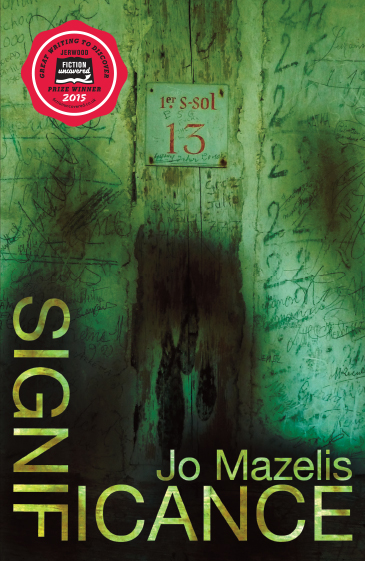
Win a copy of Significance, Jo Mazelis’ Jerwood Prize-winning novel

Enter our giveaway to win a copy of Jo Mazelis’ award-winning novel, Significance.
To enter, simply sign up to the Seren newsletter before 1st March:https://www.serenbooks.com/newsletter/signup
 
Significance was a Jerwood Fiction Uncovered Prize-winner, 2015. Up for grabs in this giveaway is a copy of the new edition of the book, printed to commemorate the Jerwood Fiction Uncovered announcement.
About Significance:Lucy Swann is trying on a new life. She’s cut and dyed her hair and bought new clothes, but she’s only got as far as a small town in northern France when her flight is violently cut short. When Inspector Vivier and his handsome assistant Sabine Pelat begin their investigation, the chance encounters of her last days take on a new significance.Lucy’s death, like a stone thrown into a pool, sends out far-reaching ripples, altering the lives of people who never knew her as well as those of her loved ones back home.
 
The winner of this giveaway will be chosen at random from all our email subscribers on 1st March 2017, so make sure you sign up to Seren News before this deadline to be in with a chance of winning.
Feeling generous? Why not invite your friends to enter, by signing up using the link below:http://serenbooks.com/newsletter/signup


Posted on

Friday Poem – ‘What We Talk About When We Talk About Motherhood’, Carolyn Jess-Cooke

Boom! Carolyn Jess-Cooke

This week our Friday Poem comes from Carolyn Jess-Cooke’s poetry collection Boom!.

Boom! Carolyn Jess-CookeBoom! is a brilliant contribution to the evolving archive of women’s experience, and its poems range from free-verse riffs on essential moments of joy and blame, to artful sonnets on the physical act of childbirth, to meditative and discursive pieces on the way that love for a child suffuses your being. The collection serves as an exploration into the profound impact motherhood can have upon creativity. Carolyn has continued to explore the relationship between motherhood and creativity as editor of Writing Motherhood, an anthology of poetry, interviews and essays, which is publishing 09 March, and is available for pre-order from our website (£12.99).


Boom! is available from the Seren website: £9.99

Join our free, no-purchase-necessary Book Club for 20% discount every time you shop with us


Save

Posted on

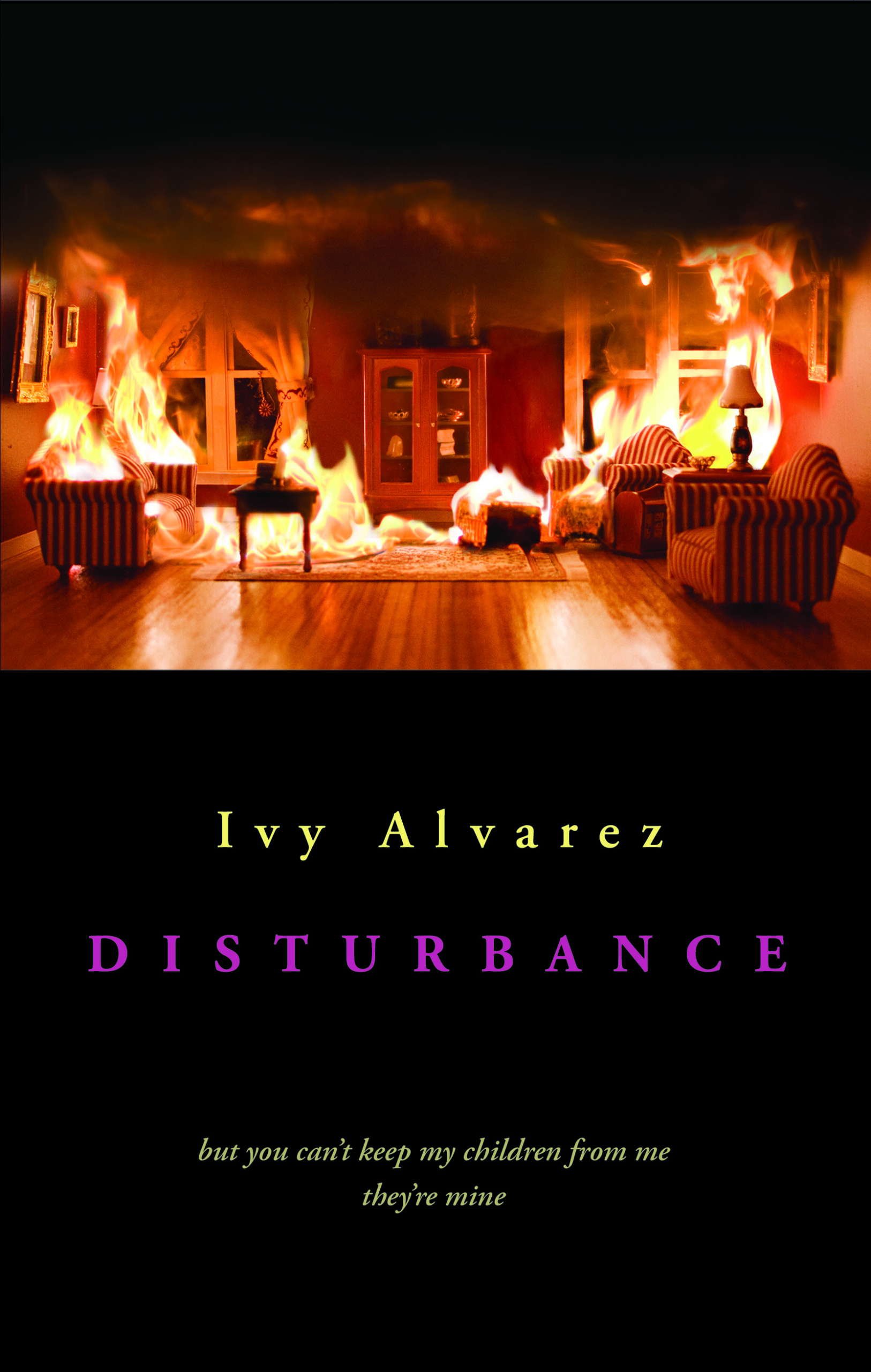
Disturbance by Ivy Alvarez one of Courtney LeBlanc’s Best Books of 2016

Ivy Alvarez’s poetry collection Disturbance has been named by Courtney LeBlanc as one of her best books of 2016, alongside authors such as Stephen King and Chimamanda Ngozi Adichie. You can see the full list on Courtney’s blog, Word Perv.
 
About Disturbance:
Disturbance is a novel in verse by Ivy Alvarez that chronicles a multiple homicide, a tragic case of domestic violence, where a family was gunned down by the husband and father. The book features poems in a kaleidoscope of voices from all the characters involved. We first meet the family itself and witness how the father’s controlling attitude gradually escalates into violence. Then we get the aftermath: the authorities, police and neighbours, who all might have helped to prevent this tragedy. This is a very dark book, but a courageous one, ultimately about evil and its presence in our everyday lives.

Posted on

Friday Poem – ‘Her to Apollo’, Carol Rumens

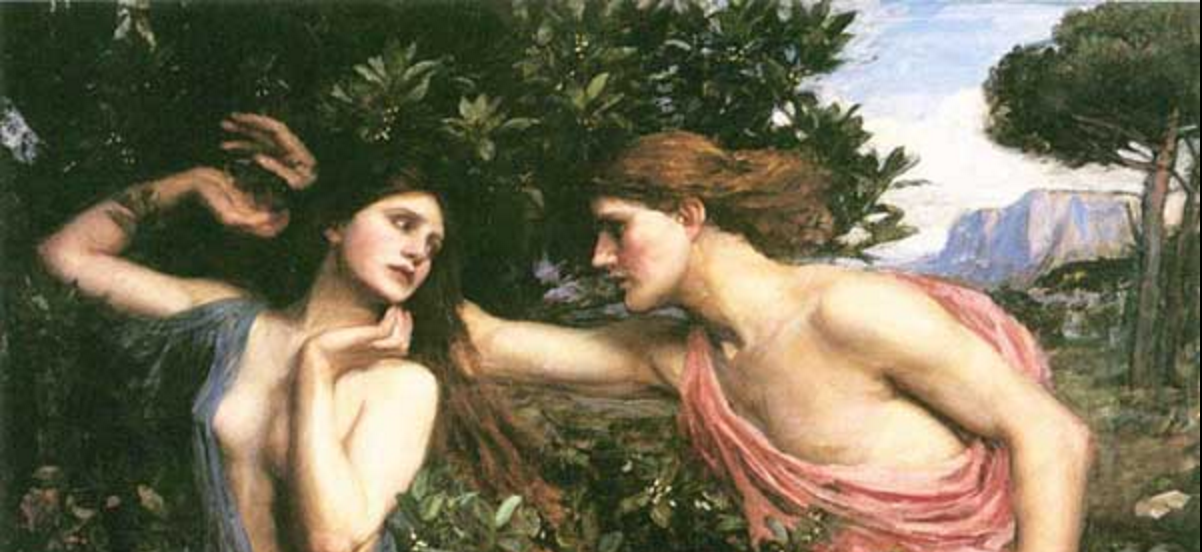
Image credit http://www.jwwaterhouse.com/view.cfm?recordid=93

Our Friday Poem this week is ‘Her to Apollo’ by Carol Rumens from her latest collection, Animal People.

animal people‘The title, ‘Her to Apollo’, contains a pun on Hymn to Apollo. I don’t have a particular Hymn in mind; it’s simply an allusion the classical genre. I wanted to signal a feminist ‘take’ on the theme. The speaker is a woman addressing the Sun God as her lover, though with no great reverence towards him.’ says Carol Rumens.
A power struggle sits at the heart of this poem, the spiky female voice biting back against the god figure’s assumed importance. Their dialogue, hard and violent in nature, breaks apart the classical base of the poem, and so although it opens with a mythological premise, ‘Her to Apollo’ instead turns out to be a sort of modern morality tale.


Her to Apollo

I fall in love and sunbathe less these days –
I must be old, the bark-legged woman says.
Stuff your Olympics. I’ll be in my black,
pissing on you, Apollo. But the star
that spikes earth’s drinks and rapes her slow, sings back,
my face is all you got, bitch, all you are.
The woman spreads her thighs. Such green light beckons,
and gods, however cracked, must claim their tokens

from flesh that knows it’s trees and cloud and slate,
and not too tall to stretch a prayer. Gold pieces
wink in her eyes like birch-leaves, ripple out
like baby cephalopods. And still he lies,
that god – I’m all you need, I’m all you are;
your genesis, baby, and your nemesis.
He oils her richly, and turns up the power;
she’s barbecued, and calls it paradise.

Iron insouciance that dawns with love’s
self-love, and gilds earth’s have-nots into haves,
you win, she thinks, and sees next autumn scatter
the little, light-stunned faces, plain as scars,
and as unique – each leaf uniquely spoiled
by cell-death, yet each death the same. Who’ll matter?
Apollo, know yourself – you’re gas, not gold,
and one of around two-hundred billion stars.


Buy your copy of Animal People from the Seren website: £9.99
Join our free Book Club for 20% off every time you shop with us


Save

Posted on

Friday Poem – ‘I know I’ve gone too far when I think of pappardelle with broccoli’, Rosie Shepperd

Friday Poem Pappardelle with Brocolli Rosie Shepperd

Today we’re celebrating National Cheese Lovers’ Day with Rosie Shepperd’s gloriously gourmet poem, ‘I know I’ve gone too far when I think of pappardelle with broccoli’, from The Man at the Corner Table.

the man at the corner table rosie shepperdRosie Shepperd’s debut collection, The Man at the Corner Table is an evocative and intimate celebration of food and place, with poems that posess a stunning intensity and a winning insistence on detail. ‘I know I’ve gone too far when I think of pappardelle with broccoli’ conjures the speaker’s deliberately precise ritual of food preparation – the broccoli ‘diagonally cut’, the knowledge that ‘steam holds the flavour’ – staging it against loneliness and loss, the depth of emotion making itself known like a subtle flavour in a delicate dish.
In Rosie’s words:

The poem is the product of a little “opposition research” into the link between the perception and conception of feeling. So the grief of the speaker has certain concrete particulars that she doesn’t understand. The process of making the dish with (Alpine) cheese and vivid broccoli is her way of exploring that grief. Fontina (cheese that is made high in the clouds) is a way in to this poem. The way out is an acceptance of the “bitterness” in the herbs and black pepper and in the resolution of making sense of what was and is no longer – through the universal – “sand” or “gravel” or “ash”. The semiotic turn comes with the acknowledged need for comfort – maybe nutmeg or butter. Next time.


Buy your copy of The Man at the Corner Table from the Seren website: £9.99

Join our free, no-purchase necessary Book Club for 20% off every time you shop with us


Save

Posted on

Short Story of the Month | ‘Spoiled’ by Jaki McCarrick

Short Story Spoiled by Jaki McCarrick

January’s Short Story of the Month is ‘Spoiled’ by Jaki McCarrick, an award-winning writer of plays, poetry and fiction – including The Scattering, one of our best-selling short story collections. ‘Spoiled’ takes us to Paris, where we see a troubled woman adrift, and an enigmatic priest whose sermons she attends.


Spoiled

This is an extract. Read the full short story for free on our website.


He had quoted from one of the Narnia chronicles, something she could clearly remember reading once, from Prince Caspian, in which Lucy, faced with a difficult river journey, asks Aslan to promise she will be safe and Aslan cannot promise. The priest had said that this was the meaning of faith: to go forth without a promise of anything. Mary had been astonished by him and by what she was listening to in the small bright chapel in Paris. During the week she had thought of his sermon often. And of how she had been encouraged by it not to dwell on the thing she had done, that ‘sin’ for which she knew she was truly sorry. She had cried in the church, but was somehow able to choke back the tears so that Susan and Yves and the children would not see. Though Tristan, Susan’s oldest, had seen.
Mary had not wanted to go to the service at all. For what kind of Catholic was she? Beyond lapsed, that was certain. Nonetheless, she went again with Susan and family on the following Sunday. This time she did not like the homily: something about St. Paul and the Jews which she hated because it smacked of anti-Semitism and she felt uncomfortable listening to it and had wanted to walk out. Tristan also saw this reaction in her, her face reddening with rage at the words spoken by the pompous-sounding reader who’d come up to the altar, and her nephew had nudged her, playfully. But then when he began to speak, Father Cal astonished her again. It was not what he said, but how. A couple and their children had been making noise in the front row and though people were openly telling them to hush, they continued. Rather than raise his voice above the rattle of the children and their equally distracted parents, Father Cal did the opposite: his voice quietened, so that Mary began to hear birdsong from outside in the courtyard, and it became the job of those amassed in the chapel to hear Father Cal and not his to reach out to them.
But then, Father Calum O’Neil had been always astonishing. A brilliant student, he shocked his family in his late-teens by declaring his vocation to God. The journey from seminary to curate in a small town in Tyrone to this Paris posting had taken him a mere fifteen years. Fluent in several languages, he had almost completed a PhD at Aberystwyth University and had published several papers, two books. He pursued brilliance and it, seemingly, had pursued him. He would only be in the city for a few months, had broken off his PhD studies to cover for the elderly chaplain whose brethren were this group of mostly Irish ex-pats, some of whom lived in the suburbs but who travelled all the way in by car or train each Sunday to attend the English-language mass in Trinite d’Estienne d’Orvres in the 9th arrondissement.
On the third Sunday, Susan decided they should all stay for the after-service tea and cake. The tea was from home and the cake was a freshly baked tea-brack. (Each Sunday an army of mostly middle-aged women – African, Irish, French – who worked voluntarily for the Church, would swan into the courtyard at the commencement of the service and silently dress and set the table, so that when the worshippers emerged a glorious spread would be ready for them as if by magic.)
Tristan nudged Mary as the priest finally appeared, his white and golden robes now gone in favour of a pale-blue short-sleeved shirt and dog-collar. He walked purposefully towards the congregation of thirty or so people gathered about the long table beneath the metal and glass awning of the chapel. Mary was about to chastise her nephew for teasing her yet again when Father Cal sidled up to them and stuck out his hand. She met Father Cal’s hand with hers and flashed a look up at him. She quietened the nervous movement of her mouth by biting her teeth together, even though she knew this action made her look old.
‘Susan’s sister?’ Father Cal said.
‘Yes,’ Mary answered.
‘Bonjour, Père Cal,’ Tristan said.
‘Bonjour, Tristan,’ the priest said, and smiled. He ran his hand through the boy’s hair in a rough but playful manner. Tristan laughed and ran towards another boy who was kicking a white football by a large pink-flowered chestnut tree at the back of the courtyard.
‘I’m Mary,’ Mary said.
‘How long are you in Paris for?’ he asked. She shuffled uncomfortably as she was not sure for how long she would continue to be in the city – but knew her sister’s invitation to have a change, forget about what had happened at home, was certainly not an open one. At most, Mary thought, they will only be able to stick me another month.

Continue reading ‘Spoiled’ for free here


Posted on

Seren awarded 3-year grant from Welsh Books Council

It may be Blue Monday but nevertheless it’s a bright day for new Welsh literature, as Seren, along with four other Welsh publishers, has received a 3-year grant from the Welsh Books Council.
The £250,000 grant, shared between Seren, Parthian, Gomer, Honno Press and (for the first time) Firefly Press, will provide funding for a wonderfully varied range of new titles, to be released over the next three years.
‘We thank the Welsh Books Council for their continued support, which will enable us to bring exciting new literature into print,’ said Seren Publisher Mick Felton. The grant enables Seren to plan our publishing schedule over a three year period, and supports key marketing activity, essential in a hugely competitive industry. After ten years of standstill funding, this year has seen a slight increase. Evidence perhaps of a wider appreciation of the value of cultural activity to the Welsh economy, of its role as an agent of economic regeneration, and how, in the Year of Legends, literature will attract visitors and explain Wales, through its stories, to the wider world.
Authors published by Seren have previously been long-listed for the Man Booker Prize, won the Costa Award, Forward Poetry Prize, Jerwood Fiction Uncovered Award, Cross Sports Book Award and the Edge Hill Prize.
The next three years look bright, and we can’t wait to reveal the new poetry, fiction and non-fiction soon to be added to the Seren list. They include Writing Motherhood, an anthology with essays on the theme of female creativity and the impact having a family has; Writing on Water, short stories ranging from the Caribbean to Britain and the wider world; and Dark Land, Dark Skies, where astronomer Martin Griffiths re-aligns the constellations according to Celtic rather than Classical mythology.


Posted on

Friday Poem – ‘The Soldier’s Song’, Simon Mundy

Friday Poem The Soldier’s Song Simon Mundy

This week our Friday Poem is taken from More for Helen of Troy, Simon Mundy’s keenly satirical, and often poignantly lyrical collection.

more-for-helen-of-troy-rgbThe opening, titular sequence is a series of vignettes of the immortal Helen. In some, such as ‘Perfect Nights’, we see Helen in an intimate, close-up frame: ‘Lying awake and naked but mercifully / Alone’. But in others, like our featured poem ‘The Solider’s Song’, Helen of Troy instead takes on her mythical status, being unreachable: her perfection only imagined, yet all the more keenly felt. The unnamed soldier of this poem has never seen the fabled beauty, yet his worship of Helen has an authenticity to it, with her reputation alone being enough to conjure hope and admiration.


The Soldier’s Song

She is so far away
I have never smelled her skin,
Felt the texture of her dress,

Once a voice sounded silken enough to fit
The official picture but it was nothing
I could prove – just a distant
Parting of the air that carried hope.

No woman I have touched is worth my life
No goddess needs it
But she is not for touching
And the years will leave her
Warm when I am mud.


Buy your copy of More for Helen of Troy: £4.49 until midnight tonight, as part of the big January Sale (RRP £8.99)

Posted on

Top of the Non-Fiction: what to buy in the half price sale

Top of the Non Fiction Seren half price sale

There’s still time to take advantage of our big January sale – which ends midnight, Friday 13th (not such an unlucky day, after all!)
All our books are half price, and that includes a gloriously diverse range of non-fiction: everything from biography to art, history to criticism. Here we pick a few of our favourites.

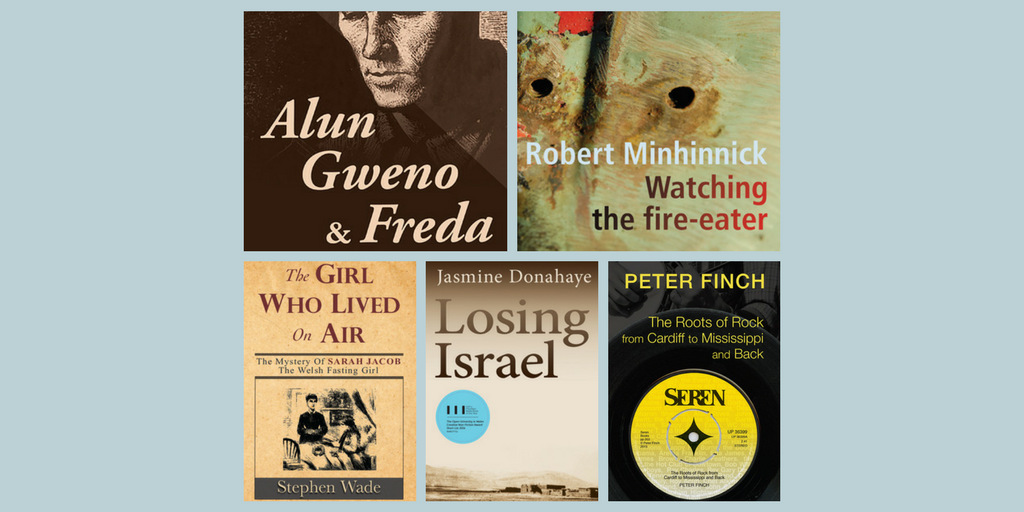
The Girl who Lived on Air by Stephen Wade examines the strange story of The Girl Who Lived on AirSarah Jacob, ‘the Welsh fasting girl’. Though not the first anorexic, she was arguably the first to cause a national furore, and was made to be the centre of a lucrative and also media-hungry ‘spin’ on the nineteenth century nexus of knowledge between science and superstition, folk-belief and religious asceticism. Stephen Wade covers new ground in examining the medical issues surrounding the case, the legal complexities, the prison life of Sarah’s parents, and the significance of folklore and superstition.
Alun Lewis biographer John Pikoulis covers new ground in Alun, Gweno & Alun, Gweno & Freda by John PikoulisFreda, which examines Lewis’ life and writing through the particular prism of his relationships with his wife, Gweno, and Freda Aykroyd, an ex-patriot in India whose house provided respite for British officers on leave. The book argues that Lewis’s charged relationships with these two women were the key to both his writing and his mental health, and goes on to explore the circumstances surrounding Lewis’ sudden death, and weigh into the ongoing debate over whether it was accidental, or suicide.
Losing Israel by Jasmine Donahaye is more than biography. This moving and honest losing_israelrgbwelsh-book-of-the-yearmemoir, which won the Wales Book of the Year, Non-Fiction Category (2016), recounts the author’s struggles with identity and history after she stumbles upon the collusion of her family in the displacement of Palestinians in 1948. Biography, travel writing and birdwatching are all weaved together in this fascinating re-evaluation of memory, family and cultural identity.
Robert Minhinnick’s Watching the Fire Eater, newly back in stock, takes us Watching the Fire Eater Robert Minhinnickfrom Copacabana to urban Yorkshire, from New Mexico to a Welsh funfair, from The Netherlands to the Clare coast. Minhinnick’s essays cover a variety of subjects – sunbathing, third world poverty, the demise of Margaret Thatcher, to name a few – but at the core this is a vivid series of attempts to strip away the exhausted mythologies of the writer’s own country and the increasingly-packaged places he visits.
The Roots of Rock, from Cardiff to Mississippi and Back is Peter Finch’s The Roots of Rock, from Cardiff to Mississippi and Backserenade to rock and popular music, and an infectiously nostalgic trip from the 1950s onwards that is guaranteed to enthrall music lovers. From an old valve radio playing in the Cardiff suburbs in the ’50s to live music today in America and beyond, Peter Finch tours countries and decades to illustrate how rock and pop has evolved, giving us sharp-eyed accounts of gigs from Champion Jack Dupree to the Garth Mountain Boys, visits to musical shrines and theme parks – Dollywood, Grand Ole Opry, Graceland, Stax – and music, lots and lots of music.


See our full Non-Fiction list on the Seren website, and hurry – sale ends midnight, Friday 13 January.

Save

Posted on

Poetry Picks: what to buy in the half price sale

poetry picks sale

If your bookshelves are looking a bit bare (or even if they’re full to bursting – who are we to judge?) then we hope our half price sale helps you discover new and intriguing collections to add to your ‘must read’ pile.

Until midnight this Friday (13th January), all books on the Seren website are 50% off. This includes hundreds of poetry books – and in an effort to help you with your decision-making, we’ve picked out a few of our favourites.

Carrie Etter’s Imagined Sons is visceral and emotionally intense, a reflection on the experience of a birthmother who imagined Sons Carrie Ettergave up her son when she was seventeen. These haunting, psalm-like prose poems are bursting with courage and insight. She describes possible encounters with this son, now in his late twenties, expressing how ‘sometimes the melancholy arrives before the remembering’. These poems leave a mark upon the reader, and explore with profound skill the aching agony of displaced motherhood.
The Museum of Disappearing Sounds by Zoë Skoulding is a collection of the_museum_of_disappearing_soundsdensely intellectual poems, experimental, rich and resonant. Rather than aspiring to reach beyond language, these poems focus on the spaces that words occupy, looking at how ‘a sentence reverses itself between two pairs of eyes’ or noting ‘the distance drifted by a word shaken loose from border controls’. Exploratory and alive to the senses, these poems create new perspectives on language and the world in which it exists.
Jonathan Edwards’ My Family and Other Superheroes is (in contrast) utterly my family and other superheroes jonathan edwardsjoyful and hilarious, and introduces the reader to a mishmash of odd characters, including Evel Knievel, Sophia Loren, Ian Rush, Marty McFly, a bicycling nun and a recalcitrant hippo. Winner of the Costa Poetry Prize, and shortlisted for the Fenton Aldeburgh First Collection Prize, Jonathan Edwards’ debut has charmed the masses, and is a must-read – if you haven’t already.
Kim Moore’s The Art of Falling twists and manipulates the idea of falling into The Art of Falling Kim Moorean abundance of meanings, and weaves this central theme alongside vivid and unabashedly realistic descriptions of the North and ‘My People’: ‘who swear without knowing they are swearing… scaffolders and plasterers and shoemakers and carers’. Blisteringly raw poems appear in the central sequence, ‘How I Abandoned My Body To His Keeping’: the story of a woman embroiled in a relationship marked by coercion and violence. These are poems that confront the reader, steeped in realism, not designed to soothe or beguile. Midnight, Dhaka is the debut collection by Mir Mahfuz Ali. As a boy, Mahfuz Midnight, Dhaka Mir Mahfuz Aliwitnessed atrocities and writes about them with a searing directness in poems like ‘My Salma’: ‘They brought Salma into the yard, / asked me to watch how they would explode / a bullet into her’. His trauma becomes transformative, and his poetry the key to unlocking memories of a childhood that are rich in nuance, gorgeous in detail and evocative of a beautiful country. Influenced by Rabindranath Tagore (1861-1941) and Jibanananda Das (1899-1954), as well as modern British poets, Mahfuz brings his own unique voice in these poems, which celebrate the human capacity for love, survival and renewal.


See our full Poetry list on the Seren website, and hurry – sale ends midnight, Friday 13 January.