Posted on

Friday Poem – ‘Bicep to Bicep’ by Mary J. Oliver

This week’s Friday Poem is ‘Bicep to Bicep’ by Mary J. Oliver, from her new book Jim Neat: The Case of a Young Man Down on his Luck.

Jim Neat is a coalescing of prose, poetry, documents and photographs in which Mary J. Oliver uncovers the life of her father. Tinged with the tragedy of his partner’s death and an orphaned daughter, it ranges across the history of 20th century England and Canada.

Gathering documents, following leads, Mary traces Jim’s story full circle. She presents the case for the remarkable life of an ordinary man. His family and the people who knew him are the witnesses in his defence. The verdict is this extraordinary memoir.


Jim Neat is available on the Seren website: £9.99

Create your free Seren account and enjoy 20% off every book you buy from us.


Posted on

Kim Moore Shares her Poetry Advice

This week’s poetry advice blog comes from Kim Moore. Her first collection The Art of Falling won the Geoffrey Faber Memorial Prize in 2016 and was shortlisted for Lakeland Book of the Year.

The Art of Falling Kim MooreIn The Art of Falling, Kim Moore sets out her stall in the opening poems, firmly in the North amongst ‘My People’: “who swear without knowing they are swearing… scaffolders and plasterers and shoemakers and carers…”. The title poem riffs on the many sorts of falling “so close to failing or to falter or to fill”. The poet’s voice is direct, rhythmic, compelling. These are poems that confront the reader, steeped in realism, they are not designed to soothe or beguile. They are not designed with careful overlays of irony and although frequently clever, they are not pretentious but vigorously alive and often quite funny.


What first drew you to poetry?

I think like a lot of people, I came to poetry through reading it.  As a child, I had poetry anthologies which I read in the same way I read novels or stories. I have definite memories of reading Tennyson and not understanding it but enjoying the sound of the words – nobody ever told me I should understand it, or that poetry was ‘difficult’ so I think I approached it with quite an open mind, even as a child.

Where do you look to for inspiration?

I don’t like the word inspiration, but if I don’t have anything to write about, or I don’t feel like writing, I always read, and it often kick starts the desire to write again.

What does poetry mean to you?

This is a hard question! I’ve just had a baby, so my relationship with poetry has changed a little, in that it has been squashed into the edges of my life at the moment.  But I guess poetry is my way of making sense of the world, of finding out what I really think, a way of making connections and these are all things I couldn’t live without doing. Poetry to me is those solitary moments of writing, when there is nobody to see or care whether it is any good or not, but it is also those solitary moments of reading, when you read a poem and put the book down because the poem is so good, because it has articulated something you didn’t know you felt.

How do you balance writing poetry with working? If you write full time, what made you decide to do so?

I’m currently on maternity leave from a full time creative-writing PhD, so prior to my maternity leave I had the luxury of writing full time. Now the baby is here, I have two hour slots to write whilst my husband takes care of the baby. It has to be two hours roughly because I’m breastfeeding and she is very hungry all the time!

Do you have a writing routine? What is it?

I’ve never had a routine.  Before I started my PhD, I worked as a trumpet teacher and writing always fitted around the edges of my job.  Now I work as a freelance writer and do a lot of travelling, so I write quite a lot on the train. I’ve learnt to trust that the poem will emerge when it is ready. My days are never the same, so it’s impossible to have a routine.

How do you prepare yourself before sitting down to write?

I don’t really prepare myself. When I’m writing a first draft or an idea in a notebook, I do this anywhere – trains, cafes, in the car.  Typing it up from the notebook to the laptop I like to be at home, in my office with the door shut.

What advice would you give to poets looking to get their work published?

Read, read and read! Read the magazines that you want to be published in (how will they survive without readers?) Read the books that are published by the presses you want to be published by.

Is it important to build a reputation by submitting to competitions, magazines and journals?

I think most publishers want a track record of publications in these places so I guess it’s important in that sense, if you want to go on and publish a full length collection. I personally think competitions are a bit like a lottery ticket with slightly better odds, and it’s great if you win some money, but I prefer publishing poems in magazines.  I think magazine/journal publication feels more like being part of a conversation.

 Do you have any tips for submitting poems to publishers or magazines?

Create a system – i.e a spreadsheet to keep track and to give you something to do when the poems come back rejected! Instead of feeling depressed about the rejection, you can fill your spreadsheet in and send them out again.   

What methods do you use to overcome feeling disheartened or to keep positive?

I use a spreadsheet to keep track of my submissions which cheers me up as I have a complicated system of colours which takes my mind off rejections. But my main method of keeping positive is reading other great poets, which reminds me of why I like poetry in the first place, which actually has nothing to do with being published or not. 

Do you have any other advice for fellow poets?

Read and if you find some poetry you like, and the poet is still alive, write and tell them! It doesn’t cost anything apart from your time and you’ll make someone’s day.


Kim’s collection The Art of Falling is available on the Seren website: £9.99

Create your free Seren account and enjoy 20% off every book you buy from us.

Posted on

Friday Poem – ‘Windfalls’ by Paul Henry

This week’s Friday Poem is ‘Windfalls’ by Paul Henry, from his collection The Glass Aisle.

The Glass Aisle Paul Henry

The Glass Aisle moves between rage and stillness, past and present, music and silence. Acclaimed poet Paul Henry’s tenth book includes a moving elegy to displaced workhouse residents, set on a stretch of canal in the Brecon Beacons National Park.

‘Here is a rich and comforting voice next to you in the dark. Twenty eight poems so beguiling you know not whether they depict ancient folklore or an everyday occurrence in the next but one village’ – Caught by the River


The Glass Aisle is available on the Seren website: £9.99

Create your free Seren account and enjoy 20% off every book you buy from us.


Posted on

Happy National Poetry Day! – Philip Gross Shares his Poetry Advice

Today is National Poetry Day, which means there are events happening up and down the country celebrating poetry. Not only that, but this year it is National Poetry Day’s 25th Anniversary. We’re joining in the fun by sharing some thoughts and advice from our poets, starting with  Philip Gross. Keep your eyes on the blog over the next few weeks for more interviews like this one. Why limit the sharing to just one day?

What first drew you to poetry?

Words that snagged in my head and kept on echoing, even though I didn’t understand them, in the normal sense.

Where do you look to for inspiration?

The page, the pen, the act of doing it.

What poets or writers inspire you?

Inspire? Not sure that is a useful word for me. But lots of writers – WS Graham, Louise Gluck, Paul Celan, to name a few quite different ones – remind me of the size and scope, the sheer possibility, of the space of poetry.

What does poetry mean to you?

Words in a conversation with, sometimes dancing with, silence.

How do you balance writing poetry with working? If you write full time, what made you decide to do so?

If I’d been a novelist (as opposed to a poet who has sometimes written novels) I might have needed to write full time. As a poet, I seem to need the back and forth, the constant friction, with the world and people. True, a lot of my work has been to do with writing. But it has been the human content I most needed. That and a living wage, of course.

Do you have a writing routine? What is it?

Always have a notebook with me. Be on standby. Grab the moments when they jump up, and I can. That doesn’t sound much like ‘routine’, does it? But it is a kind of discipline.

How do you prepare yourself before sitting down to write?

Far from ‘preparing myself’, catching myself off guard is a good way to start.

What advice would you give to poets looking to get their work published?

Send work to places that publish things you really want to read. And don’t see publication as an end in itself. It’s a means to an end – discovering a space or spaces where your work will be heard, where some people will ‘get’ you. That isn’t the same as praise (though, let’s be honest, praise feels nice. In moderation.)

Is it important to build a reputation by submitting to competitions, magazines and journals?

Yes, unless you’re a performer mainly, in person or through the media. (Including social media…? I know I shouldn’t judge them on their tendency to creepy clannishness and opinioneering, the ruthless celebrity, and the breeding of trolls. I want to see an online poetry world, with publication and performance spaces, new multi-artform opportunities and interactivity with readers, that will prove my misgivings wrong.)

Do you have any tips for submitting poems to publishers or magazines?

Know the magazine or publisher and its culture, so you don’t come at it like a cold call. Do your homework. Many editors have strong aesthetic preferences and opinions, and have ways to make them known. Don’t be obsequious or chummy in your approach. And remember that the way to book publishing tends to be through building a track record of some kind.

What methods do you use to overcome feeling disheartened or to keep positive?

When flattered by success, as much as when dejected by rejection, keep asking: If I was on a desert island, with no way to write except on sand the tide will sweep clean… what would I still write, then?

Do you have any other advice for fellow poets?

We are different. We are meant to be different. Celebrate that. Don’t critique in ways that really mean ‘Well, if I were you, I would…’

There are so many of us, relative to the number of readers, let alone buyers, of poetry. See it as your job to bring new readers in to reading poetry of all kinds… not only your own or your friends’.


Philip’s collection A Fold in the River is available on the Seren website: £12.99

A Fold in the River is the fruit of collaboration between T.S. Eliot prize-winning poet Philip Gross and the visual artist Valerie Coffin Price. Philip Gross once lived on the banks of the River Taff in Wales and his journals are the source for the powerful poems. Valerie Coffin Price revisited the walking route along the river and evolved the beautiful prints and drawings that accompany them.


Posted on

Friday Poem – ‘The Birds of Rhiannon’ by Rhian Edwards

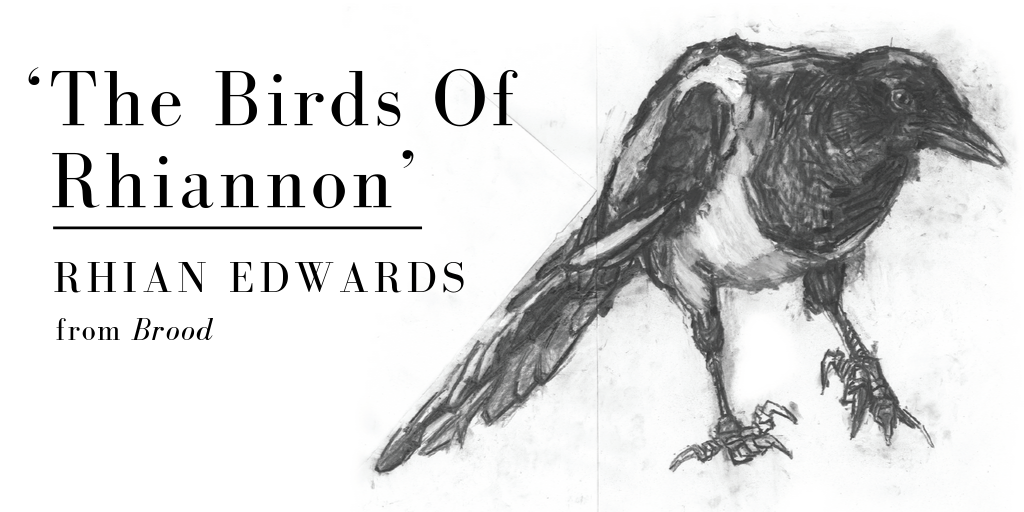
This week’s Friday Poem is ‘The Birds of Rhiannon’ by Rhian Edwards, from her pamphlet Brood.

Brood Rhian Edwards

Inspired by both a fascination with birds as well as intense personal experiences of motherhood and a broken relationship, Brood is a stunning pamphlet by prize-winning poet Rhian Edwards. Also featuring beautiful, original charcoal drawings by Welsh artist Paul Edwards.

The pamphlet opens with ‘Birds of Rhiannon’ introducing us (via a nod to the famous medieval Mabinogion story where magic birds, said to bring people back from the dead, console the heartbroken Celtic princess Rhiannon) to a darkly resonant tone that echoes from the myth.

Brood is available on the Seren website: £6.00

Create your free Seren account and enjoy 20% off every book you buy from us.

Rhian’s debut poetry collection Clueless Dogs won Wales Book of the Year in 2013. It is available from the Seren website: £9.99

Posted on

Friday Poem – ‘Hare’ by Ross Cogan

This week’s Friday Poem is ‘Hare’ by Ross Cogan, from his collection Bragr.

Ross Cogan Bragr

Whether its myth intended to explain the constellations, the secret of eternal life, or the bloodthirsty tale of the mead of poetry, Ross Cogan’s collection Bragr (meaning ‘poetry’ in Old Norse) is a reimagining of Norse mythology for our times. In particular, the collection focuses on environmental concerns. The earth’s incredible beauty seems all the more fragile in the face of habitat loss and global warming.


Bragr is available on the Seren website: £9.99

Catch Ross reading from Bragr at The Hive in Worcester on Thursday 3rd October. Full details and where to book are available here

Create your free Seren account and enjoy 20% off every book you buy from us.

Posted on

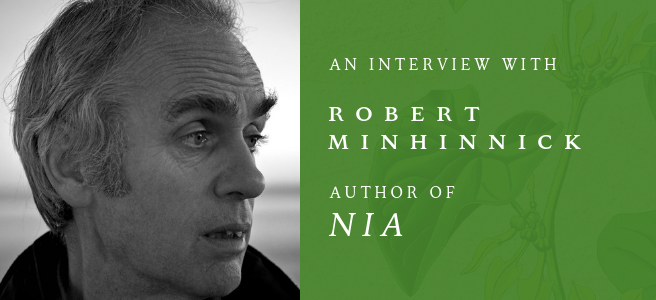
An Interview with Robert Minhinnick

Robert Minhinnick is one of Wales’ (some would say Britain’s) most eminent writers. Next month we publish his latest novel Nia, the third book in his coastal trilogy all set in the same fictional resort. Ahead of its publication on the 1st October, Robert talks to us about the novel’s themes, its characters and what inspires him.


In Nia, dreams, memory and time all flow into one, leaving the reader to decide for themselves what is real and what is in Nia’s imagination. What about this structure draws you to it when writing and how is it important to the development of your characters?

Frankly, ‘madness’ is a big part of my life, and how it is socially perceived. Schizophrenia continues to play a role in my family, via my mother and her sister, aged 93 and 91. During World War II, my father contracted malaria, in Burma. The result was periodic delirium. My writing tries to explore ‘madness’ and delirium, and relate them to memory and dreams and the very act of writing ‘fiction’.

Throughout the book you touch on themes of the environment and climate change. Do you think it is important that authors use their voice to highlight issues to their audiences, and why in particular are they important to you?

You’re interviewing someone who is co-founder of Friends of the Earth Cymru, in 1984, and the charity ‘Sustainable Wales’, ongoing.

This is your third novel set in the same fictional community, each with interlinking characters but separate, stand-alone stories. How have the community and its inhabitants changed over the course of the series? Will we see any more writing set in the same place?

The fairground is a constant theme. It’s a powerful metaphor, a constant source of drama. I can see it from my attic. I like the idea of a particular family or community being examined.  After all, staying/belonging are familiar themes in fiction.

Nia is a book dominated by sunshine, even drought. Limestone Man experienced a suffocating sea-fret. The town’s economic circumstances always play a part, as does its history, and they are very much based on Porthcawl where I live. The street names, for instance, are the names of ships wrecked off the Porthcawl coast.

You take Porthcawl and the Merthyr Mawr dunes as the inspiration for your fictional town. Why did you choose to reimagine that place?

I write about where I live. I decided long ago that I should celebrate Porthcawl and the areas between the mouths of the rivers Ogwr and Cynffig. My writing is one way of achieving this. In Nia, I also celebrate my time in Saskatchewan, and my brief periods in Kerala and Amsterdam. Writing about different places can create an interesting friction – a little like icebergs grinding against each other in the South Saskatchewan river.

Some may say that the structure of Nia is reminiscent of that of prose poetry. How does your long career as a poet influence your prose style?

Originally, Nia possessed chapter names. I dispensed with these at a late stage, as I felt they directed the reader too forcibly. One of my friends is disappointed by the first two novels in that there seems no real ‘resolution’. Of course, I tell him, even death does not resolve matters…

How has your fiction style developed over the course of writing this series? Did the process of writing Nia differ from that of your previous novels? 

I’m older. But still wishing to learn. The character of Nia is developed because some years ago the former fiction editor at Seren, Penny Thomas, told me I should strengthen my female characters.

Nia is obsessed with words. What is your relationship with them?

Well, obsessional might be the correct description.

Another blurred boundary between time and place, comes about through the travel stories vividly recounted by Nia’s friends throughout the book. In what way is the theme of travel important to the book, and to Nia’s story in particular?

I wanted to write about Saskatchewan. There are poems actually written there incorporated into the text of Nia. Also memories of visiting Auschwitz, Amsterdam, Kerala and New York. But the editing process removed many references…

Nia’s perception of her life seems unstable throughout: she constantly questions her own sanity and her role as a mother. These kinds of traits can be seen in the lead characters of your other two novels as well. What draws you to this type of character as a narrator?

All my narrators are ‘unreliable’, and plagued by self-doubt, dreams and delusion. That’s why memory blends into delirium. The fairground is an excellent means of depicting this. I look at the eyes of my grandchildren as they encounter the funfair, or ‘the shows’ as we used to call it, and wonder what they see…

At the heart of Nia’s story, is her dream expedition with her friends into the unexplored caves beneath the dunes. Why did you choose to centre the action of your book on a caving expedition, and what is the significance of the trip to Nia?

It’s a fictional expedition, but Nia doesn’t dream it. Yet she experiences many other dreams in this novel about the dunes, their history, flora and fauna.  ‘The Shwyl’ caves are based on ‘the Schwyll’ cave system, which provided fresh water for the Bridgend area (including the Seren office) until recently, using ‘the Great Spring of Glamorgan’, which emerges in Ewenni.

Thus, it’s a real place, little known yet fascinating. Perhaps Nia feels intimidated by the travel stories of Isaac Pretty and Skye, and it’s her way of competing with two seemingly powerful personalities, who have returned to her community.

Nia will be available on the Seren website from the 1st October 2019. Pre-order your copy now. 

Robert Minhinnick’s ‘Sea Holly’ series is a set of three novels that follow generations of one family – the Vines – and a cast of characters brought up in the same location, which is dominated by the sea, wild duneland, and a funfair. 
Posted on

Friday Poem – ‘Roads Across Europe’ by Martyn Crucefix

This week’s Friday Poem is ‘Roads Across Europe’ by Martyn Crucefix, author of The Lovely Disciplines.

Martyn Crucefix The Lovely Disciplines

Displaying his characteristic flair, craft and intelligence, Crucefix’s poems often begin with the visible, the tangible, the ordinary, yet through each act of attentiveness and the delicate fluidity of the language they re-discover the extraordinary in the everyday.

‘…highly wrought, ambitious, thoughtful – and very good.’ – The Sunday Times


The Lovely Disciplines is available on the Seren website: £9.99

Create your free Seren account and enjoy 20% off every book you buy from us.

Posted on

‘Footnotes to Water’ is a PBS Winter Recommendation

We’re delighted to be able to share that Zoë Skoulding’s forthcoming collection Footnotes to Water is a PBS Winter Recommendation. Publishing on the 21 October it is Zoë’s fourth individual collection of poetry for Seren. 
The PBS Winter 2019 selections are dominated by female poets and celebrate the most diverse range of independent publishers yet including flipped eye, Peepal Tree Press, Carcanet, Arc and Seren.
Sandeep Parmar, one of the PBS Book Selectors said, “Choosing books for PBS members over the past two years has made it crystal clear where the risks are being taken in poetry – to expand the language and to forge new forms. My fellow co-selector and I were joyfully overwhelmed every quarter by the exciting work being done by independent, small presses and in particular by women and poets of colour. It has been hugely gratifying to bring much-deserved attention to all these incredible works.”
Read the full list here. 

Posted on

Jonathan Edwards in booksellers’ top 25 poetry books of the past 25 years

This cover shows a colourful painting of a school boy stomping with excitement viewed as if looking from the ground. The text reads: My Family and Other Superheroes, Jonathan Edwards.

To celebrate their 25th anniversary of National Poetry Day the Booksellers Association and Forward Arts Foundation joined together to announce Poetry Booksellers Love, a list of 25 favourite poetry books from the last 25 years as nominated and voted for by booksellers in the UK and Ireland. 
Amongst the 25 titles chosen is Jonathan Edwards’ collection My Family and Other Superheroes, which won the Costa Poetry Award in 2014.
The five poetry books with the most booksellers’ votes are: Alice Oswald’s Dart, a book-length poem that dramatises a West Country river through the words of those who live and work by it, The Lost Words by Robert Macfarlane and Jackie Morris, Maya Angelou’s The Complete Poetry and two anthologies, Staying Alive edited by Neil Astley and The Rattle Bag, edited by Seamus Heaney and Ted Hughes.
Find out more and view the full list here.