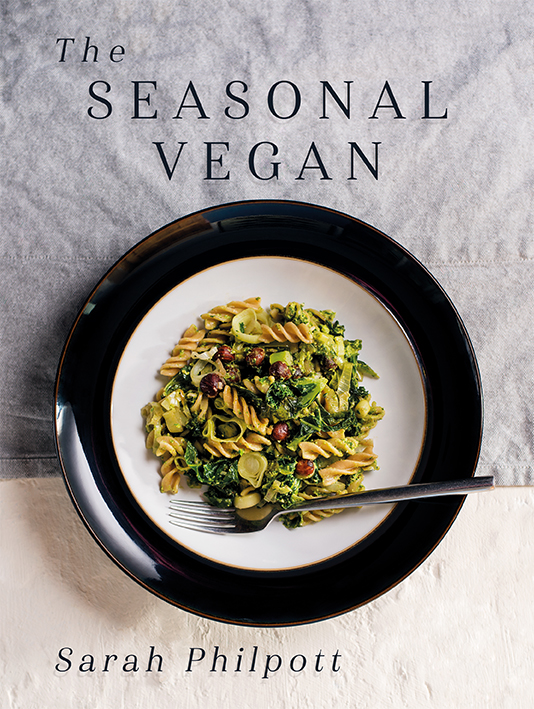
Sunday 23rd January is Sticky Toffee Pudding Day. As this month is also Veganuary, we wanted to re-share this indulgent Sticky Toffee Apple Pudding recipe from The Seasonal Vegan by Sarah Philpott. The perfect way to celebrate, especially when served with hot vanilla custard on a cold winter weekend.
The Seasonal Vegan is a kitchen diary of seasonal recipes with a delicious mixture of Sarah Philpott’s fine food writing and Manon Houston‘s beautiful photography. This guide to eating with the seasons takes a realistic approach to shopping cheaply and sustainably and proves that the vegan lifestyle is anything but expensive. Perfect for long-term vegans and novices alike.
– 250g dates – 100g soft brown sugar – 100g vegan butter, plus extra for greasing – 3 apples, grated – 300g self-raising flour – 2 tsp baking powder – 2 tsp ground allspice – A pinch of sea salt – 1 tsp vanilla extract – 1 tbsp treacle
For the sauce:
– 150g vegan butter, softened – 350g dark muscovado sugar – 1 tbsp black treacle – 50ml oat milk – 1 tsp vanilla extract – A pinch of sea salt
For the custard:
– 1 litre oat milk – 150g white sugar – 2 tsp vanilla extract – A pinch of sea salt – 1 tbsp cornflour – A pinch of turmeric (optional)
Preheat the oven to 180C. Put the dates in a bowl and pour over 250ml boiling water and leave for 10 minutes.
In a large bowl, cream the butter and sugar together. Tip in the flour, baking powder, grated apple, allspice and salt and stir well. Add the vanilla extract and treacle and stir again.
Lightly grease a large dish or tin and pour the batter in, making sure to spread evenly. Bake for 30-35 minutes, or until a cake tester comes out clean.
Meanwhile, make the sauce by melting the butter, muscovado sugar and treacle over a very low heat in a heavy-based saucepan. Once the butter is melted, stir gently until everything else is melted too. Now stir in the oat milk, vanilla extract and salt, then turn up the heat and when it’s bubbling and hot, take it off the heat.
Take the pudding out of the oven and leave to stand for 20–30 minutes. To make the custard, put the oat milk, vanilla, salt and sugar in a small saucepan and heat over a medium heat, stirring constantly. Add the cornflour and bring to the boil. Keep stirring until you have a thick consistency, then add the turmeric, if using.
Pour the toffee sauce over the pudding and cut into eight slices. Pour over the custard and serve.
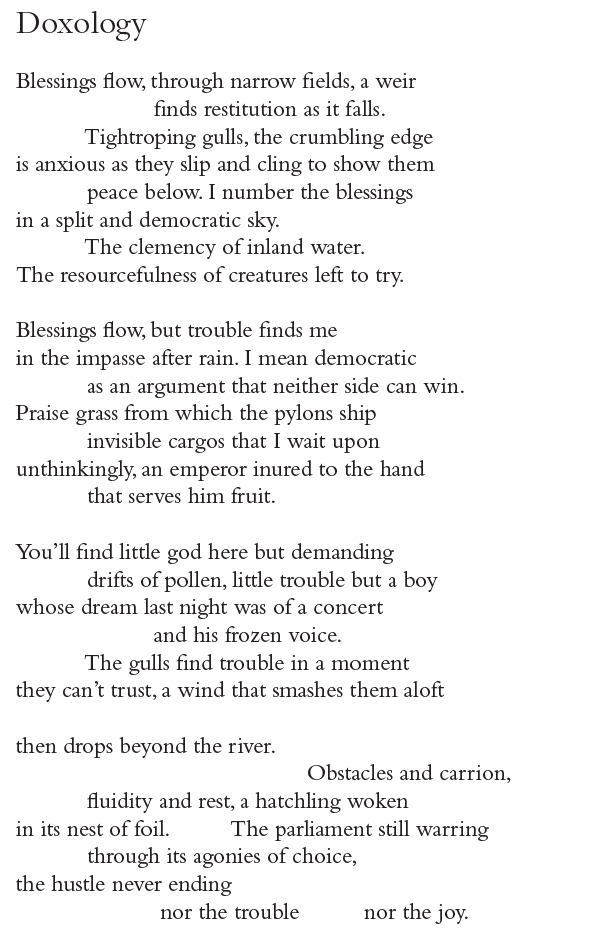
This week’s Friday Poem is ‘Doxology’ by Dai George from his collection Karaoke King.
Dai George’s confident second collection Karaoke King, addresses the contentious nature of the times. Always deeply thoughtful but also alternately ebullient, angry, curious, ashamed, the poet moves through urban and digital spaces feeling both uneasy and exhilarated. There is a feeling of history shifting, as a younger generation confronts its ethical obligations, its sense of complicity and disappointment. Ecological crisis hovers in the background. Karaoke King also contains numerous reflections on popular culture, culminating in ‘A History of Jamaican Music’, a sequence at the heart of the volume speaking to urgent contemporary questions of ownership and privilege, pain and celebration.
This week’s Friday Poem is ‘21. When he tells me I’m not allowed’ by Kim Moore from All The Men I Never Married.
Kim Moore’s eagerly awaited second collection All The Men I Never Married is pointedly feminist, challenging and keenly aware of the contradictions and complexities of desire. The 48 numbered poems take us through a gallery of exes and significant others where we encounter rage, pain, guilt, and love.
Following our previous guest post by Zoë Brigley on ecojustice, this week’s Friday Poem is ‘More Context Required’ by Vidyan Ravinthiran from 100 Poems to Save the Earth.
Our climate is on the brink of catastrophic change. 100 Poems to Save the Earth invites us to fine-tune our senses, to listen to the world around us, pay attention to what we have been missing. The defining crisis of our time is revealed to be fundamentally a crisis of perception. For too long, the earth has been exploited. With its incisive Foreword from editors Zoë Brigley and Kristian Evans, this landmark anthology is a call to action to fight the threat facing the only planet we have.
In this guest post Zoë Brigley, co-editor of landmark anthology 100 Poems to Save the Earth, looks at ecojustice – what it is, why it’s important – and talks about its place within the anthology and in poetry more widely.
Our climate is on the brink of catastrophic change. 100 Poems to Save the Earth invites us to fine-tune our senses, to listen to the world around us, pay attention to what we have been missing. The defining crisis of our time is revealed to be fundamentally a crisis of perception. For too long, the earth has been exploited. With its incisive Foreword from editors Zoë Brigley and Kristian Evans, this landmark anthology is a call to action to fight the threat facing the only planet we have.
What is Ecojustice?
After recently publishing 100 Poems to Save the Earthwith Kristian Evans, I received many questions about ecojustice. With resolutions for the new year being made, this felt like a good time to talk about why ecojustice is important, and to spotlight some of the poets from the anthology.
In basic terms, ecojustice links ecological movements to global social justice movements, a move which is necessary because sometimes environmental movements have been coopted by groups with racist or bigoted agendas. (See this article in The Guardian by Jeff Sparrow on eco-fascism). Ecojustice refuses environmental narratives based on restricting or blaming people with fewer privileges, but instead listens to the voices of social justice activists. Very often, groups with fewer privileges experience most acutely the deprivations and hardships caused by climate crisis. Environmental changes are already horribly real for populations in the Global South. There are also, however, more direct connections between the active oppression of groups with fewer privileges and environmental exploitation.
So social justice and climate justice are not two separate projects, and according to Raisa Foster and Rebecca A. Martusewicz, ‘Environmental and social impoverishment can be traced to the same deeply embedded cultural ways of thinking and being that our industrialized systems use and are created from’. Foster and Martusewicz hint at something that many writers have emphasized – see Wendy Wheeler in A New Modernity (1999). The Baconian, empirical worldview dominating Western thinking has also caused deep, intractable problems.
Foster and Martusewicz describe how dualism in ‘Western industrial society’ has dictated ‘where we locate value’ and ‘what we learn to identify as inherently inferior or superior’. They conclude: ‘Social and ecological violence is born in and maintained by this fundamentally violent hierarchical structure: culture–nature, mind–body, reason–emotion, man–woman, and civilized–savage’. Thinking in the context of Latin America – a contested site of some of the most biodiverse areas in the world, Verónica Schild suggests that dualistic thinking is inherent in a capitalist society, as capitalism seeks to extract value from sites of nature as well as poor women, both of which exist on the other side of a constructed binary. She also notes that many indigenous activists have already made the connection between the capitalist shaping of nature and the shaping of women’s lives. Although our anthology was mainly focused on writers from the UK and Ireland, we did give a flavour of writing from around the Anglophone world, including indigenous poets like Carter Revard, Gwen Nell Westerman, Craig Santos Perez, and Ellen van Neerven.
van Neerven is an award-winning writer and editor of Mununjali Yugambeh (Southeast Queensland) and Dutch heritage. van Neerven indicated in interview that her work has parallel themes that are ‘environmental’ and ‘anti-government.’ This comes together in van Neerven’s poems as, in Jeanine Leane’s words, ‘In this built-up and built-over environment the poet asserts the continuation of Aboriginal culture’ and ‘Australia is a nation imagined and constructed over many Aboriginal nations.’ Leane sees in van Neerven’s work the importance of ‘the role of women as gatherers of often small but essential items of food that sustain the clan – lizards, insects, bugs, berries, fruits, frogs, seeds, tubers’ but also ‘as gatherers and keepers of family histories, knowledge and secrets from Country that are handed down to nurture and sustain future generations.’
In 100 Poems to Save the Earth, we included ‘Love and Tradition,’ dedicated to van Neerven’s Aunty Nancy Bamaga. The poem is a prayer registering the danger of rising sea levels. Sparsely written, ‘Love and Tradition’ carefully maps out the problem while also calling on the wider community to recognise the effects on the indigenous community. van Neerven poses what Leane calls ‘the everyday activism that occurs in the Aboriginal home, differing from the more public or “loud” expressions of activism’ but posing ‘the home front as a sovereign space of nurture, growth and actualisation.’
There are many other poets in the anthology writing about ecojustice. For example, Ross Gay’s poem, ‘A Small Needful Fact,’ emphasizes the nurturing work of Eric Garner at the Parks and Rec, before he was killed in a racist murder by police. Kazim Ali in ‘Checkpoint’ emphasizes the pettiness of customs officials juxtaposed with portentous events in nature which seem to accuse humanity. The Cyborg Jillian Weise explores the body and nature in the context of disability, commenting on the hierarchies and judgements imposed on both. Sean Bonney’s ‘Our Death / What If the Summer Never Ends,’ Erin Robinsong’s ‘Late Prayer’ and many other poems in the anthology call out capitalism and its detrimental effects on nature and people.
Many poems speak of ecojustice in global terms. In interview with Nicholas Wroe, Welsh/Indian poet Tishani Doshi has commented on how transnationally, women often ‘have to navigate economic and environmental hostilities’. In Doshi’s work, concerns for women and for the environment mingle and jostle, and she also challenges the centrality of human beings over nature or the greater-than-human. In ‘Self’, the poem included in the anthology, there is an acknowledgement that the world does not necessarily need people. Also thinking on a global scale, Vidyan Ravinthiran’s ‘More Context Required’ seems to grapple with global circulation of information about climate crisis and social justice, which can’t be fathomed from ‘beautiful computer-generated maps.’ Other poems register how war creates disconnectedness from land and people, as populations are killed by remote control. Mir Mahfuz Ali comments on the violence of war in ‘MIG-21 at Shegontola,’ where a boy riding a bicycle seems to be the only survivor of an idyllic rural community destroyed by missiles.
Some poets speak from a spirit of hope in the face of climate and social injustice. Roger Robinson’s ‘A Portable Paradise’ turns to wisdom from his grandmother about rewilding ourselves – carrying a paradise within us in spite of injustices we may face. Registering awe of the greater-than-human, Carter Revard describes a happy afternoon as two Native boys explore nature in ‘Over by Fairfax, Leaving Tracks.’ The poem extends into networks of global capitalism, across time and space towards a profound thought about how nature might be preserved in our memory – if we survive.
What you won’t find in the anthology are moralizing or didactic poems for the simple reason that we don’t think they are very effective. As we suggest in the anthology introduction, poems that work through clichéd or even moralizing trains of thought can be easily dismissed. Poems that seek to make people – already feeling immense guilt about climate crisis – to feel even more guilty don’t help. People are moved to act far more out of inspiration, hope and – yes! – sometimes fear than out of guilt. What tends to happen more often with didactic writing is that people turn away and put their heads in the sand.
That doesn’t mean that these poems aren’t moving, inspiring, brilliant, or that they don’t work on the reader in significant and subtle ways to make those connections between damage to people and the environment. According to Foster and Martusewicz, ecojustice proceeds ‘from the fundamental acknowledgment that humans are utterly dependent upon a complex and diverse ecological system,’ and ‘damages to the ecological system are damages to ourselves’.
Foster, Raisa and Rebecca A. Martusewicz (2018) ‘Introduction.’ Art, EcoJustice, and Education: Intersecting Theories and Practices, ed. Raisa Foster, Jussi Mäkelä, and Rebecca A. Martusewicz. London: Routledge: pp 1-9 (p. 1, 3).
This article is based on a paper, ‘Justice, Ecologies, and Transnational Feminist Poetics: What Poetry Has to Say About Ecojustice’ given at the National Women’s Studies Association (NWSA) Convention this past October 2021. Thanks to the NWSA for including this paper.
Zoë Brigley is a poet and academic who has three PBS recommended poetry collections: The Secret (2007), Conquest (2012), and Hand & Skull (2019) (all from Bloodaxe). She has also published a collection of nonfiction essays Notes from a Swing State (Parthian 2019) and several chapbooks. She is Assistant Professor in English at the Ohio State University where she produces an anti-violence podcast: Sinister Myth. She won an Eric Gregory Award for the best British poets under 30, was Forward Prize commended, and listed in the Dylan Thomas Prize. She is the current editor of Poetry Wales Magazine.
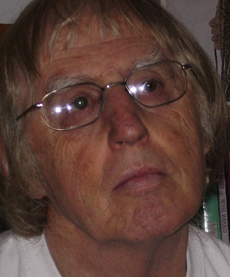
We are very sorry to have the news of the passing of John Haynes, a lovely person and a fine poet. John lived a various and active life and published a number of equally various books, on teaching, language theory, African poetry, stories for African children and two extraordinary volumes of poetry. He was for many years a lecturer in Nigeria, where he founded the literary journal, Saiwa, returning to the UK in the eighties.
Seren was honoured to publish two book length poems by John, both embodying technical brilliance with all the richness of life meeting poetry that could be wished for. You (2010) is his hymn to his wife Afiniki, a celebration of, and meditation on, personal love, and how that love transmits into community and the wider world.
You was preceded by Letter to Patience (2006), which ranges between England, to which Haynes had returned, and northern Nigeria where Patience, a former politics lecturer forced out of university by junta pressure, ran a bar called Patience’s Parlour. Part autobiographical, part essay on post-colonialism, the poem is an epic portrayal of a beautiful but troubled country and of the search for meaning in difficult times.
Letter to Patience won the Costa Prize for Poetry and made John’s reputation, the equal of Muldoon, Heaney and Hill as a poet of autobiographical realism, according to one reviewer. This sad time certainly calls for a re-reading of these two books, and remembrance of John Haynes.
As the last Friday Poem of 2021, this week’s Friday Poem is ‘Offering’ by Alexandra Davis from the festive pamphlet Twelve Poems for Christmas.
Christmas Closing dates
The Seren Offices will be closed for Christmas from Thursday 23rd December until Monday 4th January. We wish you all a very Merry Christmas and a Happy New Year.
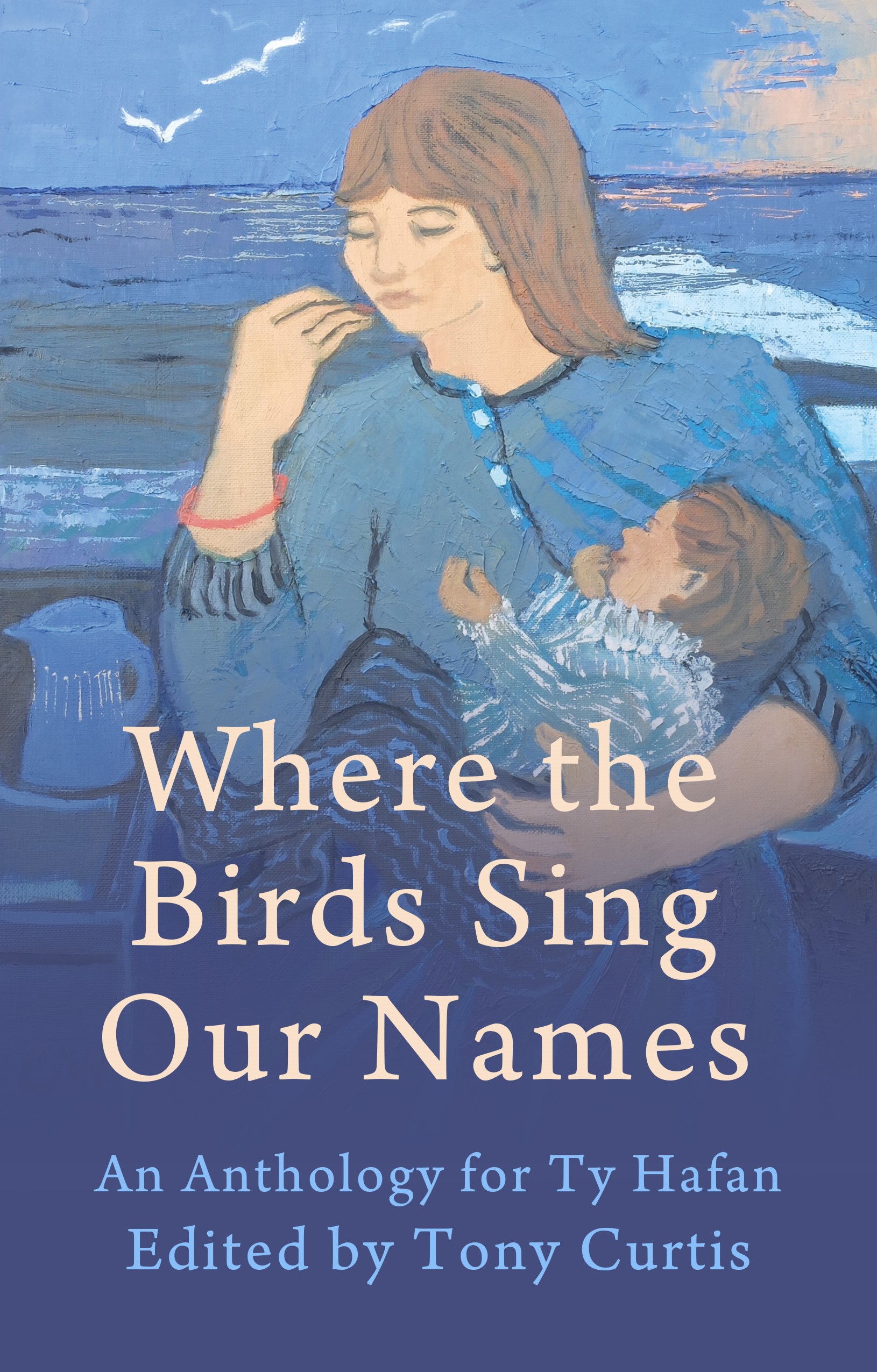
Earlier this month, we published Where The Birds Sing Our Names, a new anthology published to raise money for Tŷ Hafan Childrens’ Hospice in Sully, South Wales.
Edited by Tony Curtis, the book includes poems and lyrics in English and Welsh by a variety of poets, including four National Poets – Gillian Clarke, Jackie Kay, Michael Longley and Gwyneth Lewis, as well as some of the best-known writers in the UK and beyond – from Max Boyce and Lord Rowan Williams to the young singer-songwriter Kizzy Crawford.
Tŷ Hafan provides care and support for children with life-limiting conditions, and their families, across Wales. All proceeds from the sale of this anthology will go to the charity. No publication fees or other charges will be deducted.
“This anthology enriches the reader. It is a book to be savoured and enjoyed – the celebration of each wonderful moment from conception through a toddler’s first steps and all the family dynamics of life: the simplest of encounters, of depth and beauty.” – Baroness Finlay of Llandaff
Where The Birds Sing Our Names is available directly from Tŷ Hafan online (www.tyhafanshop.org) or in their shops.
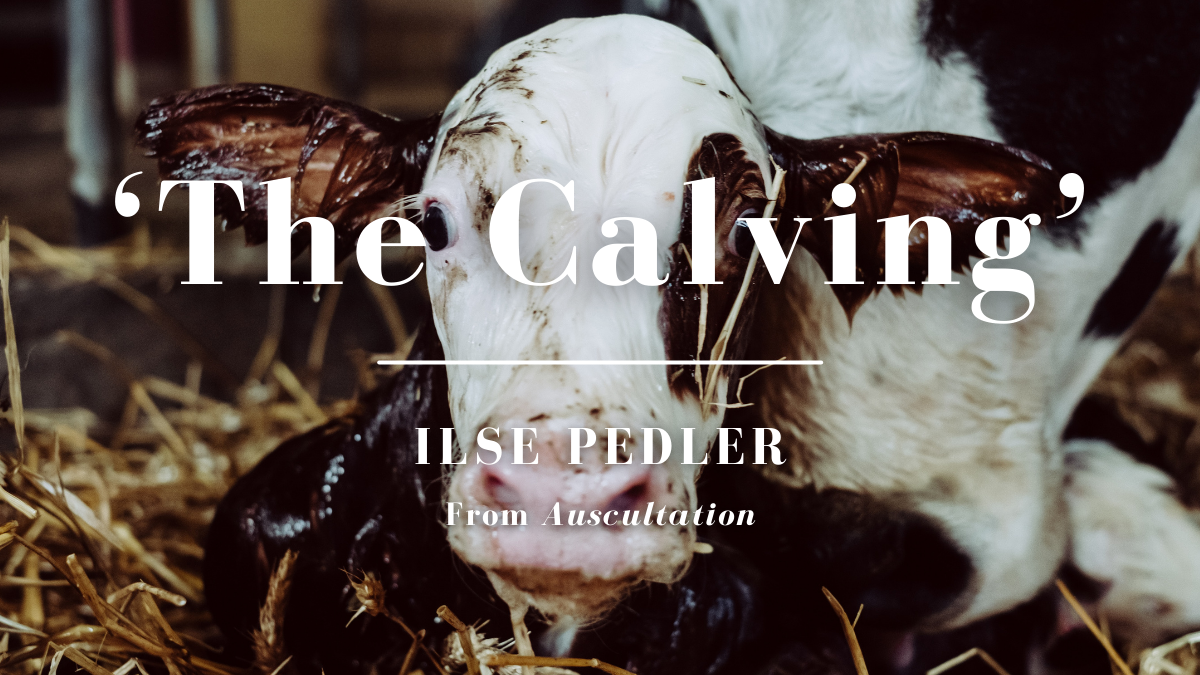
This week’s Friday Poem is ‘The Calving’ by Ilse Pedler from her debut poetry collection Auscultation.
Ilse Pedler is a veterinary surgeon who works in Kendal. Her debut collection is Auscultation, which means listening and specifically, in medicine, listening to sounds that come from the body’s internal organs. If listening is a central theme of this collection, it is also about being heard. There are poems about vets waiting rooms and surgical instruments, about crisis calls, about overhearing farmers and pet owners and colleagues. There are also poems about surviving a stern childhood and a heartbreaking sequence about being a stepmother.
It’s not too late to order on the Seren website in time for Christmas. If you’re still struggling for inspiration why not look through our Christmas Gift Guide? Or check out the new Seren Gift Subscription.
Create your free Seren account and enjoy 20% off every book you buy from us.
Congratulations to Robert Walton, author of Sax Burglar Blues, whose poem ‘Dun’ has been highly commended in the Troubadour International Poetry Prize 2021. This is the second year in a row that one of Robert’s poems has been highly commended in the prize.
This year’s entries were judged by Linda Gregerson and John McAuliffe. Robert is one of 20 commended poets. First place was awarded to Sam Garvan for his poem ‘Balthazar’. The full list of winners and highly commended poems can be found on the Coffee-House Poetry website.
Of the entries, judge Linda Gregerson wrote: ”The great joy of judging such a prize as this is twofold: first, the encounter itself, on the page, with compelling poetic voices, in all their distinctiveness and variety; second, the opportunity for in-depth conversation with a fellow judge about the art form to which we are both devoted… From the Northern Isles to the cornfields of Nebraska, from antiquity to the paradoxical timelessness of the live cam, from the plenitude and bustle of a street market to the stillness of a gable window, the sites and temporalities that occasion the poems in our short list have been bathed in the light of lyric transformation. This is not to say that the tones are always gentle or the vistas reassuring. There is darkness in these pages, as in our world: the suffering of displacement, the treacheries of history, the mortal fallibility of flesh. Anything less would be less convincing. Which is why, I think, I find the poems, each of them, so heartening.“
You can read the judges full comments and each of the prize-winning and commended poems on the Coffee-House Poetry website.