A Last Respect is a selection of contemporary Welsh poetry by winners of the Roland Mathias Prize. The poems included are wide ranging in style and subject. They contemplate relationships, nature, the environment, mortality, time, art and politics, and take place in a range of locations, from Aberystwyth to Baghdad, from war-torn landscapes to parents’ evenings. Featuring Dannie Abse, Tiffany Atkinson, Ruth Bidgood, Ailbhe Darcy, Rhian Edwards, Christine Evans, John Freeman, Philip Gross, Gwyneth Lewis, Robert Minhinnick, and Owen Sheers, it is a must-have anthology of poetry from Wales.
Yesterday, the Slate Landscapes of Northwest Wales were awarded World Heritage Status meaning they are now on the Unesco list of World Heritage Sites alongside landmarks the Pyramids in Egypt, the Taj Mahal in India, the Grand Canyon and the Great Wall of China.
The Gwynedd slate mines in Snowdonia were once said to have “roofed the 19th Century world” as slate from its quarries was exported around the globe. In this extract from Miriam, Daniel and Me by Euron Griffith, John Meredith is teaching apprentices how to cut slate in the same historic location.
When Miriam fell in love with Padraig life seemed simple. But soon she discovered that love is a treacherous business. Everything changed when she met Daniel. She was taken down an unexpected path which would dictate and dominate the rest of her life.
Spanning three generations of a North Wales family in a Welsh-speaking community, Miriam,Daniel and Me is an absorbing and compelling story of family discord, political turmoil, poetry, jealousy…and football.
…
John Meredith could slice slate as thin as paper. At the quarry he told the fresh crop of young apprentices who crowded around him every September that all they needed to do was find the sweet spot. Because a piece of slate was almost like a living thing. He would ask the boys if they’d ever stroked a cat. Some of them looked at each other with uncertainty. The braver ones would mumble that they had. So John Meredith explained that a cat always responded to a human hand and would guide it towards the spot where it wanted to be touched. The same was true of slate.
“Look at this mountain”, he’d say, directing their confused but eager faces to the massive whale of rock that they were precariously balanced upon. “What we’re doing is ripping this beautiful material out of Mount Orwig’s belly. Newly-mined slate rumbles past us on these trains and trucks – huge slabs. Raw. Listen to the groaning and squealing of the metal wheels. That tells you how heavy it is. You’d think it was cold and unfeeling wouldn’t you? But slate is alive boys. Trust me. As alive as you or me.”
It was a well-rehearsed lecture, delivered every year and honed, by now, as perfectly as one of his slices of slate. These were the less sturdy boys. The ones who had been deemed unsuitable for face-work. They’d been sent over by Mr MacNamara to learn how to cleave slate into thin slices using only a mallet and chisel and John Meredith was the best they had. A true artist. Now he was telling them about cats and saying that slate was alive. He knew they probably thought he was a bit mad.
“Okay boys,” he’d say, sticking the rolled-up cigarette behind his ear, “see how I’m tapping away at the rock with the blade of the chisel? What I’m searching for is that sweet spot. The place where, with one sharp tap of the mallet, the slate can be split cleanly and perfectly. That sweet spot is very important boys. It’s the key that opens up the treasure. But like with a new cat, it takes a while to find it. Unlike with a cat however, with slate you only get one chance. Get it wrong and you blow it. Which is why it’s important that you get it right. Otherwise all the men in Orwig – the men down in its bowels risking life and limb every day – won’t be happy with you. The last thing they want to see is their hard work wasted.”
He tapped the wooden hilt of the chisel. The blue-grey rock surrendered into two swooning squares.
“See how they’re both the same thickness boys? Pass them round. They’ve both got to be exactly the same thickness otherwise they’re no good.”
The apprentices would all look at each other anxiously but, in time, most of them got the hang of it. Mr MacNamara always congratulated him on training up a new generation of skilled craftsmen and if he only knew how valuable he really was, Mr MacNamara thought, he could probably demand double his wages.
We are currently looking for an enthusiastic, hard working individual to join our team as Administrative Officer. This new role is an opportunity to gain experience of the arts scene in Wales and receive formal training in business admin. Full details of the role and requirements can be found on acttraining.org.uk.
Key Duties:
Administration and analysis of sales and profitability
Administration of royalties
Administration of bookshop accounts
Marketing research
Promotion to the media and to festivals
Administration of ebook preparation and distribution
Closing date for applications: 9th August 2021
Interview date: 19th August 2021
Apply via www.acttraining.org.uk/vacancies/administrative-officer.
This week’s Friday Poem is ‘Boasting Sonnet’ by Katrina Naomi from her collection Wild Persistence.
Wild Persistence by Katrina Naomi is a confident and persuasive collection of poems. Written following her move from London to Cornwall, it considers distance and closeness, and questions how to live. She dissects ‘dualism’ and arrival, sex and dance, a trip to Japan. The collection also includes a moving sequence of poems about the aftermath of an attempted rape.
“Funny, moving, surprising, unflinching and, above all else… joyous.” – Helen Mort
This week’s Friday Poem is ‘Chorus’ by David Morley from the anthology 100 Poems to Save the Earth, edited by Zoë Brigley and Kristian Evans.
Our climate is on the brink of catastrophic change. 100 Poems to Save the Earth invites us to fine-tune our senses, to listen to the world around us, pay attention to what we have been missing. The defining crisis of our time is revealed to be fundamentally a crisis of perception. For too long, the earth has been exploited. With its incisive Foreword, this landmark anthology is a call to action to fight the threat facing the only planet we have.
Writing from rural and urban perspectives, linking issues of social injustice with the need to protect the environment, this selection of renowned contemporary poets from Britain, Ireland, America and beyond attend carefully to the new evidence, redraw the maps and, full of trust, keep going, proving that in fact, poetry is exactly what we need to save the earth.
“These achingly beautiful poems… remind us how to refind ourselves amid the landscape we call home.” – Sonya Huber
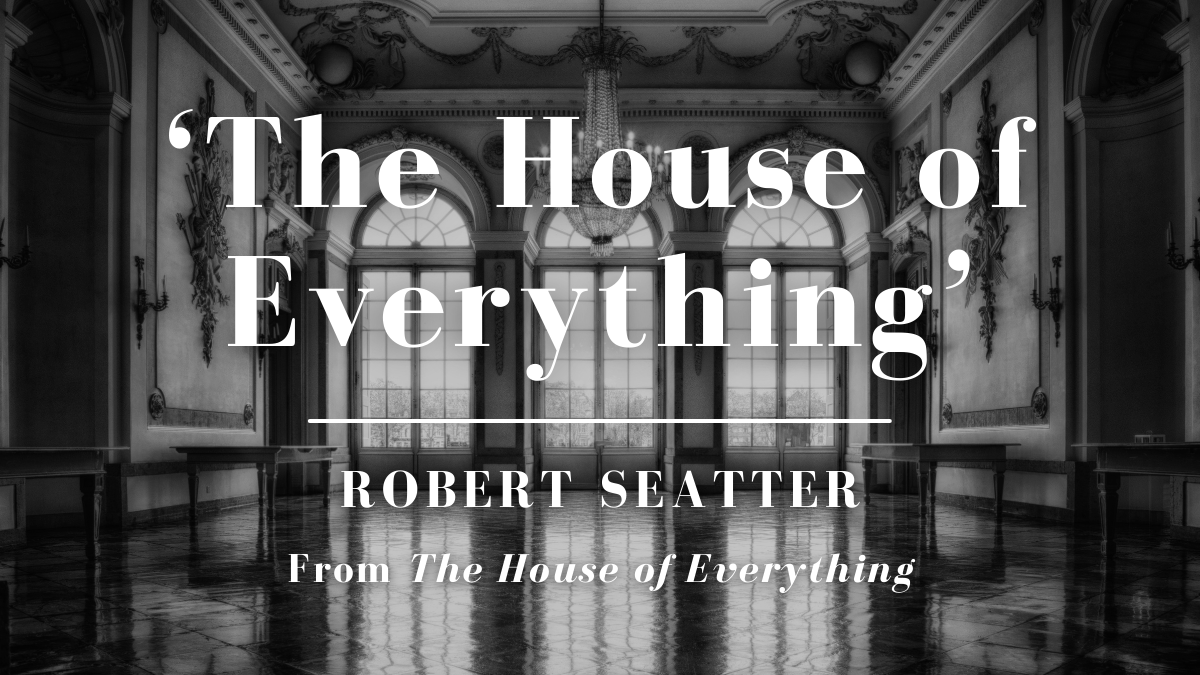
This week’s Friday Poem is ‘The House of Everything’ the title poem from Robert Seatter’s new collection of the same name which is inspired by the collection of Sir John Soane’s Museum in London.
Sir John Soane’s Museum in central London is a unique and idiosyncratic ‘house museum’, designed and built in the early 19th century by its obsessive architect/collector owner. The House of Everything takes the reader on a personal and poetic trail, capturing the tragic story of the man who created it, the eclectic collection he gathered within its walls, and most importantly what it says about our universal desire to leave a mark in space and time. No matter if you have never visited the place before – the texts are intercut with a series of striking collages made by the poet himself. They mix archive imagery of the house with contemporary visuals and help locate the reader in his/her passage through the house. They also help conjure the unique message of this book: how to make material our elusive dreams and imaginings.
Find out more about Sir John Soane’s Museum on their website www.soane.org
Create your free Seren account and enjoy 20% off every book you buy direct from us.
Join us on Wednesday 14th July from 7pm for the online launch of The House of Everything. Register for free via Eventbrite here https://www.eventbrite.co.uk/e/161494704007. Please note registration will close at 6:30pm on the 14th to ensure everyone receives the link.
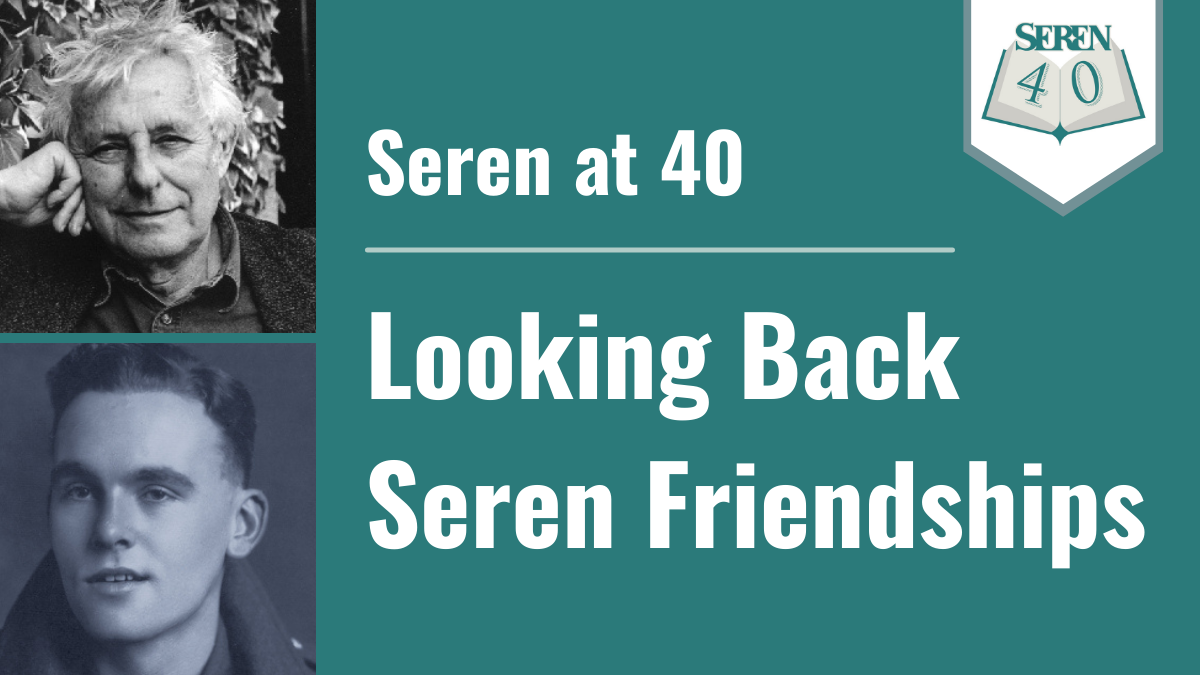
As we continue to celebrate our 40th anniversary, our founder Cary Archard looks back at some of the long-lasting friendships which helped Seren grow into the press it is today.
Seren Friendships
Looking back, I’m struck by how important friendships have been to Seren’s progress the last forty years. ‘They came into our lives unasked for’ is the first line of ‘The Uninvited’, the first and earliest poem in Dannie Abse’s Collected Poems. I first met Dannie at a reading soon after he and his wife Joan bought Green Hollows, their home in Ogmore-by-Sea, in the early Seventies. It was the start of a forty year friendship. From the beginning of Seren, Dannie was an enthusiastic supporter, always particularly keen we should encourage and develop our poets. When within a year of start-up, running things from home became physically impossible, my living room already overflowing with parcels of books and a bigger space needed, Dannie offered the use of the annexe to his Ogmore house.
Dannie Abse
Ogmore-by-Sea was a wonderful place to be based. From the upstairs office window you could look across the grey sea to Devon or muse on the terrors of ‘the eternal, murderous fanged Tusker Rock’ (‘A letter from Ogmore-by-Sea’). Across the road was the Craig-yr-Eos Hotel (since turned into flats) where at lunchtimes you could discuss work over a pie and seek inspiration at the bar. Subsequent office locations have never been so romantic or so characterful. Seren’s super modern, hi-fied, all modcons, present office in the middle of Bridgend just doesn’t have the same charm. Looking back it’s tempting to think that life generally was better then, the pace slower, the publishing world kinder. A time when friendship influenced the decisions. Pressure now seems greater. Success however modest has its price perhaps. Dannie has been much missed since his death in 2014.
(A footnote: Dannie’s wonderful autobiographical novel, Ash on a Young Man’s Sleeve set in Cardiff in the thirties and Forties, published in 1954, never appeared on my Cardiff grammar school syllabus; instead for O level we were offered Harrow and the British army in Churchill’s My Early Life.)
From one chance friendship to another. Also in the early Seventies, I found myself teaching English in the Cynon Valley where I had grown up. I’d applied for the post of a history teacher in Swansea but missed the deadline for applications. Some kind officer in the Glamorgan office had noticed I had appropriate qualifications and sent me the details of the English job. I was lucky. Fortunate also to have arrived there just before Mrs Lewis, highly respected and loved Senior Mistress and German teacher, retired. So it was, ‘totally unasked for’, that I became a colleague of Gweno, wife of Alun Lewis (1915-1944), one of Wales’s finest twentieth century writers. At the time, I knew next to nothing about Lewis’s poetry and stories, even though I had grown up in the same valley. And as far as I can remember, his name had never been mentioned in my grammar school education.
Covers of Morlais, Alun Lewis Collected Poems and Alun, Gweno and Freda (John Pikoulis)
Gweno and I became friends. It was a friendship which led to Seren’s most important publishing achievement, namely the publication of Alun Lewis’s Collected Poems, Collected Stories, and his Letters to my Wife. (Lewis is a wonderful letter writer; comparing him to Keats no exaggeration.) When Gweno returned to her family home in Aberystwyth, I often made that steep climb to ‘The Chateau’, a striking red house, high on the hill overlooking the bay. We talked about Alun, the young Cynon Valley boy (he was under thirty when he died in Burma), his family (I got to know Mair his sister later on), her involvement in his second book of poetry, Ha! Ha! Among The Trumpets, her guardianship of his reputation, and the progress of John Pikoulis’s biography. To be entrusted to publish the author’s work by his wife was a remarkable privilege. It was an unforgettable day when on one visit she brought me a packet inside which was a faded manuscript tied in a red ribbon. It was Alun’s copy of his unpublished early novel, Morlais, which Seren published in 2015, Lewis’s centenary. Just in time. Gweno sadly died the year after.
Create your free Seren account and enjoy 20% off every book you buy direct from us.
To celebrate our anniversary we’re asking our readers to share their favourite Seren books from the last 40 years on social media. Tag us in your photos on Twitter, Instagram and Facebook using the hashtag #Seren40.
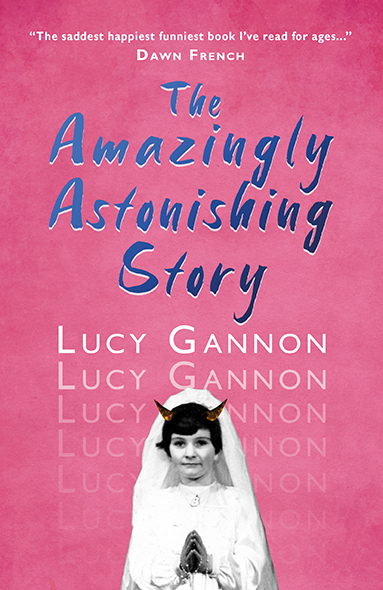
We can now share that The Amazingly Astonishing Story by Lucy Gannon is one of three titles on the shortlist in the Creative Non-Fiction category for Wales Book of the Year 2021.
On hearing the news, Mick Felton, publisher at Seren said: “Seren is delighted at the shortlisting of Lucy Gannon’s The Amazingly Astonishing Story. It’s a book that lives up to its title in the story and the writing. Although it has all the ingredients of misery lit the book is very different from that. It takes the reader to a very good place, through an original, unsentimental inhabiting of a child’s perspective. And then there are the Beatles…”
Wales Book of the Year celebrates outstanding literary talent from Wales across various genres in both English and Welsh. There are four categories in each language – Poetry, Fiction, Creative Non-fiction and Children & Young People. The English-language shortlists were announced on the Radio Wales Arts Show on Friday 2nd July.
Literature Wales Chief Executive Lleucu Siencyn said “This shortlist is a celebration of the outstanding literary talents we have in Wales, during what has been incredibly challenging times for writers, readers, and the wider publishing sector… I encourage everyone to visit your local bookshop or library and immerse yourselves in the worlds of these exceptional titles.”
The Amazingly Astonishing Story is shortlisted in the category alongside Slatehead: The ascent of Britain’s Slate climbing scene by Peter Goulding (New Welsh Review) and Lady Charlotte Guest: The Exceptional Life of a Female Industrialist by Victoria Owens (Pen & Sword).
The full shortlists for each category can be found on the Literature Wales website.
The public now have a chance to have their say by voting for their favourite book across all categories in the People’s Choice Award. You can vote here on the Wales Arts Review website.
The English-language winners will be announced on the BBC Radio Wales Arts Show on Friday 30 July from 6.00pm, where representatives from the judging panel, Literature Wales, and literary pundits will join presenter Nicola Heywood Thomas for this highlight in the Welsh literary calendar. The Welsh-language winners will be announced in a series of programmes on BBC Radio Cymru’s Stiwdio programme between 2 – 4 August.
The Amazingly Astonishing Story is available on the Seren website: £12.99
This week’s Friday Poem is ‘Unseen Island’ by Christine Evans from our new anthology A Last Respect.
A Last Respect is a selection of contemporary Welsh poetry by winners of the Roland Mathias Prize. The poems included are wide ranging in style and subject. They contemplate relationships, nature, the environment, mortality, time, art and politics, and take place in a range of locations, from Aberystwyth to Baghdad, from war-torn landscapes to parents’ evenings. Two accompanying essays provide the context in which the poets work. In her Introduction, Jane Aaron writes about Roland Mathias: a poet himself, but also an influential editor and cultural commentator who did much to foster and develop poetry in Wales.A Last Respect is a continuation of his legacy. Daniel G. Williams’ Afterword is an incisive discussion about poetry in Wales over the past sixty years: where it started from and how it changed. A must-have anthology of poetry from Wales.
Featuring Dannie Abse, Tiffany Atkinson, Ruth Bidgood, Ailbhe Darcy, Rhian Edwards, Christine Evans, John Freeman, Philip Gross, Gwyneth Lewis, Robert Minhinnick, and Owen Sheers.