Posted on

Short Story of the Month | ‘Let Her Go’ by Maggie Ling

Let Her Go Maggie Ling Short Story

October’s Short Story of the Month is ‘Let Her Go’ by Maggie Ling. Previously an illustrator and cartoonist, Maggie now writes short stories. Her writing has been commended and longlisted by a number of prizes, and published in Unthology, and the Asham Award-winning ghost story collection, Something Was There (Virago 2011).

In ‘Let Her Go’, illusory boundaries, previously respected by a holidaying couple, begin to break down when, watching her husband emerging from the sea, the wife picks up an urgent call on his mobile phone and looks back over the years of misplaced love.


Let Her Go

This is an extract. Read the full short story for free on our website.


Your head is just breaking the water when I hear that tedious new ring tone of yours – mercifully muffled by your beach towel. Do you have to bring your phone to the beach? I moaned that morning, We are supposed to be on holiday. You know what it’s like, you’d said, Someone might need a quick comment, a quotable line. I can never be totally out of touch.
What liars we are.
I let that awful, tinkly, tinny tune go through several more ring cycles – less painful, less drawn out than Wagner at least – watch your sea-slicked seal head rise up, watch you turn to look back to the vast expanse of ocean, unwilling to leave this element that is so much your own. Torso fully exposed, now, you wade a few steps, stop once more, turn once more, hands on hips, back to me, looking back. Reluctant to face the deserted beach, no doubt. Your ‘flipper’ feet unwilling to make contact with the desiccated land, unwilling to rejoin the landlubber lying here waiting for you. Although, looking back myself, haven’t I always been the fish out of water.
The caller persistent, I decide to do the unthinkable. Rules, they say, are made to be broken. Though you and I have always prided ourselves on our mindfulness of rules. The concern we have for each other. The boundaries we respect. We have, you could say, made it a rule: a stick with which to measure our so-called easy-going, independent spirits; one we need not beat ourselves up with, since we do stick to the rules. No wishy-washy one-for all, all-for-one sentimentality for us. Oh no. We respect each other’s privacy, each other’s bank accounts, each other’s digital interactions. We two of the Me/Myself/I generation honour each other’s individuality. We are good at holding on while letting go. It was you who coined that arsehole, oxymoron of a phrase. Except, I seem to remember, you said You are good at holding on while letting go. It was back in the days when I was fool enough to take this as some kind of compliment.
I am unmuffling your smothered Blackberry from its multi-coloured cocoon when it comes to me: Who would bother to call, rather than to text you? No one calls you now – except me. And you and I both know I don’t count. All manner of correspondence done, arrangements made with all and sundry, without a single word said by you, heard by me. Who, I ask myself, would be this persistent?  Who would feel a need for such urgency? And, suddenly, in spite of having no warning signs, no reason to expect it, I know who is making the call, know why she is making it.
Meanwhile you are, quite literally, dragging your feet across the sand. Dry land already tiring, already tiresome to you. So much effort a body must make just to stay afloat on boring old dry land.
​           Yes, Izzy, Louise is saying, She’s gone. Too late to do anything. Can I speak to him? Is he there?
​           He’s here now, I say. Louise! I tell you, as droplets of seawater drip from your hair to dot my oily thighs. Lingering there, they remind me of those little golden domes of plastic that keep dropping off the insides of our kitchen unit doors. And I notice several extraneous pubic hairs have escaped my home-waxing treatment. Notice pink pinprick spots left by my home-waxing treatment. While you demand details from Louise: time, place, time before the ambulance arrived. Ask what more might have been done, say what should have been done, who could, should be blamed, sued, shouted at. You appear to almost blame Louise for not being there earlier – she who is there every Saturday afternoon. You exercise your phenomenal powers of outrage, while showing not one smidgen of sorrow.
​           He’s in shock, I tell myself.
​           Bye then, sweetheart, you say, Chin up!
​           And dropping the phone, you reach for the towel and energetically rub your hair with it…


Continue reading ‘Let Her Go’ for free here.


Posted on

Short Story of the Month | ‘Swimming’ by Katie Munnik

Katie Munnik Swimming Short Story

July’s featured Short Story of the Month is ‘Swimming’ by Katie Munnik. Katie is a Canadian writer living in Cardiff whose prose, poetry, creative non-fiction and reviews have appeared in several magazines and anthologies; her first collection of short fiction will be published by Wild Goose this autumn. In ‘Swimming’ she paints a vivid picture of a hot day on the beach, a suggestion of something sinister hidden by the calmness of the sea.


Swimming

This is an extract. Read the full short story for free on our website.


Light and water and sand and warmth. Peace on the way here, too, which can’t be guaranteed these days. Seems of late we’re getting slammed doors and tears every day, and then I stand in the kitchen, taking long, deep breaths. It’s not as if I can’t remember what it’s like to be her age, but try convincing her of that. In such a rush to grow up. She doesn’t see how soon it will all be coming her way; how few years we have left before she’ll be leaving. We could almost count it out in months.

But not today.

Today, she is relaxed. Stretched out on a beach towel, her pale skin courting that perfect, golden glow and her nose already freckling. Long-limbed and lovely. She’s lying on her belly, reading a paperback from the library and chewing on a pencil. From time to time, she underlines something or scribbles in the margin. I’m only watching out the corner of my eye and I wonder what she’s adding to the story, but I don’t ask.

We left her dad at home, working on the new cedar deck. He’ll be sunburnt and spent when we get home, his skin covered in sawdust. He’ll be happy.

This beach is a favourite of mine. It’s not far from the city – only half an hour in the car – and we usually have the place to ourselves. My mum loved it here and used to bring us along on the bus, with a travelling rug and a thermos in the tote bag and her long hair tied back in a scarf. I’d steal her sunglasses and pull faces, pretending to be a bug, and she’d take them back and set them on top of her head, then straighten my pigtails and tell me to go collect some shells. She looked like a movie star, my mum. She’d like to be here now, I’m sure. I’d like that, too.

The sun is already hot on the sand and my skin feels tight. ‘You okay here?’ I ask, ‘I was thinking of going in for a swim.’

‘Fine, Mum.’ She doesn’t look up from the page and her voice is soft and distracted.

The sand is warm and dry under my feet. A breeze blows gently. Not enough to turn the pages of a book. The horizon looks hazy, and I wonder if it’s the heat. Does heat do that over water? I’m wondering about this when I hear a call from the dunes, so I turn to look back and there’s my daughter looking up from her book. Then I hear the crow call again. I smile, catching my mistake, and my daughter waves her hand and lets out an echoing caw. I wave back and turn again to the sea.

The water is cold, but it always is and I don’t hesitate. Step after step after step until I can lower myself in and let the water catch my weight. Long strokes pushing out, the water deepens under me. Further along the coast, there are rocky stretches and cliffs, too, but this bay is gentle and so is the sea. Everything is quiet. The birds must be further out, fishing where the water is deeper or tucked away on their cliffs to watch the world. All I can hear is the sea’s song, lapping and rippling around me.

I swim out a hundred strokes, counting with each breath.

A wave catches me with my eyes closed, mouth open, and I flip onto my back, full of sea. I spit out my breath and taste my heart in my mouth, wondering how a wave caught me unaware like that. I’m blinking now and everything shatters into reflected light as I find the surface again and try to balance, but another wave is coming, so I take a breath and tuck myself safely under the surface. The strength of the running water somersaults me and I can’t fight it. Surfacing again, I look for the next wave, but there isn’t one. The sea is flat…


Continue reading ‘Swimming’ for free here.


Posted on

Short Story of the Month | ‘Spoiled’ by Jaki McCarrick

Short Story Spoiled by Jaki McCarrick

January’s Short Story of the Month is ‘Spoiled’ by Jaki McCarrick, an award-winning writer of plays, poetry and fiction – including The Scattering, one of our best-selling short story collections. ‘Spoiled’ takes us to Paris, where we see a troubled woman adrift, and an enigmatic priest whose sermons she attends.


Spoiled

This is an extract. Read the full short story for free on our website.


He had quoted from one of the Narnia chronicles, something she could clearly remember reading once, from Prince Caspian, in which Lucy, faced with a difficult river journey, asks Aslan to promise she will be safe and Aslan cannot promise. The priest had said that this was the meaning of faith: to go forth without a promise of anything. Mary had been astonished by him and by what she was listening to in the small bright chapel in Paris. During the week she had thought of his sermon often. And of how she had been encouraged by it not to dwell on the thing she had done, that ‘sin’ for which she knew she was truly sorry. She had cried in the church, but was somehow able to choke back the tears so that Susan and Yves and the children would not see. Though Tristan, Susan’s oldest, had seen.
Mary had not wanted to go to the service at all. For what kind of Catholic was she? Beyond lapsed, that was certain. Nonetheless, she went again with Susan and family on the following Sunday. This time she did not like the homily: something about St. Paul and the Jews which she hated because it smacked of anti-Semitism and she felt uncomfortable listening to it and had wanted to walk out. Tristan also saw this reaction in her, her face reddening with rage at the words spoken by the pompous-sounding reader who’d come up to the altar, and her nephew had nudged her, playfully. But then when he began to speak, Father Cal astonished her again. It was not what he said, but how. A couple and their children had been making noise in the front row and though people were openly telling them to hush, they continued. Rather than raise his voice above the rattle of the children and their equally distracted parents, Father Cal did the opposite: his voice quietened, so that Mary began to hear birdsong from outside in the courtyard, and it became the job of those amassed in the chapel to hear Father Cal and not his to reach out to them.
But then, Father Calum O’Neil had been always astonishing. A brilliant student, he shocked his family in his late-teens by declaring his vocation to God. The journey from seminary to curate in a small town in Tyrone to this Paris posting had taken him a mere fifteen years. Fluent in several languages, he had almost completed a PhD at Aberystwyth University and had published several papers, two books. He pursued brilliance and it, seemingly, had pursued him. He would only be in the city for a few months, had broken off his PhD studies to cover for the elderly chaplain whose brethren were this group of mostly Irish ex-pats, some of whom lived in the suburbs but who travelled all the way in by car or train each Sunday to attend the English-language mass in Trinite d’Estienne d’Orvres in the 9th arrondissement.
On the third Sunday, Susan decided they should all stay for the after-service tea and cake. The tea was from home and the cake was a freshly baked tea-brack. (Each Sunday an army of mostly middle-aged women – African, Irish, French – who worked voluntarily for the Church, would swan into the courtyard at the commencement of the service and silently dress and set the table, so that when the worshippers emerged a glorious spread would be ready for them as if by magic.)
Tristan nudged Mary as the priest finally appeared, his white and golden robes now gone in favour of a pale-blue short-sleeved shirt and dog-collar. He walked purposefully towards the congregation of thirty or so people gathered about the long table beneath the metal and glass awning of the chapel. Mary was about to chastise her nephew for teasing her yet again when Father Cal sidled up to them and stuck out his hand. She met Father Cal’s hand with hers and flashed a look up at him. She quietened the nervous movement of her mouth by biting her teeth together, even though she knew this action made her look old.
‘Susan’s sister?’ Father Cal said.
‘Yes,’ Mary answered.
‘Bonjour, Père Cal,’ Tristan said.
‘Bonjour, Tristan,’ the priest said, and smiled. He ran his hand through the boy’s hair in a rough but playful manner. Tristan laughed and ran towards another boy who was kicking a white football by a large pink-flowered chestnut tree at the back of the courtyard.
‘I’m Mary,’ Mary said.
‘How long are you in Paris for?’ he asked. She shuffled uncomfortably as she was not sure for how long she would continue to be in the city – but knew her sister’s invitation to have a change, forget about what had happened at home, was certainly not an open one. At most, Mary thought, they will only be able to stick me another month.

Continue reading ‘Spoiled’ for free here


Posted on

Short Story of the Month | ‘Intervals in making lace’ by Diana Powell

short story intervals in making lace diana powell

Our new short story of the month is ‘Intervals in Making Lace’ by Diana Powell. This is one of a collection of stories set in the Black Mountains, where a group of women artists gather to work. As they do so, they spin tales of their childhoods, coloured by the folklore and landscape of their surroundings. But what do they really remember?

Diana Powell Intervals in making laceDiana Powell was born and brought up in Llanelli, and studied English at Aberystwyth University. She writes mainly short stories and novels. She won the last PENfro short story prize, and the 2013 Allen Raine Award. This year, she was a runner-up in the Cinnamon competition, and was longlisted for the Sean O Faolain, and the Over the Edge. Her work has appeared in a number of print publications, including The Lonely Crowd and Brittle Star.


 

Intervals in making lace

This is an extract. Read the full short story for free on our website.


………

………………..

…………………………

How do you describe a gap? It is, after all, a place with nothing there. You could say ‘an opening with two clear ends’ perhaps – like a break in a fence or a mountain pass (both easily found in our hilly, farm-shod landscape). Or holes in a fishing net; a clearing in a wood …  to let water out; to let light, animals, people, gather.

All these are gaps. All physical entities (although there is nothing there). There are plenty of examples both natural and man-made, difficult, but not impossible, to explain.

But how do you make sense of the other kind of gap – the less substantial, belonging to the mind, or the spirit?

Recently, I have been enduring such a gap in my life: a break in its normal proceedings. An accident. It was an accident: all my own fault, of my own making. There is no one else to blame.

Just like then, whatever they may have said.

‘Foolish Bron! Daydreaming again!’ Words from the past echo down to me. The voices of my mother and father, or sisters, fondly scolding. ‘Off in cloud-cuckoo-land, Bron? Again?’ True, then; true, now. For yes, I was daydreaming. You’d think I would have learnt … I had learnt! For a long time, I had! But no, my thoughts wandered away, and my body followed, leaving the stove on, and the towel draped too close. Easily done; it could happen to anyone! Though there are, no doubt, those who whisper about my fondness for a glass of whisky; a second glass. Those such as the old women in the Square, who tutt behind me as the till girl in Mace slips the bottle into a brown paper bag; all the while dismissing and excusing, somehow, their own favoured tipples – as if sherry and gin do not count as the devil’s potions, brewed to steal your wits and lead you to Hell.

But there was no whisky that night, though I am happy to admit to it on other occasions. After all, it is a quick, easy way of making gaps in your existence, if that is what you are after.

So … there was a fire, as testified by those who pulled me from it, and by the charred detritus of my worldly goods – and of my body. Yes, my body bears witness, but not my mind. Not my consciousness, for I remember nothing. Even the knowledge of the stove and tea towel were presented to me later. Lucky, some say. Better that way – to have been pushed into such dense oblivion by the fumes, and to fall from that into an even deeper chasm of unconsciousness (the greatest depth of my gap), so that I did not know the worst of the pain, or the prodding, patching and finishing that was needed to put me back together again, into some reasonable fashion. Did not know … until I finally woke and had to face the torment, and battle through it (such floundering, such darkness, then!) Making tentative steps forward into painful reality, interspersed with welcome lapses back into insensibility … one step forward, two steps back. Onwards, upwards, until…

Until I am here. Now. Again. Yes, I have come through on the other side. For there is always this about gaps – the suggestion that they can be bridged or crossed; that they are something to emerge from. It may take time, and much effort. But, with some luck, and hope, you can make it. Maybe.

That is how it seems to me now – now that I am trying to put my life back together, and make sense of it all. Yet, in truth, none of what happened should have been strange to me. I should have been prepared. I should have known all about absences from consciousness; lapses from reality. I should have remembered. But back then we called such things by different names. We wrapped them in strange words, or wove them into magical imaginings, all meant to cloak, disguise or simply hide them. And so the truth was left unsaid, replaced by uncertainty and bewilderment. Another kind of gap; a deep, churning river that you struggled through, leaving you reaching for understanding like a drowning man gasping for air. But since I came back here, amongst you, memories have been returning – not from the accident, but from my earliest years, as if they are needed now. Like the echoing words, they flash into my mind, clear, not clouded. And beyond them, something else is taking shape – something not fixed, yet, not fully revealed, but which, if I start with what is definite, will also, perhaps, become more clear, so that I, too, will have some kind of story…


Continue reading ‘Intervals in making lace’ for free here.


Posted on

Short Story of the Month | ‘The Dig’ by Graham Mort

short story of the month the dig graham mort

Our new Short Story of the Month is ‘The Dig’ by Graham Mort, from his newest collection, Terroir, in which past and present intertwine as amateur archeologists dig for answers in an area whose violent, territorial history they know nothing of.

the dig from terroir by graham mortAbout Terroir:
From England to Europe, Africa to South America, these stories from prize-winning short story writer Graham Mort explore relationships: father and child; man and wife; man and his environment.
All these stories are sensitively told and beautifully written, bringing fresh perspectives to our place in the world around us.
Graham Mort has won the Edgehill and Bridport and Short Fiction short story prizes.


The Dig

This is an extract. Read the full short story for free on our website.

A Thistlethwaite, red-haired like all her clan. Longshanked, full-breasted, tall. Freckled, grey-eyed, jug-eared, a crooked smile creasing into dimples. Climber of rockfaces for hawk’s eggs. Horse breeder, dog hater. Broadshouldered, a fighter who’ll take on her brothers and anyone else. Fey, man-shy, loyal. Fierce to the lie, quick to offence. Footsore now, limping from a bruised knee where the gelding took her into a dry stone boundary.
Homeward bound, the moor’s peat squelching underfoot, the heather springy, bog cotton in the hollows. Hungry and used to it.

The Land Rover lurches on the bridleway, loaded with wire ladders and lamps, yellow waterproofs, digging gear. The man’s helmet lies beside him on the front seat. His hair is spiky grey, his hands badly scarred from a fire. The flesh has grown back in purple patches. He’s got a blue thumbnail where a hammer missed. He wears a diver’s watch with a black plastic wristband. Sun shows up the scratches on the spattered windscreen, tyres jog over stones and ruts and into mud puddles. The exhaust stinks in low gear. He’s arranged to meet the others at the dig. This one’s been on the go for months and you never knew who’d turn up.

She’s a long hour from home after trading her grey horse in the next dale. There are coins in her purse but she’s packed it tight with grass to stop them chinking. She rode the gelding bareback to the Sykes place, now she has the walk home. It was a good sale. The bridle and harness are
tight under her jerkin. She’s taken a short cut over a flank of moorland, crossing a corner of Abel Rintner’s land, past his new peat cuttings where turves are piled. She’s black to the ankles and there’s a foul gas from the moss. She could have played it safe and detoured by the valley head,
then down past the inn where there were other folk. There’d be drunken, groping bastards too. Fenmen and Dutchlanders draining the land for the monks, gabbling, fetching up phlegm and laughter. She can’t bear that. No need if the light holds. Her feet catch in rushes. She can hear the calling of fat lambs. Soon they’d be cutting their throats for Eric’s wedding.

There’s a dirty Peugeot estate parked where the bridleways meet. Dark blue with a roof rack. Two other cavers are already climbing into their gear. A woman in her late thirties with pulled-back hair and acute blue eyes; a fifty-year-old man, bow-legged, short and bearded. He’s coiling a climbing rope clarted in dried clay and she’s fastening her overalls over rubber boots. Their greeting is a stubbing of cigarette butts, a faint smile, nods to the stile, the causeway they’ve laid across the marsh that leads to the dig. Another path goes up over the limestone edge, past the killing pit – a swallow-hole with almost sheer sides, twenty yards across and twelve deep. They’d help excavate that for an archaeological dig, uncovering broken animal bones and Mesolithic flints. Hand axes, arrow tips, flensing blades. The ancient people had hunted with dogs, driving red deer, elk, auroch, and wild boar over the edge then stoning them to death. They’d been proud of that dig, the way it made sense of things, of the past. The man with the
scarred hands slams the Land Rover door and takes two yellow plastic trugs from the back. They pick up their lamps, two folding spades, a short-handled pick. The bearded man carries the rolled-up ladder and the woman with blue eyes lifts a coil of rope.

Jogging across the moor to strike the track, Hannah’s breath is harsh now. She’s anxious to get to the commons below. Sun is dropping over the sea about thirty miles west. The air is cooling, smoke coiling from the farmstead she’s too close to. A flight of geese follows the river to the estuary in
a double vee. She stumbles, pauses, rights herself, touching a hand to her sore knee. There’s the sudden hiss and flicker of plumage. A streaking bird is attacking her. Then the arrow strikes into her forearm, almost parallel to the bone, the point driving right through. She sucks her breath, freckles starring her suddenly white face. She glares round quickly and keeps moving. She should have covered her hair. That was stupid. The mistake will cost her. She’s wearing an amber amulet that hangs from a leather thong. It tosses as she runs. The arrow stings, evilly. She needs to get out of view, jags to the left, drops into a gulley and lies listening for dogs. Nothing. She follows the gulley down, stumbling, nursing her arm, trying to let blood drip onto her and not bare rocks where they can track her. There’s a little water in the beck bottom, not much.

They walk up the lane in single file, trudging a little after their day of work. Each to their own: wrought iron making, timberwork, the work of the body. There’s a gate on the left leading to the wooden causeway laid over the moor. The timber smells of creosote. The man with the beard grimaces, but the woman half smiles, bends her head a little closer as she swings the gate back onto its catch, savouring a memory. They move across the peat bog, feeling the planks sink a little under their weight. There are black pools on either side. Petroleum from the peat has stained them with iridescent patterns. A stand of bog cotton stirs in a slight breeze coming off the Irish sea. The man in the lead flexes his fingers and switches hands on the trug. The woman’s eyes are paler here, bluer, as if cut from underwater stones. She’s thinking of a bright room, how she loves the touch and smell of babies though she’s had none of her own. Their pure skin, their tiny hands reaching to their awed mothers’ faces.

Voices, thick and faint, not far off. A hundred yards. Maybe more. Men’s bass tones. She pauses, hunched over. Dark blood is oozing where the arrow tip has gone through.

Continue reading ‘The Dig’ for free here.


Graham Mort’s short story collection Terroir is available to buy from the Seren website: £9.99.

Claim 20% off when you become a Book Club Member.

Posted on

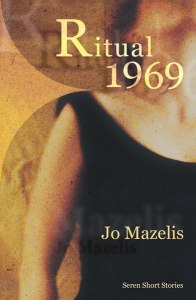
Win a signed and numbered copy of Ritual, 1969

win a copy of ritual, 1969 by jo mazelis

Enter our giveaway to win a signed and numbered copy of Ritual, 1969, the haunting new collection of short stories by Jo Mazelis!

To enter, simply sign up to the Seren newsletter before 1st June:
https://www.serenbooks.com/newsletter/signup

win a copy of ritual, 1969

Ritual, 1969 is a darkly gothic collection of stories by Jerwood Prize-winner Jo Mazelis that explores the unsettling borderland between reality and the supernatural. Ranging from early twentieth-century France to 1960s South Wales and contemporary Europe, Jo Mazelis’ singular vision and poetic language creates characters caught up in events and feelings they do not fully understand or control, giving the book its uncanny focus. Not all is as it seems in a world where first impressions may only conceal disguises and false trails – and there’s no going back.

The winner will be chosen at random from all our email newsletter subscribers on 1st June 2016, so if you haven’t already, hurry and sign up for our newsletter before the end of the month if you want it to be you!


Posted on

Short Story of the Month | ‘A Bird Becomes A Stone’ by Jo Mazelis

Our January Short Story of the Month, still available to read, is ‘A Bird Becomes A Stone’ by Jo Mazelis, which features in her beautiful new collection Ritual, 1969, due to be published April 2016.

A Bird Becomes A Stone from Ritual, 1969 by Jo Mazelis

This, her third collection, welcomes you to a darkly disquieting world of make-believe and performance, where nothing is quite as it seems and first impressions may only lead to further disguises and false trails. Twins, circus acts, playground games and play-acting, the path from the schoolyard to adulthood is beset with misunderstandings, missed dates and traps for the unwary.

Awarded a Jerwood Fiction Uncovered Prize for her debut novel Significance, Jo has also had numerous short stories in anthologies and listed for awards, including five short-listings for the Rhys Davies short-story prize. Several of her stories have been broadcast on Radio 4.


A Bird Becomes A Stone

This is an extract. Read the full short story for free on our website.

The film Sarah had volunteered to act in was written and directed by a Welsh girl called Catrin, who was at college in Bristol. She’d brought a crew of other students to Wales, one to do sound, another was a cameraman. There was also a sulky girl with bad skin called Morgana whose role was not explained. They drove in a grubby white VW van up to the Brecon Beacons, careering and bumping along narrow tracks in search of good locations. The cameraman drove and the girl with bad skin sat up front because she claimed she’d get carsick otherwise. So the other three had to suffer in the back, wedged in among the film equipment and two plastic sacks of what seemed to be dirty laundry but turned out to be props and costume.

Sarah played the main role. According to the storyboard a lot of footage would consist of her running through woods, along a shoreline (brooding clouds and crashing waves in the background) and along treacherous mountain paths. The schedule demanded that they shoot with her for three days, then on the fourth and fifth days another actor would join them. He was to play a man who had molested her as a child. The chief premise of the film was that every impression in the early sequences led the audience to believe she was being chased, but actually it emerged that her character was the pursuer. The hunted becomes the hunter.

They parked at a lay-by above a stream. The day was still and unusually warm, white puffs of cumulus clouds moved lazily across a yawning blue sky.

‘This weather is crap,’ Catrin said.

The girl with the bad skin sat on a rock and stared hatefully at the rest of them as they unloaded the van.

From eleven o’clock until almost two, Sarah helped Catrin and the sound man scatter torn white sheets along the side of the stream while the cameraman shouted directions at them. At two they stopped for a lunch made by Catrin’s mother. Sandwiches with cheap white bread, some sort of meat that might have been pork or possibly turkey, hard-boiled eggs, crisps and an assortment of chocolate-covered biscuits which were warm and sticky and reminded her too much of long journeys in the back of her parents’ car; of her loneliness as an only child.

After lunch Sarah climbed into the back of the van and struggled into the costume they had brought for her; a grubby, ivory-coloured floor length dress. It had a plunging front and tied behind her neck leaving her back bare. It was made of artificial satin and the rough skin on her hands caught on it like tiny barbs.

In this scene she was meant to wander along by the stream charting a course between one discarded rag and another. Catrin showed Sarah some photographs taken after a battle; women searching for their menfolk in a field littered with the corpses of soldiers, explaining that this was the atmosphere she wanted to convey.

Sarah set off barefoot; in places mud oozed between her toes. The dress was thin, she shivered as the sun began to drop behind the mountains, but she persevered.

That night Sarah dreamt that she was filming the scene over and over, but her dream was invaded by the war photograph and as she stared at each flung-down rag, the torn scraps came to life turning into dreadful ghosts with scarred and half-flayed skin who moaned and tried to touch her.

The next day Catrin was overjoyed as weighty blue-grey cumulonimbus began to gather behind the mountains threatening an approaching storm.

‘We’re going further north today, then as far as Dolgellau on Thursday.’

There was little time wasted on the second day; they parked on a bleak mountain with a ribbon-like road running through it. Plynlimon hunkered under dark skies to the north.

‘Now just run towards the camera but look beyond it, not directly at it.’

She ran. Barefoot in wet grass peppered with shiny black sheep droppings, her long dress saturated up to her thighs. A few times she fell but pulled herself up and stumbled on.

‘That was brilliant! It looks so real when you fall,’ Catrin said.

‘Hey,’ the sound guy said, touching her arm gently. ‘Is that blood? Did you hurt yourself?’

She looked down; the dress was torn over her right knee, bright crimson blood mixed with muddy grey stains. She lifted her dress, her knee was grazed and in one place a small cut sent a trickle of red coursing down her leg and over the arch of her foot.

Continue reading ‘A Bird Becomes A Stone’ here.


Jo Mazelis’ new collection, Ritual, 1969, will be published by Seren in April 2016. More information coming soon to the Seren website.

Posted on

Why Short Stories Are Worth Reading

In the publishing world, there’s one thing that’s almost always guaranteed: short stories don’t sell. But why?

Short stories are the first stories we’re ever introduced to, they’re our stepping stone into the world of storytelling. Whether they were told around campfires, painted on cave walls or sewn into tapestries, short stories have been passed down throughout the generations for as long as we’ve been able to tell them. From the Brothers Grimm to the Mabinogion to the many voices that make up the 1001 Nights, the short tales and fables our ancestors leave us are some of our first teachers: lessons such as ‘don’t stray off the path’ and ‘slow and steady wins the race’ are the product of short stories, not epic novels.

As adults we don’t need these kinds of stories – or so we might like to tell ourselves – we move on, quite literally, to bigger things, and yet nowhere does it say that short stories are only meant for children. After all, the Grimm’s Fairy Tales were initially meant for everyone, not just younger readers. To tell a story both well and concisely takes real skill, which is one of the many reasons why short story collections are so worth reading. Here at Seren we’ve published several collections, from Mary-Ann Constantine’s haunting All the Souls to Graham Mort’s upcoming Terroir, and they’re an ideal way to get a taste of an author’s style before you dip into their longer fiction.

Short story anthologies can be even better. With the recent publication of New Welsh Short Stories, we released a collection of stories by both new and established Welsh authors such as Jo Mazelis, Robert Minhinnick, and Stevie Davies just to name a few. Anthologies are the perfect way to read widely within one book, to try out new authors or revisit old favourites, meaning there’s always a story for everyone. They might even teach us the odd lesson or two.

By limiting ourselves to novels we miss out not only on some of the world’s most finely crafted fiction, but on the chance to discover new authors we may never have stumbled upon otherwise.

Order New Welsh Short Stories from our website.

Posted on

The Murder of Dylan Thomas

Seren will be bringing you a new short story every month in 2014, written by some of the best undiscovered and established writers in Wales.

February’s short story takes a look at the haunting legacy of Dylan Thomas, something we’re likely to hear a lot about this year. Written by Somerset Maugham prizewinner Mark Blayney, The Murder of Dylan Thomas, is set in the future, looking back through the smoke and mirrors of Browns Hotel to a confused but essential past.

Read The Murder of Dylan Thomas here.

Image

Posted on

Graham Mort ‘Touch’ longlisted for Edge Hill Short Story Prize

Graham Mort’s book of Short Stories Touch, has been longlisted for the Edge Hill Short Story Prize. Touch, which was published by Seren in 2010, is on this year’s long-list with an impressive range of award-winning writers.

Touch includes a Bridport prize-winning story “The Prince” and was described by Novelist and Bridport judge Tracy Chevalier as “the writing is word-perfect.. with the story quietly remarking on how something out of the ordinary both does and doesn’t affect daily life. In particular, I was enchanted by deft descriptions of nature”.

Also on the longlist is Roshi Fernando, who features in Sing Sorrow Sorrow, an anthology also published by Seren.

Short-list to be announced in May and the winner will be announced at an award ceremony at Blackwell Bookshop, Charing Cross Road in July.

Find our more about Seren author Graham Mort on our blog under ‘Seren Authors’, or on our website.