Posted on

50% off all Seren poetry collections for National Poetry Day

national poetry day sale 50% off

Today is National Poetry Day, and in celebration we are offering a whopping 50% off all our fabulous poetry books.

Seren have been dedicated to publishing poetry since the 1980s, and so there are a stunning number of titles on offer – everything from the classic bestsellers like Dannie Abse’s Welsh Retrospective and Sheenagh Pugh’s Selected Poems to our newest offerings, like Caroline Smith’s topical The Immigration Handbook and Tony Curtis’ hot-off-the-press From the Fortunate Isles: New and Selected Poems.

national poetry day 50% off sale Seren

Hurry to take advantage of this offer as it ends at midnight on Sunday, 9 October. We hope you discover great new poetry, on this most poetic of days…

Explore the Seren poetry shop and find new poetry for less

Posted on

Friday Poem – ‘Savoy Hotel, London’, Rosie Shepperd

friday poem rosie shepperd

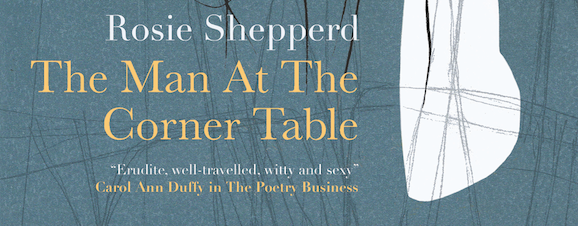
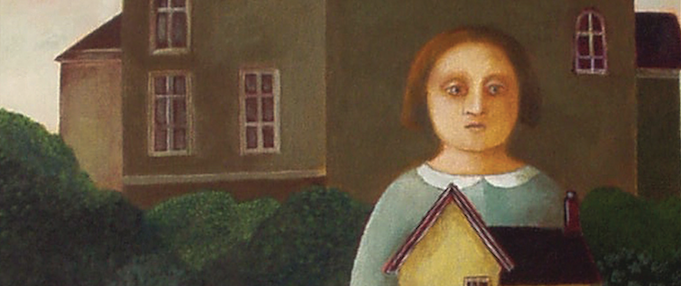
This week our Friday Poem is from Rosie Shepperd’s tantalising debut, The Man at the Corner Table. You can hear Rosie read from this collection live on National Poetry Day, 6 October, at Berkhamsted Waterstones alongside Caroline Smith and Graham Clifford.

the man at the corner table rosie shepperdThe Man at the Corner Table crackles with the unexpected. The voice is one of urban sophistication; a merciless charm that teases and tempts us with sensual evocations of food and place. The reader is surprised with tastes, scents, colours and textures. There is a winning insistence on detail offered with an irony that blends into satire.


Savoy Hotel, London
Those nights downstairs at the American Bar;
it’s not just the chairs that show gilt in the telling.
Back then we were almost quite something.
You and London were lean;
your eyes, a fraction off-centre as you
struggled not to say,
We have this connection. My God.
You overplayed.
And not just your hand.

My role in this mellow
drama was to shift that arse
you loved to chase and twitch my best side
close to the oh-so-Maraschinos.
Too long ago, they were fruit in a tree.
Some tree.
I guess they were something for me
to play with; the pretence
we were ever friends was just
a way to simulate sharing.

30:70 and I never found out
who made the best bet
but I do know that’s the wrong word.
Early is just another kind of late and
anyway, you were always
there each night, every night. There’s
no fool like a blind
fool; thank God I didn’t see the edge
till I was over and out
the other side.


Buy your copy of The Man at the Corner Table now: £9.99

Claim 20% when you become a Book Club member

Posted on

Friday Poem – ‘What the Dead Don’t Know’, Anne-Marie Fyfe

Friday Poem What the Dead Don't Know Anne-Marie Fyfe

Our Friday Poem this week is taken from Anne-Marie Fyfe’s latest collection, House of Small Absences.

House of small absencesAnne-Marie Fyfe’s poems have long dwelt on the role that the spaces we inhabit, the places in which we find security, play in our lives: House of Small Absences is an observation window into strange, unsettling spaces—a deserted stage-set, our own personalised ‘museum’, a Piedmont albergo, underground cities, Midtown roof-gardens, convent orchards, houseboats, a foldaway circus, a Romanian sleeper-carriage—the familiar rendered uncanny through the distorting lenses of distance and life’s exigencies, its inevitable lettings-go…


What the Dead Don’t Know

Grows quickly, daily, from the perimeter
of a postage stamp, until it’s twice the size
of Norway, and growing fast.

What the deceased can’t understand
is why they don’t still hear from us
day-by-day, hour-by-hour.

What the departed don’t see
is how the lead story has moved on.

What the dead won’t say
is more or less what they didn’t say
when they had the chance. Diplomacy,
tact, reserve: these things endure.


Buy your copy of House of Small Absences now: £9.99

Claim 20% when you become a Seren Book Club member


Posted on

Friday Poem – ‘VII’ from Batu-Angas, Anne Cluysenaar

batu-agas Anne Cluysenaar

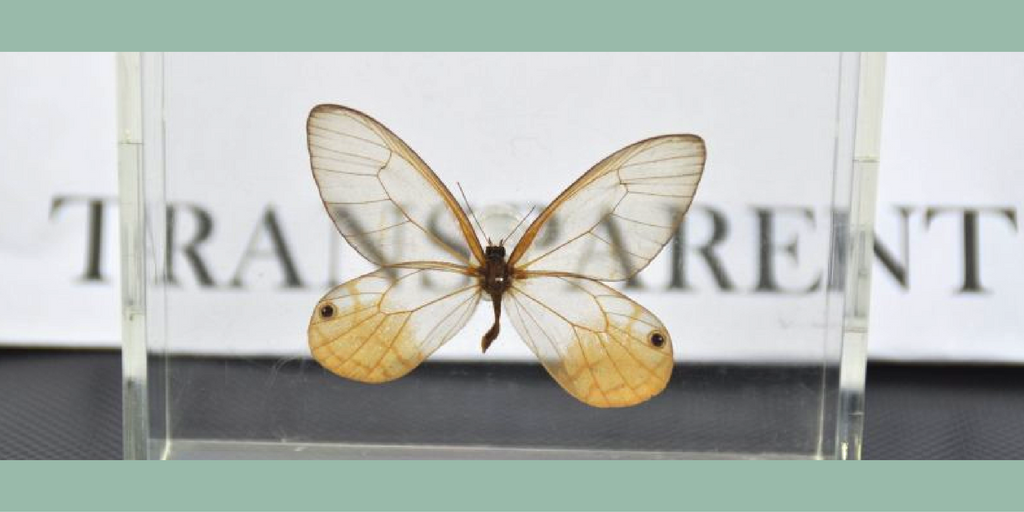
In celebration of the brief heatwave that has hit the UK, we are taking this week’s Friday Poem from Anne Cluysenaar’s tropical Batu-Angas: Envisioning Nature with Alfred Russel Wallace.

Batu-Angas Anne CluysenaarAlfred Russel Wallace (1823-1913) was one of the most famous scientists of the 19th century and is best known today as the co-discoverer, with Charles Darwin, of the theory of evolution through natural selection. Wallace’s life and work are the inspiration for this beautifully considered collection of poems. Why the title? As Anne Cluysenaar explains in her Foreword:

It was during an acute bout of malaria on the volcanic island of Ternate that it ‘flashed upon’ Wallace how life evolves through natural selection … From the local language of Ternate itself, Wallace had borrowed the phrase ‘batu-angas’ to describe the ‘burnt rocks’ or cooled lava he saw there. The phrase struck me as as suitable title for this sequence because it could be said to symbolise the visible world at any one time – a world now, thanks to Wallace and Darwin, known to maintain a seeming stasis only, amid the flowing lava of evolution.


VII

batu-angas-blogBatu–Angas is available from our website: £8.99

Sign up to the Seren Book Club and save 20%


Save

Posted on

Friday Poem – ‘Autumn Elegy’, Leslie Norris

Friday Poem Autumn Elegy Leslie Norris

Our Friday Poem this week marks the coming of autumn, and is taken from Leslie Norris: The Complete Poems, edited by Meic Stephens.

Leslie Norris Collected PoemsThis landmark publication of over 300 poems is a testament to a publishing life of more than sixty years. The late Leslie Norris, who died in 2007 at the age of 86, was best known as a nature poet and elegist of passion and rare expression. Lyrical and individual, to his closely observed poems, each word weighed and in its correct place, Norris introduces a strong metaphysical element which makes the poems, as Edward Lucie-Smith noted, “much larger than the sum of their parts”.


Autumn Elegy

September. The small summer hangs its suns
On the chestnuts, and the world bends slowly
Out of the year. On tiles of the low barns
The lingering swallows rest in this timely

Warmth, collecting it. Standing in the garden,
I too feel its generosity; but would not leave.
Time, time to lock the heart. Nothing is sudden
In Autumn, yet the long, ceremonial passion of

The year’s death comes quickly enough
As form veins shut on the sluggish blood
And the numberless protestations of the leaf
Are mapped on the air. Live wood

Was scarce and bony where I lived as a boy.
I am not accustomed to such oppulent
Panoply of dying. Yet, if I stare
Unmoved at the flaunting, silent

Agony in the country before a resonant
Wind anneals it, I am not diminished, it is not
That I do not see well, do not exult,
But that I remember again what

Young men of my own time died
In the Spring of their living and could not turn
To this. They died in their flames, hard
War destroyed them. Now as the trees burn

In the beginning glory of Autumn
I sing for all green deaths as I remember
In their broken Mays, and turn
The years back for them, every red September.


Buy your copy of Leslie Norris: The Complete Poems now: £25.00

Claim 20% off when you become a Seren Book Club member


Posted on

An Interview with Caroline Smith

An interview with Caroline Smith The Immigration Handbook

Today we are joined by Caroline Smith, whose new poetry collection The Immigration Handbook weaves together stories of hope, frustration and pain, drawn from Smith’s experience as an Immigration Caseworker.

CarolineSmith CropCaroline Smith was born in Ilford and grew up in Hertfordshire. She originally trained as a sculptor at Goldsmith’s College. Her first publication was a 30-page narrative poem, ‘Edith’. Smith’s first full collection, The Thistles of the Hesperides (Flambard), is about the community of West Pilton in Scotland where Caroline lived in the 1980s when it was one of the most deprived housing estates in Europe. Using imagery and structure from Greek mythology, and direct stories from observed lives, the poet weaves a dense and dramatic tension between the harshness of reality and the lyricism of myth. Published widely in journals like Poetry Wales, Poetry Review, Staple, Orbis and Stand, she has twice won prizes in the Troubadour Poetry Competition.  Smith has had work set to music, broadcast on the BBC and is also the author of a musical play, The Bedseller’s Tale, that was performed at the Edinburgh Festival Fringe.  She lives in London with her family.

 The Immigration Handbook Caroline SmithYour new poetry collection, The Immigration Handbook, brings to life the stories from migrants and refugees that you hear every day in your work as an Immigration Caseworker. What made you choose to transcribe these deeply affecting stories, and was the process cathartic?

Writing thousands of letters to the Home Office over the years, I think about language, what turns a letter into a poem, the different functions of language and how by changing the angle or perspective on a subject you can show it afresh. My book is another way of contributing to the immigration debate, but it is primarily a book of poetry. It’s the stuff of my life so it’s what I make art out of.

When I was younger I couldn’t decide if I wanted to be a priest or a sculptor – so I campaigned for women’s equality and ended up as a poet! But in a sense these twin strands have come together in my poetry; my interest in social justice and my training as a sculptor who needs always to recreate the world in a different way.

I’ve never found writing cathartic. When I am most upset about something I want it to stop, I don’t write my way out of it. I see my work as an Immigration Caseworker and my poetry as separate. I get angry and try to change the system, but for poetry I need distance and reflection and I enjoy the creative process; the juxtaposition of odd fragments, creating something new, although I suppose it is cathartic in a Nietzschean way….. ‘Every art and every philosophy may be regarded as a healing… in that respect maybe.

Your poems are often (unsurprisingly) rather bleak, as they describe characters who have lost hope, who feel abused by the system, who don’t know where to turn. Do you hope the collection inspires people to see beyond the statistics and recognise the humanity of those seeking citizenship?

Yes that is exactly what I am hoping people will find in my poems – despite the bleakness, a celebration of humanity. My poetry contributes to the immigration debate; not by putting forward a set of arguments like I do in my letters to the Home Office, but by showing the humanity of people trapped in the system. Not every asylum seeker or refugee is a hero or angel. I have painted people as they are – with both frailties and resilience. We all have the same longings and desires to make something of our lives, it’s just that the people I see in our immigration surgery have a much tougher journey than most of us have ever had to bear.

You have a knack for finding humour in surprising places, for instance in your poem ‘Judgements’, which cleverly and comically portrays the bureaucracy behind judgements made on applications:

“… if the appellant claimed
that relevant matters did not happen I should not
exclude the possibility that they did not happen
(although believing that they probably did)”

Is humour an important part of poetry writing for you? And does it follow you into the workplace, and other aspects of your life?

Tragedy and comedy sit very close to each other. I’ve received so many misspelt letters…’I have been arrested by six uninformed guards’…with wormiest regards’‘I love your cuntry’!

Satire and the use of comedy is important in art. Slapstick and the absurd sharpen the truth of a situation. The most wildly improbable stories, can actually accentuate pathos and provide a break in the bleakness. Humour is also a great tool for showing up the absurdity and dysfunctionality of the Home Office which cruelly traps people without status and documents for years. It is the startling and unbelievable that is often true; whereas the predictable stories are most likely to be fabricated.

The Immigration Handbook was written over a number of years. Were these poems always destined to be released as a collection, or did the idea to publish these stories together come much later?

I always intended them to be a sequence of poems on the subject. I remember the night I started writing this collection. I filled a book with scrawling notes of incidents, characters and injustices. But it is one thing to have an idea for a poem, but then you have to wait for all the elements to come together and it often ends up going off in a completely different direction. Because I have so many stories fermenting in my head, unexpected elements mesh together.

Both my previous collections included sequences of poems. I’ve never been interested in writing a novel, but I love the opportunities presented by writing a number of individual poems that can work together and spark off each other to come at an idea from different angles and perspectives. Although I don’t write formally, the form of the poems are critical to me. I used to approach a sculpture from all angles as once.  I would use different materials and found objects set against each other to break up the surface, juxtaposing different textures. And I think I do the same with poems using different intensities; some highly worked, some quick ‘line drawings’, some found reports. The difference today is that I’m carrying my studio of scraps and fragments and found objects around in my head!

And finally, tell us about your plans for the future- where will we see your name next, and are there any festival or events appearances you can tell us about?

I had a great time reading at the Ledbury Festival earlier this summer and my book launch at the Nehru Centre in London was just fantastic – courtesy of the Indian High Commissioner! I have a whole series of readings lined up for the autumn in Cardiff, London, Aberystwyth and I’m doing a couple of Festivals in Bristol and Chorleywood as well as a special event with Waterstones in Berkhamsted for National Poetry Day.

I am really enjoying giving readings and talking about my book but already the restlessness to create and my dissatisfaction with the world as it is, is pushing me back to my writing desk. When I have lots of ideas in my head I find it distracting to read. Now The Immigration Handbook is out I’m reading as much as I can, going to lots of poetry events and every play that I can get tickets for.

17th September: Free Verse, The London Poetry Book Fair.
3
rd October: Poetry Can Festival, Bristol.
6
th October: National Poetry Day, Waterstones Berkhamsted, Herts.
15
th October: Chorleywood LitFest, 12 noon The Junction, Chorleywood, Herts.
18
th October: Lumen Poetry Series, 19:00 Tavistock Place, London.
26
th October: Aberystwyth University, English & Creative Writing Society.
27
th October: Waterstones Aberystwyth.
30th October: Cardiff Book Festival.
24
th November: 19:30 Waterstones Piccadilly.

The Immigration Handbook is available on our website. Buy your copy now: £9.99
Claim 20% off when you become a Seren Book Club member

Save

Posted on

Friday Poem – ‘In September’, John Ormond

Friday Poem in September John Ormond

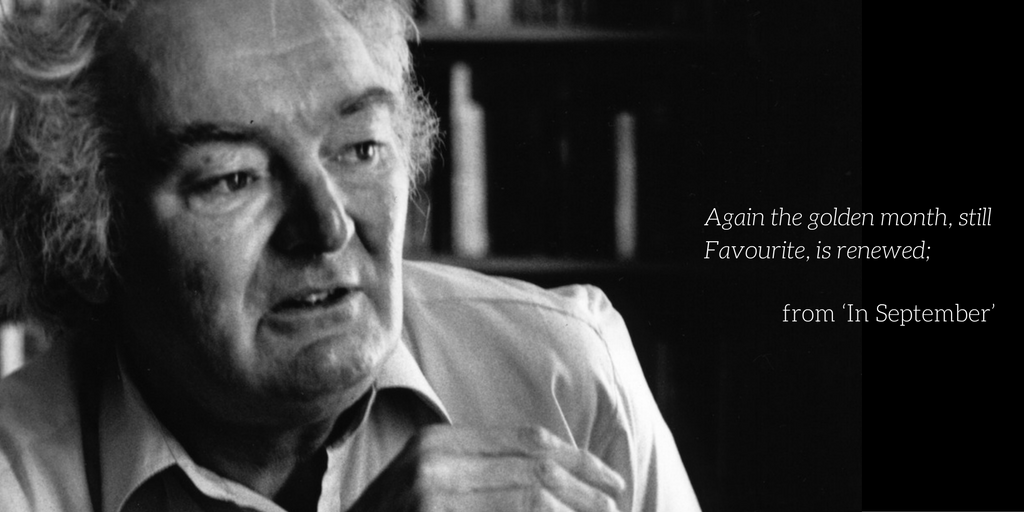
For this week’s Friday Poem we have ‘In September’ by John Ormond, from his Collected Poems, edited by Rian Evans. The poem was written for Glenys in celebration of their wedding anniversary, which fell on the 21st September. Since the two were married in 1946, that would have been 70 years ago.

John Ormond Collected PoemsPenned late on the night of the 20th of September, probably 1970, because he’d forgotten to buy a card, it was deemed by them both to be infinitely preferable. Memories of key moments in their courtship are woven into the lines, while the storm door was the big black outer door of their home in Conway Road. The poem appeared in various anthologies: one which pleased Ormond was the Almanacco internazionale dei Poeti 1975 (La Pergola Edizioni) containing the Italian translation ‘In Settembre’ by the eminent translator, poet and critic Roberto Sanesi.


In September

Again the golden month, still
Favourite, is renewed;
Once more I’d wind it in a ring
About your finger, pledge myself
Again, my love, my shelter,
My good roof over me,
My strong wall against winter.

Be bread upon my table still
And red wine in my glass; be fire
Upon my hearth. Continue,
My true storm door, continue
To be sweet lock to my key;
Be wife to me, remain
The soft silk on my bed.

Be morning to my pillow,
Multiply my joy. Be my rare coin
For counting, my luck, my
Granary, my promising fair
Sky, my star, the meaning
Of my journey. Be, this year too,
My twelve months long desire.


John Ormond: Collected Poems draws together all of Ormond’s work, including unpublished material. It includes notes and commentary of the poems, and a bibliography of Ormond’s prose writing, films and writing about him. An index of titles and first lines completes this essential book.

Buy your copy now: £14.99

Claim 20% off as a Seren Book Club member


Posted on

Friday Poem – ‘Insomnia’, Tamar Yoseloff

Friday Poem Insomnia Tamar Yoseloff A Formula for Night

This week our Friday Poem is taken from Tamar Yoseloff’s newest collection, A Formula for Night: New and Selected Poems, which is half price on our website until midnight on Monday as part of the Seren summer sale.

Tamar Yoseloff A Formula for Night Tamar Yoseloff is a poet whose career has been profoundly influenced by the visual arts. A Formula for Night: New and Selected Poems is the eagerly awaited summation of her work, encompassing selections from four published print volumes: Sweetheart, Barnard’s Star, Fetch and The City with Horns (now mostly out of print); and poems from her collaborations with artists: Formerly, Marks and Desire Paths. The book also includes a generous selection of beautiful new poems. ‘Insomnia’, our Friday Poem, is one of these.


Insomnia

The clock’s small hands carry me
to the house where I was a child

and in those rooms peace settled
despite the war inside the TV,
the lunatic with an axe who filled
the drive-in screen. My parents said
no harm would come if I was good.

My room was buttercup yellow,
it was always spring; my Barbies
were missing arms or legs, while boys
came back from Nam in bags.
Everyone seemed old but they were young,

now everyone seems young, and I’m the one
crowding the night with phantoms.


Buy your copy of A Formula for Night now, half price until midnight, Monday 29th August!


Save

Save

Posted on

Friday Poem – ‘Bob’s Dogs’, Hilary Menos

Friday Poem Bob's Dogs Hilary Menos

It’s that time of the week again, and this time our Friday Poem is taken from Hilary Menos’ collection, Red Devon.

Originally a food writer and journalist, Hilary Menos’ poems are often inspired by rural farming life in Devon where she lived for some years.

Red Devon by Hilary MenosIn Red Devon, her second collection, Menos reveals her experiences as a “blow in” from upcountry moving into a tight-knit rural community and seeing at first hand some of the human and animal costs of the conflict between traditional farming methods and the demands of modern commercial agriculture. She also tells the story of a burgeoning love affair between farmer Grunt Garvey and haulier Jo Tucker, a romance which ends in tragedy. Alongside these two stories, one fictional and one very real, runs a concern for farmers around the world whose livelihoods – and lives – are threatened by global changes in agriculture.


Bob’s Dogs

There was the one dog, neither use nor ornament.
Each morning he lurked by the tanker’s dribbling spout
licking his chops. Spawned every cur in the district.
Bit the postman, once, and got away with it.

There was the other dog, two-bit brother to the first,
eyes like spilt milk. Danced on the slurry pit’s crust
one time too many, said Bob, and no good since.
Bit the builder’s foreman twice, and got away with it.

There was the third dog, each month went walkabout
under a chicken moon, fetching and shedding stars.
Deaf to everyone but Bob’s dad, now four years
bed-bound. What shall I say? Bit nobody, yet.

And lastly there was the bitch. Bit the child.
The four shots blew through the lanes and echoed loud
in the neighbour’s eyes. Only Bob shook my hand,
hitching his trousers up with a ‘Welcome, my friend.’

 
Buy your copy of Red Devon now: £8.99
Claim 20% when you become a Book Club member

Posted on

Friday Poem – ‘A Pembrokeshire Artist’, Tony Curtis

A Pembrokeshire Artist Tony Curtis Llangwm

This week we have a treat for you – our Friday Poem is one of the new poems from Tony Curtis’ forthcoming From the Fortunate Isles: New and Selected Poems (Seren, October 2016).

From the Fortunate Isles: New and Selected Poems, Tony CurtisFrom the Fortunate Isles, published in celebration of the author’s 70th year, features poems from ten of Curtis’ published collections as well as a substantial number of new poems. This is a poet whose themes and variations remain consistent: a profound interest in the wars of the last century, an abiding fascination for all art forms, particularly painting and poetry, tender attachments to family, and (most evident in the poem below), a deep affection for his roots in West Wales.


A Pembrokeshire Artist
John Knapp Fisher (1931 -2015)

An evening with the rain coming in,
that sea so cold and unsettled, a heavy graphite,
you’d not have gone out with your mackerel lines
in the Viking or any of her successors
from the stone-brick embrace of Porthgain.

We’ve eaten our fill at your wake, John,
the Sloop Inn squeezed tight
with suits, black ties and memories.
Wives, patrons, grandchildren.
Photos of you through all seven ages on the screen.

Inland to Wolf ’s Castle and as far south as the cathedral
the farms, haggards and holiday lets
shrug down for the cold night.
You’d have worked to conjure the reluctant light
discovered in them under this empting, moonless sky.

And the first scurp coming would have dabbed
your paper, blossomed and been coaxed,
smudged, into the finished sketch.
Now the county will have to sing its own spirit,
compose its own shape, keep its own watch.


If you would like to listen to Tony read from his forthcoming collection and other books in his native Pembrokeshire, don’t miss his event at the Llangwm Literary Festival, Saturday 12th August. More details here.

You can buy copies of Tony Curtis’ poetry collections, anthologies he has edited, critical essays, and other writing direct from us (20% off for Book Club Members):
Crossing Over
Heaven’s Gate
Tokens for the Foundlings (ed Tony Curtis)
After the First Death (ed Tony Curtis)

Wales at War
Real South Pembrokeshire
Keep an eye out on the Seren website – Tony’s new collection, From the Fortunate Isles: New and Selected Poems, is coming soon…