Posted on

Friday Poem – The Love Songs of Davy Blackrock

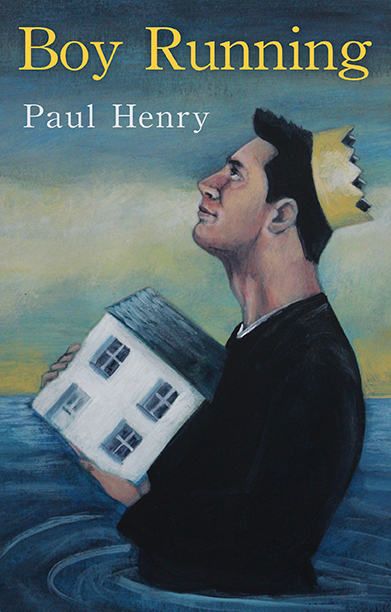
Boy Running, Paul Henry

Today’s poem is from Paul Henry’s latest collection, Boy Running, published last month.

Paul Henry has gained a reputation as one of of the best poets in the UK. Boy Running is his beautiful sixth collection and the first to follow ‘The Brittle Sea: New and Selected Poems’. We begin in a ‘Studio Flat’. Cut adrift by marital break-up, the poet must sort through the emotional fallout and the various ‘chattels’ left behind; a sea of characteristic props: tables, lamps, metronomes, pianos, guitars. The poet’s sons are at the heart of this section where pathos is balanced by humour amidst the characters of a small country town.

A second section moves to the Welsh coastal town of Henry’s childhood, Aberystywth, opening with a long poem, ‘Kicking the Stone’ set in the summer of 1969. Also in this section are some familiar characters from earlier poems such as Brown Helen and Catrin Sands.

In the final sequence we meet ‘Davy Blackrock’: washed-up songwriter and modern day alter ego of Dafydd y Garreg Wen (David of the White Rock), alias David Owen (1720-1749), the blind, 18th century harpist and composer who fell asleep on a hill and dreamt the famous song which bears his name. In contrast to David of the White Rock, Davy Blackrock, ‘star of an ashen town’, drags his guitar from street to hotel to bedsit, an unsettled ghost who dreams of the perfect song.

The Love Songs of Davy Blackrock

  “The songs I had are withered
   Or vanished clean,
   Yet there are bright tracks
   Where I have been,”

                         Ivor Gurney – ‘The Songs I Had’

Few remembered them
but by the end
it was enough
that they’d brought love,
some good friends.
What was ambition
after all but the drum
of rain on a glass room,
a distraction from the moon?

He’d sit late for hours, Davy
in those final days,
inventing new chords
in his conservatory,
oblivious to the news,
worrying less about words
than the melody,
trusting his ear,
not counting the bars

and, between downpours
keeping one eye on the stars.

Paul will be launching Boy Running on 27th March at the bear in Crickhowell. Find out more or book tickets here.
Order Boy Running from our website.

Posted on

Friday Poem – A Birthmother’s Catechism

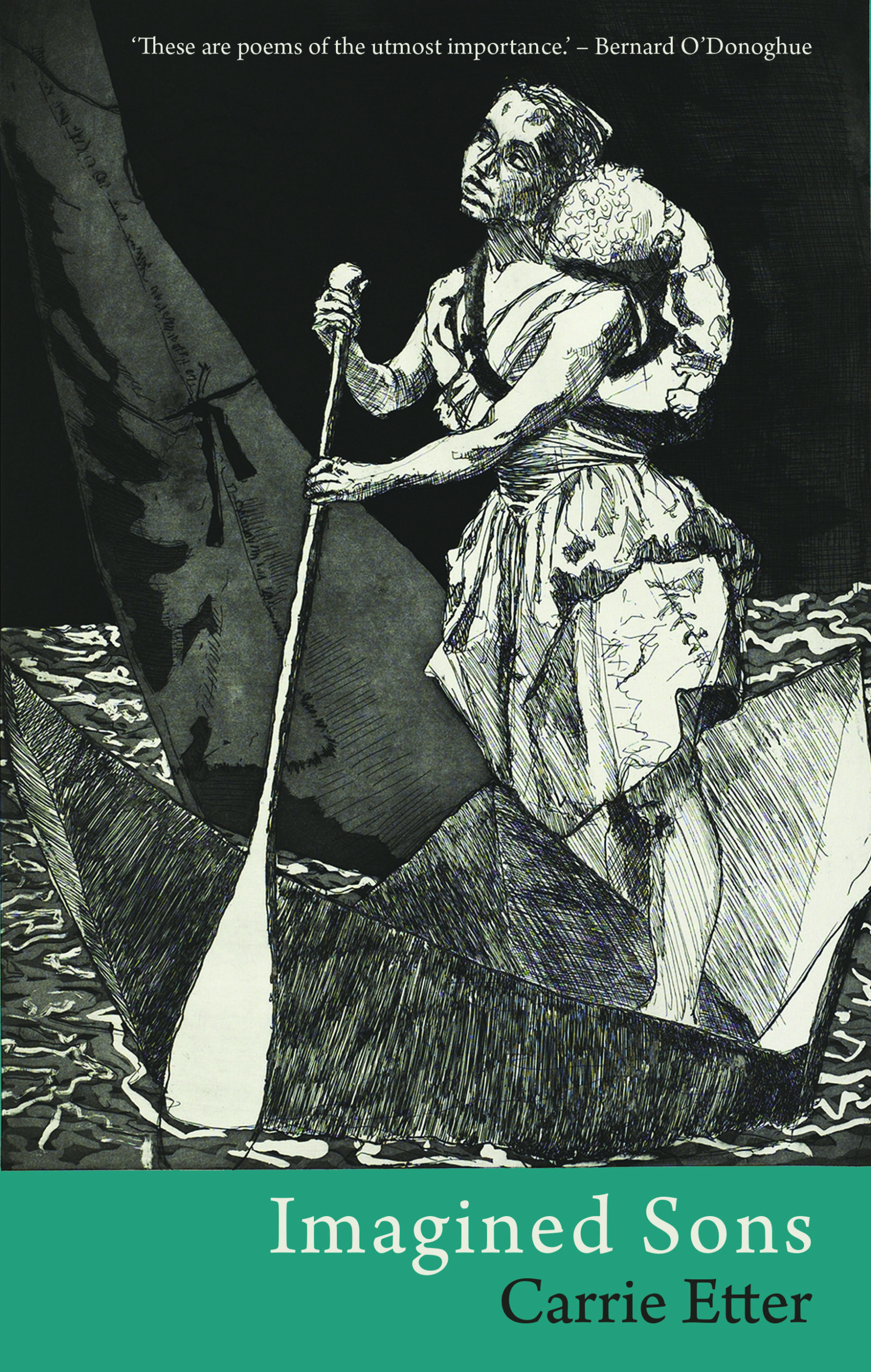
This week’s poem is from Carrie Etter’s Imagined Sons, first published in 2014, which has been shortlisted for the 2014 Ted Hughes Award for New Work in Poetry.

In Imagined Sons  Carrie Etter has written a book of vivid, heartbreaking poems on the experience of giving up a child for adoption. A prize-winning author, lecturer, critic and popular blogger, Etter imagines the possible destinies for the child and presents us with various scenarios from the tragic to the absurd. That the child’s birthday is also Sept. 11th adds a layer of irony and pathos, ‘What is the anniversary of loss?’ – asks the narrator in one of the ‘Birthmother’s Catechism’ poems. A pamphlet containing some of these poems was a Poetry Book Society Choice.

A Birthmother’s Catechism

How did you let him go?

With black ink and legalese

How did you let him go?

It’d be another year before I could vote

How did you let him go?

With altruism, tears, and self-loathing

How did you let him go?

A nurse brought pills for drying up breast milk

How did you let him go?

Who hangs a birdhouse from a sapling?

Order a copy of Imagined Sons from our website.

Posted on

Friday Poem – The Sound of a Diamond Planet

Short Days Log Shadows Sheenagh Pugh

The Sound of a Diamond Planet comes from Sheenagh Pugh’s collection Short Days, Long Shadows, published in 2014.

In this, her twelfth collection, noted poet Sheenagh Pugh steps into a new, northern landscape, the Shetland Islands, with poems steeped in the wilder weathers and views of rugged coastlines, sweeping sea-vistas and the hardy historical characters who have inhabited these lands. There is a lovely pared-down spareness, and elegiac formality to poems like ‘Travelling with Ashes’, ‘Staying’, and ‘Trondheim: January’ where the inhabitants appear lost in a ‘strange pink daylight’, and in ‘Gardening’ where ‘White stones are shaped like hearts’. The author’s characteristic dry humour emerges elsewhere as in ‘Extremeophiles’, a paean to bacteria – ‘chancers’ who live without sun. A poet who considers ‘too accessible’ to be the best sort of compliment, Sheenagh Pugh’s work has as much to offer the general reader as it does the specialist, who will admire her artful use of traditional forms.

Sheenagh will be reading at the Stanza Festival on the 5th March. For more information check out our website!

The Sound of a Diamond Planet

I seem to be surrounded
by things not quite there,

like the fieldmice munching
unseen inside my walls,

the spit of sand
uncovered at low tide,

the slick rock waiting to be
a waterfall again.

A planet, they say,
made all of diamond

resonates in its orbit,
light years beyond

human hearing, its brittle sound
broadcast in space.

Order Short Days, Long Shadows from Seren’s website.

Posted on

Friday Poem – The Tall Thin Tenor

God Loves You

The Tall Thin Tenor comes from Kathryn Maris’s collection God Loves You published in 2013.

Kathryn Maris borrows rhythms, vocabulary and themes from the Bible in this collection of poems. The result is more than artful parody, although a sly wit is in evidence. It is an approach that accommodates large themes, unravelling them in new ways.

The first section, ‘What will the neighbours think?, is a kaleidoscopic view of the sins and sinners of the modern city and opens, appropriately enough, with a vision of a flood to rival Noah’s. The poems feature domestic discord, gossip, suicide, celebrity and anxiety about the safety and behaviour of children and spouses. It says much about this poet’s meticulous poise and tone that we are lured into these scenarios with our sympathies fully engaged.

The following sections subvert scripture more directly. A mock-prayer opens: ‘My father, who art in heaven,/ sits under an umbrella that is his firmament’; a sonnet begins: ‘Kyrie eleison! I said it in the pub.’ Such burlesque moments mask poignant themes of praise or blame, as well as being funny. A skilful use of form is characteristic, as in the sestina ‘Darling, Will You Please Pick up those Books?’ Other pieces are set out in the numbered style of psalms or parables but have an entirely contemporary edge.

The Tall Thin Tenor

The tall thin tenor sings
The tall thin tenor sings to the young soprano
The young soprano sings the part of Poppea
The young woman Poppea has seduced the king
The tall thin tenor is king
The young soprano Poppea becomes the new young queen
The young soprano replaces the old queen Ottavia
The old queen Ottavia sings of replacement

The tall thin tenor sings over the soprano
The tall thin tenor sings over her to his small thin wife
His small thin wife holds a child in the stalls
His thin wife holds their quiet daughter
His small wife sings quietly to their daughter
The small wife is quiet when the queen sings

Kathryn will be reading at the Stanza Poetry Festival alongside fellow poets Carolyn Jess-Cooke and Hollie McNish on Friday 6th March. Find out more on our website here.

Order God Loves You from Seren’s website.

Posted on

Friday Poem – The Waking

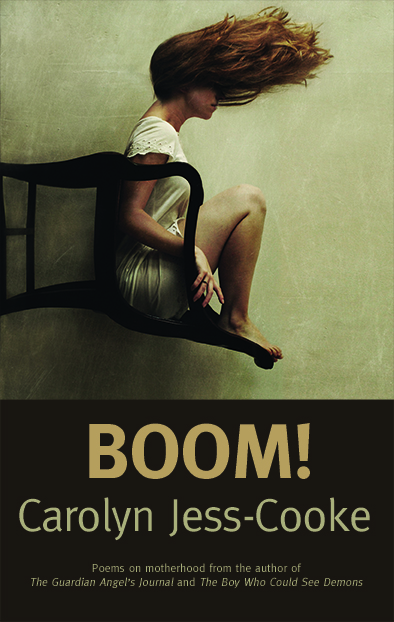
Boom! Carolyn Jess-Cooke

‘The Waking’ comes from Carolyn Jess-Cooke’s collection Boom! published in April 2014.

Boom! enacts the moment when the new baby arrives in the family ‘like a hand grenade’. ‘Becoming a mother changed me in every single way,’ says the author, ‘my first child – born in October 2006 – just about knocked me sideways. There were many reasons for this, but here’s the biggest one: I could not believe how public and political the (hugely personal) experience of motherhood was.’

A noted academic, author of a book about film and Shakespeare, and a best-selling popular novelist of The Guardian Angel’s Journal and The Boy Who Could See Demons, Jess-Cooke found, as many parents do, that the juggling act required to raise young children and continue a professional and creative life, is both exhausting and fulfilling.

Viewing motherhood from a multiplicity of artful angles, the author says, ‘Coupled with all this was the love I had for my children. It completely and utterly blew me away, how much I could love another human being.’

The Waking

Those first few days every part of her wakened,
the seedling eyes stirred by sunlight, tight fists
clamped to her chest like a medieval knight
and slowly loosening, as if the metal hands
were reminded of their likeness to petals
by the flowing hours. Her colors, too,
rose up like disturbed oils in a lake, pooling
through the birth-tinge into human shades,
her ink eyes lightening to an ancestral blue.
The scurf and residue of me on her scalp floated
easily as a pollen from the sweet grass of her hair.
She reminded me of a fern, each morning more
unfurled, the frond-limbs edging away from her
heart, the wide leaves of her face spread to catch
my gaze. Once, I saw the white down of her skin
cloud in my hands, the cream ridges of her nails
drift like crescent moons, the thick blue rope
she had used to descend me tossed like a stone,
as though she was finally free.

Carolyn will be discussin parenthood and poetry at the Stanza Poetry Festival on 6th March. Order Boom! from Seren’s website.

Posted on

Friday Poem – Studio Flat

Boy Running, Paul Henry

Studio Flat comes from Paul Henry’s sixth collection, Boy Running, available February 2015.

Boy Running has three distinct sections:

Recently reeling after a marital break up, poems such as Studio Flat deal with the aftermath of divorce. The poet is left to sift through the emotional fallout and the physical reminders of a shared life left behind: tables, lamps, metronomes, pianos, guitars. The poet’s sons are at the heart of this section where pathos is balanced by humour amidst the characters of a small country town.

A second section moves to the Welsh coastal town of Henry’s childhood, Aberystwyth, and the summer of 1969

In the final sequence we meet Davy Blackrock, a washed-up songwriter and modern day alter ego of Dafydd y Garreg Wen (David of the White Rock), the blind 18th century harpist and composer who fell asleep on a hill and dreamt the famous song which bears his name. In contrast to David of the White Rock, Davy Blackrock, ‘star of an ashen town’, drags his guitar from street to hotel to bedsit, an unsettled ghost who dreams of the perfect song.

Studio Flat

Socks hang like bats from a skylight.
They may be dry in time for the moon.
The camp site owner’s water-feature
drains more blood from the sun.

Cars queue for the narrow bridge.
Birds catch their pulses and fly.
I am suddenly old. What’s an attic
but a bungalow in the sky.

And where are you, my sons?
I heard your voices in the bells
of snowdrops pulled by the wind.
These tulips have lost their smell.

Perhaps I could tell you, one day
where the snowdrops went, why old men
dry their socks on the moon, and what
darkened the skylight, just then.

Pre order Boy Running from Seren’s website.

Posted on

Friday Poem – Holes

Disturbance – Ivy Alvarez

Ivy Alvarez’ collection Disturbance is a gripping novel in verse that chronicles a multiple homicide, a tragic case of domestic violence, where a family was gunned down by the husband and father, the one person who promised to protect them.

The book features poems in a kaleidoscope of voices from all the characters involved. We first meet the family itself and witness how the father’s controlling attitude gradually escalates into violence. Then we get the aftermath: the authorities, police and neighbours, who all might have helped to prevent this tragedy. This is a very dark book, but a courageous one, ultimately about evil and its presence in our everyday lives.

Holes captures the immense anguish and heartbreak of a mother who was helpless to protect her son in this tragic case.

Holes

I pressed the button. No-one came. The police could not find me in the dark. They were also afraid of death… it might come for them instead. They waited behind a screen of trees, for the moon to uncover itself, silver the edges of their sirens, their dark cars. The pale pebbles in the driveway, left to imagine the river that used to wet them—they must tire of always staring up, sightless and at the mercy of everything. The police step on them. They creep only so close, but no closer. My son is dead on the ground. Someone close his eyes. But I am ignored in this as I have been with so many other things. His blood is cold now, blackening, drying up, stiffening the fabric of his jacket, soaking into the soil. There are holes in him I know nothing about, nothing to do with the boy I delivered to the world, my gift, small and pure. The dark is blue and cold. The trees conceal susurrations in their high skirts, branches uplifted like arms, wailing whispers… Black cars, old scars, my son’s open mouth, empty shotgun shells whistling smoke white dancing up and out

Posted on

Friday Poem – The Voice in which my Mother Read to Me

This cover shows a colourful painting of a school boy stomping with excitement viewed as if looking from the ground. The text reads: My Family and Other Superheroes, Jonathan Edwards.

The Friday poem is back f0r 2015 and we’re kicking off with The Voice in Which my Mother Read to Me from Jonathan Edwards’ Costa Poetry Award Winning collection My Family and Other Superheroes.

The Voice in which my Mother Read to Me

isn’t her good morning, good afternoon, good night voice,
her karaoke as she dusts, make furniture polite voice,
her saved for neighbours’ babies and cooing our dog’s name voice.

It isn’t her best china, not too forward, not too shy voice,
or her dinner’s ready, your room looks like a sty voice,
or her whisper in my ear as she adjusts my tie voice.

It’s not her roll in, Friday night, Lucy in the Sky voice,
her Sunday morning, smartest frock, twinkle-in-the-eye voice,
that passing gossip of the vicar with the Communion wine voice.

It’s not her ‘Gateau – no, ice cream – no… I can’t make the choice’ voice.
It’s not her decades late, fourth change, ‘Is this skirt smart enough?’ voice.
It’s not her caught me with the girl from number twenty-one voice.

That voice which she reserved for twelve-foot grannies, Deep South hobos,
that sleepy, secret staircase, selfish giants, Lilliput voice.
That tripping over, ‘Boy, why is your house so full of books?’ voice.

[soundcloud url=”https://api.soundcloud.com/tracks/183594834″]

My Family and Other Superheroes is available from the Seren website. Save 20% when you join our online book club.

Posted on

Friday Poem – Some Christmas Haiku

A Christmas themed haiku by Peter Finch

Some Christmas Haiku

On the moors
The snow caught by grass
No one to see it

Not Christmas holy silent night
But the Holiday season
Above the cloud same old moon

Cinio Nadolig
Boldy praising Iesu
Menu’s in English

In the Chapel
Old wood
After so many years still shining

Through the dense firs
Light of a wrecked car
Burning

Early snow
On the berried holly
Some cretin starts complaining

Old man
Pulling crackers by himself
Sound clear to the big dipper

Sound of retching
Three man in an empty street
Crushing larger cans

Street guitarist mangles carols
On the shopkeeper’s face
The shopkeeper’s mask

Posted on

Friday Poem – Bitumen and Rust

The Hitting Game, Graham Clifford

This Friday, our poem Bitumen and Rust, comes from Graham Clifford’s collection The Hitting Game. The vibrancy of Clifford’s voice and the immediacy of his claims upon our attention are clear in this lively collection. Incidents are approached from disarmingly intimate and entertainingly oblique angles. These are urban poems where nature appears like a strange intrusion. There is gentleness and empathy, humour and pathos, with poems full of unexpected dramas and fresh enchantments, which provoke as well as delight.

Bitumen and Rust

In the end you didn’t buy an angle-poise light
called lack – it must mean something aspirational
in another language. Driving home, a green-brass prick

of a church wedged in-between semis began to glow
as if a prayer just got answered. As if. Polystyrene
tea in cup holders. Dirty little seas rich as slicks

of sewage-juice in ruts we trudged in a landscape
ruined with bitumen and rust, by slung piglet carcasses
still eyeing fly-tipped, shoddy white goods.

There is more than one disputed memory
We tug apart like foxes: under branches
Sweating out winter, the colder, wet side of freezing

I found clay pigeon shrapnel like smashed, thick 45s.
You first saw the sun drown in two ponds at the outskirts
Where, where we know turned in to where we don’t.

Spuds and beet surfaced from dirt, sick bits;
it was me that bit an onion like an apple. Barbed wire –
you slam on the brake so as not to kill

a man selling premature roses in the road.
Everyone is full of music to make it better.
Jittery clouds scarper to the margin like bath foam,

soap-touched. Suddenly, above us is baby blue.
You won’t be around forever; laugh: tea –
barbed wire that disappeared into tree bark.

Get it in time for Christmas! The Hitting Game is available to buy with 20% off when you join our online book club.