Posted on

Don’t Judge a Book by its Cover

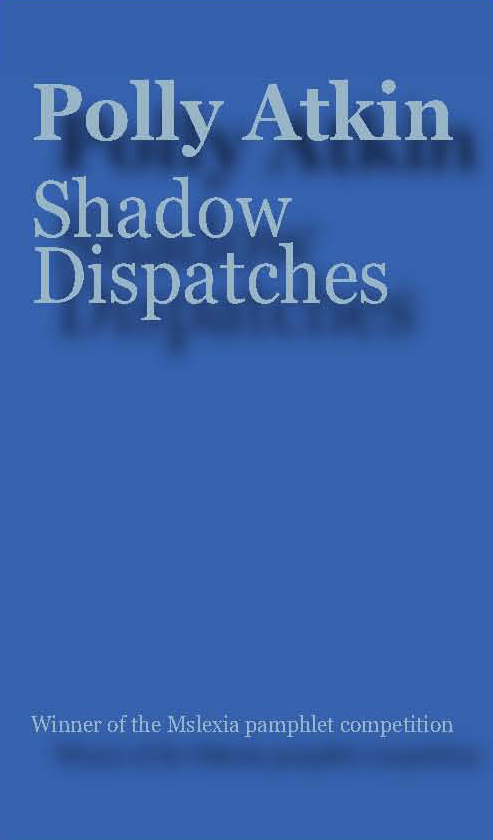
It’s a lesson we’re all taught, but one few of us ever really learn. No matter how much we try and convince ourselves otherwise, how our books look matters; it’s easy to appeal to the wrong audience, or not appeal to the audience you’re aiming for at all, if you have a cover that isn’t right for your book.

It’s true that it’s what’s inside that counts, but nobody’s going to bother taking a look inside, or even picking your book up off the shelf, if it has a hideous cover. You could have written the next masterpiece – winner of all the awards! – but the way your story is packaged has to appeal to readers.

The great thing about book covers, and, frankly, life in general, is that everyone’s different. You’re unique, just like everyone else. All of our tastes vary, so what could be a horrible cover to some is a beautiful one to others. In that case you might even ask: ‘well what’s the point of this blog post at all?’ And to that I say: here are some of my personal favourite Seren book covers.

I’d love to know what some of yours are!

serencovers

Browse our books on our website.

Posted on

Tony Curtis is Writer in Residence at Dyffryn Gardens

From May 2015 Tony Curtis, Emeritus Professor of Poetry at the University of South Wales who introduced and led Creative Writing there for many years, will be the writer in residence at Dyffryn House and Gardens in the Vale of Glamorgan. This is the first residency of its kind at a National Trust property in Wales.
Tony Curtis lives close to Dyffryn and will be spending his residency exploring the history of the place – in particular the Cory family, a wealthy family of coal merchants and mine owners for whom Dyffryn House was their main residence – as well as responding to the changing of the seasons in the gardens. Visitors to Dyffryn Gardens will have the opportunity to learn of Tony Curtis’s progress through Writer’s Walks, and he will also eventually be sharing his response to Dyffryn in publications and online.
Find out more about Dyffryn here.

Posted on

Commemorating Patagonia with Seren

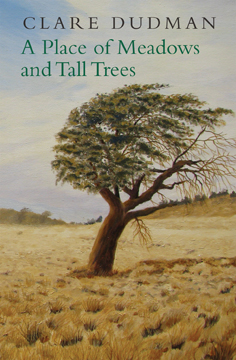
Commemorate the 150th anniversary of the establishment of a Welsh colony in Patagonia with Clare Dudman’s novel of the early years of the colony, A Place of Meadows and Tall Trees, and Imogen Herrad’s exploration of modern day Patagonia, Beyond the Pampas.

Posted on

I Know What You Read Last Summer

Well actually I don’t, but now that summer is just around the corner I can at least tell you what we think you should be reading this summer!

Look out for these upcoming releases on our website.

InfragreenInfragreenrgb
by Kate Bingham

Perceptive, persuasive and intricately made, the poems of Kate Bingham’s third collection, Infragreen, take the reader on a startling and unfamiliar journey through everyday experiences and phenomena. Her keen eye, reflectiveness and quiet wit endow her subjects with a shimmering freshness.

Set within the four walls of home, on the streets of north London and in the Yorkshire countryside, the poems build out from mundane activities such as taking the pill, traveling a daily bus route and scything thistles. In Bingham’s hands, the familiar sights and hypnotic routines that normally lull the brain into unthinking acquiescence are the starting points for finding new richness in the world around us and our participation in it.

The book contains three sections, each infused by a different season and place, but a spirit of serious play presides throughout. Contemporary versions of Hardy and Frost, a collage cut from old favourite Christmas carols, and a refleshing of some of English poetry’s oldest clichés are part of it, but so too is Bingham’s fascination with pattern: the patterning required by some of poetry’s stricter traditional forms, and pattern as content, a subject in itself.

Those who know Bingham’s earlier work will recognize in this collection her playful, often darkly comic, appreciation of the surreal, which features hearts and hands, feet, and even a pair of shoes with minds and agenda of their own. Elsewhere, a milk-bottle breathes, a pocket of air turns into a winged creature, flies serenade the poet whose mortal scent has drawn them into her room. A ballad at the start of the final section tells the story of an artisan paper-maker whose origami creation is so perfect it comes to life, only to be destroyed again by its maker.

But beneath the gently cynical, almost self-deprecating tone lie Infragreen’s darker themes: a base note of environmental and existential anxiety in which teasing self-deprecation can mutate into a desire for disembodiment, and a ruthless wishing away of consciousness and self.

MorlaisMorlais cover
by Alun Lewis

Morlais is Alun Lewis’s unpublished novel from the late 1930s. The Laurentian story of a young boy growing up in the poverty stricken industrial valleys of south Wales, it also reflects Lewis’s own experiences, particularly his search for self-knowledge and his conviction that he would be a writer.

Miner’s son Morlais Jenkins is already being educated away from his background at grammar school when he is adopted, on the death of her own son, by the wife of the local local colliery owner. Morlais’s parents recognize the opportunity for their son to make a better future, but they must all pay a great price. Stifled by middle class life, his adoptive mother recognizes that Morlais will be a poet and encourages him to be neither working class or middle class, but true to his talent.

Full of vivid descriptive passages of life in the fictional mining valley, and centred on the conflicted character of Morlais and the decisions he faces over his two families, his two social backgrounds, and his desire to be a poet, the novel is an enthralling journey through the life of a young boy becoming a young man.

Alun Lewis (1915-1944) was the outstanding writer of World War Two and Morlais, written in his mid twenties, is an early indication of the talented writer he would become just five years later. This edition is accompanied by an Afterword by Lewis’s biographer, John Pikoulis.

coverThe Road to Zagora
by Richard Collins

When Richard Collins was diagnosed with a progressive incurable disease in 2006 he decided to see as much of the world as he could while his condition allowed. The result is The Road to Zagora, a singular travel book which takes in India, Nepal, Syria, Turkey, Morocco, Peru, Equador and Wales. ‘Mr Parkinson’, as Collins refers to his condition, informs the narrative.

As inveterate walkers Collins and his partner Flic decided to continue to travel ‘close to the land’ post diagnosis, leaving the tourist trails and visiting places of extremes: the Himalayas, rainforests, deserts. The difficulties of rough terrain, altitude, extremes of climate for a person with Collins’ condition are an ongoing strand of his narrative; occasionally they cannot be overcome and Collins is forced to consider the frailties of the human body in passages of moving contemplation.

The Road to Zagora also includes an element of memoir, as Parkinson’s Disease also causes Collins to reflect on his life, and in particular on his relationship with Flic. There are moments of great charm as their relationship evolves, and also the drama of previous serious illnesses. These recollections of pre-diagnosis life have the wistfulness of hindsight as Collins considers what constitutes a life well lived.

Yet any sentiment or self-pity is denied through Collins’s resolute and independent- mindedness and the quality of writing. In the travel passages the readers experiences the sheer physicality of Collins’ expeditions, along with his novelist’s eye for telling local detail. In the sequences of memoir the writing is humane, compassionate and quite often comic. The Road to Zagora is a memorable journey around the world, and the self.

Posted on

Friday Poem – String

infragreen

Today’s poem comes from Kate Bingham’s latest collection, Infragreen, due to be released in June.

‘String’ was first published in The Poetry Review.

Perceptive, persuasive and intricately made, the poems of Kate Bingham’s third collection, Infragreen, take the reader on a startling and unfamiliar journey through everyday experiences and phenomena. Her keen eye, reflectiveness and quiet wit endow her subjects with a shimmering freshness.

Set within the four walls of home, on the streets of north London and in the Yorkshire countryside, the poems build out from mundane activities such as taking the pill, traveling a daily bus route and scything thistles. In Bingham’s hands, the familiar sights and hypnotic routines that normally lull the brain into unthinking acquiescence are the starting points for finding new richness in the world around us and our participation in it.

The book contains three sections, each infused by a different season and place, but a spirit of serious play presides throughout. Contemporary versions of Hardy and Frost, a collage cut from old favourite Christmas carols, and a refleshing of some of English poetry’s oldest clichés are part of it, but so too is Bingham’s fascination with pattern: the patterning required by some of poetry’s stricter traditional forms, and pattern as content, a subject in itself.

Those who know Bingham’s earlier work will recognise in this collection her playful, often darkly comic, appreciation of the surreal, which features hearts and hands, feet, and even a pair of shoes with minds and agenda of their own. Elsewhere, a milk-bottle breathes, a pocket of air turns into a winged creature, flies serenade the poet whose mortal scent has drawn them into her room. A ballad at the start of the final section tells the story of an artisan paper-maker whose origami creation is so perfect it comes to life, only to be destroyed again by its maker.

But beneath the gently cynical, almost self-deprecating tone lie Infragreen’s darker themes: a base note of environmental and existential anxiety in which teasing self-deprecation can mutate into a desire for disembodiment, and a ruthless wishing away of consciousness and self.

String

The farmer kept his trousers up with string.
Out of his pockets like an entertainer
with a Punch and Judy sausage-string
he summoned knots of orange binder-twine,
a scruffy scratchy plastic nest of string
his filthy freckled hands pressed into mine.

The lining of his jacket hung in strings
but there would be a Cadbury’s Eclair,
a humbug, or a coil of licorice string
unwinding somewhere, hidden in the hem,

and I was not to give him back his string
until his fingers turned into a hen
and laid a sweet. He didn’t need the string.
I tugged his arm and trotted after him.

Check out Infragreen on our website.

Posted on

Seren at The Hay Festival

hayfestlogo

Today marks the beginning of The Hay Festival 2015, and this year there are plenty of events involving some of our very own authors.

my_family_and_other_superheroes_covercosta_quicksand coverPaul Henry and Jonathan Edwards will be reading from their latest collections, Boy Running and the Costa Poetry Prize-winning My Family and Other Superheroes respectively. If you’re a fan of poetry, T.S. Eliot Prize-winning poet Philip Gross and visual artist Valerie Coffin Price will also be discussing their collaborative collection, A Fold in the River, and Damian Walford Davies will be discussing and reading from his latest collection, Judas.

We’re alAlun Lewis 72so going to be celebrating the centenary of Alun Lewis at Hay this year, with two events dedicated to the WW2 writer. Juliet Aykroyd, Owen Sheers and John Pikoulis will be discussing Lewis’s time in India, in particular how he met and fell in love with Juliet’s mother, Freda Aykroyd, while Owen Sheers reads some of his poems.

Another event will see Gillian Clarke, the National Poet of Wales, do a close reading and discussion of Lewis’s poems.

Losing_Israelcmyk300Our prose is also getting some attention at Hay this year. Jasmine Donahaye will be talking to Francesca Rhydderch, author of the 2014 Wales Book of the Year The Rice Paper Diaries and co-editor of New Welsh Short Stories, about her upcoming memoir, Losing Israel, a moving and honest account of nature writing, travel writing and family history exploring the displacement of Palestinians in 1948.
For those of you who are fiction lovers, Tiffany Murray will be doing a late-night reading from her acclaimed ghost story, Sugar Hall, where she will be joined by David Mitchell, author of Cloud Atlas and the upcoming Slade House.

With so much to see this year at Hay, you’d be a fool to miss out! Buy your tickets online at www.hayfestival.com, or check out our Events Page for more information.

Posted on

Friday Poem – Io’s Sisters

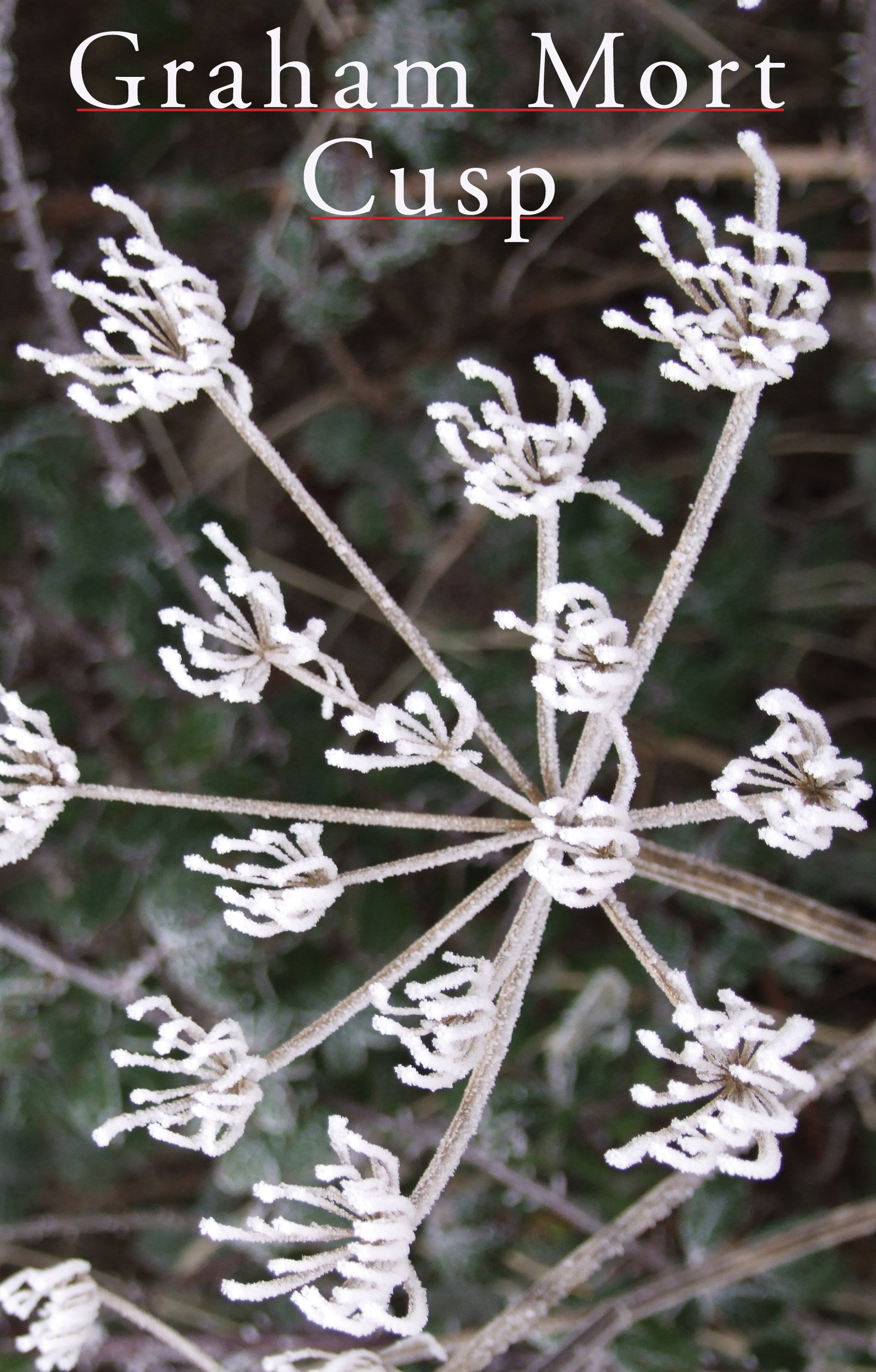
This week’s poem comes from Graham Mort’s collection, Cusp. His latest short story collection, Terroir, is now available on our website.

Cusp features many of the qualities readers have come to admire from Graham Mort; keen observation, a feeling for the natural world that echoes and enhances the human interactions in his poems, the sense of the individual as part of a larger society of which we are implicitly responsible. New here is a different sort of line, which alternates short and longer lines in a step-like formation, a terracing which propels the narratives along. Also included is the remarkable, ambitious long poem, ‘Electricity’, fizzing with riffs on its theme. Mort’s formal rigour, instinctive compassion, and warm humanity shine through in this new book, the first since his acclaimed: Visibility: New and Selected Poems.

Io’s Sisters

The usual English summer:
early heat stoking speedwell
dog’s mercury stealing
a march, then months
of drizzle until rosehips
were fading coals
in the hedgerows
sloes a hidden bruise
slugs cruising a lacework
of green and bodies coming
home under Union Jacks
salutes, tributes, the Last Post.

Then on the fading cusp
of August, cows calling
nightlong into rain that
pelted the village:
knock-kneed, teats dragging
in mud, their lungs’ bellows
working the drenched ember
of summer, as if Hera’s spite
stranded them beyond
phonetical love; their eyes
goaded by flies, their tongues
turning a hoarse cud of longing.

Even in darkness
we question their sad
calling with the glib surety
of words, shaping these
smallest sounds as if glass
had broken in our mouths
to join up again as meaning
measure the loss in their
inhuman mooning yet
still fall short of ours.

Engorged, drooling
teat-sore, they drag their
banishment through wet
fields, call for their stolen
calves in pain so large
so inexpressible so deep
it erupts from the colossal
absence they circle as if
they have known in one
form, one incarnation, one
language of consonant
delight a delicacy they
could never speak in this
brute sphere, nor ever be
transfigured to themselves.

Order Cusp and Terroir from our website.

Posted on

Dylan Day

idtd

Thursday 14th May marks the very first International Dylan Thomas Day – Dylan Day – paying homage to the anniversary of the date Under Milk Wood was first read on stage in New York in 1953. Today Literature Wales are inviting everyone to celebrate Dylan Day in their own way, whether it’s by reading some of Dylan’s work or visiting somewhere associated with Dylan; luckily for us, Swansea’s just a train ride away!

On social media Literature Wales are encouraging people everywhere to show how they’re celebrating with the hashtag #DylanDay, and they’re even looking for photographs of readers reading Dylan using the hashtag #DylanSelfie. Have you taken part yet?

dylanday

Find these Dylan Thomas related books and more on our website!

Posted on

Jo Mazelis wins Jerwood Prize

Jo Mazelis is one of eight winners of the 2015 Jerwood Fiction Uncovered Prize for her striking debut novel Significance. The winners were announced on 18th June at a reception at the Jerwood Space, London. Each of the winning authors received £5000.
Now in its 5th year, the Jerwood Fiction Uncovered Prize is unique in its aim to celebrate great British fiction.
Speaking about the longlist, chair of judges India Knight said: “It is absolutely thrilling to have found such brilliant books, across such a wide variety of genres, and from authors that live and write all over the country. These are fantastic writers who deserve to be household names.”
Significance, which subverts the conventions of the murder mystery, is Jo’s first full-length novel, although she is the author of several collections of short stories. 
WH Smith Travel will be running an eight-week summer promotion featuring all eight winning titles. The promotion will feature in stores across the UK from 25th June 2015 as travellers look for some enticing holiday reading. They won’t be disappointed by Significance, which has been described as ‘unputdownable’.

Posted on

Gold for American Sycamore at the Independent Publisher Book Awards

Karen Fielding’s American Sycamore has won Gold in the Mid-Atlantic Best Regional Fiction category of the 2015 Independent Publisher Book Awards.
Digital magazine Independent Publisher have been promoting independent publishers, from self-published authors to university presses, since 1983. For the past 19 years their Independent Publisher Book Awards – the “IPPYs” – have been increasing the recognition of these publishers in the wider publishing world, attracting entries from around 2,000 publishers every year from the US, Canada, and English-speaking countries outside of North America.
Karen’s debut, coming-of-age novel, consisting of madness, death and fishing, can now boast its status as a winner of one of the oldest independent book awards in operation. The reward for such an achievement is publicity; winners of the IPPYs are advertised on Independent Publisher, Publisher Weekly and Shelf Awareness, and are also promoted internationally in a press release sent to over 2,000 publishing industry media outlets and an average of 50 articles.
Two free passes to the IPPY gala, held during BookExpo America in New York City, are given to each winner, meaning Karen, alongside the winners of the other categories, will be celebrating her success in style.