Posted on

Guest Post: Tradition is your Toolkit – Writing advice from Elizabeth Parker

Close up photo of turned wooden spindles

In today’s guest post, Elizabeth Parker considers the elements which make up a poet’s toolkit. Two years on from publication of her second collection Cormorant, she reflects on how the poems make use of traditional tools like form and meter.

Poetry and craft

My late dad’s uncles were patternmakers in a bike factory. His great-uncle was a master craftsman. I can still see my dad kneeling at the sea chest his great-uncle made, stroking the inner lid with its shellac glaze, also known as French Polish, and telling me his ancestor was one of the last to know the technique.

My mum and her sisters all sew. Their mum made her own curtains and cushion-covers. She made her thirteen children new summer outfits each year, the offcuts used for dolls’ clothes, pram frills.

My late sister – actor, playwright, screenwriter, secret poet – sewed, beaded, studded, appliquéd, fabric-painted, glue-gunned. She was partway through painting and beading lampshades. From the a box of stained glass and instructions on foiling amongst her possessions, we guess she was also planning on making a mirror.

My uncle Kevin was both a joiner and a tech wizard. He built cabinets and computers. His wake was in his four-storey, bought-for-a-penny, shambling Victorian house in Bootle, a few of us breaking out to gather in the garage he’d made his workshop. Surrounded by his tools and machines, cabinets, a near-finished doll’s house, I told my cousin Peter, Kevin’s eldest, that I was writing a blog about the idea of tools when writing poetry. Peter responded: ‘There’s a lathe over there you can have!’ and I joked that I would get someone to help me lift it on the train, tell them ‘I need it! It’s a metaphor!’

A well-known poet’s comment still perplexes me: ‘I hate the word craft. You’re not making a chair.’ ‘Not even a Farmhouse Spindle Carver?’ I still ask, years later. Oh, to make a poem with the integrity, strength and elegance of such an object! Marking, sawing, carving, sanding the seat; turning a leg on a lathe. Ornamentation and functionality. An object the design of which gives both pleasure and support. I can certainly see the analogy, the metaphor.

I find it a relief to think of writing as craft, with tools and techniques available to be used as I strive to improve; poetry’s greatest engineers, designers, architects, craftsmen, patternmakers – whatever metaphor you fancy – helping us to escape our habits and tendencies.

Poetry and form

A poet and teacher once said ‘The iamb is a heartbeat.’ Another poet, teaching a workshop, stated that ‘the spondee is underused.’ Tools. To be used.

Many of the poems in Cormorant began as experiments in trying out the tools of traditional forms. ‘I Choose River’ began as an attempt at ottava rima. I didn’t ask myself which form would convey something of the rhythms of walking by the river at night, with a rowing eight alongside, and think ‘ottava rima!’ No. I am not there yet! I had what I felt was a strong refrain line: ‘Tonight, I choose river.’ I had been wanting to try ottava rima and it struck me that this particular form might help me in achieving the tight rhythms and rhymes I felt would help me to convey the experience of the walk.

I scanned my refrain line and made no changes. The iambic ‘Tonight, I choose’ helps in conveying both the speaker’s steadiness in their decision and their footsteps (with humans usually favouring one foot over the other), while the pyrrhic ‘river’ suggests the quickness of the current. I scanned my notes, edited and edited some more until I had a first stanza. I’d aimed at iambic pentameter, but, listening as I edited, I noticed that allowing variations in the meter would convey more detail: the skittering and sweeps over surfaces, the depths below, the flowing river and the concrete walkway along its bank. 

I knew, as I reviewed my notes for the poem ‘Stonehenge’, that a traditional form that featured rhyme and refrain lines would help me in evoking my experience of visiting this place for the first time. The interconnectedness of the natural and spiritual world. The birds and the cordons, preoccupying me throughout the visit: there are forms designed – ready-made, if you like – to convey cycles, recurrences, harmonies. I read up on forms with refrains and rhyme schemes and chose the pantoum, as it allows for two refrain lines and the quatrains meant I could include more detail.

There were end and internal rhymes in my notes, full and partial, expressive of affinities and harmonies, as well as pointing up contrasts: rhymes I felt would be patterned to powerful effect by the rhyme scheme of the pantoum. The quiet harmonising of partial and internal rhymes sounded the interconnecting currents, above and beneath the surface, visible and hidden, of spirituality and the natural world: ‘Sentry crows scouted from fence posts, / pecked carrion, mobbed a carcass near the Alter Stone. / I understood hunger, bones picked clean, hands casting seeds. / I didn’t quiver. Ley lines failed to pluck my blood.’ Though it can be strenuous, on this occasion I found the form a natural fit (give or take a few end rhymes and alterations to the refrains).

An adventure with the rondeau redouble helped me hugely in the making of the poem ‘Saturday’. I had encountered the form in a workshop and had been intending to have another go at it. My mother had told me about her Saturday outings with her mother and sisters in 1960s Bootle. I felt these details were so evocative – in their specificity, their turn of phrase and the sense her words gave of a particular time and place – that they could all be refrains: ‘We were always running for the bus. 56./ Do a reccie, look at the material in Lewis’, / George Henry Lees, / finish off in Marks’ for Sunday’s tea.’ I had notes on my own Saturdays in lockdown. The rondeau redouble allowed for four refrain lines and the quatrains gave me another three lines in which to juxtapose details of my Saturdays with my mother’s. The alternate rhyme connects the lines that express my experience, sounding the distinction between my lockdown Saturdays and my mother’s recollections (which form the refrain lines): ‘I watch the walls, the cast of light. A year since / the decorator sanded, layered cream. / I am stranded on plains of ‘slipper satin’. / Do a recce, look at the material in Lewis’.  

Another poem inspired by my mother’s memories of her girlhood is ‘Doll Hospital’, which began as a roundel. I had been reading about the roundel, which uses a partial refrain – a phrase rather than whole line – and felt the noun phrase ‘doll hospital’, particularly in the context of a recollection of girlhood, was rich in connotation and would evoke varying emotions and meanings were it to recur in different positions throughout the poem.

Cutting detail and altering my mother’s wording in order to keep to the form, I ended up with what I felt was rather a thin piece, with the riches of my mother’s telling returned to the notebook. In this instance, I broke the poem out, but the endeavour was far from a wasted effort. The concision of detail gives a sense of the tightness and textures of the space, as well as the editing and wearing away of memory: ‘The stairs. Bare wood. / All our houses were modern. Carpeted. / These were little. Rickety.’

Knowledge of the origin and history of a form often guides my choice. It would, I felt, have been a missed opportunity not to work notes for a poem inspired by a Renaissance polymath into a Renaissance form. ‘Dear Leonardo’ is a quatorzain, but I had been trying for a sonnet. In trying for a sonnet, I achieved an effective volta – expressive of a shift in time to an imagined future – and I had compacted details into longer lines, thereby creating, I feel, some sense of a few brief moments loaded with impressions and meaning, the harmony of these moments heard in the chime of alternate rhymes: ‘She will return to this: your anatomies, the child’s curls / shining on his temples, his every nerve, every fibre / wandering your lines, asking with more than words.’

In ‘Sonnets of Separation’, I try to convey my experience of having a baby during the first lockdown – a baby no-one but myself and my partner could hold, make a fuss over, as the rules of lockdown, people’s fear and my own, kept them at a distance. This sequence is actually a series of quatorzains but ‘Quatorzains of Separation’ doesn’t quite trip off the tongue! Again, working with the sonnet form resulted in effective stanza breaks (originally voltas) and alternate rhymes that help to convey the enclosure, the tight spaces of lockdown, when the textures and parameters, the touch, of the shrunk spaces we were allowed to exist in became so familiar to us. I feel that the rhymes of the piece help to convey the closeness and interconnectedness of these spaces and our daily lives within them: ‘My warning glare, willing the air to defend us – willing Sue, bringing smiles, best wishes too near; / Bob, approaching the front wall of his drive / with a joke about leper colonies, / to feel the hard borders of my fear. Your cries reel / across crowdless stadium, parked up street.’  

Using your tools

I believe you learn a tool by using it. Scan your lines, mark the metrical feet. Be proud as you notice your technique, the tools you’ve used already. Be excited about dipping into the toolkit and having a go at the ones you’ve yet to use!

Elizabeth Parker

Posted on

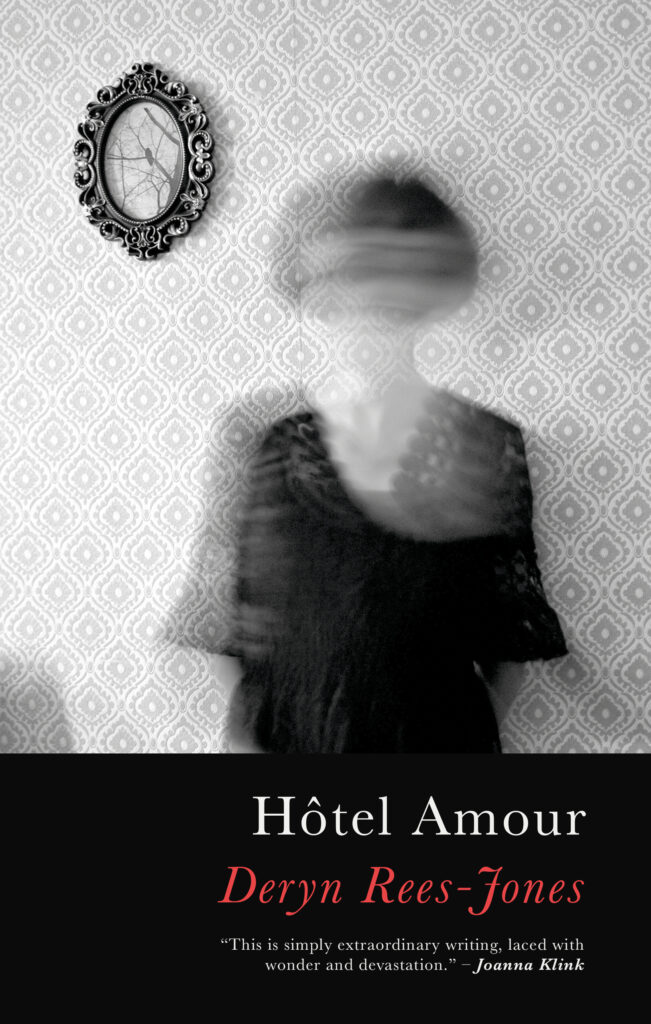
Guest Post: Deryn Rees-Jones on writing ‘Hôtel Amour’ in Paris

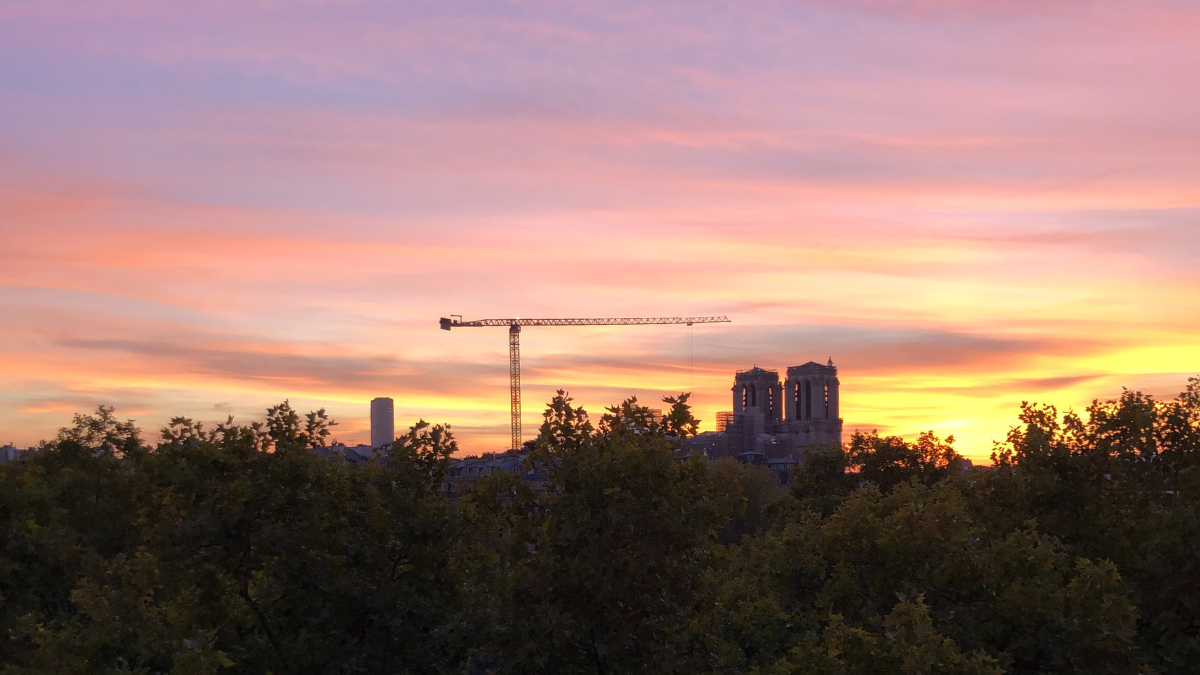
Photo of a pink-orange sunset over the trees and rooftops of Paris, Notre-Dame and its cranes just visible on the horizon.

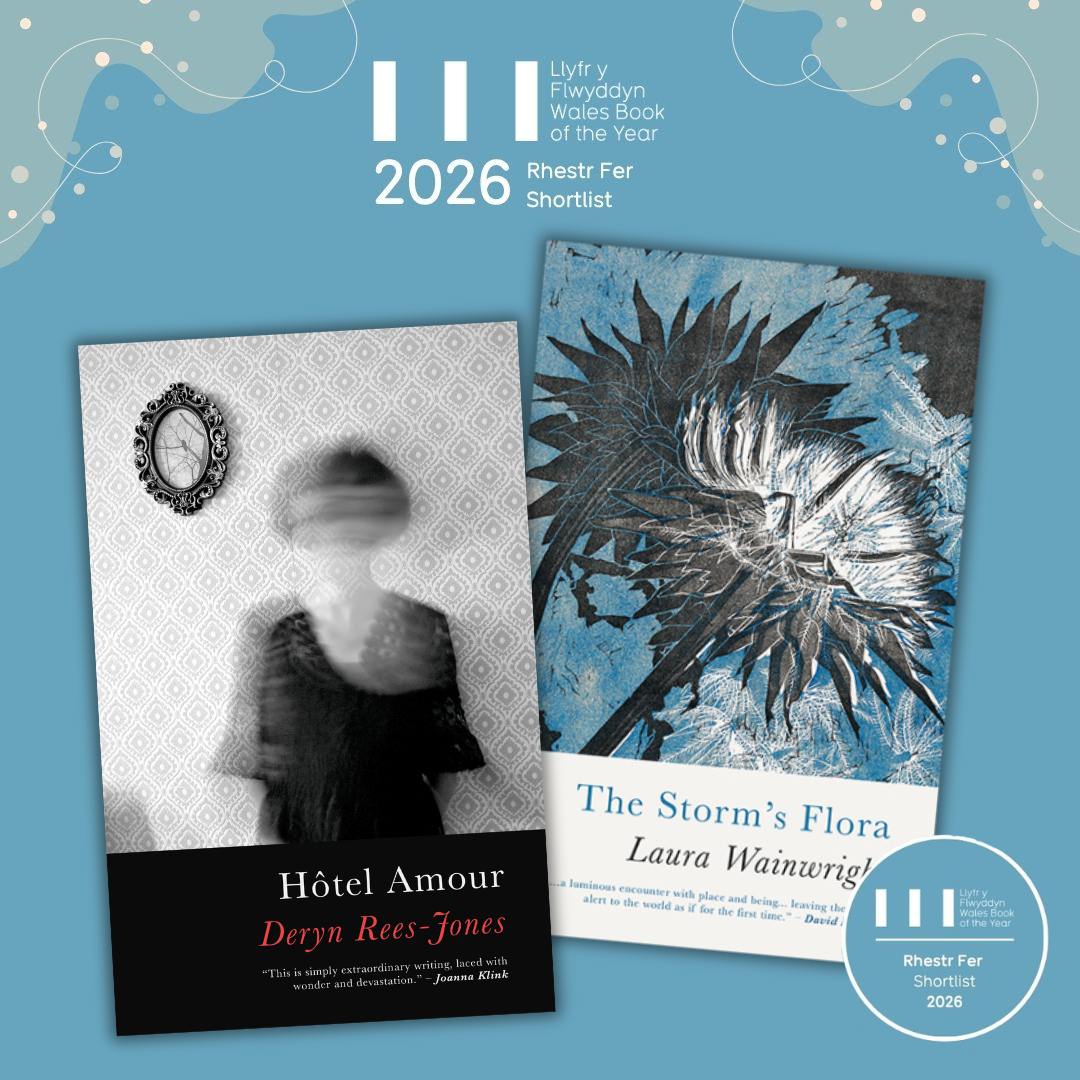
In this guest post, poet Deryn Rees-Jones reflects on time spent in Paris whilst writing her collection Hôtel Amour, offering an insight into her writing process and the inspirations behind the book.

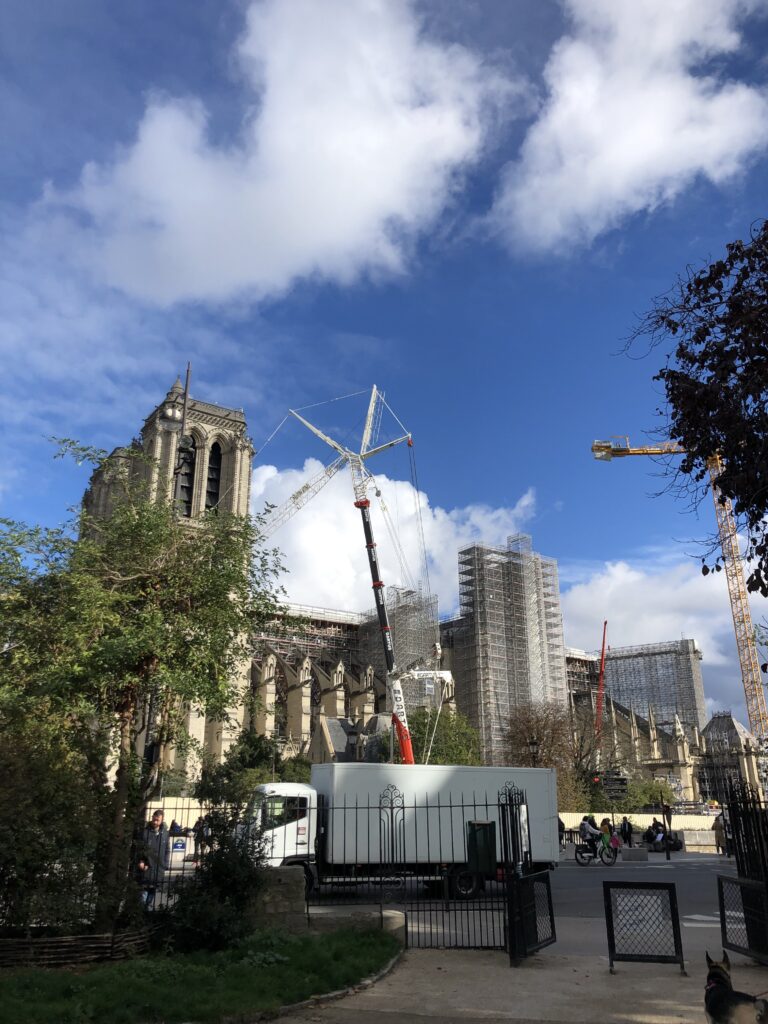
On the evening of my arrival, early in October 2022, my room at the Cité International des Arts, Paris, was rich and glowing with late evening light. An intense orange and pink sunset was a startling backdrop to the view of nearby Notre-Dame, still then under radical reconstruction, after the fire of 2019. Throughout the autumn months, and into winter, the large bare room, with its lino floor, tiny corner camp bed, two ring stove and sink, and artists’ easels, was my home. Around me, artists and writers and composers from across the world were being supported in residencies, and all about me people were quietly going about their work. Living spaces, each week, were transformed into open studios. Sometimes I would hear people rehearsing a song, or playing the piano. The building – the most international of hotels – felt both very alive and very still. I kept my own room empty except for a handful of postcards, and once, towards the end of the residency, I allowed myself a bunch of flowers, bought after a late-evening walk on the Île Saint-Louis. Looking back, the radical simplicity of the life I was living was like an act of devotion to life itself.

Photo of large bright windows in an almost bare hotel room
Photo of the light shining on the wall in a near-bare hotel room.

I first visited Paris when I was fifteen. For me, Paris was synonymous with the modernist writers I was then discovering: Hemingway, Stein, Joyce. Later, I came to read them differently, alongside Woolf, Jean Rhys, and Hope Mirrlees. But it would also become for me the Paris of French philosophers, of Simone De Beauvoir, Satre, Foucault, and later, so-called ‘French feminisms’. It was a place of ideas, and a place of a language that I was haltingly learning to enjoy as a new sound in my mouth. Over the next forty years, after that first visit, I managed to return numerous times, so that my memory of the city and its geography became a series of regular waystations to punctuate my life.

For the three months of my residency, though, Paris functioned as a concentrated dreaming and thinking space as well as a space for an ongoing recovery from the damage a wild-type covid infection, which I’d caught early in the pandemic, had left in its wake. I slept beside the huge studio windows with the Seine’s river traffic at my feet, and could never quite bear to draw closed the huge, slightly-dilapidated black-out curtains on the floor to ceiling windows. Not far from where I was living was a room, in the Quai D’Anjou, where Baudelaire wrote ‘L’invitation au voyage’; and it didn’t take much for the windows of my own room to also bring to mind Baudelaire’s prose poem ‘Les Fenêtres’. I wrote several versions of the poem, in lyric mode, playing with perspective and gender, and although those poems never made it into the book, they remain important under-seams to its conception. As the dark nights drew in, Paris came alive with lights; the river traffic continued in its flow and beyond my room, if I walked the short distances I could manage, the distant Eiffel tower would loom in and out of view,  shimmering on the hour like a glittering clock-hand.

What emerged as I was writing (and importantly not writing, too) was a desire to think about self and time and the world in the context of the pandemic, as I looped back to the narrative of my last book, Erato. That earlier book used solid blocks of prose narrative, alongside lyric, to hold each mode alongside each other in creative tension. I think, then, of Hôtel Amour, as a sequel; it picks up and shakes, and breaks and repeats images and narratives from Erato in the context of the geography of Paris, and continues them and also retranslates them, giving shape to moments from a life, but also reinventing them. In my imagination Paris was a place of compressed history, of post-war reconstruction after the Occupation. I was not drawing parallels, but it was difficult, too, not feel the weight of history at every corner.

Photo of Notre-Dame cathedral being rebuilt beneath a bright blue sky.
Photo showing a glimpse of Notre-Dame cathedral in the distance with graffitied, shuttered up market stalls in the foreground.

It is only towards the end of writing a book that a book’s meanings start to emerge afresh, and to sometimes even diverge from an original loose idea or plan. Nothing in the book points to fixed solutions, analogies, as it plays with silence, memory, form. Ideas of breath and song, how we locate ourselves and create, and how we attempt to give memory a provisional resting place in narrative, are bedded into the three sections of the book’s architecture. The first and last sections of ‘poetic prose’, and the central sonnet sequence they frame, might be seen as visualising a heart and lungs; they feel to me as well like an image of a bird (my namesake) or an angel. The twenty-five sonnets at the book’s heart also configured themselves to me as a concertina. They drag their long lines across the page, creating, with a space at their centre at line 7, a fractalled version of the larger structure of the book, turned on its side. Trying to find a vehicle for thinking through became the space of the hotel and its multiple etymological roots and connections to the hospital, and the hostel. And yes, love is at the centre of the book, in its many manifestations, what it makes in and of us, its drive towards life, and possibility.

So much has happened in the world since I started the book, in the wake of Brexit in 2019. The pandemic, the invasion of Ukraine, the atrocities committed in Gaza, has doubtless transformed our relationship to time, illness, violence, mass death, and the climate’s ongoing destruction, in ways we are not yet even able to reckon with. The passing of time has made me more aware of the vertiginous nature of subjectivity, of poetry’s potential to hold us, demand that we pay attention, as we try to go about our daily lives. This is a book born out of an enforced retreat, but it is also a book about recovery and return. As I write this, Paris is transitioning slowly into autumn, slowly shaking itself away from its summer of intense heat. I am glad to have been here again, for a while.

Deryn Rees-Jones

Posted on

Perfect Gift Books for Christmas 2025

Christmas stack of titles featured in our Christmas gift guide tied up with ribbon and other festive items.

With Christmas fast approaching (seriously, how is it that time again already?) we’ve rounded up our top bookish gift suggestions for all your family and friends, because who doesn’t love getting books at Christmas!

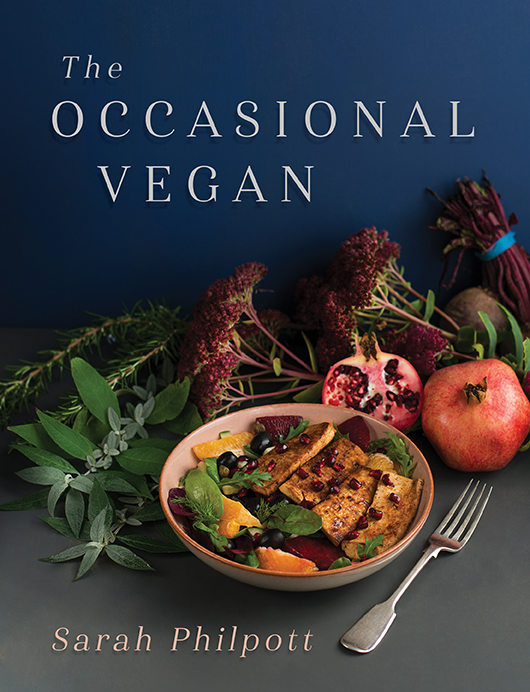
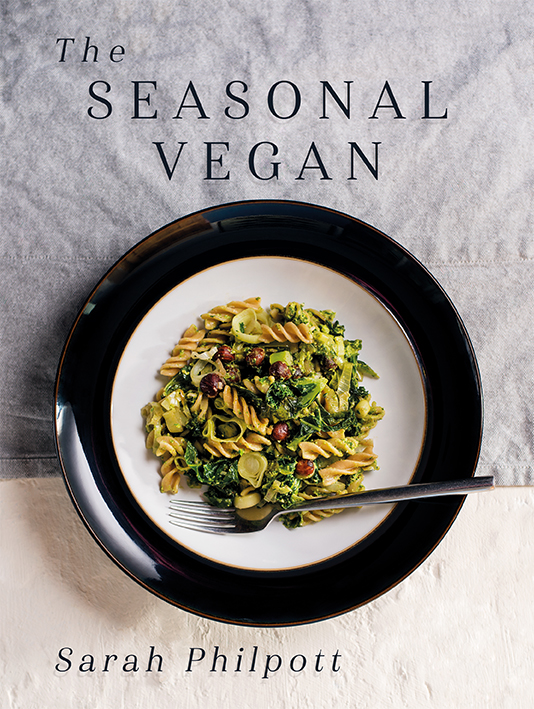
We’ve only scraped the surface here (otherwise you’d have been stuck reading this right up until the big day) but we’re sure you’ll find plenty of inspiration to get you started. And if you’re interested in what else we have to offer, our Fiction, Non-fiction and Poetry pages are ideal for browsing.

Oh, and did we mention we’re offering £10 off orders over £30 right up until the end of December? Use the code Xmas25 when checking out!

Perfect Gifts for…

Can’t-put-a-good-novel-downers

Film, TV & Pop Culture Buffs

History Geeks

Poetry Lovers

Nature & Outdoorsy Types

Foodies

Thank you for supporting independent publishing this Christmas!

Posted on

Guest Post – Alex Hubbard: Have you ever seen the rain?

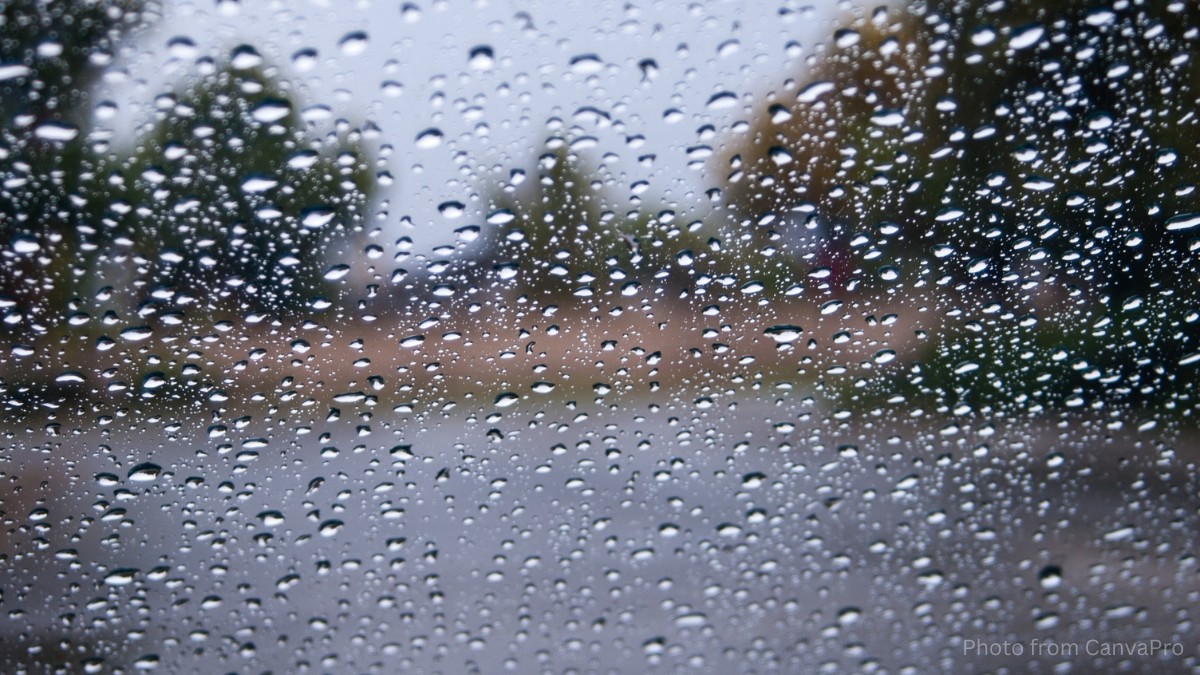
Close up photo of raindrops on a window blurring the view outside

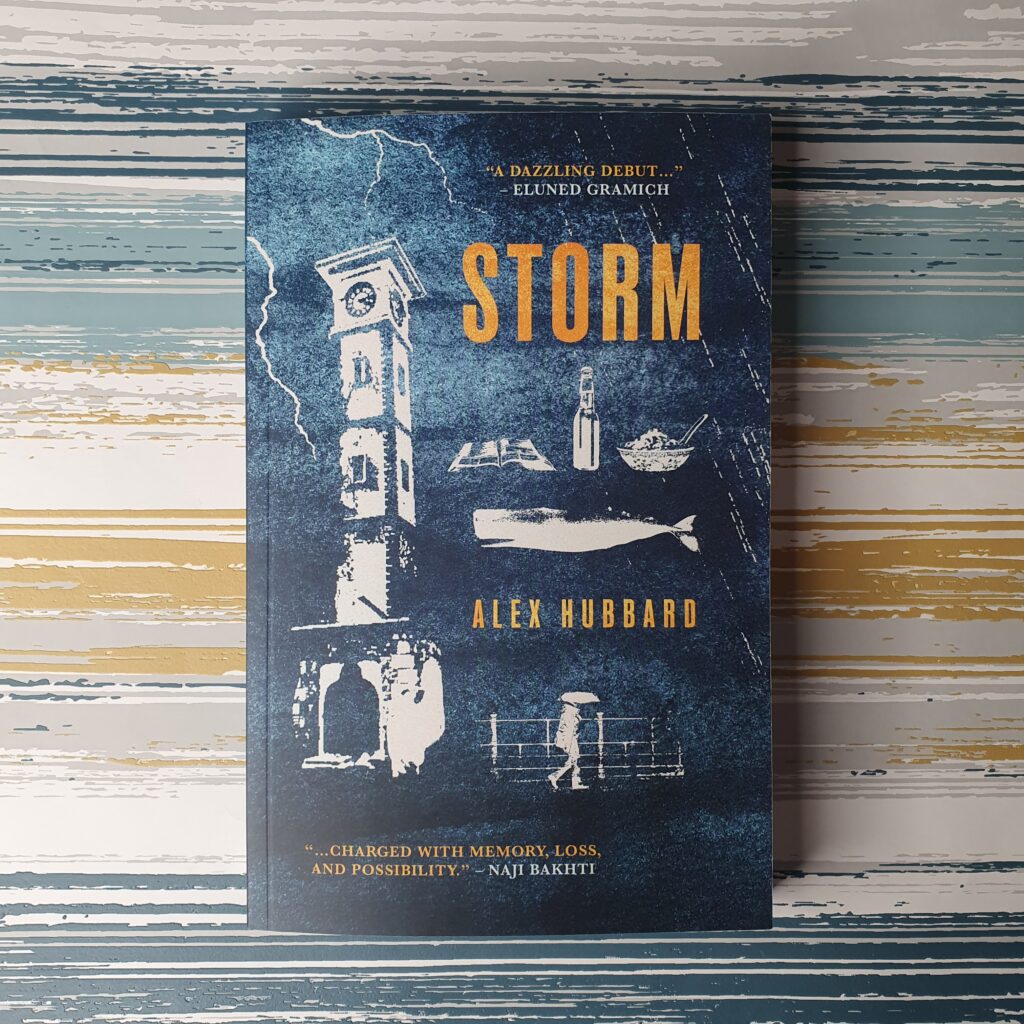
Have you ever wondered what writers listen to (if anything) when working on a book? In this guest post, Alex Hubbard shares some of the songs he listened to whilst writing his debut novel Storm. You can find his book in bookshops and here on our website from today!

A playlist for Storm: the novel

When writing Storm, I worked recklessly alongside endless streams of music. I’d put on my headphones and turn the volume up to max. This had such an effect on my already rather weak ears that I now avoid earpieces almost entirely. It was, however, an incredibly exhilarating and stimulating way to fire myself through the writing process.

Novels take a long time. Often, the writing process produces similar feelings to the daily grind of any other job which requires sitting at a desk and typing. So, when I think of a writing playlist, I think really of music’s effect on the mundane. I think of sitting in my dad’s car on a motorway flyover one Sunday night, looking out the window, seeing the rain coming down and all that red light from the cars beneath, made magic by Meatloaf’s ‘Paradise by the Dashboard Lights’. And I think that, really, reminds me of what is exciting about creativity: how it points to what we know is there and says, but what else could be?

So, with that in mind, I’d like to give you some insight into the music which helped make Storm. Now, to be clear, what you are about to read is not the authentic Storm playlist. There are in fact, four or five different ones, each with many overlaps and oddities. The longest clocks in at nearly 12 hours, altogether. In this one, you can listen to 13 songs which I think each represent about a thirteenth of the novel. 

‘Walkin’ After Midnight’ by Patsy Cline

We meet Josephine in Aberystwyth, after midnight. A heavy rain is beginning to fall. She is walking the long stretch of road from the local night club where she works to the flat above the barber shop where she lives. It’s hardly ‘miles along the highway’, and Josephine is certainly not hoping to find a lost love. But, like Patsy, she is ‘lonesome […] as can be’. And loving it. For now.

‘Feels Nice’ by Clwb Chess

Like all cosmic, chaotic fever dreams, Storm is really a novel about nights out. Early on, Josephine, Glynn and their various connections go out-out in Aberystwyth. Nothing has ever captured the Aberystwyth night out quite like Clwb Chess’ 2025 EP, In Da Clwb. This Brummie-Cymraeg collaborative effort is forceful, fun and fabulous. ‘Feels Nice’ opens:

I caught you in the smoking cage
cornered in-between
the windy weather battering
and my suit-wearing shiny gleam

The smoking cage, I suspect, is belonging to Pier Pressure and overlooks the sea – a quite wonderful feature of an otherwise God-awful night club. And there is perhaps not a better image of an Aberystwyth night out than the one imagined here – stuck between the harsh wind and some smart-dressed idiot. I’d rather the clowns and jokers.

‘The Whale Has Swallowed Me’ by J.B. Lenoir

And then comes the next morning. If you’ve ever indulged a little too much in vices of the alcohol, you might also feel that ‘the same old whale’ that ‘swallowed Jonah’ has ‘swallowed’ you. You’re far less likely, however, to find that a whale has actually washed up right on your doorstep. Yet, come the dawn of Storm’s second day, that’s exactly what happens. At least whales don’t actually generally swallow people. I think.

‘Drowning (feat. BADBADNOTGOOD) by Mick Jenkins

House parties, though, are fundamentally different ontologically to night clubs. They are slower, stranger and illicit, like some stripped back version of a speakeasy. At the end of the novel’s second day, Josephine finds herself at a house party full of strangers. Just as Jenkins croons ‘we gon’ need some drugs/for this situation’, Josephine finds herself floating into more surreal substances than alcohol and nicotine.

‘Dafydd Iwan Yn Y Glaw’ by Datblygu

But descend to what? Well, I don’t want to give too much away, but something like this. Glaw, cerainly, but unfortunately Dafydd Iwan does not make a cameo. Fear not, there are plenty of other Welsh icons making appearances. If I could, I’d make sure all readers listened to this song on loop from pages 182 to 208.

‘The Winner Takes It All’ by Abba

And then, we come to Abba, as all things must. This song joined the Storm playlist quite late, when I was re-writing parts in relation to Josephine’s relationship with her mother. I went to see Tai Haf Heb Drigoyln perform at the Bank Vault’s experimental music night, and they covered the song in a manner simultaneously silly and sincere, comic and sad. Fundamentally, this is a song about futures: about what continues, what ends, what is remembered, what is lost. I heard it anew at just the right time to realise that this is what Storm is about, too.

Still with me?

Well, fair play, because I assumed that having someone tell you why they listen to certain songs when they write was one of the circles of hell. Still, I hope you enjoy the playlist. I think it holds up. You can read my breakdown on every song on my Substack. And if you’d like to read some prose which has a similar vibe, my book is available now!

Alex Hubbard

This cover shows the clock tower in Aberystwyth standing ominously tall in the midst of a violent storm. A young woman with an umbrella walks along the promenade. The text reads: Storm, Alex Hubbard.

Check out a longer version of this post on Alex’s Substack.

Posted on

Poetry Wales Press awarded $30,000 Grant from Hawthornden Foundation

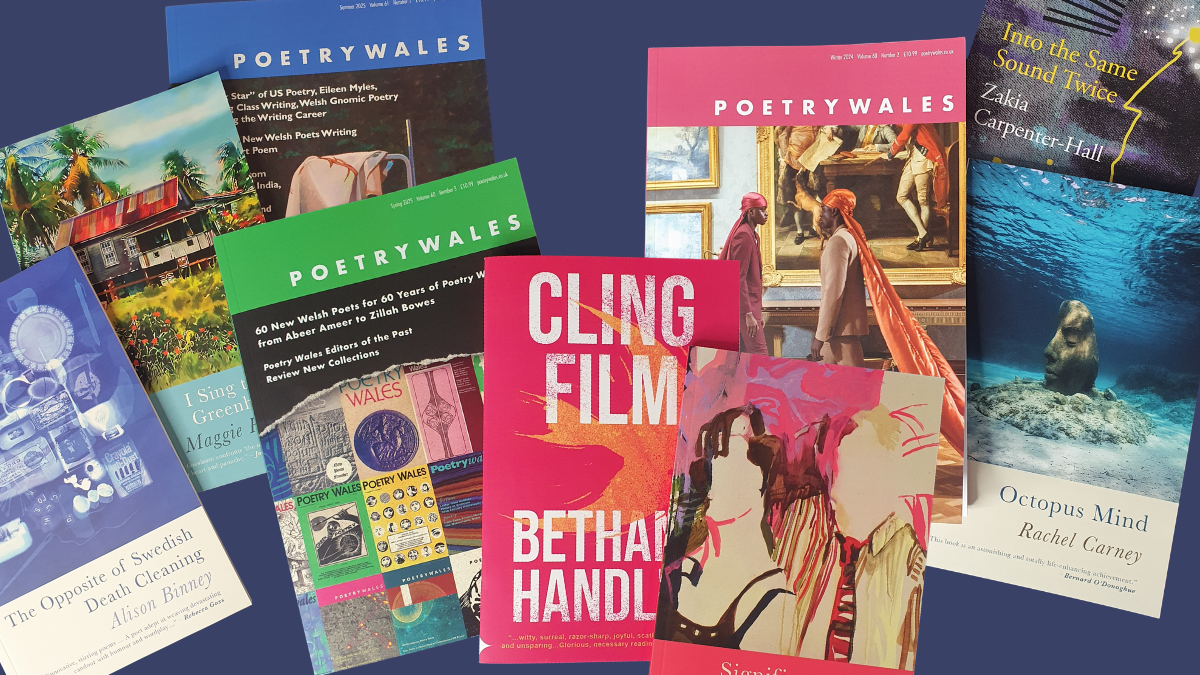
Photo showing issues of Poetry Wales alongside recent poetry books by Seren

Poetry Wales Press, which includes Seren Books and Poetry Wales magazine, has been awarded a $30,000 grant from the US-based Hawthornden Foundation. We are one of only two UK-based publishers to be approached by the foundation for this round of funding.

The award has been allocated in recognition of our reputation for serving underserved literary communities in a part of the world deemed to have “weak or non-existent literary infrastructures”.

The funding will go towards organisational overheads at a moment when we – along with the rest of the sector in Wales – faces unprecedented financial pressure. Some spend will also go towards projects which support our growth, such as professional training for staff, workshops for magazine subscribers and a Cymraeg Editor and proof-reader for Poetry Wales magazine, to be implemented in 2026.

The Hawthornden Foundation is a private charity supporting contemporary writers and the literary arts. Established by Drue Heinz, the noted philanthropist and patron of the arts, the Foundation runs an international residency program, conferences and literary retreats. It also sponsors the annual Hawthornden Prize, one of Britain’s oldest and foremost literary awards, which was won by Emyr Humphreys in 1958 for his novel A Toy Epic, later republished within the Seren Classics series.

Our CEO Bronwen Price says: “We are delighted to receive this incredibly generous grant, especially given all the work we have put in to creating a future for the company over the past few difficult years. This support will make the world of difference to us. It reinforces that we’re on the right track and will ensure we are in the best possible position to continue offering innovative, equitable and engaged publishing from and for Wales and the world.”

Zoë Brigley, editor of Poetry Wales adds: “That the Hawthornden Foundation chose Poetry Wales for one these grants is hugely encouraging to us. One of my main goals on becoming editor was to make the magazine a welcoming space for everyone, a place where Welsh writers and international poets could know that their work would be read carefully and respectfully, offering a large variety of voices from around the world. This grant will be such a huge help in our missions, as we seek to foster new writing by emerging and established poets from all kinds of backgrounds.”

Posted on

Bethany Handley and Alison Binney are Highly Commended by the Forward Prizes 2025

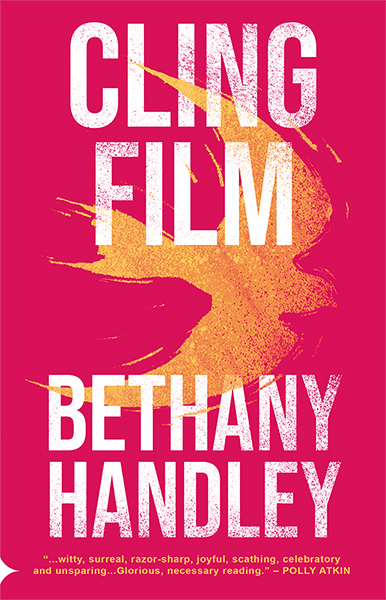
Photo of the Forward Book of Poetry, The Opposite of Swedish Death Cleaning and Cling Film

On National Poetry Day, the Forward Prizes for Poetry published their annual anthology, the Forward Book of Poetry which brings together the best contemporary poetry published in the UK that year, as chosen by the Forward Prize judges.

We’re delighted that both Bethany Handley and Alison Binney feature on its pages having been Highly Commended in this year’s prize. Bethany’s poem ‘Limbs not walked on’ is published in her pamphlet Cling Film and Alison’s poem ‘Testimony’ appears in The Opposite of Swedish Death Cleaning.

We’ve also got our fingers crossed for Abeer Ameer who is shortlisted for Best Single Poem – Written for ‘At Least’ which was first published by MODRON. The winners of the Forward Prizes will be announced at the award ceremony in London on 26 October 2025.