You can now buy all of our eBooks directly via the Seren website. We have a range of titles across poetry, fiction and non-fiction for you to choose from. Browse eBooks here.
Our eBook orders are fulfilled by our partners Glassboxx making it quick and easy for you to access the books you’ve purchased. Once your order has been processed, simply download the Glassboxx app (Android and iOS versions available) and type in the email address you used for the order.
For more information, visit our About eBooks page or browse eBooks.
This week our Friday Poem is ‘The Reed Flute and I’ by Abeer Ameer from her debut collection Inhale/Exile. Abeer recently featured on an episode of the Babble podcast which can be listened to here.
Abeer Ameer writes of her forebears in her first collection, Inhale/Exile. Dedicated to the “holders of these stories”, the book begins with a poem about a storyteller on a rooftop in Najaf, Iraq, follows tales of courage and survival, and ends with a woman cooking food for neighbours on the anniversary of her son’s death.
“…these poems remind us that even in the darkest times, there is light, and there is love.” – Katherine Stansfield
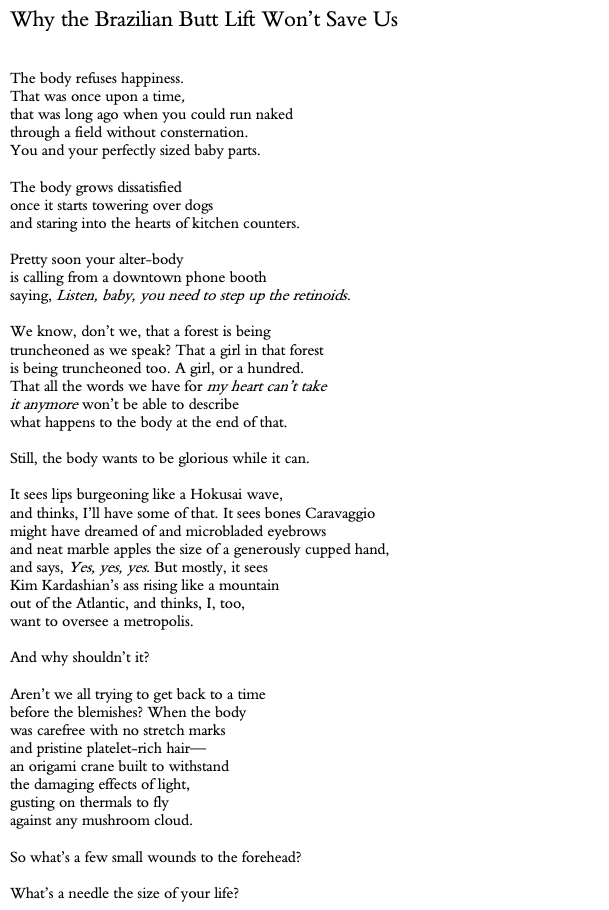
This week’s Friday Poem is ‘Why the Brazilian Butt Lift Won’t Save Us’ by Tishani Doshi from her forthcoming Bloodaxe collection A God at the Door.
Photo taken for Vogue India
Tishani is taking part in an event at the Seren Cardiff Poetry Festival this afternoon from 2pm! There’s still time to register to hear her reading alongside Joe Dunthorne. Register here.
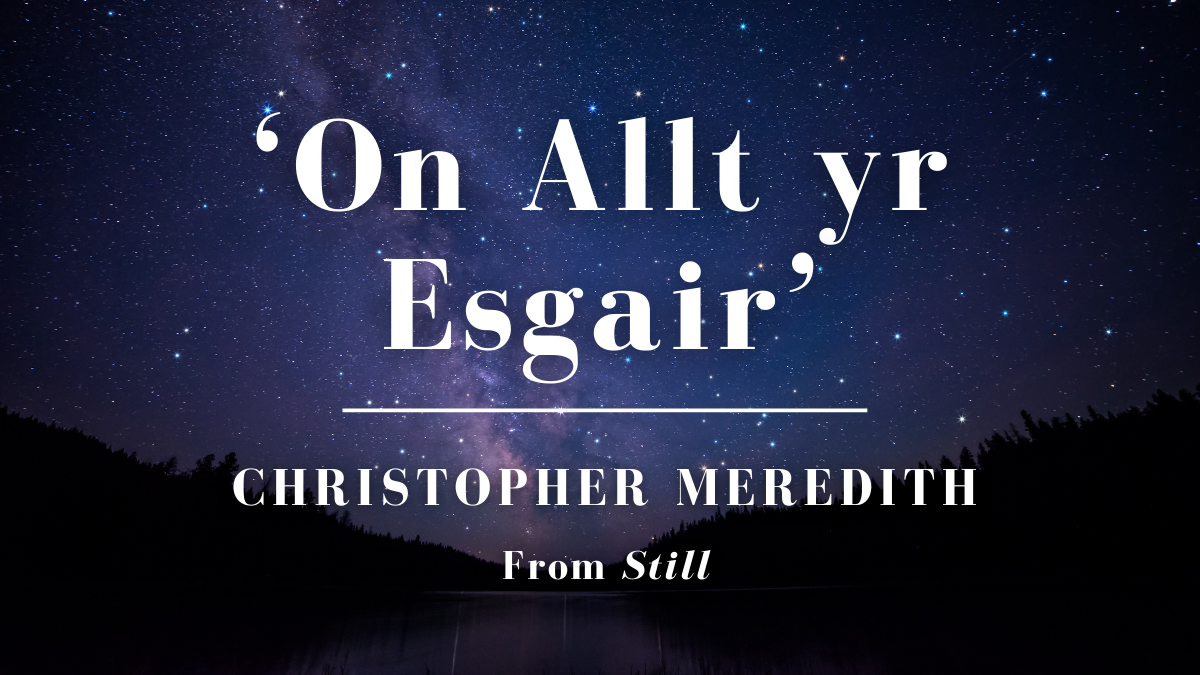
This week’s Friday Poem is ‘On Allt yr Esgair’ by Christopher Meredith from his newly published poetry collection Still. In a unique publishing event, Still is published simultaneously with Christopher’s tragicomic short novel Please. Both are available on our website now.
Christopher Meredith’s new poetry collection Still, uses the title word as a fulcrum to balance various paradoxical concerns: stillness and motion, memory and forgetting, sanity and madness, survival and extinction. Lively and thought-provoking, this is a beautifully crafted, humane and intelligent collection.
“Lyrical, always surprising, Meredith ‘fixes stillness’ in absences here. His perfect ear tunes in so precisely – especially to the natural world, it’s ‘edge of sense’ – we are left haunted á la Frost, by a deep lonliness in the human condition.” – Paul Henry
Don’t miss the launch of both books at the Seren Cardiff Poetry Festival from 12pm on Sunday 18 April. Register for free via the festival website here. You only need to register ONCE for access to the entire four-day weekend.
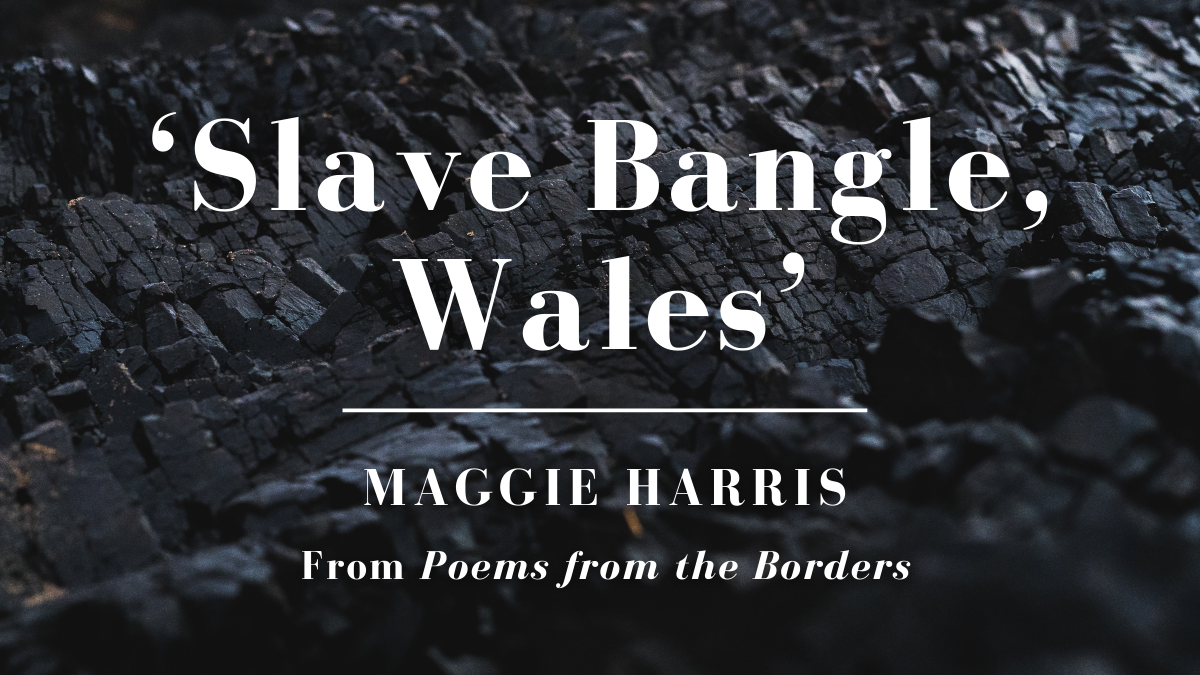
This week’s Friday Poem is ‘Slave Bangle, Wales’ by Maggie Harris from the pamphlet Poems from the Borders. Maggie recently won the Poetry WalesWales Poetry Award judged by Pascale Petit.
Poems from The Borders is part of Seren’s pamphlet series celebrating the spirit of place. Featured poems range from “the spine of the A470”, through Monmouthshire, over the dramatic Brecon Beacons, and also through the Black Mountains towards Hay-on-Wye, towns in Herefordshire and Radnorshire and along rivers, the Wye and Severn.
This week’s Friday Poem is ‘Remembrance of Things Past’ by Grahame Davies from his collection Lightning Beneath the Sea which is currently £4.49 in our half-price spring sale.
Earlier this week we launched Grahame’s new book Real Cambridge, the latest addition to the Seren ‘Real’ Series.
Lightning Beneath the Seais the first collection of poems in English by Grahame Davies, featuring the work that he has honed over the years as he has read them at literary festivals, conferences and events world-wide. Well-known for his prize-winning Welsh-language poetry and fiction, and for his scholarly non-fiction. He brings a native warmth, an intimate, conversational tone, and a raised civic awareness to these poems.
This week we have two Friday Poems from TROEON : TURNINGS, the new bilingual collaboration between poets Philip Gross and Cyril Jones and artist Valerie Coffin Price. ‘Penny’ by Philip Gross and ‘Glasffrwd’ by Cyril Jones.
To turn, to dig, to plough, to upset, to translate… Bend, lap, journey, time… The Welsh word troeon unfolds meaning after meaning. In TROEON : TURNINGS, two poets confident in their own traditions meet in the hinterland between translation and collaboration – Cyril Jones from the disciplines of Welsh cynghanedd, Philip Gross from the restless variety of English verse.
This year we’re celebrating 40 years since Seren was established as Poetry Wales Press. In the first of a series of posts looking back at our history, founder Cary Archard shares an archive article written shortly after the press was first set up.
“The following piece of optimism was written exactly forty years ago, at Seren’s birth. In it I gave a brief account of what led to the setting up of the press. Its name at the start was Poetry Wales Press and it wasn’t until 1989 that it became Seren. Two of the first three books were first collections of poetry by two young writers called Mike Jenkins and Nigel Jenkins (and encouraging new, young writers is still central to the press), the third was a miscellany of writing by the older, more established Dannie Abse. All three were close collaborations between publisher and authors. All three were produced without any public subsidy or support, though it’s fair to say quite soon such support was offered to enable the infant to grow. At the time, there were people who thought I was crazy, but the risk seems to have paid off.” – Cary Archard
Poetry Wales Press
Photo of Cary Archard by Martin W. Roberts
Sometimes I pretend to myself that my present position as small press publisher came about fortuitously. Circumstances were to blame, not I. After all, would anyone in his right mind enter such a risky business, even in a small way, at such an especially risky time? There may have been times in the past when a fairly bookish person might have longed to start his own press for all sorts of vaguely literary and romantic reasons, but is 1981 the time to emulate Keidrych Rhys or the Woolfs? Surely these hard-headed days are too uncomfortable for such dreamers?
On the surface (pretending circumstances were in control), things were like this. In the summer of 1979, Christopher Davies, the publishers of Poetry Wales, asked J. P. Ward and myself whether we would be willing to take over the publication of the magazine which they had produced and distributed for eleven years. There were probably many reasons for the publisher’s decision, but with the experience of hindsight, I have no doubt that a major consideration was the enormous degree of time and effort that is involved in the production of the magazine. John Ward and I welcomed the opportunity to be both editors and publishers and an agreement was reached which was satisfactory to the outgoing publishers and ourselves. We felt that the magazine couldn’t but benefit by being completely in the hands of its editors. Then, about the same time as our first number appeared in the summer of 1980, J. P. Ward discovered that the pressure of his other work was too great and he decided, reluctantly, to end his active involvement with the magazine. And so, Poetry Wales was left in the relatively inexperienced hands of the present editor who was forced by the exigencies of the situation to learn as much as he could about the business of publishing and distribution.
So, you see, it was, on the surface, circumstances that brought Poetry Wales into my hands. Yet that is too simple an explanation. I had already worked on the magazine for seven years and when you work on a small magazine you get to love it. You care about it and fuss over it as you would a child. (If you were to ask an editor’s family, they might say it assumes more importance than a child.) It’s very difficult to remain unmoved when you hear hard things said about it. Then, besides all this accumulated natural feeling, there was my desire that the magazine should not change its character, something which could happen should it fall into other hands. I saw (and see) its character as broad based, attempting to cover a variety of styles, presenting the best of what is being written in Wales–– primarily in English but most certainly in both languages. The magazine should avoid the coterie: no one should be able to talk about the typical Poetry Walespoem. The magazine’s tone, I believe, should be unpretentious and, as far as possible, non-political. (This does not mean, of course, that individual poems or articles might not be ‘political’. Neither am I so naïve as to imagine that political attitudes do not influence my judgements about poetry. An editor, I think, should be aware of this problem and try to compensate for his tendencies.) I am pleased when readers write in, as they have done, to tell me that the magazine is too left-wing, too respectable, too loose, too Welsh, not Welsh enough: all these conflicting views suggest the balance is about right.
The question remains: how did the magazine become the Press? Part of the answer is that from publishing the magazine I became interested in publishing books. After all, producing Poetry Wales is a bit like producing a quarterly paperback. Then there was my position as editor of the last six booklets in the Triskel poetry series which has been started by Meic Stephens in 1966 and which the publishers, Christopher Davies, has decided to discontinue. I knew from that editorial experience that there were good collections of poetry by young writers waiting to be published. (Indeed I am proud to have published among my first books the first book-length collections of two such fine poets as Mike and Nigel Jenkins.) Again, then, it could be said that circumstances spurred me on: some substitute was needed to replace the Triskel series. It was at this time that I began talking about my publishing ideas to Dannie Abse on our walks, near our homes, along the cliffs between Ogmore-by-Sea and Southerndown. I ought to mention here a particular feature that marks all small press publishing, namely, the close relationship that exists between writer and publisher. This active collaboration has been the most rewarding feature of all the books I have worked on so far. It may have been Dannie who had the original idea from which the Press Miscellany series has grown. Certainly, I doubt whether without his encouragement I would have started the press at all. The idea behind the Miscellany series was that I should publish a selection of a Welsh writer’s work to demonstrate his range and versatility, to get away from the idea that a writer was only a poet or novelist and that anything else he wrote could be safely disregarded. At the same time, some very interesting stories, articles and poems could be rescued from magazines. The first volume has already been published and those who had forgotten what an extraordinarily fine prose writer Dannie Abse is have been delighted by Miscellany One. Miscellany Two by Emyr Humphreys and Miscellany Three, a collection of unpublished writing by Alun Lewis, will be published later in the year.
These then were the circumstances that led to the first books, but I would be less than honest– less than human– were I to leave things at that. Actions are governed by beliefs as well as circumstances. One of my beliefs about the Welsh is that they lack confidence in their own achievements and especially in the achievements of their writers. (I’m talking here about the English speakers in particular.) This belief has been reinforced in different ways. To begin with, the story of a friend’s experience. Robert Watson was born in Newbridge and, until recently, taught in Gowerton. He writes articles and reviews and contributes to magazines like Tract, Use of English and Poetry Wales. He also writes novels, working long hours into the night often after a hard day’s teaching. The point of this story is that Robert hoped his novels would be published in Wales. However, Welsh publishers were not interested. Reluctantly, he left Wales to teach in England and soon after his first novel Events Beyond the Heartlands, set in Wales and a serious attempt to engage with contemporary issues, was published by Heinemann of London. It is ironic that Yr Academi Gymreig’s competition ‘A Novel for Wales’ should come too late for Robert Watson – and it says something about Welsh publishing that the publisher involved in the competition should be English. The competition might help a Welsh novelist to get his work published but it will do nothing to help restore the Welsh writer’s confidence in Welsh publishers.
Wherever I glance I seem to see this lack of confidence. When Book News produced a special issue last year for the Frankfurt Book Fair did it confidently support our contemporary English language writers? No. Instead we were given articles about writers such as David Jones and R. S. Thomas, safely established figures whose books are not published in Wales. When I turn to Professor Gwyn Jones’s anthology, The Oxford Book of Welsh Verse in English, I cannot help but notice how heavily he has lent on the part Welshness of established English poets like Wilfred Owen and Edward Thomas and on the translations from Welsh language writers, with the consequent neglect of many fine English language writers working in Wales today. Isn’t this another example of lack of confidence? Or look at the way the new magazine Arcade treats writers. Its series of profiles on writers is an excellent idea but what it has meant so far is that writers are treated as news personalities. Their writings have been largely neglected.
The problem, then, is a general lack of confidence in the achievements and potential of our writers, and at a time, too, when we have, I firmly believe, many good writers working in Wales. This is where I hope Poetry Wales Press can contribute something important. I want to publish new books of poetry regularly, and occasionally books of prose, of articles and criticism. The first three books were published without Welsh Arts Council grants but to continue without their support would mean publishing very infrequently. If the momentum is to be kept up, I shall need their financial help. And this is where I am not sure the present system of grant support is of the right kind. The present method of submitting each manuscript to the Literature Committee for separate consideration is too bureaucratic. If the ‘wrong’ reader is chosen by the Committee, your manuscript may not receive a grant. There are inevitable delays. Besides, no publisher worth his salt wants his judgements discussed and his plans altered by a committee. I think the Literature Committee ought to show more confidence in publishers and award block grants so that they can get on with their job. It seems to be inconsistent, for example, that a block grant can be awarded to a magazine like Poetry Wales which produces what are, in effect, four paperbacks a year but that a block grant cannot be made to a publisher to produce four unrelated books. I am confident that the Literature Committee which has made bold and imaginative decisions in the past (such as the creation of its own bookshop which has made an invaluable contribution to the literary life of Wales) will think constructively about this problem.
Robert Watson prefaced his first novel with a quotation of Nietszche which begins: ‘We no longer see anything these days that aspires to grow greater’. Placing the emphasis on ‘aspires’. I would like to think that Poetry Wales Press aspires to do something to improve the general state of publishing in Wales. Risking immodesty, I would like to think that its inception isn’t only related to personal circumstances but that it is also, in its own way, part of recent attempts (like Sally Jones’s Alun Books) to help Welsh writing ‘grow great’.
Celebrating 40 years of independent publishing in 2021
What’s your favourite Seren book from the last 40 years? We’d love to know! Tag us in your photos on Twitter, Facebook or Instagram using the hashtag #Seren40.
Create your free Seren account and enjoy 20% off every book you buy direct from us.
This week’s Friday Poem is ‘Hands’ by Elizabeth Parker from her debut collection In Her Shambles.
Spiky, provocative, declamatory, these energetic poems sweep the reader along through their narratives. In Her Shambles introduces us to a poet who uses language with verve and zest. Her subjects range from a poem where family members are embodied by their own rivers, to carefully observed set-pieces inspired by relationships, from burgeoning first loves to break-ups.
“A radiantly-written and vigorous collection by a rising star of British poetry.” – David Morley
This International Women’s Day we’re showcasing books written by or about inspiring women. Find many more on our website.
With over 250 contributors, this generous selection of poetry by women with an emphasis on twentieth-century poetry in English features poets from the USA, Canada, England, Ireland, Scotland, Wales, Australia, and New Zealand. Arranged by thematic chapters that touch on various aspects of modern life, this anthology aims to be a touchstone of women’s thoughts and experiences; to be entertaining and relevant as well as inclusive and representative of some of the best poetry published now.
Wild Persistence by Katrina Naomi is a confident and persuasive collection of poems. Written following her move from London to Cornwall, it considers distance and closeness, and questions how to live. She dissects ‘dualism’ and arrival, sex and dance, a trip to Japan. The collection also includes a moving sequence of poems about the aftermath of an attempted rape.
The Estate Agent’s Daughteris the eagerly awaited follow up to Rhian Edwards’s Wales Book of the Year winning debut collection Clueless Dogs. Acute and wryly observed, the poems step forth with a confident tone, touching on the personal and the public, encapsulating a woman’s tribulations in the twenty-first century.
This informative biography restores Elaine Morgan’s reputation and establishes her significant place in writing from Wales. It outlines her early days living only just above the poverty line in the Rhondda, before reading English Literature at Oxford, and examines her careers as an award-winning television writer and visionary anthropologist. Richly detailed it is essential in understanding the life and work of this important writer.
By turns laugh out loud funny and deeply sad, The Amazingly Astonishing Story is a frank and surprising look into a child’s tumultuous mind, a classic story of a working-class girl growing up in the 60s. Her Catholic upbringing, a father torn between daughter and new wife, her irreverent imagination and determination to enjoy life, mean this really is an amazing story (including meeting the Beatles).
When Nula’s husband James, an Irish documentary filmmaker, becomes forgetful they put it down to the stress of his work. But his behaviour becomes more erratic, and he is eventually diagnosed as suffering from Pick’s Disease, an early onset and aggressive form of dementia. The Longest Farewell is the true story of Nula’s fight with her husband’s disease, and how this terrible time held a happy ending.
A city burns in a crisis − because the status quo has collapsed and change must come. Every value, relationship and belief is shaken and the future is uncertain. In the twenty-six stories in A City Burning, set in Wales, Northern Ireland and Italy, children and adults face, in the flames of personal tragedy, moments of potential transformation. On the threshold of their futures each must make a choice: how to live in this new ‘now’.
In the aftermath of World War II, hundreds of thousands of Yugoslavia’s ethnic Germans, the Danube Swabians, were expelled by Tito’s Partisan regime. A further sixty thousand were killed. Seventy years later, Marie Kohler’s marriage is falling apart. She’s seeing someone new, an enigmatic man named David, who takes her to the former Yugoslavia to find the truth behind her grandparents’ flight to America. Ford has written a moving narrative of emigration and identity, realpolitik and relationships, and asks what happens when the truth is unspoken.
Princess Adélaïde, daughter of Louis XV, is at odds with the etiquette of the French court. Adélaïde envies her brother, is bored with her sister and, when Madame de Pompadour, a bourgeoise, comes to court as her father’s mistress, she is smitten, with dangerous results. Adélaïde pushes against the confines of the court, blind to the difference between a mistress and princess, with tragic results. Forty-four years later, under the looming shadow of the revolution, what has happened to the hopes of a young girl and the doomed regime in which she grew up?