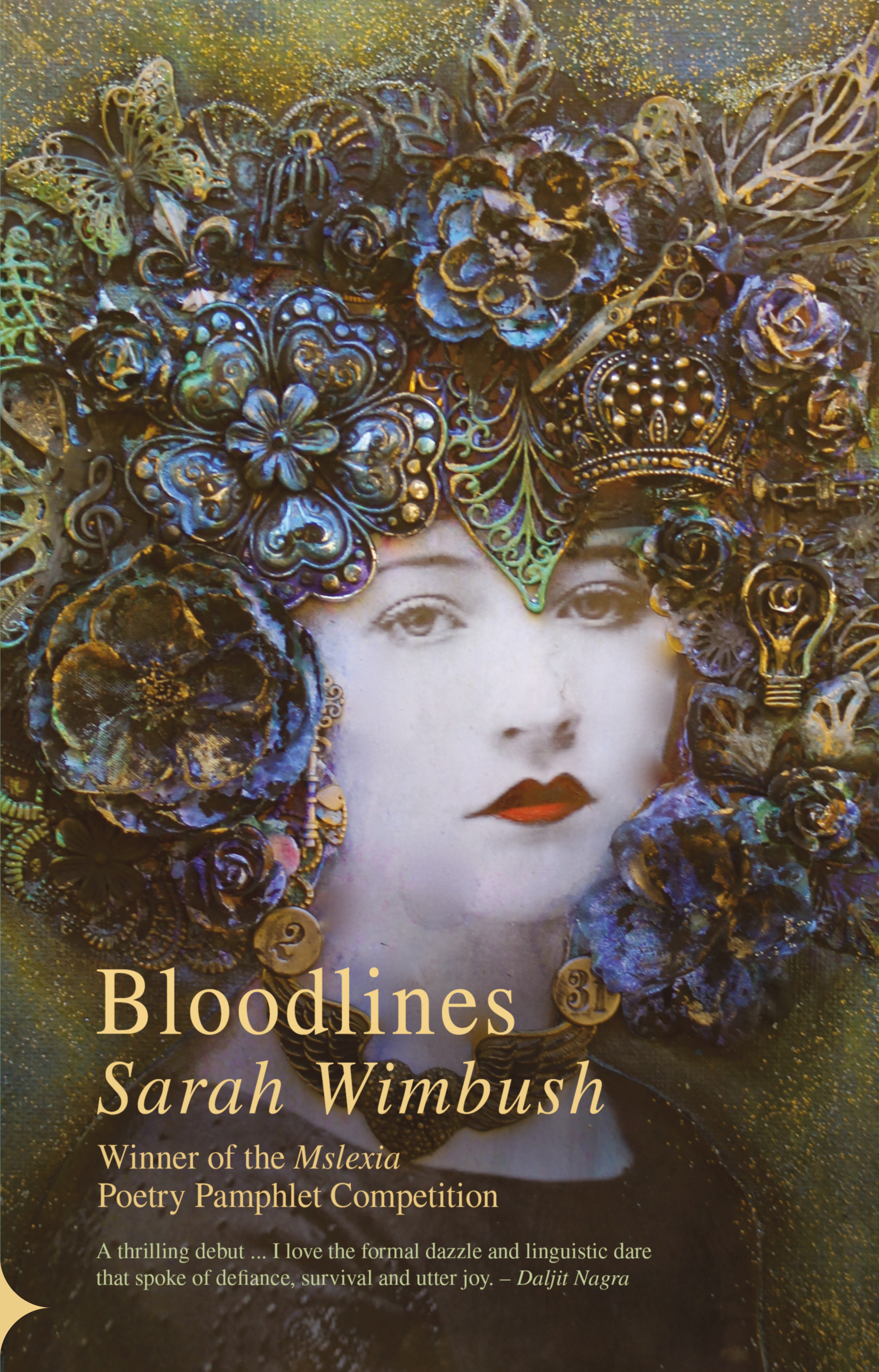
This week’s Friday Poem is ‘Weaving with Rushes’ by Sarah Wimbush from her debut pamphlet Bloodlines which has just been shortlisted for the Michael Marks Poetry Award 2020.
Bloodlines is an exploration of Sarah Wimbush’s own Gypsy/Traveller heritage, a journey made by piecing together fragments of distant stories and a scattered language. Along the way, we meet people who are ‘tethered to the seasons’; voices that reverberate with a sense of family and resilience, and always with that constant wonder of being part of something colourful, untamed and rare.
We are delighted to share that Bloodlines by Sarah Wimbush has been shortlisted for the Michael Marks Awards for Poetry Pamphlets 2020.
In what was a record year for entries, Bloodlines was one of five pamphlets to make the shortlist.
The judges commented:
“Linguistically and formally inventive, Sarah Wimbush’s Bloodlines evokes the world of Gypsies and Travellers, a vital and intensively lived world at once harsh and earthy, exuberant and exotic. A plethora of voices punctuates the sequence as the reader is invited to connect imaginatively with customs, traditions and communities known at first hand by their chronicler and creator. This is an exciting debut pamphlet thrumming with humanity and with the mystery and joy of being alive.”
The full shortlist can be viewed on the Michael Marks Awards website.
The winner will be announced in an online ceremony on Monday 14 December from 7:30pm. You can register to attend for FREE here.
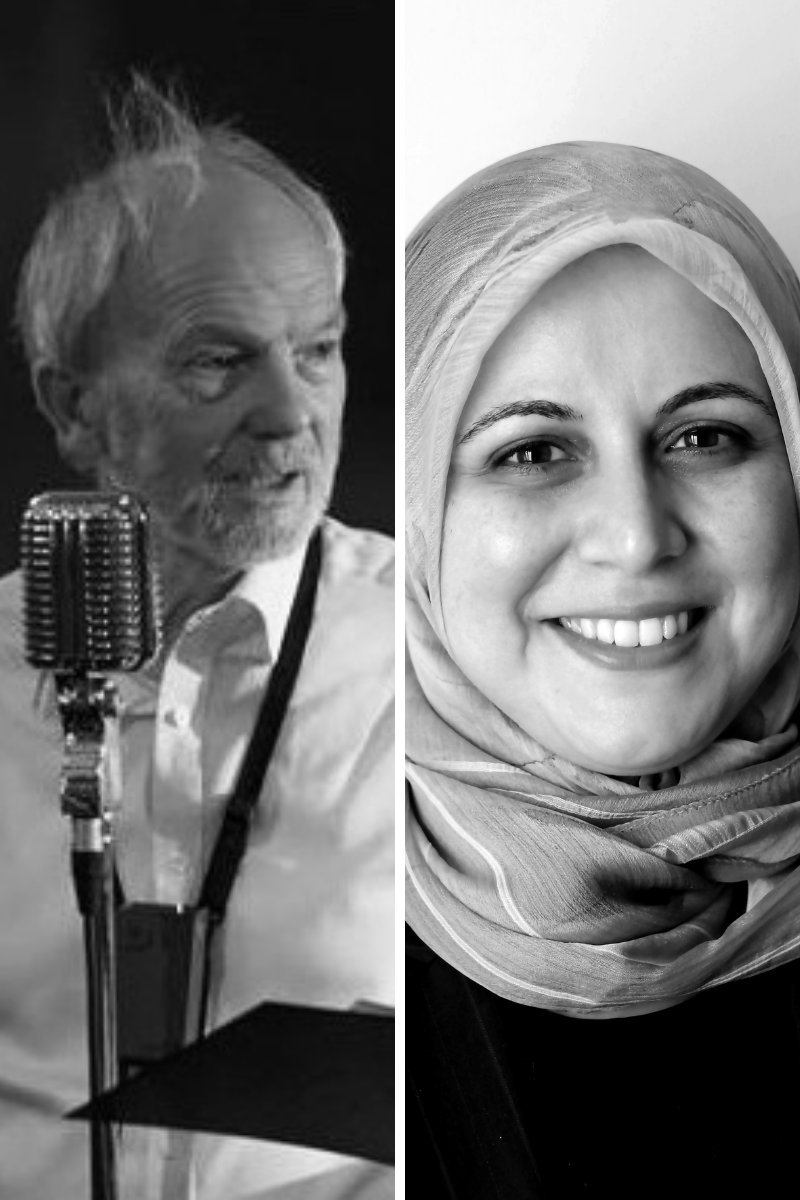
Congratulations to Robert Walton and Abeer Ameer on having their poems highly commended in the Troubadour International Poetry Prize 2020.
This year’s competition was judged by Mark Doty and Mona Arshi, and the two make the list alongside 20 other poets.
Robert Walton’s highly commended entry is ‘Nature Table’ which features the same Mrs Jones who appears in several poems his collection Sax Burgular Blues. Abeer Ameer’s poem ‘The Reed Flute and I’ was called “a truly magical poem a pleasure to read and turns language into music” by Mona Arshi in her judges comments, and will be published in Abeer’s forthcoming Seren collection Inhale/Exile in February 2021.
The winning poems were:
‘Entre-Deux-Mers, June’ – Amy Glynn’Filter Queen’ – Michael Lavers’Calf’ – Elizabeth Cook
Read the winning poems and full judges comments on coffeehousepoetry.org.
Kim Moore, author of The Art of Falling, has won the 2020 Ledbury Poetry Festival Poetry Competition with her poem ‘All Night A Bird’.
On hearing the news Kim said: “I am writing this still not quite believing that I’ve won! It’s even more special that it’s the Ledbury Poetry Competition because the festival is so close to my heart, and has been so important to me over the years in my development as a poet. To have Liz Berry, a poet I hugely admire pick this poem out of the thousands of entries still doesn’t feel quite real. Thank you again to Ledbury and to Liz Berry for bringing some joy and light into my lockdown existence, which this week has been especially grim.”
Second place was awarded to Kizziah Burton with her poem ‘Cist’, and Felicity Sheehy placed third with her poem ‘The Shapeshifter’s Wife’.
See judge Liz Berry’s comments on this year’s entries on the Ledbury Poetry Festival website.
Seren are delighted to be publishing Kim’s second collection All The Men I Never Married in October 2021.
This week’s Friday Poem is ‘Fold The River’ by Philip Gross from A Fold in the River.
A Fold in the River is the fruit of collaboration between T.S. Eliot prize-winning poet Philip Gross and the visual artist Valerie Coffin Price. Philip Gross once lived on the banks of the River Taff in Wales and his journals are the source for the powerful poems. Valerie Coffin Price revisited the walking route along the river and evolved the beautiful prints and drawings that accompany the poems.
Struggling to find the perfect gift for that hard-to-buy-for family member? Browse our Christmas Gift Guide for inspiration. Don’t forget there’s 20% off on the Seren website when you sign up to our bookclub.
The Other Tiger: Recent Poetry from Latin America is an anthology of Spanish language contemporary poetry from the Americas. Produced bilingually, with Spanish and English versions on facing pages, it is a welcome addition to the canon of translation, focusing on poets born since 1945. It includes work from Argentina, Colombia, Mexico, Peru, Nicaragua, Chile, Uruguay, Venezuela, Cuba, the Dominican Republic, Ecuador, Costa Rica, Bolivia and El Salvador.
The Other Tiger: Recent Poetry from Latin America is an anthology of Spanish language contemporary poetry from the Americas. Produced bilingually, with Spanish and English versions on facing pages, it is a welcome addition to the canon of translation, focusing on poets born since 1945. It includes work from Argentina, Colombia, Mexico, Peru, Nicaragua, Chile, Uruguay, Venezuela, Cuba, the Dominican Republic, Ecuador, Costa Rica, Bolivia and El Salvador.
Do you have a fiction or poetry lover in your life but you’re stuck for choice? Don’t worry, the Seren Mystery Book Bundles are back!
This time of year is stressful enough already so why not take the pressure out of present buying and let us do the choosing (and the wrapping) for you.
Treat yourself or someone special to one of our Mystery Book Bundles for the fantastic price of only £9.99 and we’ll send you three books from our wide-ranging and wonderful list, beautifully gift-wrapped and ready to put under the tree.
Choose from two varieties:
The Poetry Bundle – a pretty package of three full poetry collections, ranging from exciting debuts to powerful works from established poets.
OR
The Fiction Bundle – an exciting selection of three fiction titles, from gripping literary novels to absorbing short stories.
The Mystery Bundles will be available on our website until the end of the year – while stocks last.
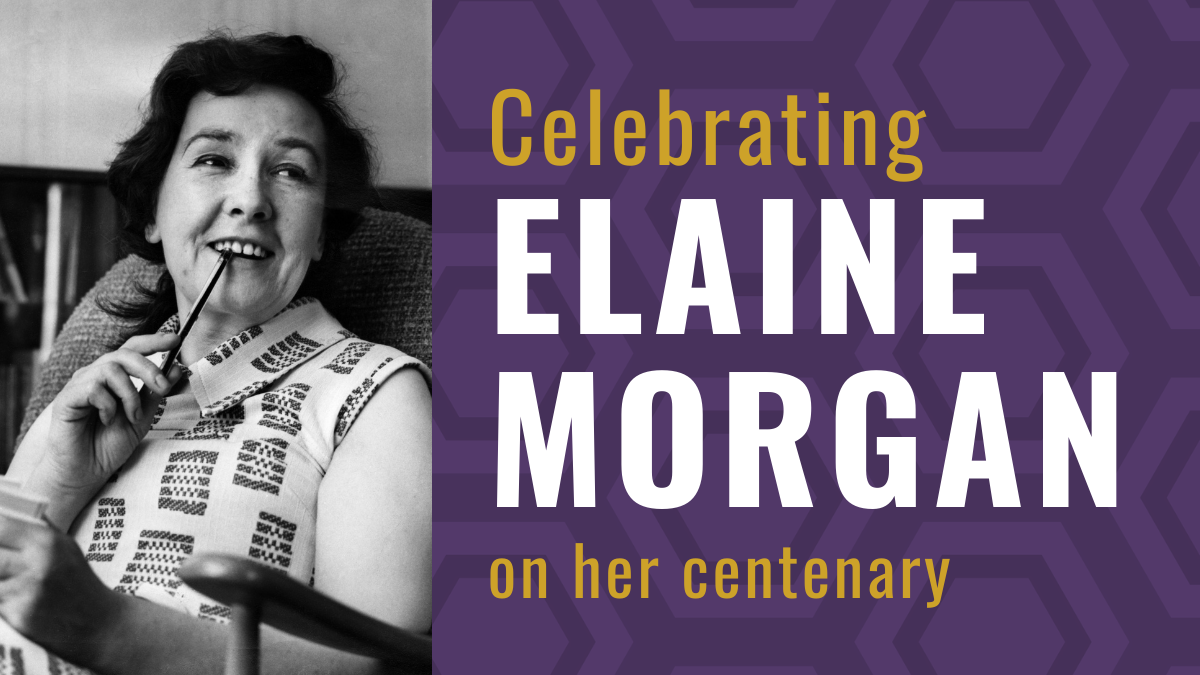
Elaine Morgan (1920 – 2013) was a pioneer. Born into a working-class family, she was the first person from her school in Pontypridd to go to Oxford University. She went on to pursue multiple careers, first as an award-winning TV writer, then anthropologist, whilst maintaining a role in political activism throughout her life. Daryl Leeworthy, author of Elaine Morgan: A Life Behind the Screen, introduces us to this extraordinary writer on the eve of her centenary.
This informative biography restores Elaine Morgan’s reputation and establishes her significant place in writing from Wales. Richly detailed it is essential in understanding the life and work of this important writer.
“A scintillating new biographical study, impressively researched and elegantly written.” – Dai Smith
“Thanks to this book… many more can take inspiration from Elaine Morgan and a legacy that spans both arts and science. In this, her centenary year, there can be no more fitting tribute.” – Carolyn Hitt
Elaine Morgan has always been a hero of mine.
I suppose I first heard her name when I was in secondary school – we went to the same one. To me it was Coedylan Comprehensive, to her Pontypridd Intermediate School for Girls; these days Pontypridd High. One of my teachers, whose own life had been so influenced by Elaine’s iconic feminist book, Descent of Woman (1972), pointed out to me that being someone from ‘our town’ studying at Oxford not only brings great opportunities but also sets you on a path set down by one of Wales’s truly great writers. A national treasure.
Elaine Morgan at matriculation, autumn 1939 – front row, second from left. By Kind Permission of The Principal and Fellows of Lady Margaret Hall, Oxford.
That idea of Elaine has stuck with me over the years. When I set out to research Elaine Morgan: A Life Behind The Screen, I knew that I wanted to look more carefully at her screenwriting and her contribution to our collective sense of the valleys and their people – those aspects of her career now very much overshadowed by the aquatic ape theory and Elaine’s undoubted contributions to popular anthropology. How, I wondered, did Elaine get her break at the BBC; how did she fit into an overwhelmingly masculine world; and how did she reach the top all from a desk in South Wales – a feat that seems so impossible nowadays.
Seeking the answers to those questions took me to the BBC’s written archives near Reading, a marvellous building with truly wonderful staff, where you half expect George Smiley to wander through the corridors. Out of Elaine’s voluminous files came letters sent back and forth to producers like Donald Wilson, Michael Barry, Sydney Newman, and Verity Lambert. The Doctor Who fan in me got very excited when I saw their names! Writers such as Gwyn Thomas and Dennis Potter were mentioned with casual ease. And there were occasional tête-a-tête when Elaine felt she was being undervalued – and underpaid – because she was a woman. The writer who emerged from those files was strong-willed, determined, and keen to learn. She was every bit the feminist my teachers had told me about.
The greatest finds in those files related to Elaine’s debut serial – now lost from the television archives – A Matter of Degree. First broadcast on the BBC in 1960, it told the story of the Powell sisters, and their experiences of South Wales and Oxford. Like the producers who brought it to the screen, I could not help but read an autobiographical presentation of Elaine’s life. She had always maintained that she loved Oxford, but here was the clash of cultures so familiar to me and to many others who have gone up from the valleys to those dreaming spires. Here was a kind of sequel to Emlyn Williams’s famous play The Corn Is Green (1938) but which anticipated the famous television serials of Oxbridge life, Brideshead Revisited (1981) and Porterhouse Blue (1987), decades before they were aired. This was Elaine Morgan, then, the television pioneer.
There was, I discovered, another side to Elaine, too – her politics. She grew up in a household which read the Labour-supporting Daily Herald and her own political activity took her to the pinnacle of student activism whilst she was at Oxford and into circles which included Clement Attlee and Roy Jenkins. Then she worked for the Workers’ Educational Association, just like Gwyn Thomas and Raymond Williams. As a young mother, she kept up her public activism and at one point taught for the Extra Mural Department of Manchester University. She helped to set up the United Nations Association in Burnley and led the town’s first celebrations of International Women’s Day. She even joined the Communist Party, although later returned to the Labour fold. Her radicalism had its fullest expression in a passionate belief in nuclear disarmament, in combatting climate change and humanity’s exhaustion of the planet’s natural resources, and in the campaign to ensure the survival and vibrant future of the Welsh language.
But, of course, if we are to remember one thing about Elaine Morgan on this, her centenary, it is her contribution to the women’s movement and to the self-belief that all women, regardless of their origins, can reach the top. Though she is not traditionally remembered as a historian, her television work, her radio broadcasting, her teaching, and her activism, all contributed to the active recovery of women’s collective, historical experience. In those decades of the twentieth century when Welsh women were absent from parliament, from leadership roles, from the apex of public life, Elaine Morgan stood out. She understood this and made the most of her remarkable influence.
In many respects, Elaine Morgan was the embodiment of what I like to think of as the ‘South Walian Dream’. She took the opportunities afforded her by an education which lasted for as long as she wished, but never forgot her origins. Never lost sight of the fact that she had grown up in a small terraced house in Hopkinstown. Never lost her ear for the rhythm of the valleys and their people. Alongside Gwyn Thomas, she helped to define what Wales meant for television and radio audiences all over the world. Whether as the pensioner, the playwright, the protester, the poet’s muse, or the student politician, Elaine Morgan was determined to say to her own community, to her own people, first and foremost, it does not have to be this way.
Join us for the virtual launch of this important new biography on Wednesday 11 November at 7pm. Author Daryl Leeworthy will be in conversation with Carolyn Hitt. Register for FREE via Eventbrite https://www.eventbrite.co.uk/e/125898462691.
Let Me Tell You What I Saw is the first ever publication as a dual-language (English/Arabic) text of substantial extracts from Adnan Al-Sayegh’s ground-breaking epic poem, Uruk’s Anthem, one of the longest poems ever written in Arabic literature, which gives voice to the profound despair of the Iraqi experience. This superb translation by Jenny Lewis, Ruba Abughaida and others, brings the eloquent original Arabic epic to a new readership.
Create your free Seren account and enjoy 20% off every book you buy from us.
Join us on Tuesday 10th November from 6pm (GMT) for the virtual launch of Let Me Tell You What I Saw. Readings from the text in Arabic and English by Adnan Al-Sayegh and Jenny Lewis will be followed by a discussion on the translation process between Jenny and Ruba Abughaida. Register for FREE via Eventbrite https://www.eventbrite.co.uk/e/122240752381.