Posted on

Friday Poem – Borderland

friday poem borderland christopher meredith

Yesterday marked the beginning of the week-long Hay Festival, where writers from around the world gather in the staggering beauty of the Welsh borders to debate, read, share stories and inspire – among them, Tom Bullough with his new novel, Addlands (Granta).

As a nod to Hay, our Friday poem is ‘Borderland’ from Air Histories by Christopher Meredith. ‘Borderland’ and Air Histories had a significant influence on Tom Bullough’s new Radnorshire-set novel, Addlands.

air_historiesChristopher Meredith’s Air Histories starts in the Stone Age and ends in the future. It’s marked by formal diversity and a wide range of subjects, with the personal alongside the impersonal and the experimental alongside well-known forms, as well as including some translations from the Welsh. Throughout it engages the rich meanings of its title, touching on the elemental and on historical time, as well as music and story, meditating on human creativity and its fallibilities from knapping an arrowhead to playing the fiddle or making a guitar. Nature is a touchstone, particularly the Black Mountains, near the author’s home, but also often seen ‘aslant’ as in ‘Seeing the Birds’ where sparrows seem suddenly fierce as eagles.


Borderland

Ffin is the Welsh for border. It occurs inside diffiniad which means definition, and in Capel y Ffin, a place in the Black Mountains.

You’ll find a ffin inside each definition.
We see what is when we see what it’s not:
edges are where meanings happen.

On the black whaleback of this mountain
earth curves away so sky can start
to show a ffin’s a kind of definition

where skylarks climb across earth’s turn
to air and pulsing muscle turns to an art-
ful song the edge that lets a meaning happen.

Live rock can yield to mortared stone,
a city to a castle, then a shepherd’s hut,
where ffin’s contained inside a definition,

where the lithic turns into the human.
Here’s where things fall together, not apart
at edges that let meanings happen.

And self here blurs into annihilation.
Larkfall, earthfall, skyfall, manfall each create
the ffin that is the place of definition
the edges where we see our meanings happen.


Buy your copy of Air Histories now, 20% off for Book Club Members.

Posted on

Wales Book of the Year shortlist

Two Seren authors feature on the shortlist for Wales Book of the Year 2016. Paul Henry’s poetry collection Boy Running is up for the Roland Mathias Poetry Award, while Jasmine Donahaye is shortlisted for the Open University in Wales Creative Non-Fiction Award with Losing Israel.
Winners of the Poetry, Non-Fiction and Fiction Categories, and the overall Wales Book of the Year Winner, will be announced on Thursday 21 July at The Redhouse, Merthyr Tydfil. Full details of all the shortlisted books, English- and Welsh-language, can be found on the Literature Wales website http://www.literaturewales.org/news/i/147350/

Posted on

Happy 75th Birthday, Bob Dylan

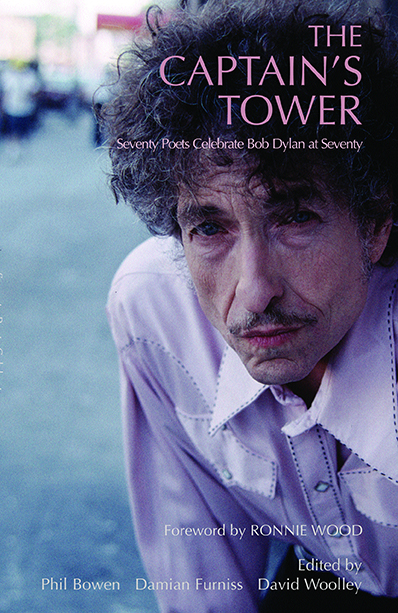
Bob Dylan was 75 last Tuesday 24 May. What better way to celebrate than in the company of great writers who have responded to his creative genius with poetry of their own. The Captain’s Tower includes poems from Allen Ginsberg, Lachlan Mackinnon, Matthew Sweeney, Jeremy Reed, Linda Chase, Linda France, Roger McGough, Paul Muldoon, Simon Armitage,  Peter Finch and many more. Perfect reading for ardent Dylan fans.

Posted on

Friday Poem – Suturing Secrets

Ilse Pedler The Dogs that Chase Bicycle Wheels Mslexia pamphlet

This week’s Friday Poem is taken from Ilse Pedler’s new poetry pamphlet The Dogs that Chase Bicycle Wheels.

The Dogs that Chase Bicycle Wheels Ilse Pedler Friday PoemIlse Pedler’s marvelous debut poetry booklet, The Dogs that Chase Bicycle Wheels, won the 2015 Mslexia Poetry Pamphlet Competition. Many of her poems are about animals and how they interact with humans, and reflect her working life as a Veterinary Surgeon. Pedler has a careful, empathetic eye for the characteristics of the animals she comes across. Humans and their secrets are also observed, with a sharp wryness but also with a characteristic gentleness.


Suturing Secrets

We are divided into compartments,
separated by taut membranes,

glistening planes of connective tissue,
resilient boundaries. 

Today this is damaged,
anaesthetized, surgically explored

your diaphragm is a torn curtain hanging
and like a peep show I’m drawn to look behind. 

In the absence of pressure lungs hesitate
to inflate, do their best to conceal 

the frantic convulsions at your core,
the struggle for rebirth every second.

I look perhaps longer than I should
at the shuddering flesh, the labouring

beauty, then I pull the curtain back over
and suture the secret inside.

Buy your copy of The Dogs that Chase Bicycle Wheels now, 20% off for Book Club members.

Posted on

Remembering Leigh Roose – ‘The Prince of Goalkeepers’

Remembering Leigh Roose

It’s Euro 2016 and Wales is in the finals! Historian Mike Rees looks back into Wales’ sporting history to remember goalkeeping legend Leigh Roose, who found glory on the football field and died a hundred years ago, at the Somme.

Mike Rees’  book Men who Played the Game looks at the development and importance of sport in Britain and the Empire leading up to the outbreak of the First World War, and the part played by sportsmen in the conflict.

On the eve of Wales’s participation in the finals of a major international football tournament for the first time since 1958, it is likely many of you may be reflecting on past glories achieved by Welshmen on the football field.
You might well consider the achievements of Wales first ‘football superstar’ Billy Meredith, talisman of both Manchester City and Manchester United in the early years of the twentieth century or the ‘Gentle Giant’ that was John Charles, revered from Swansea to Turin where he won multiple league championships and cups as the focal point of a brilliant Juventus team. More likely, you’ll consider the incomparable Ryan Giggs, with his sack full of medals, or the striking prowess of Ian Rush or Mark Hughes. But as Gareth Bale, the latest Welsh superstar, graces the football stadiums of France this summer how many will remember Leigh Roose, the first renowned Wales goalkeeper and predecessor of Jack Kelsey in 1958 or Neville Southall in the 1980’s and ‘90’s? As we move towards the centenary of Roose’s demise on the battlefields of the Somme, perhaps it is time to ensure that a new generation is made aware of the exploits of this remarkable Welshman.

Remembering Leigh RooseThe process of remembering Leigh Roose has already begun. Pupils from Wrexham are creating a collage with a particular focus on his part in the first international match to be caught on film, the game between Wales and Ireland at the Racecourse, Wrexham on 2nd April 1906. This will be displayed in Eagles Meadow shopping centre, Wrexham and bring his name to many for the first time – recognition that is long overdue.

Leigh Richmond Roose was born at Holt, near Wrexham on 26th November 1877, the son of a Presbyterian minister, the fourth of five boys. Despite losing his mother to cancer at the age of four, he had a comfortable middle class upbringing which led to him gaining a degree in Bacteriology from UCW Aberystwyth in 1899. Leigh enjoyed his time at ‘Aber’, particularly his experience of playing for the town football team in his favourite position, that of goalkeeper. So successful was he that in February 1900 he was chosen to play for Wales in the match against Ireland, the first of his 24 caps. A host of professional clubs sought his signature but by now Leigh was working in King’s College, London, fully intending to pursue a medical career. In the summer of 1901, however, he relented and signed for Stoke.

It was not long before this six foot, thirteen stone athlete made his mark. He became known for his reckless bravery, total dominance of his penalty area, his startling reflexes and resulting shot-stopping. Playing often as a modern day sweeper, Leigh left the confines of his area to start attacks, carrying the ball to the half way line, as he was permitted to do. So effective was this tactic that in 1912 the laws were changed in order to prevent goalkeepers handling the ball outside the penalty area. Leigh was also prepared to impose himself in other ways. It was not uncommon for him to be involved in the occasional scuffle or dispute with authority, sometimes over his travel expenses, on other occasions, disputes with the opposition. Leigh was also an entertainer – his gymnastic ability used to swing from the crossbar when things were quiet at his end of the pitch. Crowds loved him, even more so when Wales won their first Home International championship in 1907. Although top league and cup medals eluded him, Leigh was always challenging for honours at Everton from 1904 and later at Sunderland. He became one of the country’s best known footballers whose lifestyle as an eligible young man in Savile Row suits predates David Beckham by ninety years. His affair with the ‘Queen of the Music Hall’, Marie Lloyd would delight the tabloids of the 21st century. However nothing lasts for ever and, following a spell as player coach at Arsenal, Leigh retired to his medical commitments and the after dinner circuit in 1912.

When war broke out Leigh joined the Royal Army Medical Corps and was quickly despatched to the Dardanelles where he served in Gallipoli. Here he worked in hospitals treating hundreds of serviceman injured in that futile encounter. However Leigh wanted to see the action for himself and, following his return to London, he joined the 9th Battalion of the Royal Fusiliers. His wish for action was soon granted. Leigh was awarded the Military Medal after he had taken part in the capture of Ration Trench near Dainville and the subsequent resistance to the German counter-attack. In October 1916 Leigh was once again in action. The 9th Royal Fusiliers advanced on the Albert-Bapaume Road and this led to the capture of Le Sars but the cost was disastrous. Three hundred and thirty two officers and private soldiers were killed or injured in the action. Leigh was seen running across No Man’s Land firing his gun with no concern for his own safety. He was last seen lying in a crater, probably already dead. Leigh’s body was never discovered and he is remembered, his name engraved and incorrectly spelt, on the Thiepval Memorial to the missing. Thirty eight year old Leigh is one of the 72,000 names remembered on that most impressive of memorials.

Leigh’s death was keenly felt by all who knew him. Mike Rees, in his recent book Men Who Played the Game, quotes the Athletic Times which described him as “dexterous though daring, valiant though volatile”. But Rees also concludes that this is only part of the story and that Leigh Roose, along with Billy Meredith, did more to put Welsh football on the map than any other player. That, coupled with his ability to entertain thousands of spectators, demands that he be remembered as a sportsman of real significance, one who died as bravely as he played. During this summer of exciting Welsh football, a century after Leigh made the ultimate sacrifice, he deserves to be remembered.


 

Posted on

Win a signed and numbered copy of Ritual, 1969

win a copy of ritual, 1969 by jo mazelis

Enter our giveaway to win a signed and numbered copy of Ritual, 1969, the haunting new collection of short stories by Jo Mazelis!

To enter, simply sign up to the Seren newsletter before 1st June:
https://www.serenbooks.com/newsletter/signup

win a copy of ritual, 1969

Ritual, 1969 is a darkly gothic collection of stories by Jerwood Prize-winner Jo Mazelis that explores the unsettling borderland between reality and the supernatural. Ranging from early twentieth-century France to 1960s South Wales and contemporary Europe, Jo Mazelis’ singular vision and poetic language creates characters caught up in events and feelings they do not fully understand or control, giving the book its uncanny focus. Not all is as it seems in a world where first impressions may only conceal disguises and false trails – and there’s no going back.

The winner will be chosen at random from all our email newsletter subscribers on 1st June 2016, so if you haven’t already, hurry and sign up for our newsletter before the end of the month if you want it to be you!


Posted on

The Poetry School interviews Katrina Naomi

“I think the main thing for me is if you’re going to write about violence, do it well. Let us smell it, taste it.”
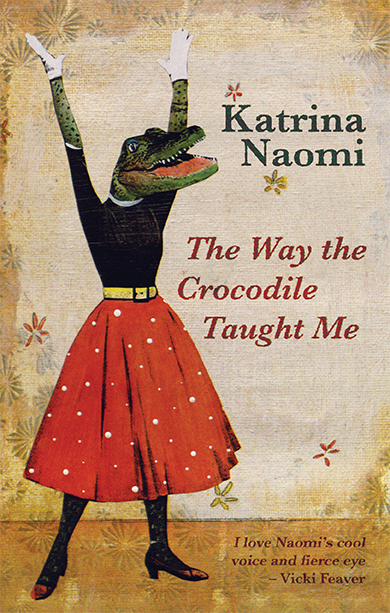
Read Katrina Naomi’s interview with Ali Lewis of The Poetry School, where she discusses violence, ‘the gentility bind’ and her new poetry collection, The Way the Crocodile Taught Me.
Katrina also talks about her upcoming one-day workshop with The Poetry School, “The Bloodjet: Violence in Poetry”, in which she will teach how to harness violence in your writing.
The Way the Crocodile Taught Me is a collection richly bound up with violence, as Katrina explains:“The collection has two main concerns regarding violence – violence in the family (specifically from my step-father) and violence on the street (specifically sexual violence). People seem to have picked up on the ‘Willpower’ poem, I’m glad about that, it was quite a tough one to write and also I’ve had a lot of positive feedback on the title poem, which responds to being playful about sex and relationships after an attempted rape.  It’s probably my most personal set of poems to date. It’s interesting, other people have picked up on the humour in the book. While I knew the collection would have an undertow of violence, it has a lighter side too.”
Read the interview, and buy the book.

Posted on

International Dylan Thomas Day 2016 | News and Offers

international dylan day 2016 offers

Happy International Dylan Thomas Day! This year is the second annual celebration of Dylan Thomas, held on 14th May to mark the date Under Milk Wood was first read on stage at 92Y The Poetry Center, New York in 1953.

International Dylan Thomas Day 2016 Dylan Day offers Seren

We have a number of Dylan Thomas related books in our store, and for today only, these titles are 50% off:

dylanday

Dylan Remembered: Volume One: 1914-1934, ed. David N. Thomas
Paperback:
£12.95

£6.48
Hardback:
£25.00
£12.50
This is the first of two volumes of transcribed interviews about the poet Dylan Thomas. Journalist, broadcaster, and author Colin Edwards interviewed numerous sources close to Thomas for a planned biography of the poet, but he was unable to begin work before his early death. The transcribed tapes have been edited into two collections, with the second due in 2004. Startling new information about Thomas’s life and writing is disclosed, including influences on his writing and the sources from which he drew inspiration and storylines.

Dylan Remembered: Volume Two: 1914-1934, ed. David N. Thomas
Paperback:
£12.95

£6.48
Hardback:
£25.00
£12.50
This second volume culled from the Colin Edwards Archive of interviews with Dylan Thomas’ family, friends and colleagues made during the 1960s covers Thomas’ ‘adult’ life from his move, aged 20, to London to become a professional writer to his death in New York 51 years ago. It is a story which we think we know, but the archive sheds new – often contradictory – light on a life which has been much mythologised.

Fatal Neglect: Who Killed Dylan Thomas, David N. Thomas
£9.99
£5.00
Who and what killed Dylan Thomas? The death of this iconic writer, in New York in November 1953, remains shrouded in mystery fifty-five years later. What might have been a triumphant new departure in his career and life with the first production of Under Milk Wood, and plans to work on operas with Igor Stravinsky and Samuel Barber turned instead into a requiem for man whose life spiralled out of control.
Leading Dylan Thomas authority David N. Thomas draws on his extensive research, and uncovers startling new evidence, to produce the definitive answers in a superbly written account which balances historical context with forensic detail, Thomas’ character with the demands made upon him by friends, lovers and his reading public.. His verdict is a chilling study of a poet, a place and a death.

Advantages of the Older Man, Gwyneth Lewis
£7.99
£4.00
A light-hearted novella exploring the strange case of a Swansea woman who is apparently possessed by the spirit of Dylan Thomas. Naturally all is not as it seems. The woman, who works in the Dylan Thomas Centre, meets a rather different Dylan from the one she knows by repute, one who doesn’t really fit in with the ghosts of other poets in heaven and is desperate to train himself to join the fitter shades of the long distance runners instead. Her own life, which has been lonely and sad, is completely transformed by the encounter.
Fluent and entertaining, the story is written with all the confidence and panache you would expect from the former national poet, also a playwright and award-winning author of fiction and non-fiction. Alongside the humour there is a warmth and pathos, and some pithy observations on poets and poetry and the nature of fame.

This offer ends midnight, 14th May, so take advantage before the time runs out!

And as always, there are events running all across the UK in celebration of Dylan Day, so when you’re finished browsing our website take a look on the Literature Wales website to find a Dylan Day event near you.

Posted on

Happy International Dylan Thomas Day! Offers in store

Happy International Dylan Thomas Day! This year is the second annual celebration of Dylan Thomas, held on 14th May to mark the date Under Milk Wood was first read on stage at 92Y The Poetry Center, New York in 1953.
We have a number of Dylan Thomas related books in our store, and for today only, these titles are 50% off:
Dylan Remembered: Volume One: 1914-1934, ed. David N. ThomasPaperbackWas: £12.95Now: £6.47HardbackWas: £25.00Now: £12.50This is the first of two volumes of transcribed interviews about the poet Dylan Thomas. Journalist, broadcaster, and author Colin Edwards interviewed numerous sources close to Thomas for a planned biography of the poet, but he was unable to begin work before his early death. The transcribed tapes have been edited into two collections, with the second due in 2004. Startling new information about Thomas’s life and writing is disclosed, including influences on his writing and the sources from which he drew inspiration and storylines.
Dylan Remembered: Volume Two: 1935-1953, ed. David N. ThomasPaperbackWas: £12.95Now: £6.47HardbackWas: £25.00Now: £12.50This second volume culled from the Colin Edwards Archive of interviews with Dylan Thomas’ family, friends and colleagues made during the 1960s covers Thomas’ ‘adult’ life from his move, aged 20, to London to become a professional writer to his death in New York 51 years ago. It is a story which we think we know, but the archive sheds new – often contradictory – light on a life which has been much mythologised.
Fatal Neglect: Who Killed Dylan Thomas, David N. ThomasWas: £9.99Now: £4.99Who and what killed Dylan Thomas? The death of this iconic writer, in New York in November 1953, remains shrouded in mystery fifty-five years later. What might have been a triumphant new departure in his career and life with the first production of Under Milk Wood, and plans to work on operas with Igor Stravinsky and Samuel Barber turned instead into a requiem for man whose life spiralled out of control.Leading Dylan Thomas authority David N. Thomas draws on his extensive research, and uncovers startling new evidence, to produce the definitive answers in a superbly written account which balances historical context with forensic detail, Thomas’ character with the demands made upon him by friends, lovers and his reading public.. His verdict is a chilling study of a poet, a place and a death.
Advantages of the Older Man, Gwyneth LewisWas: £7.99Now: £3.99A light-hearted novella exploring the strange case of a Swansea woman who is apparently possessed by the spirit of Dylan Thomas. Naturally all is not as it seems. The woman, who works in the Dylan Thomas Centre, meets a rather different Dylan from the one she knows by repute, one who doesn’t really fit in with the ghosts of other poets in heaven and is desperate to train himself to join the fitter shades of the long distance runners instead. Her own life, which has been lonely and sad, is completely transformed by the encounter.Fluent and entertaining, the story is written with all the confidence and panache you would expect from the former national poet, also a playwright and award-winning author of fiction and non-fiction. Alongside the humour there is a warmth and pathos, and some pithy observations on poets and poetry and the nature of fame.
The 50% discount ends midnight tonight, 14th May, so take advantage before the time runs out!
And as always, there are events running all across the UK in celebration of Dylan Day, so when you’re finished browsing our website take a look on the Literature Wales website to find a Dylan Day event near you.

Posted on

Friday Poem – The New World

friday poem the new world meirion jordan

Tomorrow is International Dylan Thomas Day and we will be celebrating Swansea’s most famous son, so today our Friday Poem is by another Swansea native, Meirion Jordan.

Jordan was born in 1985 in Swansea. His début Moonrise was shortlisted for the Forward Prize for Best First Collection, and his pamphlet, Strangers Hall, was shortlisted for an East Anglia Book of the Year award.

moonrise meirion jordan friday poemFinely held moods and moments resonate throughout this unusually accomplished first book. The rich, complex history of Wales often crops up, sometimes in unexpected contexts: ‘The New World’ is a vision, a cross between Dylan Thomas’ ‘Under Milk Wood’ and an early J.G. Ballard novel, of post-global warming Wales, with a polyglot population: “Ronaldinho Davies/wowing the crowds at the Millennium Stadium” and swamped by tropical vegetation: “cobalt lizards and coral snakes/swallowing the cottages an Llandinam/ the mahoganies uprooting Carno’s hearths”.

The New World

Roll on global warming. The Maentwrog Junta
seizing power on a Sunday morning
just after chapel, the frenziedly moustachioed
General Gwydion Mendéz proclaiming martial law
after the third psalm of the evening service.
The Gorseinon drugs cartel expanding
to the Aberystwyth favelas, bringing the clash
of kalashnikovs to constitution hill.
Samba and harps. O Seion Fryn
bawled out at thirty in the shade
by sweating ministers. Cawl mango
and coconuts replacing lava bread. Ronaldinho Davies
wowing the crowds at the Millennium Stadium,
the Rhondda turning out in rainbows
of rippling cloth and streamers to see England lose
four-nil, Islwyn Marley at half time
shaking the stands with sounds from Ynys Mon.
Olwen Perón leading the mob in Marchog Iesu
at the Cwmdonkin bandstand, her voice
spreading like an angelus along
the Taff Fechan, along Cwm Tywi.
David Attenborough filming the fauna
of the Nantgwynant valley, eccentric Englishmen
looking for the lost city of Dolgellau
up Cwm Pennant, out behind Corris.
100 percent humidity at Rhandirmwyn.
Kurtz Jenkins on the shores of Llyn Clywedog,
and everything from Llanidloes to Rhaeadr
declared ‘the dark interior’. The rattan
wrapping itself around the spine of the A470,
the cobalt lizards and the coral snakes
swallowing the cottages at Llandinam,
the mahoganies uprooting Carno’s hearths.
The moon at Devil’s Bridge pulled earthwards
in a sail of vines, the sun
squinting in the eye of a bromeliad
that wields its universe of frogspawn out
from Carnedd Dafydd to the new world.

Buy your copy now.