
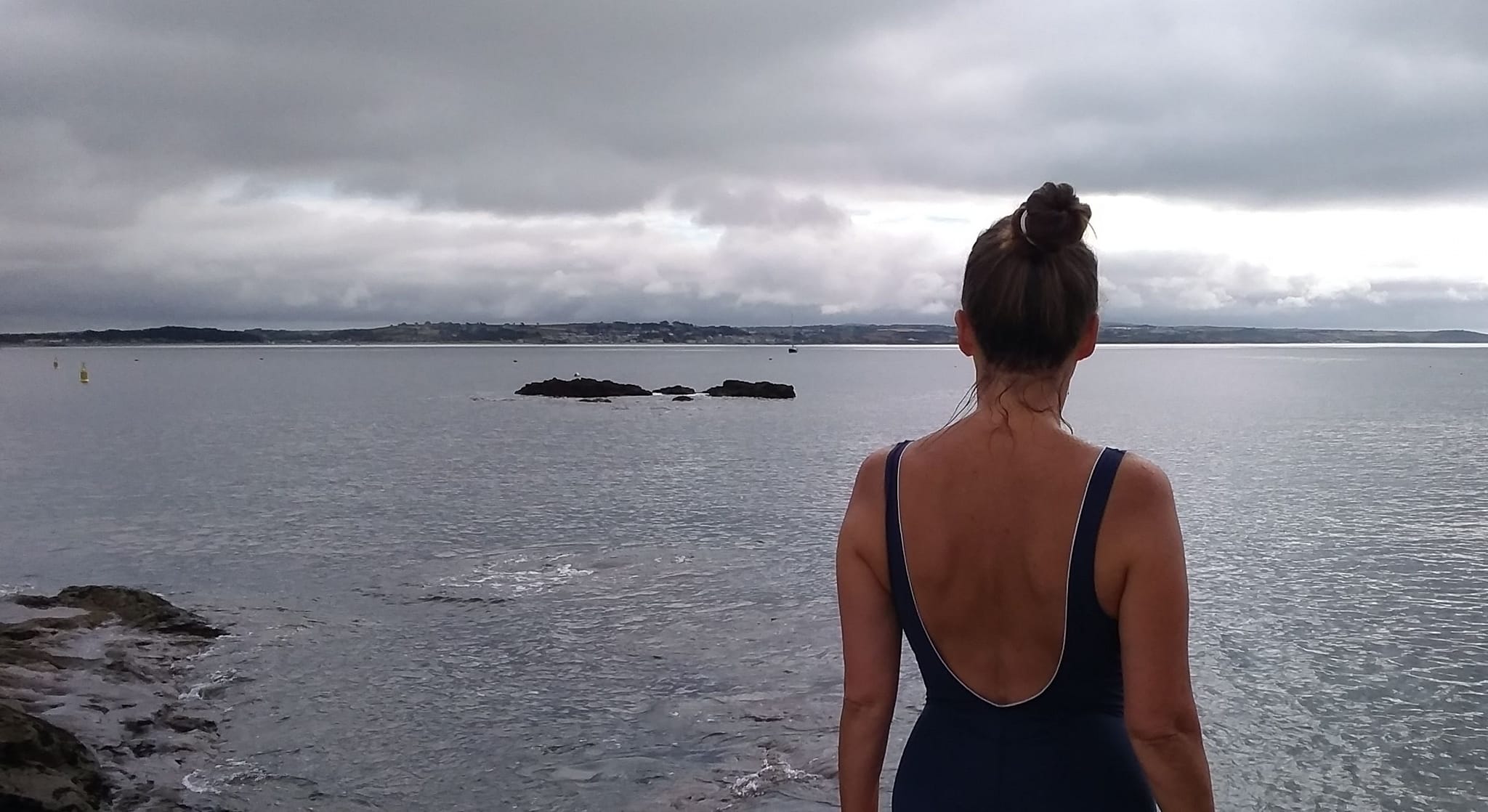
To celebrate publication of her new collection Battery Rocks, today’s guest post sees Katrina Naomi muse on some of the themes which inspired the book and how sea swimming forms part of her creative process.
I recently did a reading which previewed a few poems from my new collection, Battery Rocks. In the Q&A someone asked if risk was important to my poetry. My answer was emphatically, yes.
Battery Rocks is a collection about nature, risk, swimming and the sea.
In many ways, it feels risky to publish a themed collection – I’ve never written a whole collection that’s themed before, I’ve plenty of themed pamphlets but not a whole collection – so this feels like a risk. Is it too niche? Is it too obsessive? Quite possibly. But then if there’s no risk in a project – poetic or otherwise – it’s likely to be dull.
One thing I will say about Battery Rocks – I don’t think it’s dull.
Sea swimming, especially if you swim year-round and often on your own, with frequent Cornish storms, is inherently risky, and it’s in that risk that I find the poetry. I write in response to my fear of the sea, there’s the risk that I might not make it back to land.
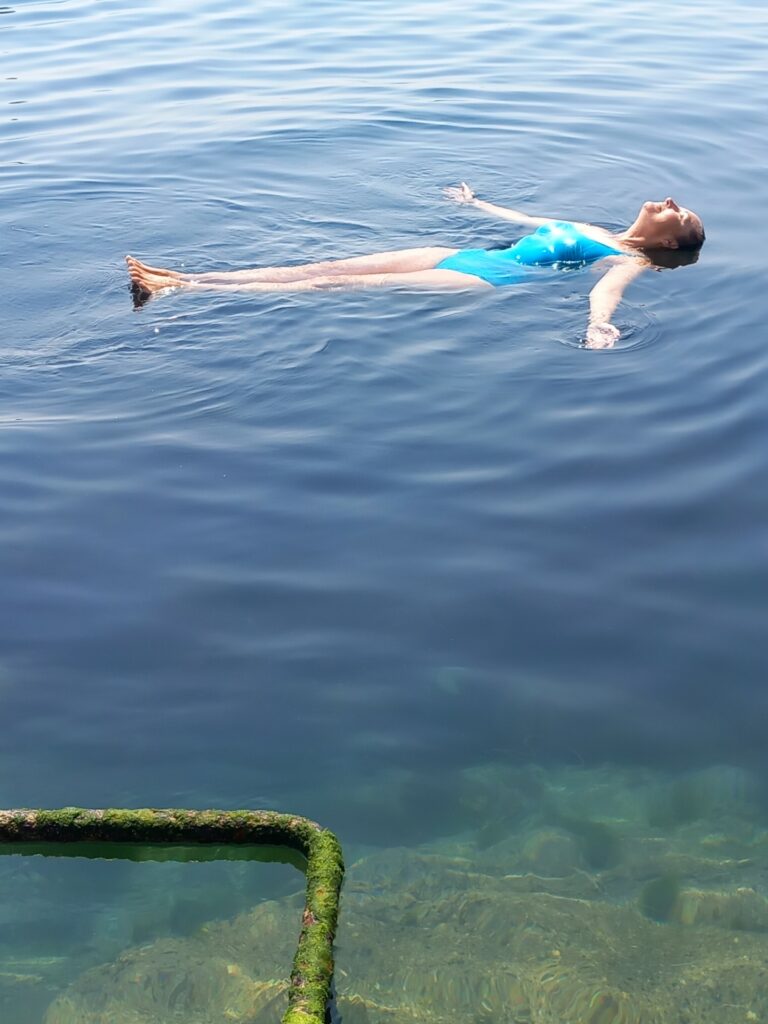
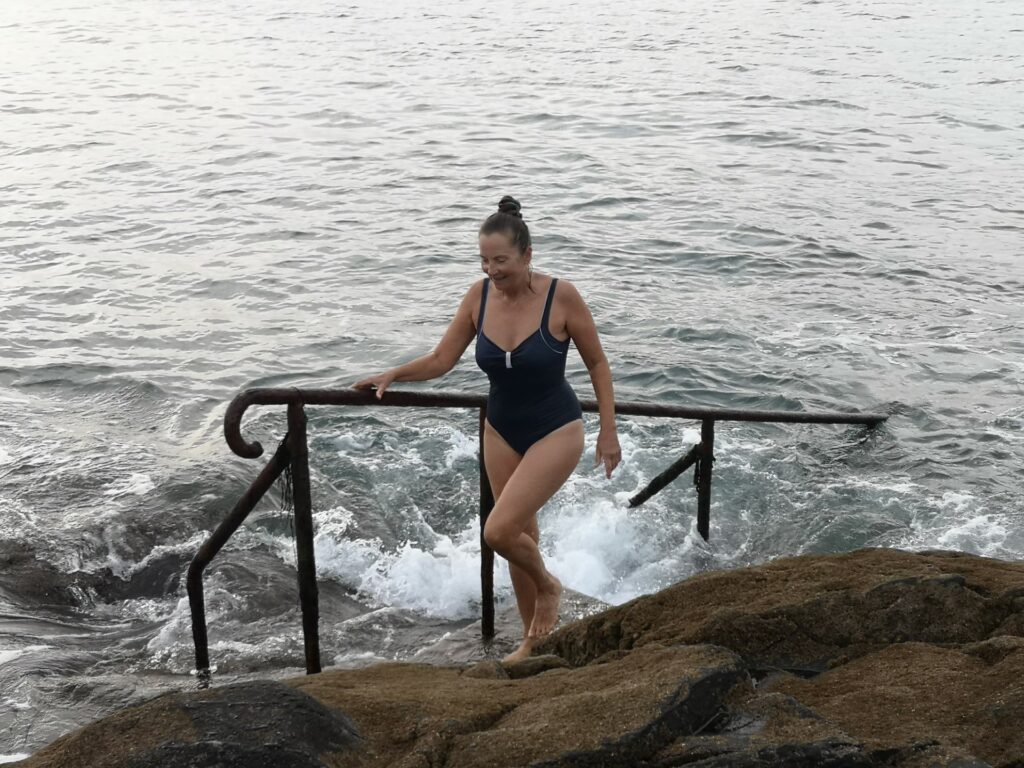
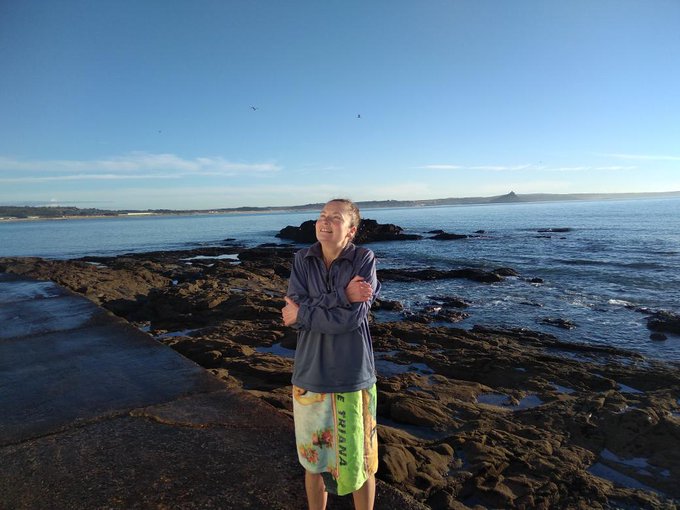
I’ve also another question around risk – and perhaps I have an unusual view on this – but in Battery Rocks I explore why I often feel safer in the sea, in just a cossie, than I do on land. As someone’s who’s experienced sexual violence, I feel free in the waves in a way I rarely do elsewhere. On land, I feel the need to look over my shoulder. In the sea, I sense a connection with other animals, birds, plants and fish, I’m part of a wider community, a different community to my life on land. One that – for the most part – feels less risky, unless there’s a bull seal about.
If you’re a sea swimmer, this book might already appeal to you. If you’re not, why would you want to read it? I can’t answer that but some people who’ve already read Battery Rocks and aren’t swimmers tell me that the poetry has a real vibrancy, that it covers a huge range of topics – from love and friendship, to world events – and that it has a fresh take on our relationship with the natural world.
I think there’s also something in the idea of the specific – a collection of poetry that’s written in response to the ritual of swimming off the same bit of rock in a Cornish town each day – that can work towards being universal. I certainly hope to offer a different take on the picture-box view of Cornwall.
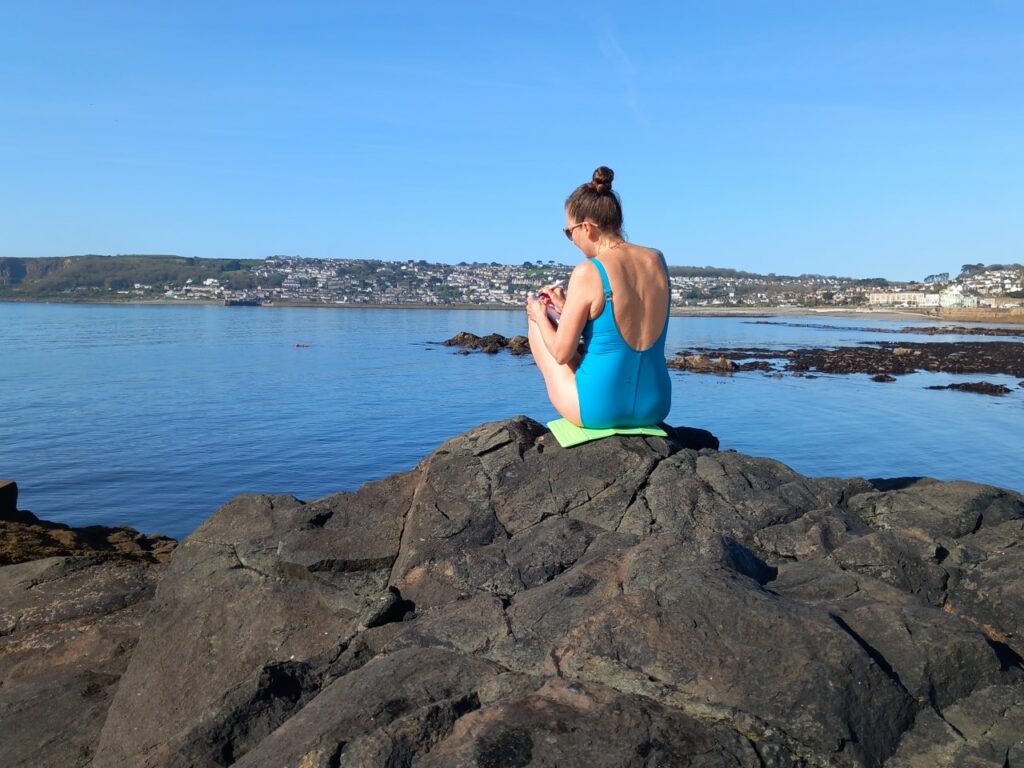
Swimming in the sea is part of my life, part of my creative process. I swim and then I write. Many of these poems were written directly after a swim, sometimes in the rain, wrapped up on the rocks against the wind. Sometimes I’ve had to admit defeat and go back home, make myself a hot chocolate and write in my little room with a view (at least on good days) of the harbour.
The closing poem of Battery Rocks, ‘in the kelp forest’, won the Keats-Shelley Prize. I’m extraordinarily grateful for this. And the collection as a whole recently won an Arthur Welton Award from the Society of Authors, which I’m chuffed to bits by.
I hope that the writing of this book will have been a risk worth taking and I really hope you’ll enjoy Battery Rocks.
Katrina Naomi


