Posted on

Friday Poem – ‘Skirrid Fawr’, Owen Sheers

friday poem skirrid fawr owen sheers

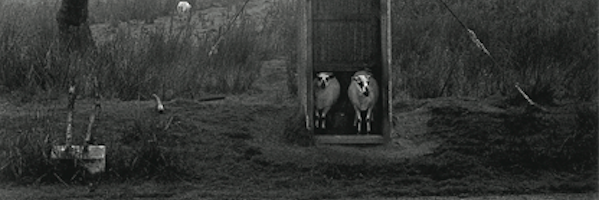
Today marks the start of the National Eisteddfod, this year in Abergavenny, and our Friday Poem talks of an area just a few miles north – Ysgyryd Fawr, or The Skirrid. The poem is taken from Abergavenny poet Owen Sheers’ second collection, Skirrid Hill.

skirrid fawr friday poem owen sheersIdeas of separation and divorce are important in Owen Sheers’ eagerly-awaited follow up to his acclaimed debut collection The Blue Book. The geographical divides of borders, the separation of the dead and the living, the movement from childhood to adulthood, the ending of relationships. Such divides are both moments of ‘mark-making’ and moments of absence. In this collection it is often the awareness of such separation – past or impending – and the juxtaposition of these diverse states – that provides the friction from which the poems are born.


Skirrid Fawr

Just like the farmers who once came to scoop
handfuls of soil from her holy scar,

so I am still drawn to her back for the answers
to every question I have never known.

To the sentence of her slopes,
the blunt wind glancing from her withers,

to the split view she reveals
with every step along her broken spine.

This edge of her cleft palate,
part hill, part field,

rising from a low mist, a lonely hulk
adrift through Wales.

Her east-west flanks, one dark, one sunlit,
her vernacular of borders.

Her weight, the unspoken words
of an unlearned tongue.


Buy your copy of Skirrid Hill from the Seren website: £8.99
Claim 20% off when you become a Book Club Member.

Save

Save

Save

Posted on

Friday Poem – ‘Outcast Hours’, Rhian Edwards

Clueless Dogs Rhian Edwards

This week our Friday Poem is taken from Rhian Edwards’ dark and sensual debut collection Clueless Dogs.

Winner of Wales Book of the Year 2013
Winner of the Roland Mathias Prize for Poetry 2013
Winner of Wales Book of the Year People’s Choice 2013
Shortlisted for the Forward Prize for Best First Collection 2012

clueless_dogs72Full of verve and humour, with a spiky syntax featuring hard-edged consonants, Rhian Edwards’ language has a winning honesty and intensity. Poems like ‘The Welshman Who Couldn’t Sing’ chronicle a fraught childhood in Bridgend, south Wales, where the sensitive child escapes through imaginative games of ‘Playing Dead’ and ‘Broken Lifeboat’. Later poems confidently explore teenage lusts, student rivalries, damaged peers and tense situations. Although the author doesn’t flinch from ruthless depictions in which we are often implicated by her use of the second person ‘You’, there is an underlying sweetness, an elegiac thread most evident in the poems of maturity.

Outcast Hours

White light weighs heavy, bullying
bright as squash courts. I fix a dirty look
on the electric clock. The walled
minutes stagger their blinks.

Wheel-footed suitcases scurry
about me like clueless dogs,
flip flops tick-tock
on the polished rink of the concourse.

One girl’s patience is vivid,
measured by the careful brush strokes
of plum on her toenails,
the soft turning of pages.

Her boyfriend hibernates,
his legs stretched out before him.
Ankles crossed, he wags his foot
conducting his concert of sleep.

A ponytailed mother raises
an eye for her wandering son.
Shc scoops him up and breathes in his scalp
in chase of a smell that is running away from her.

The antique couple are butchering time.
Their teeth tear through baguettes
raining faded confetti
onto their open laps.

Shy of games and companions, fidgeting
in plastic-boned chairs, we comb the air
for that splintered voice,
dictating when our sky will ship us.


Buy your copy of Clueless Dogs now: £8.99

Claim 20% off as a Book Club Member

Posted on

Friday Poem – ‘Talking in the Dark’, Christine Evans

Friday Poem Talking in the Dark Christine Evans

This week our Friday Poem is from Christine Evans’ sensitive collection, Growth Rings, which was shortlisted for Wales Book of the Year 2007.

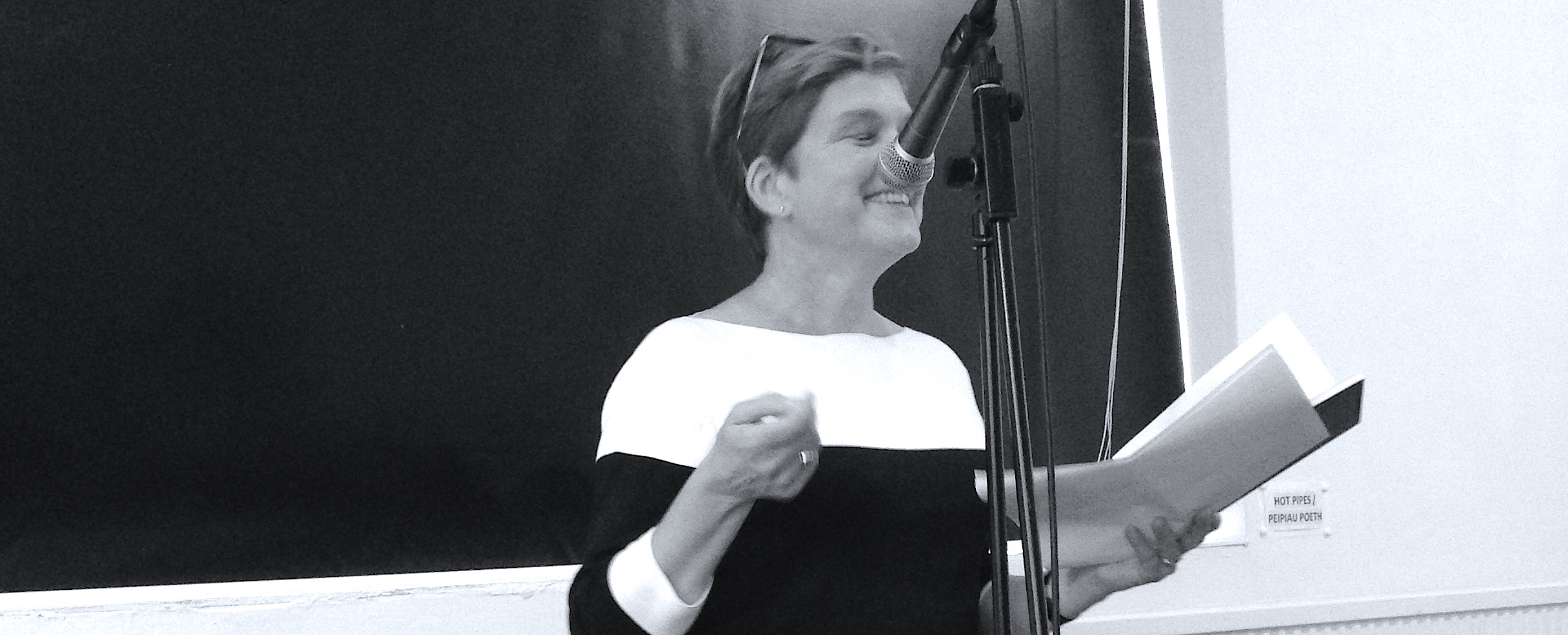
Friday Poem Christine EvansThis collection from Christine Evans follows well-received ’Selected Poems’.  Hers is a persuasive voice, highly attuned to the vagries of the seasons, to the landscapes and inhabitants of the beautiful Llyn Peninsula in North Wales where the author has made her home.
As well as vibrant short lyrics on everything from ’Bluebells in Nanhoron’ to jets flying over Wales, there are a series of tender elegiac pieces on relatives, meditations on the last moments of Shelley and the fates of the Brontes, and a number of poems featuring the mysterious Island of Bardsey.

Talking In the Dark

Now the air is indigo with evening
together by the boathouse where we’ve sprawled
an hour or more, felt earth’s breath cooling,
we wake mind-echoes of ‘the real world’.
Night prompts us all to visions of tomorrow.

A subtle fullness, like a ripening field
contains us, names and knowledge weightless now.
The biosphere, Helen thinks, might still have the power
to heal pillage, maiming, poison. Protests fly:
excuse for doing nothing, weak, evasion.

Although we can’t agree what should be done
a tribal dignity begins to hover.
Shadows with eyes that hold the light, we are
communicators, not just talking faces.
First stars beckon in a deepening sky.

The universe accepts our hopeful voices
but sea demurs with one slow-hushing sigh.


Buy your copy of Growth Rings now: £7.99

Claim 20% off as a Book Club Member

Posted on

Friday Poem – ‘The Scarlet Lizard’, Caroline Smith

Friday Poem Caroline Smith

Last night saw us at Chapter, Cardiff, for July’s First Thursday event and among the readers was Caroline Smith with her new collection, The Immigration Handbook. This week we have a treat for you – you can listen to the Friday Poem being read by the author. Look below for the video, and accompanying poem text.

The Immigration Handbook Caroline SmithThe strikingly moving poems in Caroline Smith’s The Immigration Handbook are the fruit of the author’s career as an Immigration Caseworker for one of the most diverse inner-city areas in London. Her characters are careful composites of people she’s observed. They step vividly off the page, as if out of the headlines. Written over a period of years, as layered and infused with experience as the documents she discusses: letters folded and refolded, creased with time, Caroline Smith’s poems are a moving record of global people movement, the story of our time.

The Scarlet Lizard

Nothing moves
except the evening light
crossing the Judge’s room.
The lawyers’ skeleton arguments
lay piled on his desk.
They seemed to him brittle
as bleached poppies,
tapped of their seeds.

He longed to see the quick movement
of a scarlet lizard weaving unexpectedly
through the parched, cracked hexagons
of a legal phrase, to hear the snapped stick
fritter away from a hiding place;
to feel the cold, diaphanous weed grip
in the black current of a border crossing.

He needed to sense some quiver of
indecision, an odd detail
that would open the truth of their words;
chinks of light shining
through shuttered doors.


Buy your copy of The Immigration Handbook now from the Seren website: £9.99

Become a Book Club Member to claim 20% off.


Save

Posted on

Friday Poem – ‘All Day It Has Rained’, Alun Lewis

Friday Poem All Day It Has Rained Alun Lewis

On this day, one of the best-known English-language poets of the Second World War came into the world. Alun Lewis was born on 1 July 1915 in Cwmaman, Wales.

A year later, on 1 July 1916, the British Army would see its bloodiest day as The Battle of the Somme commenced, and over 57,000 British Soldiers became casualties on the first day alone.

Our Friday Poem this week is both in celebration of Alun Lewis’ birth, and in remembrance of all those who fought and died on the Somme.

Alun Lewis
Alun Lewis All Day It Has RainedSome critics see Lewis as the last of the great Romantic poets, a twentieth century Keats. Others view him as the bridge between pre-war poets like Auden and Yeats to post-war poets such as Hughes and Gunn. He was born and raised in Depression-struck south Wales and, following degrees in history at Aberystwyth and Manchester, became a teacher there. Early in 1940, despite his pacifist inclinations he enlisted and, after long periods of training, joined the war in India.

‘All Day It Has Rained’ was written whilst Lewis was stationed with the Royal Engineers at Longmoor, Hampshire. It is among the poems featured in Alun Lewis: Collected Poems.

All Day It Has Rained

All day it has rained, and we on the edge of the moors
Have sprawled in our bell-tents, moody and dull as boors,
Groundsheets and blankets spread on the muddy ground
And from the first grey wakening we have found
No refuge from the skirmishing fine rain
And the wind that made the canvas heave and flap
And the taut wet guy-ropes ravel out and snap.
All day the rain has glided, wave and mist and dream,
Drenching the gorse and heather, a gossamer stream
Too light to stir the acorns that suddenly
Snatched from their cups by the wild south-westerly
Pattered against the tent and our upturned dreaming faces.
And we stretched out, unbuttoning our braces,
Smoking a Woodbine, darning dirty socks,
Reading the Sunday papers – I saw a fox
And mentioned it in the note I scribbled home; –
And we talked of girls and dropping bombs on Rome,
And thought of the quiet dead and the loud celebrities
Exhorting us to slaughter, and the herded refugees:
Yet thought softly, morosely of them, and as indifferently
As of ourselves or those whom we
For years have loved, and will again
Tomorrow maybe love; but now it is the rain
Possesses us entirely, the twilight and the rain.

And I can remember nothing dearer or more to my heart
Than the children I watched in the woods on Saturday
Shaking down burning chestnuts for the schoolyard’s merry play,
Or the shaggy patient dog who followed me
By Sheet and Steep and up the wooded scree
To the Shoulder o’ Mutton where Edward Thomas brooded long
On death and beauty – till a bullet stopped his song.


Buy your copy of Alun lewis: Collected Poems from the Seren website. Become a Book Club Member to claim 20% off your order.

Want to see more Alun Lewis titles? Take a look at our website for biographies, short stories, poetry, and Lewis’ previously unpublished 1930’s novel, Morlais.

Save

Save

Save

Posted on

Friday Poem – Hunting For The Man With Huge Ear Lobes

friday poem peter finch zen cymru

This week our Friday Poem is taken from Peter Finch’s collection Zen Cymru.

zen cymru peter finchNot one for quiet meditations, Finch’s voice in Zen Cymru is: loud, bewildered, satirical, furious, sad, fearful and funny. This is a Wales that missed its revolution in ‘I Chew Gum and Think of Rifles’. This is a Wales beset by: rain, the ghosts of hard-drinking poets, of holy wells guarded by heifers, of sports crowds, Ikea, sheep, “enormous storm clouds”, and the ‘Entry of Christ Into Cardiff, 2005’.
Finch is a well-known performance poet and his poems have the immediacy and the dramatic impact of pieces conceived for the stage. Formal innovation is allied with themes that are resonant and deeply humane.


Hunting For The Man With Huge Ear Lobes

It’s difficult discussing Buddhism over
whiskey. It makes you laugh.
When you reach the tenets which
concern eternal suffering it’s hard.
I imagine my father here with me. I am
explaining reincarnation but he won’t
have any of it. I am no returned wood louse,
he insists. The bottle on the table
between us is going down at a terrific rate.

We aren’t anything, says my father,
any of us, and when we go it’s just
dark, you can’t figure it, can you?
He’s drunk, my father,
he waves his hands, this is how it is.

My father tells me alcohol is best consumed
lying down. Less chance of hurting
the living. We try this. His face still has that
lopsided look it had when I last saw him
flat-out in the morgue.

He is the greater vehicle, I am the lesser.
We drive on in the darkness looking for a
smiling man with huge ear lobes. He’ll
have the answer, I say. No, says my father,
breathing softly. No he won’t.

 
Buy your copy of Zen Cymru from our website. Sign up to be a Seren Book Club member to claim 20% off.

Posted on

Friday Poem – A Psalm for the Scaffolders

A Psalm for the Scaffolders Kim Moore The Art of Falling

This week’s Friday Poem – published on Father’s Day weekend – is from Kim Moore’s lively debut poetry collection, The Art of Falling.

Kim sets out her stall firmly in the North amongst ‘My People’: “who swear without knowing they are swearing… scaffolders and plasterers and shoemakers and carers…”. ‘A Psalm for the Scaffolders’ is a hymn for her father’s profession.


A Psalm for the Scaffolders
who balanced like tightrope walkers,
who could run up the bracing
faster than you or I could climb
a ladder, who wore red shorts
and worked bare-chested,
who cut their safety vests in half,
a psalm for the scaffolders
and their vans, their steel
toe-capped boots, their coffee mugs,
a psalm for those who learnt
to put up a scaffold standing
on just one board, a psalm
for the scaffolder who could put
a six-inch nail in a piece of wood
with just his palm, a psalm
for those who don’t like rules
or things taking too long, who now
mustn’t go to work uncovered,
who mustn’t cut their safety vests
or climb without ladders, who must
use three boards at all times,
a psalm for the scaffolders
who fall with a harness on,
who have ten minutes to be rescued,
a psalm for the scaffolder who fell
in a clear area, a tube giving way,
that long slow fall, a psalm for him,
who fell thirty feet and survived,
a psalm for the scaffolder
who saw him fall, a psalm for those
at the top of buildings, the wind whistling
in their ears, the sky in their voices,
for those who lift and carry
and shout and swear, for those
who can recite the lengths of boards
and tubes like a song, a psalm for them,
the ones who don’t like heights
but spent their whole life hiding it,
a psalm for those who work too long,
a psalm for my father, a psalm for him.


Buy your copy of The Art of Falling from our website. Sign up to be a Seren Book Club member to claim 20% off.


Posted on

Friday Poem – Darling, Would You Please Pick up those Books?

friday poem kathryn maris god loves you

This week’s Friday Poem is one of Poetry Editor Amy Wack’s ‘favourite sestinas of all time’ and is taken from God Loves You by Kathryn Maris.

Friday Poem Kathryn Maris God Loves YouKathryn Maris borrows rhythms, vocabulary and themes from the Bible in this collection of poems. The result is more than artful parody, although a sly wit is in evidence. It is an approach that accommodates large themes, unravelling them in new ways.
The first section, ‘What will the neighbours think?, is a kaleidoscopic view of the sins and sinners of the modern city and opens, appropriately enough, with a vision of a flood to rival Noah’s. The poems feature domestic discord, gossip, suicide, celebrity and anxiety about the safety and behaviour of children and spouses. It says much about this poet’s meticulous poise and tone that we are lured into these scenarios with our sympathies fully engaged. The following sections subvert scripture more directly. A skilful use of form is characteristic, as in the sestina ‘Darling, Will You Please Pick up those Books?’ Other pieces are set out in the numbered style of psalms or parables but have an entirely contemporary edge.


Darling, Would You Please Pick up those Books?

How many times do I have to say
get rid of the books off the goddamn floor
do you have any idea how it feels
to step over books you wrote about her
bloody hell you sadist what kind of man
are you all day long those fucking books

in my way for 3 years your acclaimed books
tell me now what do you have to say
for yourself you think you’re such a man
silent brooding pondering at the floor
pretending you’re bored when I mention her
fine change the subject ask ‘Do I feel

like I need more medication’ NO I don’t feel
like I need more medication it’s the books
don’t you see don’t you see it’s her
why don’t you listen to anything I say
and for God’s sake books on the floor
are a safety hazard remember that man

from Cork who nearly died fine that man
fell over a hurley not a book but I don’t feel
you’re getting the point the point is that a floor
is not an intelligent place for books
books I have to see and books that say
exactly where and how you shagged her

what shirt she wore before you shagged her
I can write a book too about some man
better still about you I can say
something to demonize you how would you feel
about that ha ha why don’t I write a book
about how I hoover your sodding floor

and how you’ve never once hoovered your floor
why can’t I be a muse why can’t I be a ‘her’
what does one have to do to be in a book
around here do I have to be dead for a man
to write me a poem how do you think it feels
to be non-muse material can’t you say

you feel for me what you felt for her
can’t you say I’m better than that woman
can’t you get those books off the floor?

Buy your copy of God Loves You from our website. Sign up to be a Seren Book Club member to claim 20% off.


Posted on

Friday Poem – On Standby

Friday Poem On Standby from Animal People by Carol Rumens

This week’s Friday Poem is taken from Carol Rumens’ hot-off-the-press new collection, Animal People.

Friday Poem On Standby from Animal People by Carol RumensAs the author says in her brief introduction, ‘the vertebrae of this collection are the seasons of a sometimes Welsh and sometimes English year.’ Rumens’ poems are frequently inspired by places, either wild landscapes as in ‘Fire, Stone, Snowdonia’ or urban scenes as in ‘March Morning, Pearson Park’. But just as often a setting will be a pretext for a theme that has a political, sociological, aesthetic, philosophical or even metaphysical focus. The striking ten-page title poem explores some of the effects and affects of Autistic Spectrum Disorder (ASD), focusing particularly on Asperger’s Syndrome and how it may be experienced by young women. Rumens opens up this topic with all her characteristic energy, empathy and curiosity.
This is a beautifully intelligent collection of poetry, sure to delight and inspire.

Friday Poem On Standby Carol Rumens


Buy your copy of Animal People now, 20% off on our website for Book Club members.


Posted on

Friday Poem – Borderland

friday poem borderland christopher meredith

Yesterday marked the beginning of the week-long Hay Festival, where writers from around the world gather in the staggering beauty of the Welsh borders to debate, read, share stories and inspire – among them, Tom Bullough with his new novel, Addlands (Granta).

As a nod to Hay, our Friday poem is ‘Borderland’ from Air Histories by Christopher Meredith. ‘Borderland’ and Air Histories had a significant influence on Tom Bullough’s new Radnorshire-set novel, Addlands.

air_historiesChristopher Meredith’s Air Histories starts in the Stone Age and ends in the future. It’s marked by formal diversity and a wide range of subjects, with the personal alongside the impersonal and the experimental alongside well-known forms, as well as including some translations from the Welsh. Throughout it engages the rich meanings of its title, touching on the elemental and on historical time, as well as music and story, meditating on human creativity and its fallibilities from knapping an arrowhead to playing the fiddle or making a guitar. Nature is a touchstone, particularly the Black Mountains, near the author’s home, but also often seen ‘aslant’ as in ‘Seeing the Birds’ where sparrows seem suddenly fierce as eagles.


Borderland

Ffin is the Welsh for border. It occurs inside diffiniad which means definition, and in Capel y Ffin, a place in the Black Mountains.

You’ll find a ffin inside each definition.
We see what is when we see what it’s not:
edges are where meanings happen.

On the black whaleback of this mountain
earth curves away so sky can start
to show a ffin’s a kind of definition

where skylarks climb across earth’s turn
to air and pulsing muscle turns to an art-
ful song the edge that lets a meaning happen.

Live rock can yield to mortared stone,
a city to a castle, then a shepherd’s hut,
where ffin’s contained inside a definition,

where the lithic turns into the human.
Here’s where things fall together, not apart
at edges that let meanings happen.

And self here blurs into annihilation.
Larkfall, earthfall, skyfall, manfall each create
the ffin that is the place of definition
the edges where we see our meanings happen.


Buy your copy of Air Histories now, 20% off for Book Club Members.