Posted on

Friday Poem – Metamorphic

Zoë Skoulding Museum of Disappearing Sounds

This week’s poem is from Zoë Skoulding’s 2013 collection, The Museum of Disappearing Sounds.

The disappearing sounds of Zoë Skoulding’s collection may be either in the rich sonic environments that the poems observe, or in the resonance of words themselves, which exist in traces of speech and breath.

‘The Man in the Moone’ takes its title from a 17th century work of science fiction in which lunar inhabitants can communicate their thoughts via music alone. But rather than aspiring to reach beyond language, these poems focus on the spaces that words occupy, looking at how ‘a sentence reverses itself between two pairs of eyes’ or noting ‘the distance drifted by a word shaken loose from border controls’.

Skoulding’s characteristically inventive approach to form emerges in a fractured sonnet sequence based on the coincidences of room numbers. Repeated actions build haunting interior spaces which the reader is invited to enter, each poem becoming a room in which sound ‘bounces off four walls’, as memory accumulates in the subtle rhythms of everyday life.

These poems can provoke states of eerie unease, or of passion evoked with shimmering densities of verbal texture. We can feel the ice in ‘Gwydyr Forest’ “Freezing under feathered/ water landscapes”. Provisional landscapes in which the ground itself is ‘aslant’ call for an active state of perception in which ‘I can do more dangerous things /just with my eyes’.

Exploratory and alive to the senses, The Museum of Disappearing Sounds creates new perspectives on language and the world in which it exists.

Metamorphic

The split slate weathers, lichen colonies
advancing where I stumble in mud, shocked
blood pulsing through limbs, vertical

I tilted in the scent of pine, violent green,
a wood’s engine buzz. Up against the wall
my voice comes back not mine: between ear

and stone a rock face turned aside. What’s
unintelligible isn’t silent, isn’t transcendent
blank: it’s most of it, including you – this

noise, irresolute as rain, where harmony’s
nothing but the hard facts adding up.

Order The Museum of Disappearing Sounds from our website.

Posted on

Poetry Wales and Patagonia

Don’t forget that our latest issue of Poetry WalesWales, Patagonia and the cultures of the imagination – is now available!

PW 51.1 Cover_pw cover.qxd

Editor Nia Davies describes the issue as arising from ‘a fascination with a two-way gaze: the ways in which Patagonia imagines Wales and in turn how Wales imagines Patagonia.’ With special features to commemorate the sesquicentenary of the first Welsh settlers to arrive in Patagonia, this summer issue also showcases an array of poetry and reviews.

If you like what you see you can subscribe to the magazine, but if you’re unsure if it’s for you, you can peruse this special issue for free here!

Posted on

The Welsh in Patagonia

Today marks 150 years since 153 Welsh settlers arrived in the Chubut Valley, Southern Argentina aboard the Mimosa, a converted tea-clipper, and founded Y Wladfa: The Welsh Colony.

Throughout 2015 there have been, and continue to be, events in Wales and in Argentina to strengthen the relationship between the two communities and mark the sesquicentenary. You can find out more about all of these celebrations on the Patagonia 150 website.

If you’re interested in learning more about the relationship between Wales and Patagonia, here at Seren we have both fiction and nonfiction for you to choose from.

beyond_the_pampas

Beyond the Pampas: In Search of Patagonia
by Imogen Rhia Herrad

Beyond the Pampas is an entrancing and highly unusual account of a journey to the ends of the earth in search of a dream. Imogen Herrad sets off in search of the descendents of the nineteenth century colony of Welsh settlers in Patagonia, in the deep south of Argentina, and discovers that Welsh-speaking communities, proud of their heritage, still exist there today. She also discovers a country and a way of life hugely different from her European experience.

Her explorations lead Herrad beyond the Welsh to discover the even more remarkable story of the Mapuche, Tehuelche and other indigenous tribes, who have suffered the all too familiar fate of colonised peoples. This unexpected direction gives Herrad a new perspective on her own life and those of others, as she ends her travels standing on a Patagonian hillside, part of an ancient Mapuche ceremony of the land.

Beyond the Pampas is an emotional, compelling, at times funny, at times painful, but always beautifully told story of a still untamed land and its people.
A Place of Meadows and Tall Treesa_place_of_meadows
by Clare Dudman

Impoverished and oppressed, they’d been promised paradise on earth: a land flowing with milk and honey. But what the settlers found after a devastating sea journey was a cold South American desert where nothing could survive except tribes of nomadic Tehuelche Indians, possibly intent on massacring them.

Silas James fears he has been tricked into sacrificing everything he loves for another man’s impossible dream. But despite his hatred of the politically adept Edwyn Owen, and under the watchful eye of Indian shaman Yelue, a new culture takes root as an old one passes away.

A Place of Meadows and Tall Trees is a lyrical and insightful evocation of the trials of the first Welsh Patagonian colonists as they battle to survive hunger, loss, and each other.

Posted on

Friday Poem – What I Did in My Summer Holidays

This week’s poem is from Kathryn Simmonds’ second poetry collection, The Visitations, originally published in 2013.

The Visitations is the follow-up to Kathryn Simmonds’ Forward Prize-winning debut, Sunday at the Skin Launderette. As with her previous collection, an appealing voice prevails, though this simplicity is something of a veil, through which the author, with subtle shifts of language and perspective, manages to imply darker themes and worlds unseen. The tone is often simultaneously satirical and elegiac and the collection abounds with sudden moments of strange illumination: a lime tree strikes up a conversation; a life coach finds an old passport; an infant teeters on the brink of speech. Here are poems where the physical and metaphysical meet, where questions of new motherhood are set against those of faith, and the larger conundrum of how to live.

What I Did in My Summer Holidays

Never ask for an ice-cream confidently or menacingly or using
any other adverb. And if you’re in pain, show me where it hurts
and how. Love is an abstract noun. Dialogue gives the effect
of real speech but with all the boring rubbish taken out.
Every thought you’ve ever had has been thought better and by
someone else. Does anyone have any questions? We talked
last week about the stanza, you might think of stanzas as little
rooms: what are you going to do in yours? Are you going to just
lie there watching light reinvent itself? The second line doesn’t
scan. Yes, flair is better. For homework, sit in a soft chair and
describe the exact experience, no, don’t do that, write down a
conversation you hear on a bus; go out in the rain and open
your mouth; make a list of everything in your bathroom cabinet.
Try not to break your line on an article. The first person
you have to please is yourself, but if nobody else is pleased
you have a problem. Fill out the form and give it back to me:
te-dum te-dum te-dum te-dum te-dum. Notice that beautiful line
where the widow’s hands are likened to the wings of a dead bird.
Less is more, but sometimes less is less. What do librarians get paid?
I’ve never seen that particular noun used as a verb. But it’s too late
now to get to grips with the Dewey Decimal System.
Did anyone else have a problem with the turnip metaphor?

Order The Visitations from our website.

Posted on

Take Inspiration from Alun Lewis for the 2015 Timothy Corsellis Prize!

The Young Poets Network have brought back the Timothy Corsellis Prize after a very successful year in 2014, and this year Alun Lewis has a small part to play!
Lewis is one of six WW2 poets – the others being Keith Douglas, Sidney Keyes, John Jarmain, Henry Reed, and Timothy Corsellis himself – whose life and/or work poets from ages 14-25 are encouraged to respond.
Timothy Corsellis was a young pilot, and poet, who was killed in 1941 when the plane he was piloting stalled and crashed. He was only 20 years old. The Timothy Corsellis Prize has been set up in his name, with the support of his family, to encourage people to read the work of the lesser-known poets of the Second World War.
This year there is also a Young Critics Prize, for short essays of 500-1,500 words discussing which of the poets are most likely to be read in 20 year’s time and why.
The deadline is Sunday 6th September, so why not get involved? You can find out everything you need to know about entering, and more information about the prize, here!

Posted on

Lost & Found

Recent years have been fantastic for Wales in the literary world. 2014 saw the centenary of Dylan Thomas, this year we’re celebrating the centenary of Alun Lewis, and next year, 2016, marks the centenary of Roald Dahl.

This year in particular has been a big year for the publishing world as a whole. As well as our centenary celebrations for WW2 writer Alun Lewis, 2015 marks 150 years since the publication of Alice’s Adventures in Wonderland and has even seen the publication of Harper Lee’s second novel, Go Set A Watchman, 55 years after the publication of To Kill a Mockingbird.

But Go Set A Watchman isn’t the only “lost” novel to be published this year. This year at Seren we’re publishing Morlais, a novel by Alun Lewis that was thought lost until last year.

Morlais cover

Following in the footsteps of Richard Llewellyn’s How Green Was My Valley, Morlais is set during the Depression in south Wales, and follows Morlais Jenkins and his struggle when he finds himself caught in the middle of the class divide. From a long line of miners, Morlais finds his talents lean more towards poetry and academia, and when he is adopted by the local colliery owner’s wife after the death of her own son his struggle with his identity begins.

Will you be reading Morlais this year?

Don’t forget to follow our Alun Lewis Twitter and Facebook, and check out the Alun Lewis website!

Posted on

Friday Poem – Post-Script: For Gweno

This week’s poem is another taken from WW2 writer Alun Lewis’s Collected Poems, to celebrate the launch of Dr. John Pikoulis’s latest biography, Alun, Gweno & Freda, which is now available to order from our website.

For more information about Alun Lewis and the ongoing centenary celebrations, be sure to check out the Alun Lewis website, Twitter and Facebook.

Post-Script: For Gweno

If I should go away,
Beloved, do not say
‘He has forgotten me’.
For you abide,
A singing rib within my dreaming side;
You always stay.
And in the mad tormented valley
Where blood and hunger rally
And Death the wild beast is uncaught, untamed,
Our soul withstands the terror
And has its quiet honour
Among the glittering stars your voices named.

Order Alun Lewis’s Collected Poems from our website.

Posted on

Friday Poem – A Brief History of Topiary

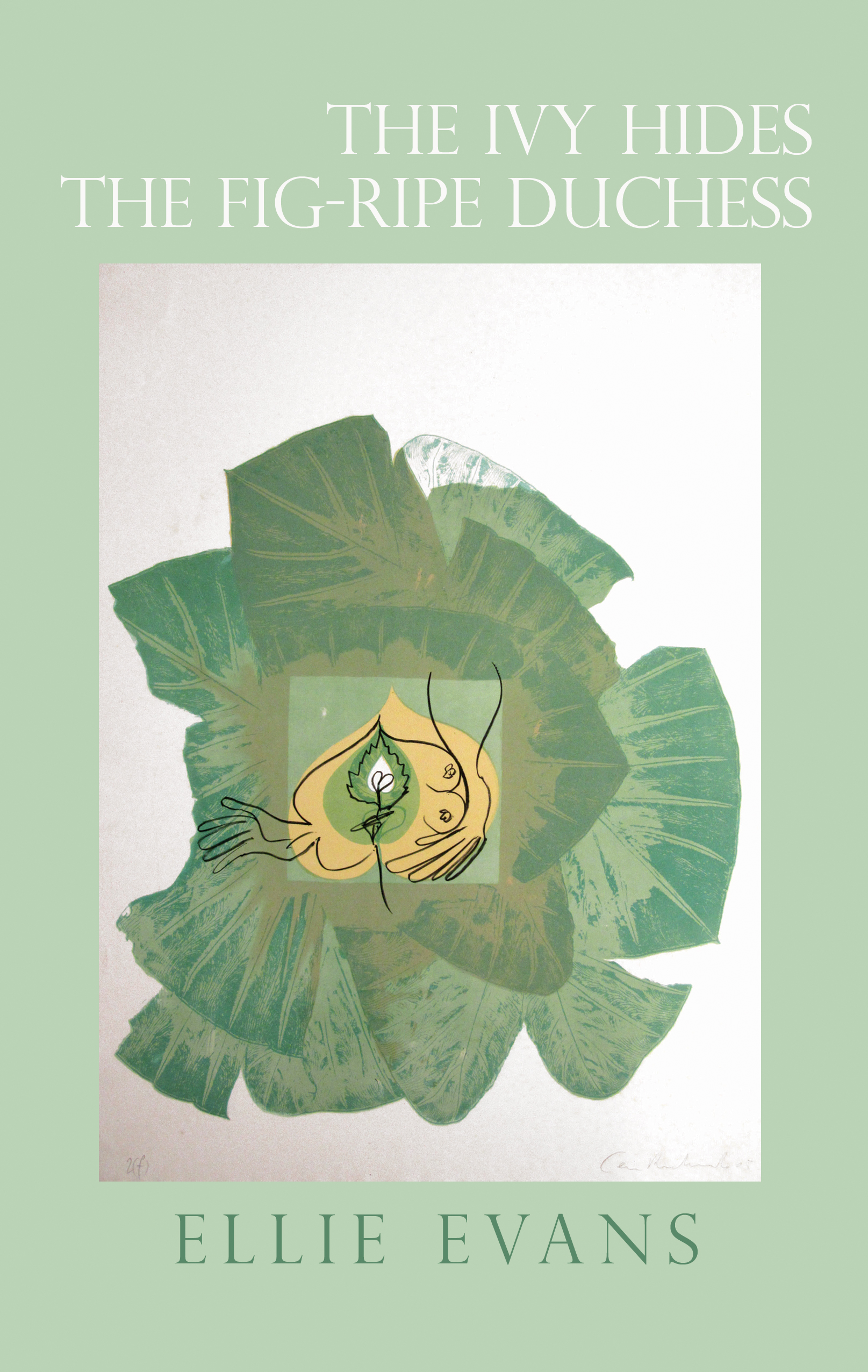
This week’s poem comes from the late Ellie Evans’s collection, The Ivy Hides the Fig-ripe Duchess, published in 2011.

The Ivy Hides the Fig-ripe Duchess is an exhilarating first collection of poems from Ellie Evans. Using a surrealist palette of imagery and a tightly focused idiom, the author takes us on strange journeys:to the post-apocalyptic world of the title poem, or into a skewed 18th century Venice in ‘The Zograscope’. These strange worlds are always to the purpose, they are, as Marianne Moore famously said of poetry ‘imaginary gardens with real toads in them.’ We obliquely unearth childhood trauma, fraught or intense relationships and also a singular (and perhaps also Welsh?) delight in rebellion, and in escape through the imagination. Poems like ‘Picnic with Earthquakes’ and ‘Jekyl Island, Georgia’ deftly align exotic locales (Eastern Europe, South East Asia, Greece and the USA,) with intimate states of mind. A fascination with art and history emerge in: ‘A Brief History of Topiary’ and ‘Two Monologues from The Odyssey’. There is also a palpable delight in technique: you will find a sonnet, a villanelle, triolets and a concise free verse where she employs rhyme, half-rhyme, and subtle alliteration.

A Brief History of Topiary

That September, in the Garden Nursery
three hundred yew cuttings, Taxus baccata,
stubbled in green, were ranked
in rows of fifty, in identical brown pots.

They were like schoolgirls waiting in Assembly
cross-legged and silent in the new Sports Hall
where the morning sun cast shadows on looped ropes
and blue lines on the floor for goals and penalties.

Years later, the young yews were planted out as hedges,
so they grew together sideways, twined, supported
each other. They made a garden room for picnics,
plays, dalliance and tennis. Some had alcoves

gouged out of them, to enclose pillars or gods,
satyrs and herms. Others were cut through, so
you could look out to another garden
or to a borrowed view. A few were special:

allowed to grow above the rest, until
frames were bolted round them. When they’re mature,
you don’t see these underlying structures for cones,
or balls, or obelisks, or whatever.

Purists won’t use frames, of course, but rely
on frequent trimming, checking from all angles.
Whichever method you chose, remember:
all stray shoots must be pinched out.

At night, the moon plays tricks on topiary,
on the giant women with their stove-pipe hats,
their capes and skirts like bells, who look as though
they’ll stride off to the woods, tearing the garden down.

Order The Ivy Hides the Fig-ripe Duchess from our website.

Posted on

Five Tips for Budding Interns

Our Marketing Assistant, Jess, shares some tips for people seeking work experience in the publishing industry.

I’ve been lucky enough to witness both ends of the spectrum in the publishing industry; I’ve been an intern, and I’ve met several interns since I started working for Seren in December 2014. This doesn’t make me a publishing expert by a long shot, but all the same there are a few tips I can offer to those of you currently seeking work experience in the publishing industry.

1) Think Ahead

Most publishing houses are very busy, and slots for work experience fill up quickly. If you want some work experience for the first week in August, you’re not going to get it if you email a publishing house in the last week of July.

I’d recommend looking into internships around a year in advance. That might sound crazy, but that year will give you plenty of time to plan your transport and possibly your accommodation – all of the major publishing houses are in London, but not everyone lives there!

To give you an idea of the timescale you’re looking at, I interned with Parthian Books in the last week of July 2014, and I first contacted them in September 2013.

2) Look outside London

I know from experience that when you start looking into publishing work experience it can feel like every single publishing house that has ever existed is in London, but that’s not the case at all. If you’re a little concerned about seeking work experience because of your finances – paying to stay in London only to work for free isn’t ideal for most people – there is a solution: look for your nearest independent publishing houses.

There are independent publishing houses all over the UK, without exception; England, Wales, Scotland and Northern Ireland all have their own independent publishing houses, and most of them will accept interns. In Wales alone Seren, Parthian, Honno, and the University of Wales Press all offer work experience.

We’re based in Bridgend, which is ideal for any of you who happen to live or study in south Wales; we’re only 20 minutes away from Cardiff on the train, so we get quite a few students from the Cardiff area, though anyone’s welcome to apply just so long as you’ve completed your A Levels!

Parthian Books‘ Marketing and Editorial Office, where I interned, is based on the Swansea University campus itself, so it’s ideal for those of you who study at Swansea or live in the area.

Honno Press specialises in books written by women and is based in the Aberystwyth Arts Centre – perfect for those of you who live or study in Aberystwyth!

University of Wales Press is based in Cardiff, and is ideal for anyone interested in academic publishing.

3) Research

You don’t have to read every single book that’s ever been published by the company you’re looking into – in fact you don’t have to read any unless you want to! – but at least give their website a little browse so you know the kind of books they publish; if you’re interested in academic publishing, you might not find a fortnight at a publishing house that specialises in children’s fiction all that helpful. (Although I have to admit that, personally, I think experience is experience, and you might discover a real passion for an area of publishing you hadn’t even considered before if you try something new!)

4) Don’t panic, Mr. Mainwaring!

When you at last secure that internship, I know it can be a little nerve-wracking stepping into a professional environment, no matter how many part time jobs you’ve had. Just remember: it’s work experience. Nobody expects you to be an expert in the publishing industry, otherwise there’d be no point in work experience at all, so don’t be afraid to ask questions – in fact we love it when people ask questions! The interns that want to know more about the industry are the interns we tend to remember most vividly, and if you make a real impression you might find yourself being considered for a job a little further down the line.

So smile, talk to us and ask questions – we don’t bite!

5) Do it all again!

Never stop looking for work experience, because every placement looks impressive on your CV, regardless of what it is. Perhaps you do a week of work experience in publishing and then a week on a hotel reception desk – that’s not going to lower your chances of getting a job in publishing! All that shows is that you’re willing to work; trust me, nothing will put your potential boss off hiring you more than a huge gap on your CV where you haven’t been at university, haven’t been employed, and haven’t done any internships or voluntary work.

The more work experience you do, the more networking you’ll do, and if you manage to secure several bouts of work experience in various different publishing houses you’ll have a whole host of professionals under your belt, and if they can’t offer you a job they can at least give you a glowing reference.

Tl;dr: Plan in advance, look all over the UK, do your research, ask questions, and keep on looking!

Good luck!

Posted on

Friday Poem – In Hospital: Poona

This week’s poem is from Alun Lewis: Collected Poems, edited by Cary Archard, to celebrate Lewis’s centenary earlier this week. Lewis was one of the most compelling writers of the Second World War, whose premature death in 1944 – when he was only 28 – was a grave loss to Britain’s literature community.

For more information about Lewis, check out his website and find out everything you need to know about the continuing centenary celebrations on Twitter.

In Hospital: Poona

Last night I did not fight for sleep
But lay awake from midnight while the world
Turned its slow features to the moving deep
Of darkness, till I knew that you were furled,

Beloved, in the same dark watch as I.
And sixty degrees of longitude beside
Vanished as though a swan in ecstasy
Had spanned the distance from your sleeping side.

And like to swan or moon the whole of Wales
Glided within the parish of my care:
I saw the green tide leap on Cardigan,
Your red yacht riding like a legend there,
And the great mountains, Dafydd and Llewelyn,
Plynlimmon, Cader Idris and Eryri
Threshing the darkness back from head and fin,
And also the small nameless mining valley

Whose slopes are scratched with streets and
sprawling graves
Dark in the lap of firwoods and great boulders
Where you lay waiting, listening to the waves-
My hot hands touched your white despondent shoulders

– And then ten thousand miles of daylight grew
Between us, and I heard the wild daws crake
In India’s starving throat; whereat I knew
That Time upon the heart can break
But love survives the venom of the snake.

Order Alun Lewis: Collected Poems from our website.