Posted on

An extract from Masque by Bethany W. Pope

an extract from Masque by Bethany W Pope

Enjoy this extract from Bethany W. Pope’s debut novel, Masque, now available from serenbooks.com (or your local bookshop!)

Masque by Bethany W PopeAbout Masque:
Masque is a richly gothic retelling of Gaston Leroux’s The Phantom of the Opera. Centre stage is would-be opera singer Christine, who, despite being devoted to her art, attracts the attention of both the Phantom, and rich theatre owner Raoul. The resulting mix of love, rage, art and murderous intent, is explosive.


This extract begins on p.11 of the novel and is our first introduction to The Phantom – Erik – a deformed and complex character, both monstrous and kind. Unlike Leroux’s original The Phantom of the Opera story, Masque is told from the perspective of the three main characters, so we see directly into the mind of the much-maligned Phantom, and can judge him as we see fit…


ERIK
1.
My father was a master mason. I never met the man but I
spent the first decade of my life inside the house he built
and so I feel I know him. The lathes of the attic communicated
with me as much through their shape (he was
exacting when he laid out the angles of the eaves) as did
the notations he left in pencil on the undersides of the
unfinished, unpainted struts which supported the ceiling. I
inherited the crabbed handwriting he used to mark out his
measurements, though I am far more articulate than he ever
was in artistry, architecture, or print.
Although he was skilled with the trowel and could lay
travertine so tightly that its texture was more like marble
than limestone, he was more renowned for the beauty of
his person that the skill of his hands. He won my mother
with his looks and he left her a sad ghost of the gay girl he
married, haunting the house that he built on Rue Rouge.
I learned about him through the letters he left to my
mother, retained by her in memory of their apparently passionate
courtship.They were bound by a blue ribbon, an
appropriate memento of an innocent girl. One envelope
contained a bright lock of hair that must have been his,
since mother’s was as dark as a sewer rat’s. The letters were
naïve, almost innocently crude. They were full of phrases
about the things that he wished that he could do to her
body and peppered with prayers for many years of marital
bliss. They were written in the kind of cheap ink that an
uneducated man would favour. He did not expect them to
last, or be held on to.The sepia was grainy and badly mixed,
this combined with his handwriting in such a way that it
seemed as though his words were written out by a sexually
precocious child with a fondness for experimenting with
matchsticks. As I said, my handwriting is no better, but at
least the ink I use is superior.
I always thought that writing was a bit like the telepathy
those spiritualists in the paper are always talking about. It
makes sense, if you think about it; one mind communicates
to another through a series of black blotches which transmit
thoughts directly into another’s brain. You, reading this,
whoever you are, can hear my voice (a sweet, trained tenor)
without ever having to worry about viewing the flesh that
produces it.This is lucky for you: all my gifts are internal.
In any case, my current habitations remind me of my
childhood home. These damp vaults are rather like the basement
where my mother moved my crib once the
neighbours complained that my cries disrupted their business.
The house my father built was tall and narrow, the
walls of dark grey granite, polished to the high shine of
gravestones. He meant his home to be a living monument
to his skill and a permanent advertisement for his services.
The roof was tiled with slabs of greenish slate, and the
windows were small and imperfectly glassed. When I was
older, I replaced them as a gift for my mother. I spent a
whole afternoon removing the warped and watery panes,
replacing them with sheets I’d poured myself. I learned the
art of glazing, sneaking every night to the factory down the
street. When the time came that I had spent enough hours
watching the midnight production shift pouring the sheets
of reddish molten sand into the mould, I tried my hand at
it myself. I waited until the Michaelmas holiday and stole
the machinery (I provided my own materials, lugging bags
of silicone that I’d found in the cellars among the unopened
bottles of wine and the skeletons of rodents). I love the look
of glass as it is being poured. It is honest, then, about itself.
Cooled, it only seems a solid. It never fully hardens. Over
centuries, window glass will melt.
There is no such thing as stasis.
In any case, my mother loved the finished product; windows
that let the light in without warping what she saw on
the street. She was so thrilled she squeezed my upper arm
through the thick fabric of my jacket. I swear she almost
hugged me. In any case, for once she did not shudder at my
smell or flinch away from the feel of my corpselike body.
The houses on either side of ours were dedicated, in their
own way, to music. Dancing girls and cabaret, absinthe and
cheap champagne that the likes of those poets who styled
themselves ‘Romantic’ drank themselves to death in. My
widowed mother hired men to refurbish the attic into a
series of rooms that she furnished with sticks she’d bought
from brothels, closed in raids by the province governor the
previous summer. She did not sleep on them and rarely
bothered to change the sheets, so she didn’t have to worry
about bedbugs. She made a good living, I must say, giving
the drunks who seethed from her neighbours in the early
morning a bed off of the streets.
For my fifth birthday she made me my first (and for a
long time only) birthday present; a mask cut from a length
of chamois that she bought from a glover. It was more like
a loose sack with holes cut for eyes than a proper garment
but it did its job well. The sight of me ceased bothering her.
As I grew older, she let me come up more frequently –
although once she had a steady stream of lodgers I never
had the run of the attic again – my father’s writing was long
since buried behind plaster. I wore the mask without complaint
– it was far from uncomfortable and it had a nice smell,
as did the sachets of mint and violet that she sewed into my
clothing. If she almost never touched me, she did love me as
best as she was able, being young and easily frightened.
After a few years of proving my capacity with panes of
glass and basic home repairs, she hired a blind tutor to teach
me letters, music, mathematics. He would come and sit for
hours in my basement room, complaining of the effect of the
chill on his bones and making me memorise many disparate
packets of learning. When I surpassed his ability to teach, as
I soon did, I had many books close at hand and I turned to
them to expand my knowledge. I read everything from
Archimedes to fairy stories. As I recall, I had a special affection
for La Belle et la Bête. My mother bought me as many books
as she could afford through mail-order – often secondhand.
She resold them after I had squeezed them of their nutrients,
though I demanded permission to keep the fairy tales. They
were a balm to me, with their stories of transformation. They
provided me with a sharp and dangerous hope.


Buy your copy of Masque now: £9.99

Claim 20% off this and all future orders when you become a Seren Book Club member

Posted on

The results are in: Graham Mort shortlisted for VC’s International Poetry Prize

Following on from his longlisting, Graham Mort has been shortlisted for The University of Canberra’s Vice-Chancellor’s International Poetry Prize, for his poem ‘Ordinary’. The prizewinner this year is Michael Lavers, for ‘Your Father at Fourteen’.
You can download Tremble, the anthology of entries for this year’s prize (which includes ‘Ordinary’ by Graham Mort) for FREE on the University of Canberra website.
Graham’s most recent poetry collection, Cusp (Seren, 2011) is available from our website.


Posted on

Paul Henry & Stornoway singer Brian Briggs collaborate on song version of ‘The Glass Isle’

Photo of Paul Henry looking over his shoulder away from the camera. He is wearing a dark leather jacket.

Poet Paul Henry has collaborated with the singer-songwriter Brian Briggs (best known as the frontman of British indie folk band Stornoway) to create a song version of his long poem-in-progress, ‘The Glass Aisle’, which is inspired by a stretch of the Monmouthshire & Brecon canal above Crickhowell.
About the collaboration, Paul Henry says:“Brian Briggs and I are writing songs together, in response to the poem as it develops (I was originally a songwriter). We’ve written five, so far.’
Paul and Brian will be performing the songs they have composed at an event at The Parish Hall, Crickhowell, on Monday 3 October. Find out more about the event here.
Want to listen to Stornoway’s music? You can find them on YouTube. Their song ‘Get Low’ is an office favourite.

Posted on

Katrina Naomi – new Writer in Residence at the Arnolfini

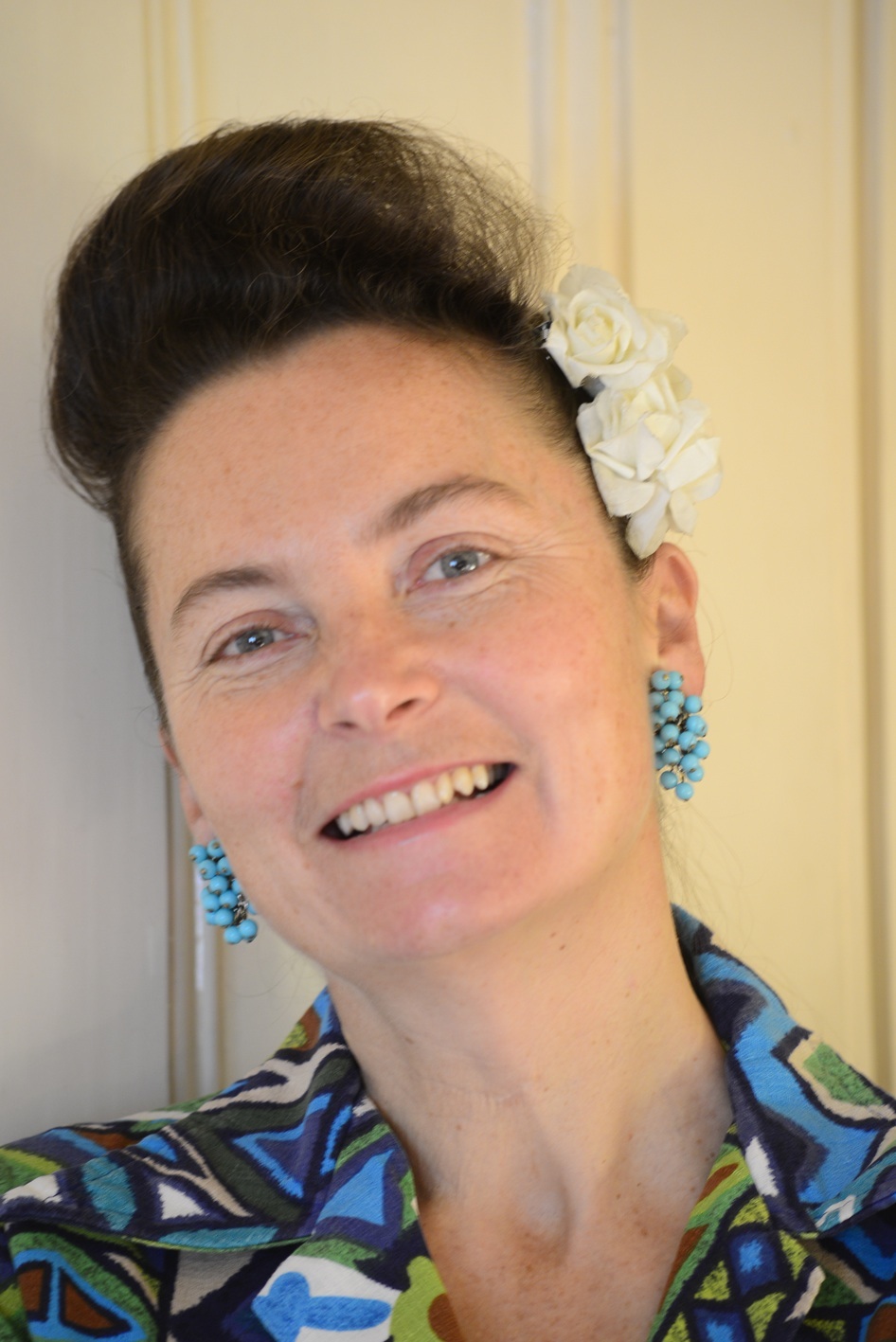
Katrina Naomi is a white woman with dark hair. She is wearing a blue shirt, large blue earrings and has her hair up in a 1950s style.

Katrina Naomi has been announced as writer-in-residence at the Arnolfini throughout their ‘Emotional Archaeology’ exhibition.
Regarding her being selected for the post she says:
I’m delighted to be Arnolfini’s writer-in-residence. I can’t stop smiling about it. I’m looking forward to Daphne Wright’s Emotional Archeology show, I like her themes and approach, and I’m interested in seeing where her art will take my poetry.
There will be a number of public outcomes to the residency, including a live presentation event in December. Keep an eye on the Arnolfini’s website and social media pages for updates.
 
Katrina Naomi is a poet, tutor and poetry mentor based in Cornwall. Her second full collection The Way the Crocodile Taught Me, (Seren, 2016) features in The Forward Book of Poetry 2017. Her 2015 pamphlet Hooligans, (Rack Press), was inspired by the Suffragettes.
Her poetry has appeared in ‘The Times Literary Supplement’, ‘The Poetry Review’, ‘The Spectator’, and on Radio 4. She received a PhD in Creative Writing from Goldsmiths in 2014 and an award from the Royal Literary Fund. In 2015 she became a post-doctoral researcher at Goldsmiths and was made a Hawthornden Fellow.
 

Posted on

Seren at the London Poetry Fair

Join us tomorrow at Conway Hall, 10:30am–4:30pm, for the Free Verse London Poetry Fair. 80+ publishers (including ourselves!) are exhibiting, and there will be free readings and discussions throughout the day.
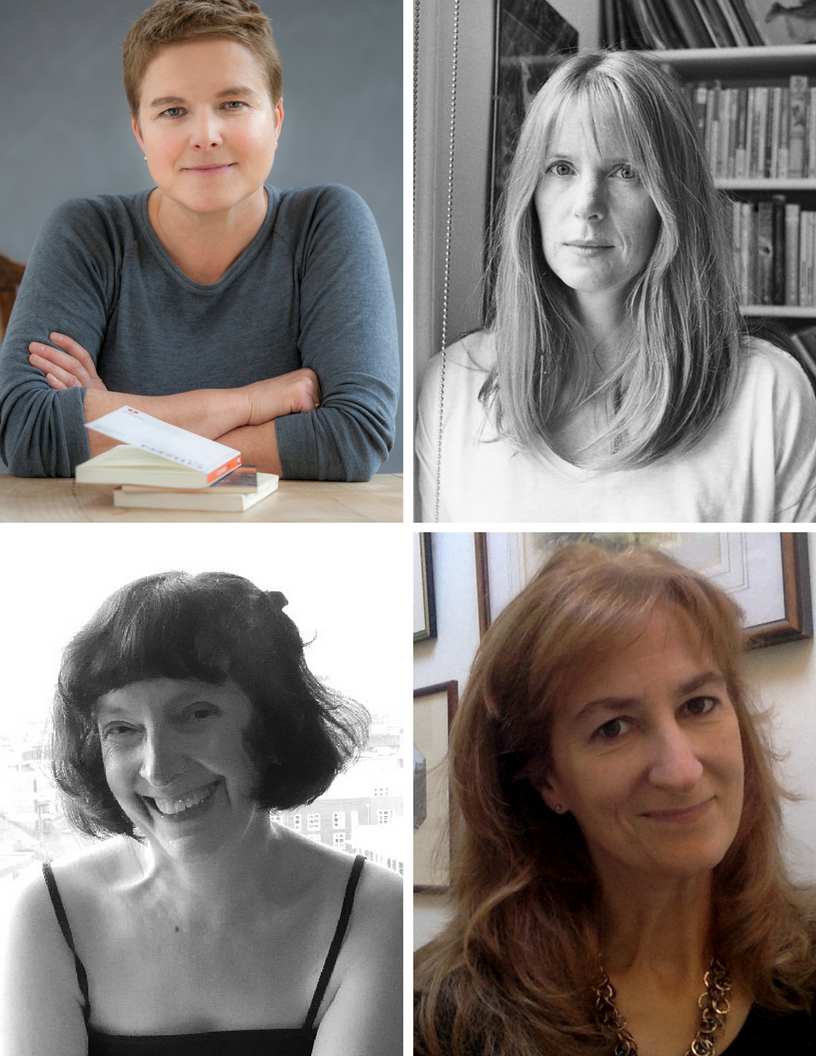
Don’t miss: Seren poets Caroline Smith, Kate Bingham, Judy Brown and Rosie Shepperd will be reading from their latest collections at 11am in the Brockway Room (Conway Hall).


Posted on

Friday Poem – ‘Autumn Elegy’, Leslie Norris

Friday Poem Autumn Elegy Leslie Norris

Our Friday Poem this week marks the coming of autumn, and is taken from Leslie Norris: The Complete Poems, edited by Meic Stephens.

Leslie Norris Collected PoemsThis landmark publication of over 300 poems is a testament to a publishing life of more than sixty years. The late Leslie Norris, who died in 2007 at the age of 86, was best known as a nature poet and elegist of passion and rare expression. Lyrical and individual, to his closely observed poems, each word weighed and in its correct place, Norris introduces a strong metaphysical element which makes the poems, as Edward Lucie-Smith noted, “much larger than the sum of their parts”.


Autumn Elegy

September. The small summer hangs its suns
On the chestnuts, and the world bends slowly
Out of the year. On tiles of the low barns
The lingering swallows rest in this timely

Warmth, collecting it. Standing in the garden,
I too feel its generosity; but would not leave.
Time, time to lock the heart. Nothing is sudden
In Autumn, yet the long, ceremonial passion of

The year’s death comes quickly enough
As form veins shut on the sluggish blood
And the numberless protestations of the leaf
Are mapped on the air. Live wood

Was scarce and bony where I lived as a boy.
I am not accustomed to such oppulent
Panoply of dying. Yet, if I stare
Unmoved at the flaunting, silent

Agony in the country before a resonant
Wind anneals it, I am not diminished, it is not
That I do not see well, do not exult,
But that I remember again what

Young men of my own time died
In the Spring of their living and could not turn
To this. They died in their flames, hard
War destroyed them. Now as the trees burn

In the beginning glory of Autumn
I sing for all green deaths as I remember
In their broken Mays, and turn
The years back for them, every red September.


Buy your copy of Leslie Norris: The Complete Poems now: £25.00

Claim 20% off when you become a Seren Book Club member


Posted on

An Interview with Caroline Smith

An interview with Caroline Smith The Immigration Handbook

Today we are joined by Caroline Smith, whose new poetry collection The Immigration Handbook weaves together stories of hope, frustration and pain, drawn from Smith’s experience as an Immigration Caseworker.

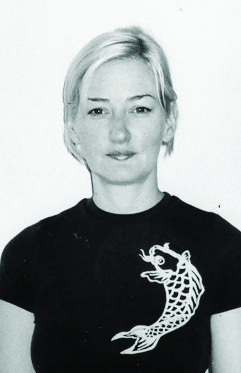
CarolineSmith CropCaroline Smith was born in Ilford and grew up in Hertfordshire. She originally trained as a sculptor at Goldsmith’s College. Her first publication was a 30-page narrative poem, ‘Edith’. Smith’s first full collection, The Thistles of the Hesperides (Flambard), is about the community of West Pilton in Scotland where Caroline lived in the 1980s when it was one of the most deprived housing estates in Europe. Using imagery and structure from Greek mythology, and direct stories from observed lives, the poet weaves a dense and dramatic tension between the harshness of reality and the lyricism of myth. Published widely in journals like Poetry Wales, Poetry Review, Staple, Orbis and Stand, she has twice won prizes in the Troubadour Poetry Competition.  Smith has had work set to music, broadcast on the BBC and is also the author of a musical play, The Bedseller’s Tale, that was performed at the Edinburgh Festival Fringe.  She lives in London with her family.

 The Immigration Handbook Caroline SmithYour new poetry collection, The Immigration Handbook, brings to life the stories from migrants and refugees that you hear every day in your work as an Immigration Caseworker. What made you choose to transcribe these deeply affecting stories, and was the process cathartic?

Writing thousands of letters to the Home Office over the years, I think about language, what turns a letter into a poem, the different functions of language and how by changing the angle or perspective on a subject you can show it afresh. My book is another way of contributing to the immigration debate, but it is primarily a book of poetry. It’s the stuff of my life so it’s what I make art out of.

When I was younger I couldn’t decide if I wanted to be a priest or a sculptor – so I campaigned for women’s equality and ended up as a poet! But in a sense these twin strands have come together in my poetry; my interest in social justice and my training as a sculptor who needs always to recreate the world in a different way.

I’ve never found writing cathartic. When I am most upset about something I want it to stop, I don’t write my way out of it. I see my work as an Immigration Caseworker and my poetry as separate. I get angry and try to change the system, but for poetry I need distance and reflection and I enjoy the creative process; the juxtaposition of odd fragments, creating something new, although I suppose it is cathartic in a Nietzschean way….. ‘Every art and every philosophy may be regarded as a healing… in that respect maybe.

Your poems are often (unsurprisingly) rather bleak, as they describe characters who have lost hope, who feel abused by the system, who don’t know where to turn. Do you hope the collection inspires people to see beyond the statistics and recognise the humanity of those seeking citizenship?

Yes that is exactly what I am hoping people will find in my poems – despite the bleakness, a celebration of humanity. My poetry contributes to the immigration debate; not by putting forward a set of arguments like I do in my letters to the Home Office, but by showing the humanity of people trapped in the system. Not every asylum seeker or refugee is a hero or angel. I have painted people as they are – with both frailties and resilience. We all have the same longings and desires to make something of our lives, it’s just that the people I see in our immigration surgery have a much tougher journey than most of us have ever had to bear.

You have a knack for finding humour in surprising places, for instance in your poem ‘Judgements’, which cleverly and comically portrays the bureaucracy behind judgements made on applications:

“… if the appellant claimed
that relevant matters did not happen I should not
exclude the possibility that they did not happen
(although believing that they probably did)”

Is humour an important part of poetry writing for you? And does it follow you into the workplace, and other aspects of your life?

Tragedy and comedy sit very close to each other. I’ve received so many misspelt letters…’I have been arrested by six uninformed guards’…with wormiest regards’‘I love your cuntry’!

Satire and the use of comedy is important in art. Slapstick and the absurd sharpen the truth of a situation. The most wildly improbable stories, can actually accentuate pathos and provide a break in the bleakness. Humour is also a great tool for showing up the absurdity and dysfunctionality of the Home Office which cruelly traps people without status and documents for years. It is the startling and unbelievable that is often true; whereas the predictable stories are most likely to be fabricated.

The Immigration Handbook was written over a number of years. Were these poems always destined to be released as a collection, or did the idea to publish these stories together come much later?

I always intended them to be a sequence of poems on the subject. I remember the night I started writing this collection. I filled a book with scrawling notes of incidents, characters and injustices. But it is one thing to have an idea for a poem, but then you have to wait for all the elements to come together and it often ends up going off in a completely different direction. Because I have so many stories fermenting in my head, unexpected elements mesh together.

Both my previous collections included sequences of poems. I’ve never been interested in writing a novel, but I love the opportunities presented by writing a number of individual poems that can work together and spark off each other to come at an idea from different angles and perspectives. Although I don’t write formally, the form of the poems are critical to me. I used to approach a sculpture from all angles as once.  I would use different materials and found objects set against each other to break up the surface, juxtaposing different textures. And I think I do the same with poems using different intensities; some highly worked, some quick ‘line drawings’, some found reports. The difference today is that I’m carrying my studio of scraps and fragments and found objects around in my head!

And finally, tell us about your plans for the future- where will we see your name next, and are there any festival or events appearances you can tell us about?

I had a great time reading at the Ledbury Festival earlier this summer and my book launch at the Nehru Centre in London was just fantastic – courtesy of the Indian High Commissioner! I have a whole series of readings lined up for the autumn in Cardiff, London, Aberystwyth and I’m doing a couple of Festivals in Bristol and Chorleywood as well as a special event with Waterstones in Berkhamsted for National Poetry Day.

I am really enjoying giving readings and talking about my book but already the restlessness to create and my dissatisfaction with the world as it is, is pushing me back to my writing desk. When I have lots of ideas in my head I find it distracting to read. Now The Immigration Handbook is out I’m reading as much as I can, going to lots of poetry events and every play that I can get tickets for.

17th September: Free Verse, The London Poetry Book Fair.
3
rd October: Poetry Can Festival, Bristol.
6
th October: National Poetry Day, Waterstones Berkhamsted, Herts.
15
th October: Chorleywood LitFest, 12 noon The Junction, Chorleywood, Herts.
18
th October: Lumen Poetry Series, 19:00 Tavistock Place, London.
26
th October: Aberystwyth University, English & Creative Writing Society.
27
th October: Waterstones Aberystwyth.
30th October: Cardiff Book Festival.
24
th November: 19:30 Waterstones Piccadilly.

The Immigration Handbook is available on our website. Buy your copy now: £9.99
Claim 20% off when you become a Seren Book Club member
Save

Posted on

Friday Poem – ‘In September’, John Ormond

Friday Poem in September John Ormond

For this week’s Friday Poem we have ‘In September’ by John Ormond, from his Collected Poems, edited by Rian Evans. The poem was written for Glenys in celebration of their wedding anniversary, which fell on the 21st September. Since the two were married in 1946, that would have been 70 years ago.

John Ormond Collected PoemsPenned late on the night of the 20th of September, probably 1970, because he’d forgotten to buy a card, it was deemed by them both to be infinitely preferable. Memories of key moments in their courtship are woven into the lines, while the storm door was the big black outer door of their home in Conway Road. The poem appeared in various anthologies: one which pleased Ormond was the Almanacco internazionale dei Poeti 1975 (La Pergola Edizioni) containing the Italian translation ‘In Settembre’ by the eminent translator, poet and critic Roberto Sanesi.


In September

Again the golden month, still
Favourite, is renewed;
Once more I’d wind it in a ring
About your finger, pledge myself
Again, my love, my shelter,
My good roof over me,
My strong wall against winter.

Be bread upon my table still
And red wine in my glass; be fire
Upon my hearth. Continue,
My true storm door, continue
To be sweet lock to my key;
Be wife to me, remain
The soft silk on my bed.

Be morning to my pillow,
Multiply my joy. Be my rare coin
For counting, my luck, my
Granary, my promising fair
Sky, my star, the meaning
Of my journey. Be, this year too,
My twelve months long desire.


John Ormond: Collected Poems draws together all of Ormond’s work, including unpublished material. It includes notes and commentary of the poems, and a bibliography of Ormond’s prose writing, films and writing about him. An index of titles and first lines completes this essential book.

Buy your copy now: £14.99

Claim 20% off as a Seren Book Club member