Posted on

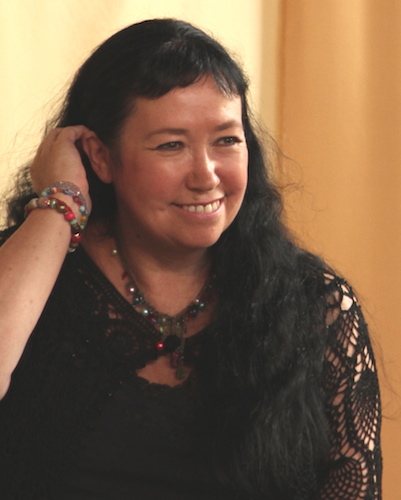
Pascale Petit Shortlisted for the 2014 TS Eliot Prize

Pascale Petit

Pascale Petit has been shortlisted for the 2014 TS Eliot Prize for the fourth time with her collection Fauverie, A collection every bit as vivid and emotive as the art of the Fauves that the title evokes.

Described as ‘the prize most poets want to win’ (Sir Andrew Motion, former Poet Laureate) and ‘the world’s top poetry award’ (Irish Independent), the TS Eliot prize is awarded to the author of the best new collection of poetry published in the UK and Ireland each year.

Pascale has previously been shortlisted for the TS Eliot prize with her earlier collections The Zoo Father (2001, Seren), The Huntress (2005, Seren) and What the Water Gave Me: Poems after Frida Kahlo (2010, Seren).

Pascale will be reading alongside ten fellow shortlisted poets including Fiona Benson, Ruth Padel and Michael Longley at the Southbank Center’s Royal Festival Hall on 11th January, with the winner of the £20,000 prize being announced at an awards ceremony on the 12 January 2015.

Helen Dunmore will chair the judging panel for the 2014 prize alongside Sean Borodale and Fiona Sampson.

Posted on

Jaki McCarrick Longlisted for the Irish Laureate Award

The Scattering author, Jacki McCarrick has been longlisted for the first Irish Laureate Award. Jaki is one of thirty four Irish writers to be nominated for the award and she sits on the longlist alongside names such as Anne Enright, Roddy Doyle, Donal Ryan and Eimear McBride

Launched by the Arts Council in summer 2014, the €150,000 award aims to find a writer who has made a significant contribution to Irish literature and with an internationally recognised body of work.

Jaki is an award winning playwright and short story writer. Her first collection of short stories, The Scattering, a series of skillfully crafted stories focusing on borders, was shortlisted for the Edge Hill award. Her plays have won numerous awards including SCDA National playwriting competition and the Papatango New Writers Award.

Nominations were made by 119 organisations and individuals, with each providing a reason for their selection. Nominations came from book clubs, bookshops, arts organisations, poets, playwrights and libraries.

The first Irish Laureate for Fiction will be announced in January 2015 and the recipient is expected to be an author that has had “a considerably positive impact on readers” and “demonstrated commitment to engaging with the public, the media and the literary sector”.

Posted on

Friday Poem – There’s no such thing as pandas

What if I told you that pandas weren’t real? That they were just people in suits? This Friday’s poem, There’s no such thing as pandas, taken from Katherine Stansfields collection Playing House, suggests just that. A concise wit, a distinct voice and an unsettling view of the domestic characterise these poems whose subjects are the ordinary as viewed through the author’s satirical yet sympathetic eye.

There’s no such thing as pandas

I cut my teeth on Newsround where ‘And finally’
meant pandas: pandas on planes, panda love
at London Zoo, the Queen unveils a new panda.
There was something about them, even then.
Those tricks-of-a-hypnotist eyes. The big pads
moving like hands. Were they shoes
inside the feet? I wasn’t sure until I saw
the sneezing baby make her mother
lurch in shock on YouTube. Then I knew:
pandas are just people in suits, having us on.

Don’t miss Katherine reading at the Aberystwyth Arts Center bookshop on Thursday 23rd October at 6:30pm. Find out more.

Posted on

Win a signed Sugar Hall paperback

To celebrate the launch of the paperback edition of Sugar Hall, we’re giving away three copies signed by the author, Tiffany Murray.

To be in with a chance all you have to do is tweet us your most spine tingling, heart stopping, goose bump raising ghost stories in 140 characters or less using the hashtag #SugarHall.

We’ll be retweeting the ones that give us nightmares and Tiffany will pick the winners on Halloween.

To get you started here’s ours:
“I told you there are strange noises here didn’t I? Ma say’s it’s the forest behind us, but it isn’t because trees don’t scream…”

Posted on

Friday Poem

This Friday’s poem, Nun on a Bicycle, comes from Jonathan Edwards’  debut collection My Family and Other Superheroes. A collection that takes inspiration from the unlikeliest of subjects including: Sophia Loren, the kebabby in Merthyr and a nun on a bicycle, My Family and Other Superheroes has been shortlisted for the Fenton Aldeburgh First Collection Prize. The winner of the esteemed award will be announced at the Aldeburgh Poetry Festival in November.

Nun on a Bicycle

Now here she comes, rattling over cobbles,
powered by her sandals, the gentle downhill
and the grace of God. Now here she comes, her habit

what it was always waiting to become:
a slipstream. Past stop signs, the pedestrian
traffic at rush hour, the humdrum mopeds,

on a day already thirty in the shade:
with her robe fluttering like solid air,
she makes her own weather. Who could blame her,

as the hill sharpens, she picks up speed and smiles
into her future, if she interrupted
the Our Fathers she’s saying in her head,

to say Whee, a gentle Whee, under her breath?
O cycle, sister! Look at you now, freewheeling
through the air conditioning of the morning –

who’s to say the God who isn’t there
isn’t looking down on you and grinning?

Posted on

Dylan Moore on why Shifts is the Greatest Welsh Novel

Dylan Moor on why Shifts by Christopher Meredith deserves your vote to be crowned as the greatest Welsh novel of all time. Taken from Wales Arts Reviews original post.

The title of Christopher Meredith’s 1985 debut novel refers to both the monotonous patterns of working class life and the changes to such routines that remain forever beyond the control of the people whose lives come to be defined by them. In a country famous for coalmining, and a Heads of the Valleys region more famous in the literary world for the romances of Alexander Cordell, Shifts is the novel of the declining steel industry. Moreover, the year of its setting – 1977 –  confirms its ostensibly undramatic events as a kind of full stop, the last dregs of the industrial South Wales that had existed for at least a century and a half, about to turn into something else.

Focusing on four characters bound together by the closure of the steel plant in the town – unnamed but quite possibly Meredith’s native Tredegar – Shifts is a study in how men and women are forced by circumstance to take control of their own destinies, even if sometimes it seems they are determined to let life pass them by. Jack Priday is the protagonist; recently returned to Wales after some years spent in Norfolk and Lancashire, he is attempting to rebuild his life a couple of valleys over from his original home, like a ‘salmon coming home to spawn.’ Jack lodges first with Connie, a middle-aged widow, but then settles with his workmate and former schoolfriend Keith, a local history enthusiast now married to Judith, herself seeking a new way forward when familiar routines are dislocated. And then there is Rob – known mysteriously as ‘O’ – bullied at work and seeming to symbolise the great emptiness in all of the characters’ lives; it is O who both opens and closes the novel, forcing us to consider issues of circularity and time, life and death, being and nothingness.

Meredith’s achievement is a significant one – easily ranking as a Great Welsh Novel – not only because of the skilful way that he combines these grand themes with humour and pathos. An unshowy understated quality marks the prose throughout and despite its depth and complexity, Shifts is a down-to-earth book in keeping with its humble environs, great also because of Meredith’s fine ear for dialect and the basic ingredients of character, setting and plot. Keith’s interest in local history is just one way in which the author subtly layers the humdrum events of the actual story with resonance and complexity; here too is Meredith’s chance to explore the shifts at the beginning of the industrial age and with a deftness of touch play the birth of the town out against what seem to be its death throes.

It is no wonder that the New York Times Book Review said of Shifts that ‘the prose is spare and poetic, at once plain and rich, musical in its rhythm of speech and clear description.’ It is a perfect critical encapsulation of Meredith’s style that also belies the essential Welshness at the book’s core. Like very great novels, the power of Shifts is to evoke universal themes in a believably rendered microcosmic reality. When Jack talks of his former life in Accrington, it seems to Keith like ‘the ends of the earth’. He and Judith cannot afford to heat the house; some of the central storyline’s persistent sexual tension arises from their getting changed in front of the two-bar electric heater in the living room. Meredith captures perfectly the reality of life in what many might be tempted to call late 1970s working class Britain. But his canvas is not nearly so wide. It stretches, geographically, from the steelworks to the unheated house, from the town’s pubs up onto ‘the tops’ where the long-dead victims of cholera and poverty lie undisturbed by time or memory; timewise, it lasts a single season: as the plant closes down, the winter thaws.

Shifts perfectly approximates the precise sub-dialect of Blaneau Gwent. It is all ‘en’ for ‘isn’t’, the redundant auxiliary ‘do’ and frequent use of ‘bastard’ as an adjective. In addition to accent, and the mercilessly cruel and foulmouthed banter of the workplace (‘bastard’, I can assure you, is mild), Meredith draws on his own experiences as a steelworker to deliver a strikingly realistic picture of a world we rarely see in fiction:

… the blast furnaces, the open hearth, the scrap bay, the coke ovens, all recently shut and decaying, and then the parts still working; the hot mill, slabyard, galv, pickler, cold mill, tinning lines, and all the other departments servicing these; boiler shop, sling shop, shoe shop, medical centre, garages, offices, railway lines, bridges…

But Shifts isn’t simply a work of gritty realism, nor is it a kitchen sink drama (although there is plenty of careful detail that paints a picture of the everyday); there is a thread of symbolism running through the novel that lifts it, wholesale, out of the read-once-and-always-remember category of classic to the lofty position I am claiming for it today. As Richard Poole points out in his ‘Afterword’ to the Seren Classics edition, beneath the text’s ‘seemingly plain skin beats an ambitious symbolist heart’; it is a novel ripe for academic interrogation not only because of its historical, cultural, psychological and linguistic specificities – its brilliantly evoked microcosm of time and place at a (dis)juncture in the region’s, and the nation’s history – but also because of its rich, highly patterned, subtext. Apart from all of that, it’s a great, engrossing, read.

So, if as a nation we seek to venerate a book that helps us understand ourselves and our circumstances, and that uses the novel’s power to investigate the psychological fallout of socio-historical trauma while at the same time being skip-along readable and viciously funny, let’s stop the search here. The book is Shifts.

If you agree with Dylan, ten you can vote for Shifts here.

Posted on

The Hunt for the Greatest Welsh Novel

In just a few days we will know which book has been named the greatest Welsh novel of all time. Earlier in 2014, Wales Arts Review set out to find the greatest Welsh novel. 25 of Wales top writers were asked to nominate a title, old or new, and argued their case in a series of essays.  A panel of over 50 leading Welsh literary figures then whittled this list down to a shortlist of just six.

Included on the shortlist are two Seren authors. Emyr Humphreys was nominated by Gary Raymond for his novel A Toy Epic, while Dylan Moore argued the case for Christopher Meredith’s Shifts. Joining Meredith and Humphreys on the shortlist are Bruce Chatwin’s On The Black Hill, Un Nos Ola Leuad by Caradog Prichard, The Life of Rebecca Jones by Angharad Price and Raymond Williams’ Border Country.

The overall winner will be decided by a public vote and you have until midnight on 12th October to vote for your greatest Welsh novel.

Posted on

Seren Talks To… Pascale Petit

Pascale Petit Pascale Petit tells us about her favourite places in Paris, The big cat house of the Jardin des Plantes zoo and it’s devilishly handsome inhabitant Aramis, teases us with the possibility of a novel and  tells all about her new book Fauverie .


Hi Pascale, tell us about your new collection Fauverie and how the idea originated?
The title Fauverie comes from the name of the big-cat house in the Jardin des Plantes zoo. It’s an amazing art deco building and has an interior where the cats sleep and are publicly fed, and an octagonal exterior, which thankfully has been enlarged. To me it’s the heart of Paris, which to me, historically and personally is a savage place. I was born there and spent five unhappy years there as child. For decades I wouldn’t go back as I was scared of it, but then my father contacted me after a thirty-five year absence and I visited him as he was dying. Over those visits I fell in love with Paris. In a way Fauverie is my account of that love affair with my home town. But mainly it’s about my relationship to my estranged father during the few years I knew him. I felt that writing about Paris could be a way of writing about him as it was very much his city.

Another building I’m obsessed with is Notre-Dame cathedral and the book began with a few poems about my father and the cathedral. The cathedral became like a friend. I discovered that my father had spent many years living in hotels that were overlooked by it and its towers with those gargoyles and chimeras, so he was observed by this stone zoo. I went up the four hundred stairs to the gargoyle galleries. I started writing the book with those poems. In fact the first poem, ‘My Father’s City’, I had started writing when I was writing The Zoo Father, my second collection, but couldn’t get right then.

What was your research process for this book?
All the poems in the book were written in Paris! I edited them in London where I live but very rarely wrote one there. I rented rooms in Paris for a month at a time and wrote very intensively, usually I’d end up with about twelve to fifteen poems. I got up very early and wrote or read to help get me going then went out to the zoo in the late afternoon or to Notre-Dame or other places. Every time I went to Paris (about three or four times a year) I’d discover some new place in this city that was so strange to me yet so familiar. One of those wonders was Sainte-Chapelle, a revelation. Then the Musée de la Chasse et de la Nature, my favourite museum. Also, in the Jardin des Plantes’ main museum there is a very sad hall dedicated to endangered and extinct animals, most of them stuffed.

The collection features a lot of wild animals, which was your favorite animal to write about?
Aramis the black jaguar! I’ve seen the young keeper kiss him on his mouth through the mesh just before feeding him. He’s four years old but large for his age. He’s actually a rich dark brown with black rosettes. He was in the Fauverie for two years while the larger zoo at Vincennes was being renovated, and that’s where I visited him when I wrote this book, in the Fauverie. Now I visit him at Vincennes zoo, where there are also two young gold jaguar sisters, kept separately from him as they are not yet old enough to mate. When they’re old enough he will have a choice of one as his mate.

Were there any poems that were particularly difficult to write?
I suppose the poems that describe the cellar I was placed in as a small child. I visited the building where we lived on the Boulevard de Grenelle, and twice I went down into the cellar. I couldn’t believe how scary it was, so medieval and narrow. It was like going into a nightmare. I had had nightmares about it throughout my life but thought I’d made them up because there was a window in the cellar and I thought that cellars don’t have windows. But there it was this tiny window at the top of the spiralling stairs, looking out onto the courtyard! Apart from those poems there were certainly a number that I couldn’t get right and took months of rewrites. I kept going back to the Boulevard de Grenelle, to the famous market outside our door, under the métro aérien, and to the park where I played, and even the horrible school.

Your relationship with your father, like in The Zoo Father, is at the fore of this collection. How has it evolved and impacted on your writing since the Zoo Father?
When I wrote The Zoo Father I was in shock – my father had just contacted me and I felt too angry to write at first, then I realised I could through the animals and my travels in the Amazon. It’s now fifteen years since he died and I felt compelled to try again, with more distance, hoping for more compassion. He was suffering from emphysema and was caged himself, could never go out so I did feel very sad for him at the time. Then he died and I lost him again, and he had never acknowledged that he’d done anything wrong, but he had done some pretty bad things. Fauverie is my attempt to redeem him, and perhaps mourn him, but it’s hard to mourn someone I barely knew.

You’ve dealt with some pretty big subjects over the years through your poetry, are there any subjects you wouldn’t write about?
Yes there are, I’m a private person even though I write personal stuff about my parents. But the speaker of my poems is not the actual me, so my poems are fictionalised.

What is the most inspirational book you’ve read and why?
There are so many it’s hard to choose one. I’ll choose two. The first was a Time Life book I found in a library, a south American library in Hyde Park that no longer exists. The book was about South American animals and in it I found the most exquisite photograph I’ve ever seen. It was of a suitcase and it contained forty live hummingbirds. I carried a photocopy of it with me but lost it. Eventually I managed to track the book down and ordered a copy so I have the photo in full colour. I’ve also found another photo of hummingbirds in a suitcase, both are of suitcases belonging to the Brazilian hummingbird expert Augusto Ruschi. The first photo led me to write ‘The Strait-Jackets’, the first poem in The Zoo Father. I’ve just written a poem about the second of those photos.

The second book was crucial to my development as a poet. It was called Waterfalls of the World by Rita Margaret Barton and was published in 1974. The cover features Iguazu Falls. I found this book in 1992, during a tough time in my life, and it was like discovering a friend. It was also the book that led me to to see the highest waterfall in the world Angel falls, in Venezuela’s Lost World. So in a way this book led to all my subsequent obsessions with the Amazon, because once I saw Angel Falls I became fascinated by the whole landscape, table mountains, the flora and fauna, the tribes and their rituals, and their spiritual worlds. It all came from that one book that appeared when I so needed it. Of course there are also countless poetry books that are important to me but it would take too long to name them all.

What are you working on next?
I’m writing a sequence of poems for the Medicine Unboxed prize, it’s called Mama Amazonica. I’ve written it this month in Paris. I was very lucky to be shortlisted for the prize for the proposal. I won’t say more about it just now as it’s a work in progress. There is also a novel in the background!

Fauverie is available to order from the Seren website with 20% off when you join our online book club.

Posted on

10 Amazing Facts You Didn’t Know About Hay-On-Wye

To celebrate the launch of Jim Saunders’ new book, Hay – Landscape Literature and the Town of Books, here’s 10 amazing facts you may not known about the famous festival town.

1) Despite its Herefordshire postal address, Hay-on-Wye is actually in Wales, and its Welsh name is Y Gelli Gandryll. (But its Co-op supermarket is just over the border in England, where they still have free carrier bags.)

2) People have been living and building in the countryside around Hay since the Stone Age. In 1959 and 1960 the pupils of Clyro Court secondary school discovered over 2000 flint arrowheads dating from this period at Old Forest Farm in Clyro. Also dating from this period is a chambered tomb near the entrance of Clyro Court, and Arthur’s Tomb in Bredwardine.

3) According to legend, Maud Walbee built Hay castle in just one night with her bare hands, carrying the stones in her apron.

4) The world-famous Hay literature festival has been running for the past 27 years and was founded around a kitchen table in 1987 by Norman and Rhoda Florence.

5) Hay has no fewer than 21 bookshops and two bookbinders, all in a town with a population of 1,500. That’s one bookshop for every 71 residents

6) Richard Booth is credited with putting Hay on the map as ‘the town of books’ after opening his first bookshop in 1962. The bookshop is still thriving today.

7) In 1977, Richard Booth proclaimed Hay an independent kingdom and crowned himself king of Hay. He named his horse Prime Minister.

8) Welsh nationalist hero, Owain Glyndwr, is said to be buried in Herefordshire, just a few miles from Hay. There are four possible burial sites: Monnington-on-Wye, Monnington Court, Croft Castle and Kentchurch.

9) The town of Hay is twinned with Timbuktu in Mali.

10) Sir Arthur Conan Doyle’s “Hound of the Baskervilles” has mysterious connections with Hay and the surrounding areas. the village of Clyro, just across the Wye from Hay.   Clyro Court was built by local landowner Thomas Mynors Baskerville while his neighbours the Vaughans, of Clyro and Kington are associated with a spooky local legend. At Hergest Court in the 15th century lived Tomas ap Rosser, known as Black Vaughan. After he was killed at the battle of Banbury in 1469, local legend has it that his restless spirit tormented the townsfolk, taking numerous forms, including a black hound. What’s more, Tomas owned a black dog. The dog is said to have haunted generations of the Vaughan family, appearing before them to signify imminent death. Conan Doyle definitely knew Clyro, his first wife owned two farms there. Is this where his “savage, appalling, hellish” hound originated?

Want to find out more about Hay? Get the book or come along to the launch on 5th  September, 6pm at Booth’s Bookshop.


Posted on

Two Seren poetry titles up for Forward Prize ‘Best First Collection’ 2011

The Forward Prize shortlist has been announced today, and we here at Seren, are thrilled to see two of our poetry titles on the shortlist for ‘Best First Collection’ 2011.

Both Sound Archive by Nerys Williams and Loudness by Judy Brown find themselves shortlisted along with another four poets.

Sound Archive is a strikingly original first collection of poems. Using formal Sound Archivestrategies similar to modernist painting: abstraction, dislocation, surrealist juxtaposition, the poet conjures a complex music, intriguing narratives, and poems full of atmosphere that query identity, gender, and the dream of art as a vehicle for emotion and meaning.

Nerys Williams is originally from Pen-Y-Bont, Carmarthen in West Wales. A recent winner of the Ted McNulty Poetry Prize, she lectures in American Literature at University College, Dublin.

“Sound Archive is an innovative volume..”–– The Irish Times.

Video of Nerys Williams reading from Sound Archive

Judy Brown’s beautiful first collection Loudness, is a straightforward manner Loudness and a gift for ironic humour belie the artful complexities and the exacting observations evident in her work. Loudness will be available to buy at the end of September 2011.

Judy Brown was born in Cheshire and has lived in Northumbria, Cumbria and Hong Kong. She has studied English Literature at Cambridge and Newcastle-upon Tyne and now lives between London (where her ‘day job’ is working part-time as a lawyer) and Derbyshire. She has won the Poetry London and Manchester Festival Poetry prizes and she has placed in the Cardiff International Poetry Competition and others. She is also the author of a prize-winning pamphlet, Pillars of Salt.

The Forward Prize for Best First Collection shortlist:

Rachael Boast Sidereal
Judy Brown Loudness
Nancy Gaffield Tokaido Road
Ahren Warner Confer
John Whale Waterloo Teeth
Nerys Williams Sound Archive

The Forward Prize Best Collection shortlist:

John Burnside  Black Cat Bone
David Harsent Night
Geoffrey Hill Clavics
Michael Longley A Hundred Doors 
D Nurkse Voices Over Water  
Sean O’Brien November 

The Forward Prize for Best Single Poem in memory of Michael Donaghy shortlist:

R. F. Langley To a Nightingale
Alan Jenkins Southern Rail (The Four Students) 
Sharon Olds Song the Breasts Sing to the Late-in-Life Boyfriend
Jo Shapcott Bees

Berg by Hilary Menos (Seren 2010) was winner of ‘Best First Collection’ 2010.