Posted on

Friday Poem – In Hospital: Poona

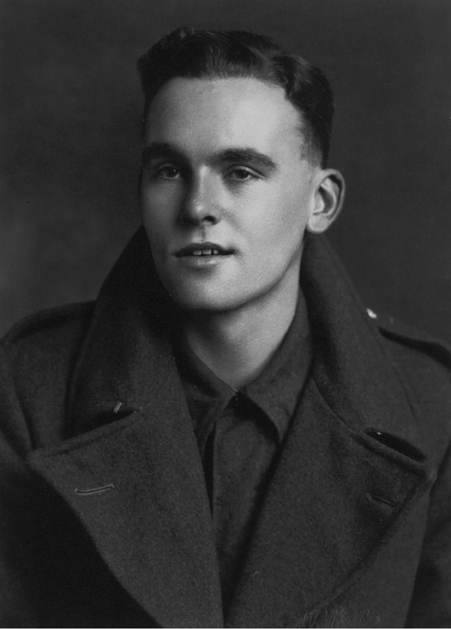
This week’s poem is from Alun Lewis: Collected Poems, edited by Cary Archard, to celebrate Lewis’s centenary earlier this week. Lewis was one of the most compelling writers of the Second World War, whose premature death in 1944 – when he was only 28 – was a grave loss to Britain’s literature community.

For more information about Lewis, check out his website and find out everything you need to know about the continuing centenary celebrations on Twitter.

In Hospital: Poona

Last night I did not fight for sleep
But lay awake from midnight while the world
Turned its slow features to the moving deep
Of darkness, till I knew that you were furled,

Beloved, in the same dark watch as I.
And sixty degrees of longitude beside
Vanished as though a swan in ecstasy
Had spanned the distance from your sleeping side.

And like to swan or moon the whole of Wales
Glided within the parish of my care:
I saw the green tide leap on Cardigan,
Your red yacht riding like a legend there,
And the great mountains, Dafydd and Llewelyn,
Plynlimmon, Cader Idris and Eryri
Threshing the darkness back from head and fin,
And also the small nameless mining valley

Whose slopes are scratched with streets and
sprawling graves
Dark in the lap of firwoods and great boulders
Where you lay waiting, listening to the waves-
My hot hands touched your white despondent shoulders

– And then ten thousand miles of daylight grew
Between us, and I heard the wild daws crake
In India’s starving throat; whereat I knew
That Time upon the heart can break
But love survives the venom of the snake.

Order Alun Lewis: Collected Poems from our website.

Posted on

The Centenary of Alun Lewis

100 years ago today, the 1st July 1915, Alun Lewis was born. No one could have known then that he would grow into one of the most remarkable writers of the Second World War, nor that he would die under tragic circumstances at just 28 years old.

Though short, Lewis’s life was tumultuous; he was a talented academic, a gifted writer, a depressive personality, and a pacifist by nature who was faced with a war against fascism. And yet despite all that there aren’t many outside of Wales who’ve even heard his name.

At Seren, that’s something we’ve been trying to change this year.

So if you’d like to celebrate the centenary of this outstanding writer, come and join us in Aberdare today for a whole array of celebrations including the unveiling of a Royal Welsh Regiment blue plaque, re-dedications of the Lewis Bronze in Aberdare Library, an address by National Poet Gillian Clarke, and a reading of Lewis’s poetry by Brigadier Philip Napier as well as contributions from local schools.

Join us at 10:30am at Glynhafod Junior School from where the celebrations will begin, and help us to mark this occasion and remember one of the greatest writers Wales has ever produced.

Order Alun Lewis’s work from our website.

Posted on

Celebrate Alun Lewis with Seren!

July 1st marked the official centenary of Alun Lewis, the greatest writer of the Second World War, and you can join us as we continue our celebrations throughout the rest of the year!
Though the official centenary is now over that doesn’t mean the celebrations have stopped, we still have plenty planned for the rest of 2015. If you’d like to know what else we have in store, check out the Events Page on the Alun Lewis website and don’t forget to follow the official centenary accounts on Twitter and Facebook.

Posted on

Friday Poem – Moving In

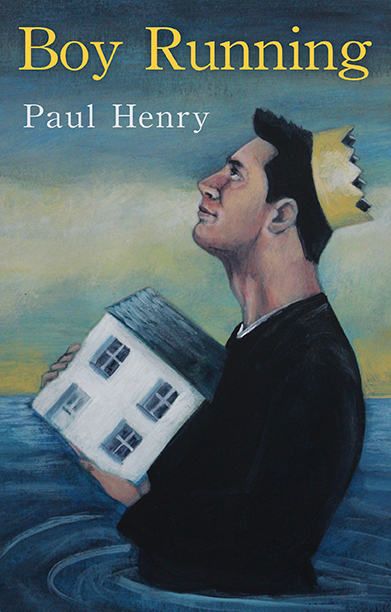
Boy Running, Paul Henry

This week’s poem is all about books, in celebration of Independent Bookshop Week 2015! ‘Moving In’ is from Paul Henry’s latest collection, Boy Running, published earlier this year. Earlier this week Paul read at Griffin Books, an independent bookshop in Penarth, and today he and fellow Seren poet Jonathan Edwards are reading some of their poetry at the NATE conference in Newcastle-upon-Tyne.

Paul Henry has gained a reputation as one of of the best poets in the UK. Boy Running is his beautiful sixth collection and the first to follow  ‘The Brittle Sea: New and Selected Poems’. We begin in a ‘Studio Flat’. Cut adrift by marital break-up, the poet must sort through the emotional fallout and the various ‘chattels’ left behind; a sea of characteristic props: tables, lamps, metronomes, pianos, guitars. The poet’s sons are at the heart of this section where pathos is balanced by humour amidst the characters of a small country town.

A second section moves to the Welsh coastal town of Henry’s childhood, Aberystywth, opening with a long poem, ‘Kicking the Stone’ set in the summer of 1969. Also in this section are some familiar characters from earlier poems such as Brown Helen and Catrin Sands.

In the final sequence we meet ‘Davy Blackrock’: washed-up songwriter and modern day alter ego of Dafydd y Garreg Wen (David of the White Rock), alias David Owen (1720-1749), the blind, 18th century harpist and composer who fell asleep on a hill and dreamt the famous song which bears his name. In contrast to David of the White Rock, Davy Blackrock, ‘star of an ashen town’, drags his guitar from street to hotel to bedsit, an unsettled ghost who dreams of the perfect song.

Moving In

I cannot see the flowers at my feet…
Keats – ‘Ode to a Nightingale.’

They look and wonder what they’re doing here,
those who’ve moved with me across the years –
Dylan Thomas, Picasso, Nightingale Ann,
Goble, David Trevorrow, young Fanny Brawne…
all strewn about this flat where I hide.
(Did I dream, last night, of a tide
laying its artefacts on sand?) They stare
but do not judge, or change, or care.

Dylan’s just opened Manhattan’s cigar box.
‘Try one,’ he says, ‘before you die. Fuck books.’
Pablo’s still pushing against his pane.
He listens for a nightingale in vain.
Goble tilts back in his top hat.
He and Trevorrow could not have shared a flat
but I loved them both, and Fanny Brawne.
There are crows on my roof. The light has gone.

Order Boy Running from our website.

Posted on

Independent Bookshop Week 2015

ibw2
This week it’s Independent Bookshop Week! But I’m sure you already knew that, because you’re all good eggs.

From the 20th-27th June it’s Independent Bookshop Week in Britain and Ireland. Part of the Books Are My Bag campaign, the celebrations include reading groups, author signings, and literary lunches, amongst other things, all across the country, with the aim of encouraging people to visit, and buy from, their local independent bookshop.

And you can join in!

Seren are an independent publishing house, and as such we’re delighted to have the chance to celebrate Britain’s independent bookshops. So if you’re feeling especially supportive when you pop down to your independent bookshop of choice this week, why not buy a book published by an independent publisher, too?

Here are some of our favourite independent bookshops, many of whom stock Seren titles!

Richard Booth’s Bookshop, Hay-on-Wye

Twitter
Facebook

Palas Print, Caernarfon

Twitter
Facebook

The Hours, Brecon

Twitter
Facebook

Griffin Books, Penarth

Twitter
Facebook

Book-ish, Crickhowell

Twitter
Facebook

Books & Pontyclun, Pontyclun

Twitter
Facebook

The Chepstow Bookshop, Chepstow

Twitter
Facebook

Cover to Cover, Swansea

Twitter
Facebook

Rossiter Books, Ross-on-Wye

Twitter
Facebook

Booka Bookshop, Oswestry

Twitter
Facebook

Burway Books, Church Stretton

Twitter
Facebook

Find out more about Independent Bookshop Week by following the campaign on Twitter at @IndieBound_UK, and don’t forget to follow us at @SerenBooks, too!

Posted on

Independent Bookshop Week

20th-27th June, 2015 marks the annual celebration of Independent Bookshop Week in Britain and Ireland.
Part of the Books Are My Bag campaign, the celebrations include reading groups, author signings, and literary lunches amongst other things, and aim to encourage more people to visit, and buy from, their local independent bookshops. Keep an eye on the Seren Blog to find out which independent bookshops stock our titles!
Follow the celebrations on Twitter at @IndieBound_UK

Posted on

Friday Poem – Bob’s Dogs

Red Devon by Hilary Menos

This week’s poem is from Hilary Menos’s Red Devon, first published in 2013.

In the late 90’s the poet Hilary Menos moved from Camden Town in London to a farmhouse two miles from a small village in Devon. Over the next ten years, together with her husband Andy Brodie and three sons, she turned this into a 100 acre organic farm with a herd of pedigree Red Devon cows and a flock of Wiltshire Horn sheep.

In Red Devon, her second collection, Menos reveals her experiences as a “blow in” from upcountry moving into a tight-knit rural community and seeing at first hand some of the human and animal costs of the conflict between traditional farming methods and the demands of modern commercial agriculture. She also tells the story of a burgeoning love affair between farmer Grunt Garvey and haulier Jo Tucker, a romance which ends in tragedy. Alongside these two stories, one fictional and one very real, runs a concern for farmers around the world whose livelihoods – and lives – are threatened by global changes in agriculture.

Bob’s Dogs

There was the one dog, neither use nor ornament.
Each morning he lurked by the tanker’s dribbling spout
licking his chops. Spawned every cur in the district.
Bit the postman, once, and got away with it.

There was the other dog, two-bit brother to the first,
eyes like spilt milk. Danced on the slurry pit’s crust
one time too many, said Bob, and no good since.
Bit the builder’s foreman twice, and got away with it.

There was the third dog, each month went walk about
under a chicken moon, fetching and shedding stars.
Deaf to everyone but Bob’s dad, now four years
bed-bound. What shall I say? Bit nobody, yet.

And lastly there was the bitch. Bit the child.
The four shots blew through the lanes and echoed loud
in the neighbour’s eyes. Only Bob shook my hand,
hitching his trousers up with a “Welcome, my friend.”

Order Red Devon from our website.

Posted on

Kim Moore shortlisted for Forward Prize for Best Single Poem

Kim Moore’s poem ‘In That Year’ has been shortlisted for the Forward Prize. The judging panel includes BBC producer Emma Harding and the poets Colette Bryce, Carrie Etter and Warsan Shire, the first Young Poet Laureate for London. The prizes will be awarded at Southbank Centre on Monday 28th September and the 24th annual Forward Book of Poetry, containing the judges’ choice of the year’s poems will be launched on the same day, 

Posted on

Friday Poem – On Becoming a Fish

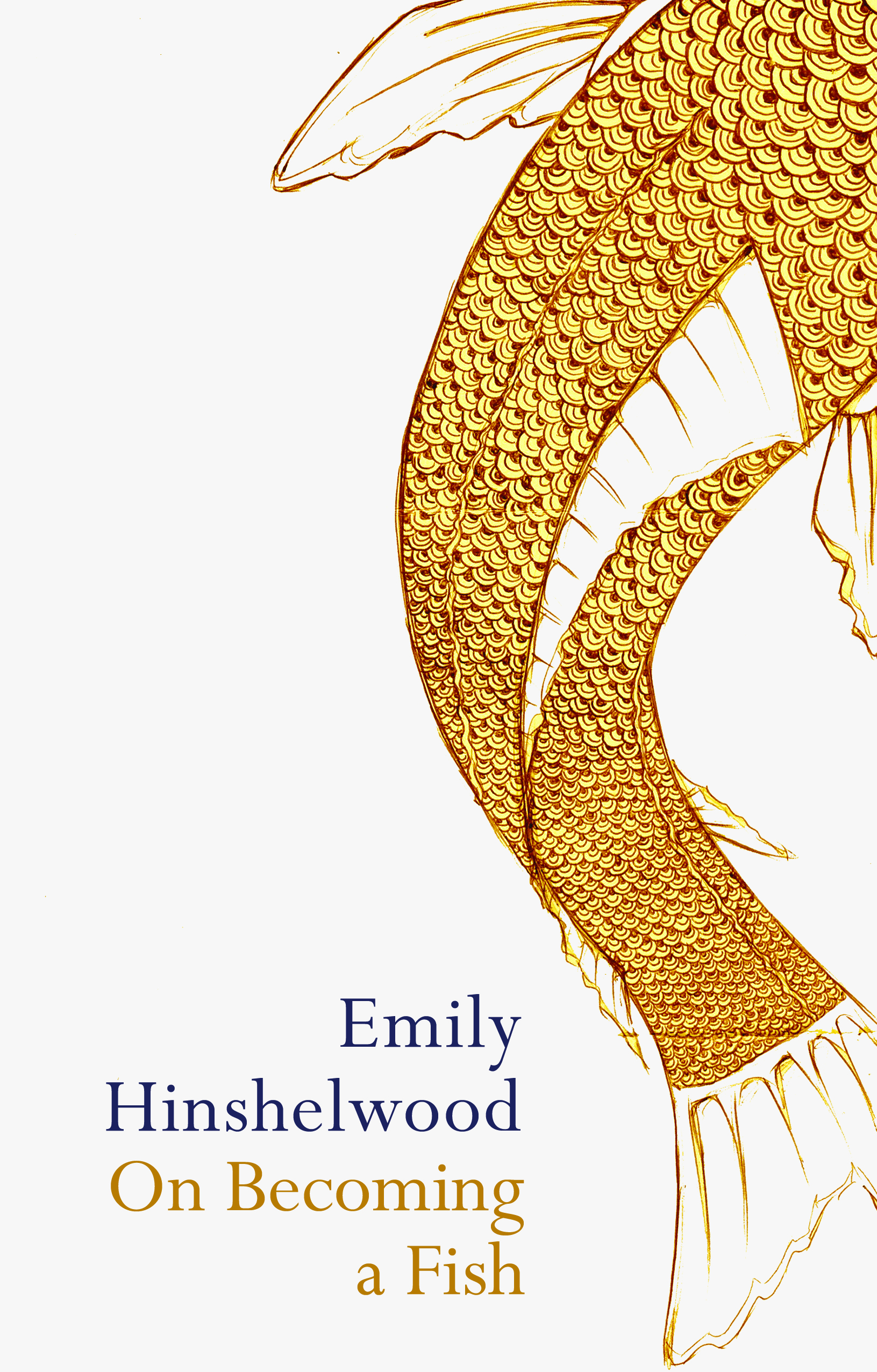
This week’s poem is from Emily Hinshelwood’s second collection, On Becoming a Fish, published in 2012.

Emily Hinshelwood’s On Becoming a Fish was inspired by a series of walks around the 186 mile Pembrokeshire coastal path in West Wales, known for its spectacular views from cliffside paths skirting the Irish sea and the Bristol Channel. Deeply engaged with environmental issues through her work in community energy and climate change, the author is also a keen observer of human nature in the context of this beautiful coastline.

The poems feature: ghosts, quarries, shipwrecks, pirates, fishermen, sailors; the remnants of industrial industry as well as monuments from the past: neolithic burial sites, forts, caves, graves, memorials. Also present are characters conjured from history such as the ‘four hundred Welsh Women wearing stovepipe hats’ who foiled the last invasion of Britain at Carregwastad in 1797, as well as contemporary encounters: a retired fisherman, lifeboat crew, a lighthouse keeper and a skinny dipper.

The author says: “This collection explores ‘what happens at the boundary’ – not just the topographical boundary of sea meeting land – but the concept of boundary in itself: political borders, social barriers, environmental limits, historical divisions; the boundary between fact and fiction, between you and I.”

On Becoming a Fish

Milford Haven

Tales of the sea didn’t prepare me for this.
It all seemed so Jack Sparrow, so Barti Du,
perhaps a mermaid flung on a rock,
whales. Jonah.
You know what I mean.
Even the fish stall with its ice trays
and neat lines of flat eyes, even he spins yarns
as he slices heads into a bucket.

When you stop coming up for air,
when your lungs implode to a stillness
all that talking ceases.
All that endless talking.
And you half-remember poking
at a lobster with rubberbanded claws
noting how prehistoric it was
and someone said something about the future.

Sounds now are just noise
against my body.
This is my story.
I keep telling it over and over.
For it’s just me
defying gravity.
The swish of my tail
darting.

It’s starting to feel like I’m dancing.

Order On Becoming a Fish from our website.

Posted on

What Editors Want – Poetry

This year we’re doing a series of blog posts on what editors in the publishing world are looking for. In February we heard from our fiction editor, Penny Thomas, and today our poetry editor, Amy Wack, lets us know what she looks for in submissions.

Dazzle me.

Isn’t this what everyone wants out of art? I want the book that makes me sit up at my desk, that makes my skull tingle, that intrigues and enlightens me, that seduces me with a fiercely intelligent music.

There is also a sense that someone has put the hours in. This is the 10,000 hours that it takes to become proficient at any art or skill. It involves a lot of reading, thinking and writing every day, often for something like a decade.

Sometimes, a writer will show evidence of talent or flair, but just hasn’t put the hours in yet. Sometimes a writer will show evidence of having put the hours in, but they need something else, that elusive spark that ignites language with feeling and relevance.

Some artists are gifted (or cursed) with a strong, sometimes tragic subject matter: a dark past, a difficult childhood, a divorce, or death, a powerfully dark story. These poems can feel like they’ve come from a pressure-cooker. There is a powerful sense of inevitability about them. They aren’t just asking for our attention, they are compelling it.

Others are gifted with a more work-a-day talent, are slow burners, and their work will build in layers, become more consistent, and over time will come to encompass a distinctive body of work. They have the luck of not needing tragedy to evolve.

Do I really need to say anything about presentation? White paper, black ink, one page cover letter, large return envelope, enough return postage. Get poems in magazines before you dream of approaching a publisher. Get used to multiple rejections. Do not take it personally. Keep your day job. Be polite to the Editor, be polite to staff.

I love classical poetic form and rhyme used well. But I also liked to be surprised out of my inclinations and persuaded by new forms. I also really like poems that speak to the average reader and not just to some esoteric coeterie, so I have time for the whole spoken-word scene, as I feel like this is entirely the point of poetry.

So, speak some words to me!

Amy Wack, Poetry Editor