Posted on

Friday Poem – Darling, Would You Please Pick up those Books?

friday poem kathryn maris god loves you

This week’s Friday Poem is one of Poetry Editor Amy Wack’s ‘favourite sestinas of all time’ and is taken from God Loves You by Kathryn Maris.

Friday Poem Kathryn Maris God Loves YouKathryn Maris borrows rhythms, vocabulary and themes from the Bible in this collection of poems. The result is more than artful parody, although a sly wit is in evidence. It is an approach that accommodates large themes, unravelling them in new ways.
The first section, ‘What will the neighbours think?, is a kaleidoscopic view of the sins and sinners of the modern city and opens, appropriately enough, with a vision of a flood to rival Noah’s. The poems feature domestic discord, gossip, suicide, celebrity and anxiety about the safety and behaviour of children and spouses. It says much about this poet’s meticulous poise and tone that we are lured into these scenarios with our sympathies fully engaged. The following sections subvert scripture more directly. A skilful use of form is characteristic, as in the sestina ‘Darling, Will You Please Pick up those Books?’ Other pieces are set out in the numbered style of psalms or parables but have an entirely contemporary edge.


Darling, Would You Please Pick up those Books?

How many times do I have to say
get rid of the books off the goddamn floor
do you have any idea how it feels
to step over books you wrote about her
bloody hell you sadist what kind of man
are you all day long those fucking books

in my way for 3 years your acclaimed books
tell me now what do you have to say
for yourself you think you’re such a man
silent brooding pondering at the floor
pretending you’re bored when I mention her
fine change the subject ask ‘Do I feel

like I need more medication’ NO I don’t feel
like I need more medication it’s the books
don’t you see don’t you see it’s her
why don’t you listen to anything I say
and for God’s sake books on the floor
are a safety hazard remember that man

from Cork who nearly died fine that man
fell over a hurley not a book but I don’t feel
you’re getting the point the point is that a floor
is not an intelligent place for books
books I have to see and books that say
exactly where and how you shagged her

what shirt she wore before you shagged her
I can write a book too about some man
better still about you I can say
something to demonize you how would you feel
about that ha ha why don’t I write a book
about how I hoover your sodding floor

and how you’ve never once hoovered your floor
why can’t I be a muse why can’t I be a ‘her’
what does one have to do to be in a book
around here do I have to be dead for a man
to write me a poem how do you think it feels
to be non-muse material can’t you say

you feel for me what you felt for her
can’t you say I’m better than that woman
can’t you get those books off the floor?

Buy your copy of God Loves You from our website. Sign up to be a Seren Book Club member to claim 20% off.


Posted on

Richard Collins: My Experience of Parkinson’s Disease

Set aside thirty minutes to watch author Richard Collins’ honest, moving and sometimes humorous video about his experience of suffering from Parkinson’s disease. About the video, he says: ‘I hope that it will give people a better understanding of this entertaining illness.’

Collins’ diagnosis in 2006 led to some years of extensive travelling, in the Himalayas, the Andes, the Middle East and North Africa, which he recorded in The Road to Zagora (Seren, 2015), a wonderful combination of travel and memoir. But a decade later Richard’s situation has worsened and he has moved from writing to making this video in which horizons have closed in and he has become more reliant on himself, and others. This is a revealing glimpse into a world we seldom see in person. You’ll learn about Mr Parkinson (as Collins calls his condition), about Richard’s enduring left-fielded take on life and, quite possibly, a little about yourself.


The Road to ZagoraYou can buy The Road to Zagora from our website. Sign up to the Seren Book Club for 20% off.

Posted on

Commissioned words by Grahame Davies performed at National Assembly Opening

The Fifth National Assembly for Wales on June 7th at The Senedd featured a specially commissioned musical composition by Prof. Paul Mealor, set to the words of Dr Grahame Davies “Wrth ddŵr a thân”, performed by the National Youth Choir of Wales.
The ceremony was attended by Her Majesty The Queen, His Royal Highness The Duke of Edinburgh, His Royal Highness The Prince of Wales and Her Royal Highness The Duchess of Cornwall, as well as Assembly Members and representatives from across Wales.
Find out more on the National Assembly for Wales website.

Posted on

Friday Poem – On Standby

Friday Poem On Standby from Animal People by Carol Rumens

This week’s Friday Poem is taken from Carol Rumens’ hot-off-the-press new collection, Animal People.

Friday Poem On Standby from Animal People by Carol RumensAs the author says in her brief introduction, ‘the vertebrae of this collection are the seasons of a sometimes Welsh and sometimes English year.’ Rumens’ poems are frequently inspired by places, either wild landscapes as in ‘Fire, Stone, Snowdonia’ or urban scenes as in ‘March Morning, Pearson Park’. But just as often a setting will be a pretext for a theme that has a political, sociological, aesthetic, philosophical or even metaphysical focus. The striking ten-page title poem explores some of the effects and affects of Autistic Spectrum Disorder (ASD), focusing particularly on Asperger’s Syndrome and how it may be experienced by young women. Rumens opens up this topic with all her characteristic energy, empathy and curiosity.
This is a beautifully intelligent collection of poetry, sure to delight and inspire.

Friday Poem On Standby Carol Rumens


Buy your copy of Animal People now, 20% off on our website for Book Club members.


Posted on

Books for your Summer Break

Books for your Summer Break

The warm weather has arrived so here at Seren we’ve been thinking about books for your summer break. Which titles do we recommend stuffing into your suitcase? Read on to find out our top picks.

1. Swimming on Dry Land, Helen Blackhurst
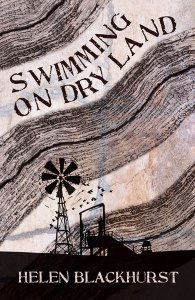
swimming_on_dry_land_72Set in the blistering Australian outback, Blackhurst’s writing is so vivid that even if (like us) you’re experiencing mild Welsh weather, you might start to feel the prickling heat she conjures.
Swimming on Dry Land tells the story of the Harvey family, who move to the fictional mining town of Akarula in outback Australia in search of paradise, and instead find deceit, mystery and superstition. Georgie, the youngest, is missing – and she’s not the first to vanish into the landscape. As the family searches for their lost daughter, their dream-like vision of life in Akarula collapses around them. And as the history of the landscape unfolds, new possibilities and answers to the mysterious disappearances slowly suggest themselves.

2. The Road to Zagora, Richard Collins
The Road to ZagoraAfter he is diagnosed with Parkinson’s Disease, Richard Collins decides to see as much of the world as possible while he still can. India, Nepal, Turkey, Morocco, Peru, Equador and even our very own Wales – Collins travels to them all, taking each day as it comes, accompanied by his partner Flic, as well as ‘Mr Parkinson’. Leaving the tourist trails, they visit places of extremes: the Himalayas, rainforests, deserts. The difficulties of rough terrain, altitude, extremes of climate for a person with Collins’ condition are an ongoing strand of his narrative; but although the hardships aren’t ignored, any sentiment or self-pity is denied through Collins’s resolute and independent-mindedness.
The Road to Zagora is dramatic, honest, and at times humerous too. Collins has written a memorable journey around the world, and the self.

3. The Man at the Corner Table, Rosie Shepperd
the man at the corner table rosie shepperdIn these poems the voice is one of urban sophistication; it has a merciless charm that teases and tempts us with sensual evocations of food and place.
Tastes, scents, colours and textures surprise and entice, and there is a winning insistence on detail offered with an irony that blends into satire.
Comedy, grief and loss combine like the distinct yet complimentary flavours in a dish – these poems are exquisite meals, to be devoured amidst surprising intimacies.

4. Foreign Bodies, Candy Neubert
foreign bodiesFresh from the UK and on an idyllic holiday in the Phillippines, Emma thinks she has fallen in love with a place, a person, and pursues the man of her dreams with a colonial zeal. But for all her poetic sensibilities, she seems unaware of the destruction she is capable of leaving in her wake.
A beautifully written first novel, Foreign Bodies explores the spaces between people, and the nature of encounters in romantic idylls on the other side of the world.

5. Dark Mermaids, Anne Lauppe-Dunbar
Dark_Mermaids_Web72It is the Olympic summer so what better time to read Anne Lauppe-Dunbar’s gripping thriller, Dark Mermaids, which tells a shocking yet enduringly familiar story of the horrors of a political system that doped its youngsters to sporting superhero status, and then left them to fend for themselves.
Dark Mermaids follows West Berlin police officer Sophia as she is called to investigate the murder of her childhood friend Käthe. The search for Käthe’s killer draws Sophia back into her abusive past as a child swimming star in the former GDR, and as the web of half-remembered horrors starts to unravel, those close to Sophia begin to take notice. There are some who still have much to hide, and they will go to great lengths to stop their secrets from surfacing.
Dark Mermaids was shortlisted for the Cross Sports Book Awards, 2016.

6. The Roots of Rock, Peter Finch
The Roots of Rock, from Cardiff to Mississippi and BackFrom 1950s Cardiff suburbia to modern-day America and beyond, Peter Finch follows the trail of twentieth century popular music. The Roots of Rock: from Cardiff to Mississippi and Back mixes musical autobiography with an exploration of the physical places from which this music comes.
Finch gives us sharp-eyed accounts of gigs from Champion Jack Dupree to the Garth Mountain Boys, muses on the importance of the Dansette record player, ponders why Elvis never came to Wales (except multiply in Porthcawl’s legendary Elvis Festival), visits musical shrines and theme parks, and even recalls his own attempt to start a band. You’ll find all kinds of music here – everyone from Ray Charles to Taylor Swift – and each chapter is accompanied by a multi-track playlist, making this the perfect book for anyone who loves music, history, and culture.

7. A Boat Called Annalise, Lynne Hjelmgaard
A Boat Called Annalise Lynne HjelmgaardBeautifully evocative of life on a sailboat, Lynne Hjelmgaard’s poems trace a journey this much-travelled author took on a sailboat to the Caribbean and back to Europe with her husband.
The couple’s relationship is poised on tensions, beautifully observed, as masculine/ feminine, the need to assert and/or withdraw in the face of the turbulent seascape. The paradise-like destination is reached and later we learn that life goes on, there is illness and loss, and in the final section, the tone becomes movingly elegiac.
Hjelmgaard’s poems are beautifully poised, full of clear-eyed and frequently humorous observations. Her work is full of sentiment without being sentimental. We hope you enjoy your trip on A Boat Called Annalise.

We hope you like our summer selections. And if you’re struggling to fit all the books that have caught your eye into your suitcase, why not explore our range of eBooks? Whether you have a Kindle, a Kobo or any other e-reader, we have a whole host of books you can download instantly. See below for the latest digital additions to our list…

Losing IsraelLosing Israel, Jasmine Donahaye
Amazon: £10.00
Kobo: £7.19
In Losing Israel the search for her family’s past and the part her forebears played in the newly created Israel reveals unsettling knowledge about kibbutzim and land clearances in northern Israel. Challenged by this new and unwonted information, Donahaye’s notion of history and her understanding of Israel, of her grandparents and of her identity is completely transformed.
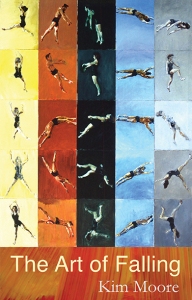
The Art of Falling Kim MooreThe Art of Falling, Kim Moore
Amazon: £9.48
Kobo: £7.19
“The poems of The Art of Falling are fearless. There are more good poems filling Kim Moore’s first collection than many poets will produce in a lifetime.” – Alison Brackenbury
In this startling debut, Kim Moore writes with a compelling directness and power about her life and the lives of others.

The World, The Lizard and Me - Gil CourtemancheThe World, the Lizard and Me, Gil Courtemanche
Amazon: £9.48
Kobo: £7.19
A novel of testament to the children caught up in the civil wars of Central Africa, The World, the Lizard and Me follows criminal invetigator Claude Tremblay as he pursues a warlord charged with creating child soldiers in the Congo.


Want to see more Seren eBooks? See our full eBook list on Kobo or search by title on Amazon.

Posted on

Friday Poem – Borderland

friday poem borderland christopher meredith

Yesterday marked the beginning of the week-long Hay Festival, where writers from around the world gather in the staggering beauty of the Welsh borders to debate, read, share stories and inspire – among them, Tom Bullough with his new novel, Addlands (Granta).

As a nod to Hay, our Friday poem is ‘Borderland’ from Air Histories by Christopher Meredith. ‘Borderland’ and Air Histories had a significant influence on Tom Bullough’s new Radnorshire-set novel, Addlands.

air_historiesChristopher Meredith’s Air Histories starts in the Stone Age and ends in the future. It’s marked by formal diversity and a wide range of subjects, with the personal alongside the impersonal and the experimental alongside well-known forms, as well as including some translations from the Welsh. Throughout it engages the rich meanings of its title, touching on the elemental and on historical time, as well as music and story, meditating on human creativity and its fallibilities from knapping an arrowhead to playing the fiddle or making a guitar. Nature is a touchstone, particularly the Black Mountains, near the author’s home, but also often seen ‘aslant’ as in ‘Seeing the Birds’ where sparrows seem suddenly fierce as eagles.


Borderland

Ffin is the Welsh for border. It occurs inside diffiniad which means definition, and in Capel y Ffin, a place in the Black Mountains.

You’ll find a ffin inside each definition.
We see what is when we see what it’s not:
edges are where meanings happen.

On the black whaleback of this mountain
earth curves away so sky can start
to show a ffin’s a kind of definition

where skylarks climb across earth’s turn
to air and pulsing muscle turns to an art-
ful song the edge that lets a meaning happen.

Live rock can yield to mortared stone,
a city to a castle, then a shepherd’s hut,
where ffin’s contained inside a definition,

where the lithic turns into the human.
Here’s where things fall together, not apart
at edges that let meanings happen.

And self here blurs into annihilation.
Larkfall, earthfall, skyfall, manfall each create
the ffin that is the place of definition
the edges where we see our meanings happen.


Buy your copy of Air Histories now, 20% off for Book Club Members.

Posted on

Wales Book of the Year shortlist

Two Seren authors feature on the shortlist for Wales Book of the Year 2016. Paul Henry’s poetry collection Boy Running is up for the Roland Mathias Poetry Award, while Jasmine Donahaye is shortlisted for the Open University in Wales Creative Non-Fiction Award with Losing Israel.
Winners of the Poetry, Non-Fiction and Fiction Categories, and the overall Wales Book of the Year Winner, will be announced on Thursday 21 July at The Redhouse, Merthyr Tydfil. Full details of all the shortlisted books, English- and Welsh-language, can be found on the Literature Wales website http://www.literaturewales.org/news/i/147350/

Posted on

Happy 75th Birthday, Bob Dylan

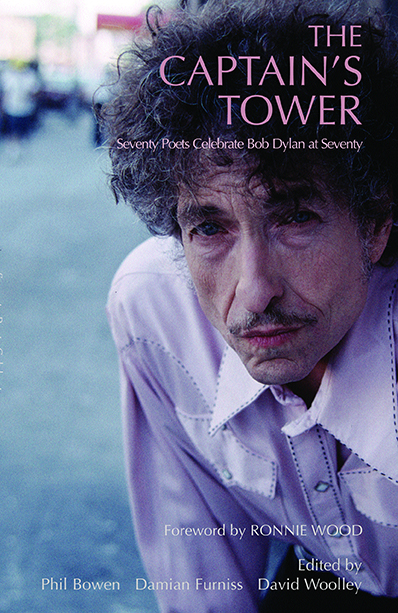
Bob Dylan was 75 last Tuesday 24 May. What better way to celebrate than in the company of great writers who have responded to his creative genius with poetry of their own. The Captain’s Tower includes poems from Allen Ginsberg, Lachlan Mackinnon, Matthew Sweeney, Jeremy Reed, Linda Chase, Linda France, Roger McGough, Paul Muldoon, Simon Armitage,  Peter Finch and many more. Perfect reading for ardent Dylan fans.

Posted on

Friday Poem – Suturing Secrets

Ilse Pedler The Dogs that Chase Bicycle Wheels Mslexia pamphlet

This week’s Friday Poem is taken from Ilse Pedler’s new poetry pamphlet The Dogs that Chase Bicycle Wheels.

The Dogs that Chase Bicycle Wheels Ilse Pedler Friday PoemIlse Pedler’s marvelous debut poetry booklet, The Dogs that Chase Bicycle Wheels, won the 2015 Mslexia Poetry Pamphlet Competition. Many of her poems are about animals and how they interact with humans, and reflect her working life as a Veterinary Surgeon. Pedler has a careful, empathetic eye for the characteristics of the animals she comes across. Humans and their secrets are also observed, with a sharp wryness but also with a characteristic gentleness.


Suturing Secrets

We are divided into compartments,
separated by taut membranes,

glistening planes of connective tissue,
resilient boundaries. 

Today this is damaged,
anaesthetized, surgically explored

your diaphragm is a torn curtain hanging
and like a peep show I’m drawn to look behind. 

In the absence of pressure lungs hesitate
to inflate, do their best to conceal 

the frantic convulsions at your core,
the struggle for rebirth every second.

I look perhaps longer than I should
at the shuddering flesh, the labouring

beauty, then I pull the curtain back over
and suture the secret inside.

Buy your copy of The Dogs that Chase Bicycle Wheels now, 20% off for Book Club members.

Posted on

Remembering Leigh Roose – ‘The Prince of Goalkeepers’

Remembering Leigh Roose

It’s Euro 2016 and Wales is in the finals! Historian Mike Rees looks back into Wales’ sporting history to remember goalkeeping legend Leigh Roose, who found glory on the football field and died a hundred years ago, at the Somme.

Mike Rees’  book Men who Played the Game looks at the development and importance of sport in Britain and the Empire leading up to the outbreak of the First World War, and the part played by sportsmen in the conflict.

On the eve of Wales’s participation in the finals of a major international football tournament for the first time since 1958, it is likely many of you may be reflecting on past glories achieved by Welshmen on the football field.
You might well consider the achievements of Wales first ‘football superstar’ Billy Meredith, talisman of both Manchester City and Manchester United in the early years of the twentieth century or the ‘Gentle Giant’ that was John Charles, revered from Swansea to Turin where he won multiple league championships and cups as the focal point of a brilliant Juventus team. More likely, you’ll consider the incomparable Ryan Giggs, with his sack full of medals, or the striking prowess of Ian Rush or Mark Hughes. But as Gareth Bale, the latest Welsh superstar, graces the football stadiums of France this summer how many will remember Leigh Roose, the first renowned Wales goalkeeper and predecessor of Jack Kelsey in 1958 or Neville Southall in the 1980’s and ‘90’s? As we move towards the centenary of Roose’s demise on the battlefields of the Somme, perhaps it is time to ensure that a new generation is made aware of the exploits of this remarkable Welshman.

Remembering Leigh RooseThe process of remembering Leigh Roose has already begun. Pupils from Wrexham are creating a collage with a particular focus on his part in the first international match to be caught on film, the game between Wales and Ireland at the Racecourse, Wrexham on 2nd April 1906. This will be displayed in Eagles Meadow shopping centre, Wrexham and bring his name to many for the first time – recognition that is long overdue.

Leigh Richmond Roose was born at Holt, near Wrexham on 26th November 1877, the son of a Presbyterian minister, the fourth of five boys. Despite losing his mother to cancer at the age of four, he had a comfortable middle class upbringing which led to him gaining a degree in Bacteriology from UCW Aberystwyth in 1899. Leigh enjoyed his time at ‘Aber’, particularly his experience of playing for the town football team in his favourite position, that of goalkeeper. So successful was he that in February 1900 he was chosen to play for Wales in the match against Ireland, the first of his 24 caps. A host of professional clubs sought his signature but by now Leigh was working in King’s College, London, fully intending to pursue a medical career. In the summer of 1901, however, he relented and signed for Stoke.

It was not long before this six foot, thirteen stone athlete made his mark. He became known for his reckless bravery, total dominance of his penalty area, his startling reflexes and resulting shot-stopping. Playing often as a modern day sweeper, Leigh left the confines of his area to start attacks, carrying the ball to the half way line, as he was permitted to do. So effective was this tactic that in 1912 the laws were changed in order to prevent goalkeepers handling the ball outside the penalty area. Leigh was also prepared to impose himself in other ways. It was not uncommon for him to be involved in the occasional scuffle or dispute with authority, sometimes over his travel expenses, on other occasions, disputes with the opposition. Leigh was also an entertainer – his gymnastic ability used to swing from the crossbar when things were quiet at his end of the pitch. Crowds loved him, even more so when Wales won their first Home International championship in 1907. Although top league and cup medals eluded him, Leigh was always challenging for honours at Everton from 1904 and later at Sunderland. He became one of the country’s best known footballers whose lifestyle as an eligible young man in Savile Row suits predates David Beckham by ninety years. His affair with the ‘Queen of the Music Hall’, Marie Lloyd would delight the tabloids of the 21st century. However nothing lasts for ever and, following a spell as player coach at Arsenal, Leigh retired to his medical commitments and the after dinner circuit in 1912.

When war broke out Leigh joined the Royal Army Medical Corps and was quickly despatched to the Dardanelles where he served in Gallipoli. Here he worked in hospitals treating hundreds of serviceman injured in that futile encounter. However Leigh wanted to see the action for himself and, following his return to London, he joined the 9th Battalion of the Royal Fusiliers. His wish for action was soon granted. Leigh was awarded the Military Medal after he had taken part in the capture of Ration Trench near Dainville and the subsequent resistance to the German counter-attack. In October 1916 Leigh was once again in action. The 9th Royal Fusiliers advanced on the Albert-Bapaume Road and this led to the capture of Le Sars but the cost was disastrous. Three hundred and thirty two officers and private soldiers were killed or injured in the action. Leigh was seen running across No Man’s Land firing his gun with no concern for his own safety. He was last seen lying in a crater, probably already dead. Leigh’s body was never discovered and he is remembered, his name engraved and incorrectly spelt, on the Thiepval Memorial to the missing. Thirty eight year old Leigh is one of the 72,000 names remembered on that most impressive of memorials.

Leigh’s death was keenly felt by all who knew him. Mike Rees, in his recent book Men Who Played the Game, quotes the Athletic Times which described him as “dexterous though daring, valiant though volatile”. But Rees also concludes that this is only part of the story and that Leigh Roose, along with Billy Meredith, did more to put Welsh football on the map than any other player. That, coupled with his ability to entertain thousands of spectators, demands that he be remembered as a sportsman of real significance, one who died as bravely as he played. During this summer of exciting Welsh football, a century after Leigh made the ultimate sacrifice, he deserves to be remembered.