Posted on

Summer Sale: Seren books half price this week

Summer Sale Half Price

Much like the nice weather, the Seren summer sale isn’t hanging around: for one week only, all our books are half price.

Seren Summer Sale books half price

Everything from poetry to novels, short stories, art, history and biography are included, and with so much choice, we thought you might like a helping hand deciding what to read next. Take a look below at our summer sale suggestions.

Best for… taking on holiday:
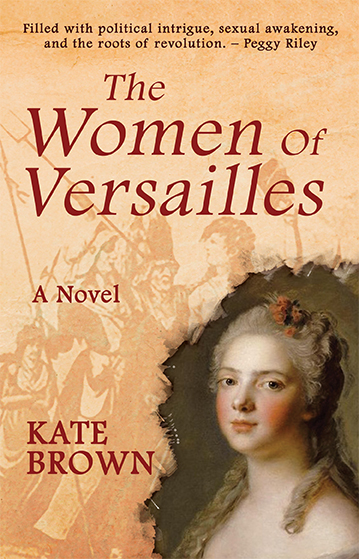
The Women of Versailles Kate BrownThe Women of Versailles by Kate Brown
£9.99 £4.99
This gripping and immersive novel tells the story of Adélaïde, daughter of King Louis XVI. Envious of her brother, bored with her sister and smitten with her father’s bourgeoise mistress, Adélaïde struggles with her budding sexuality and a desire for freedom of expression, both of which conflict with the expectations of the restrictive court of Versailles. Forty-four years later, under the looming shadow of the revolution, what has happened to the hopes of a young girl and the doomed regime in which she grew up?


Best for… devouring over lunch:
the man at the corner table rosie shepperdThe Man at the Corner Table by Rosie Shepperd
£9.99 £4.99
These poems are exquisite meals, to be consumed amidst surprising intimacies. The voice is one of urban sophistication; a merciless charm that teases and tempts us with sensual evocations of food and place. The gorgeous place settings of these poems are not just carefully delineated backdrops. They toy with our interpretations of ‘at table’. As in a Dutch master ‘tablescape’, they become symbolic of our relation to ourselves, to others and the world.


Best for… armchair reading:
Waterfalls of Stars Rosanne AlexanderWaterfalls of Stars by Rosanne Alexander
£12.99 £6.49
Rosanne Alexander paints the landscape and wildlife of isolated Skomer Island in vivid detail, drawn from her ten years spent as a warden on the uninhabited nature reserve. Waterfalls of Stars is a love-letter to this remarkable island, which is an important breeding ground for many birds, and populated by a stunning array of wildlife such as puffins, manx shearwaters, seals, and kittiwakes. With her lyrical evocation of the natural world and its enthusiastic and resourceful approach to the problems of island life, Alexander’s book is sure to inspire and entertain anyone who has felt the need for escape.


Best for… livening up a long journey:
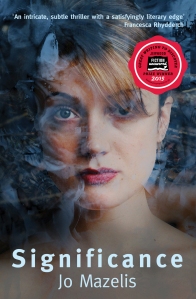
significanceSignificance by Jo Mazelis
£9.99 £4.99
Lucy Swann is trying on a new life. She’s cut and dyed her hair and bought new clothes, but only gets as far as a small town in northern France when her flight is violently cut short. When Inspector Vivier and his assistant Sabine Pelat begin their investigation, the chance encounters of her last days take on a new significance.
Jo Mazelis’ Jerwood Prize-winning novel is utterly addictive, and the cast of characters who brush ever so briefly against Lucy Swann in her last days are vividly imagined.

Best for… when you’re out and about:
Wild Places by Iolo WilliamsWild Places, Iolo Williams
£19.99 £9.99
Springwatch’s Iolo Williams picks his favourite forty nature sites in Wales and describes them in breathtaking detail, revealing rarities like the Snowdon lily and the Snowdonia hawkweed, where hares box and otters swim, where to spot dolphins and salmon, and where to see Wales’ great variety of hawks and other birds of prey. This informative and lavishly illustrated book confirms Wales’ pre-eminence as a country rich in stunning landscape inhabited in abundance by all manner of life. Take it with you on your travels, and discover all the delights of natural Wales.


Best for… broadening the mind:
Dark Land, Dark Skies, Martin GriffithsDark Land, Dark Skies by Martin Griffiiths
£12.99 £6.49
The constellations haven’t always been the province of Greek and Roman gods: ancient peoples around the world have looked up and added their particular myths to the heavens, only to have them subsumed by the Classics as the science of astronomy developed. Astronomer Martin Griffiths repopulates the night sky with figures from Welsh myths and legends, including the heroes of the Mabinogion, in this Celtic reclaimation of the night sky. Complete with star charts for the entire celestial year and 80 photographs of astronomically interesting objects, this informative guide is suitable for amateur and professional astronomers alike.


Best for… curling up with before bed:
The Tip of My Tongue Trezza AzzopardiThe Tip of My Tongue by Trezza Azzopardi
£8.99 £4.49
Enid wants a dog and wants to be a spy, but listening in on adult conversations doesn’t seem to bring her any nearer to understanding their troubled world. For all that,when times get tough and she has to stay with the Erbins, particularly her rich and spoilt cousin Geraint, she has plenty of verbal ammunition to help her fight her corner. Trezza Azzopardi transforms the heroine from The Mabinogion’s ‘Geraint and Enid’ into a brave 1970s girl from downtown Splott in Cardiff who, no matter how difficult the circumstances, always seems to get the last word. The original Enid defends her misguided husband by warning him of approaching villains, even though he has forbidden her to speak. Azzopardi’s young Enid is also unlikely to respect a gagging order.


We hope you enjoy browsing our summer sale. The half price offer ends at midnight on Sunday 23 July, so don’t delay – see what you can find before the time runs out.



Save

Save

Save

Save

Posted on

Summer Sale: Seren books half price for one week only

Summer is here and with it comes our half price sale. For one week only, enjoy 50% off our books – everything from poetry, novels, short stories, art, biography and our enduringly popular Mabinogion books are included, so what are you waiting for? Have a browse, and find some wonderful new reading material for these long Summer nights.
Sale ends midnight, Sunday 23 July.


Posted on

Friday Poem – ‘Brown Furniture’, Ellie Evans

Friday Poem Brown Furniture Ellie Evans

This week our Friday Poem is ‘Brown Furniture’ from The Ivy Hides the Fig-ripe Duchess by Ellie Evans.

Ellie Evans The Ivy Hides the Fig-ripe DuchessEllie Evans’ first and only collection, The Ivy Hides the Fig-ripe Duchess, was published in 2011, a year before Evans sadly passed away. In this exhilirating book, the author uses a surrealist palette of imagery and a tightly focused idiom, taking us on strange journeys: to the post-apocalyptic world of the title poem, or into a skewed 18th century Venice in ‘The Zograscope’. There is also a palpable delight in technique: you will find a sonnet, a villanelle, triolets and a concise free verse where she employs rhyme, half-rhyme, and subtle alliteration.
‘Brown Furniture’ doesn’t take us to strange worlds or uncanny places, but the personification of an old oak cupboard evokes the oddity of aging, its painful straining: ‘I dent the carpet … you shove and shove/ and your eyes pop.’ The surface simplicity of the poem veils deep wells of meaning.


Friday Poem Ellie Evans Brown Furniture


The Ivy Hides the Fig-ripe Duchess is availabe from the Seren website: £8.99

Join our free Book Club for 20% off every book you buy from us

Posted on

Short Story of the Month | ‘Swimming’ by Katie Munnik

Katie Munnik Swimming Short Story

July’s featured Short Story of the Month is ‘Swimming’ by Katie Munnik. Katie is a Canadian writer living in Cardiff whose prose, poetry, creative non-fiction and reviews have appeared in several magazines and anthologies; her first collection of short fiction will be published by Wild Goose this autumn. In ‘Swimming’ she paints a vivid picture of a hot day on the beach, a suggestion of something sinister hidden by the calmness of the sea.


Swimming

This is an extract. Read the full short story for free on our website.


Light and water and sand and warmth. Peace on the way here, too, which can’t be guaranteed these days. Seems of late we’re getting slammed doors and tears every day, and then I stand in the kitchen, taking long, deep breaths. It’s not as if I can’t remember what it’s like to be her age, but try convincing her of that. In such a rush to grow up. She doesn’t see how soon it will all be coming her way; how few years we have left before she’ll be leaving. We could almost count it out in months.

But not today.

Today, she is relaxed. Stretched out on a beach towel, her pale skin courting that perfect, golden glow and her nose already freckling. Long-limbed and lovely. She’s lying on her belly, reading a paperback from the library and chewing on a pencil. From time to time, she underlines something or scribbles in the margin. I’m only watching out the corner of my eye and I wonder what she’s adding to the story, but I don’t ask.

We left her dad at home, working on the new cedar deck. He’ll be sunburnt and spent when we get home, his skin covered in sawdust. He’ll be happy.

This beach is a favourite of mine. It’s not far from the city – only half an hour in the car – and we usually have the place to ourselves. My mum loved it here and used to bring us along on the bus, with a travelling rug and a thermos in the tote bag and her long hair tied back in a scarf. I’d steal her sunglasses and pull faces, pretending to be a bug, and she’d take them back and set them on top of her head, then straighten my pigtails and tell me to go collect some shells. She looked like a movie star, my mum. She’d like to be here now, I’m sure. I’d like that, too.

The sun is already hot on the sand and my skin feels tight. ‘You okay here?’ I ask, ‘I was thinking of going in for a swim.’

‘Fine, Mum.’ She doesn’t look up from the page and her voice is soft and distracted.

The sand is warm and dry under my feet. A breeze blows gently. Not enough to turn the pages of a book. The horizon looks hazy, and I wonder if it’s the heat. Does heat do that over water? I’m wondering about this when I hear a call from the dunes, so I turn to look back and there’s my daughter looking up from her book. Then I hear the crow call again. I smile, catching my mistake, and my daughter waves her hand and lets out an echoing caw. I wave back and turn again to the sea.

The water is cold, but it always is and I don’t hesitate. Step after step after step until I can lower myself in and let the water catch my weight. Long strokes pushing out, the water deepens under me. Further along the coast, there are rocky stretches and cliffs, too, but this bay is gentle and so is the sea. Everything is quiet. The birds must be further out, fishing where the water is deeper or tucked away on their cliffs to watch the world. All I can hear is the sea’s song, lapping and rippling around me.

I swim out a hundred strokes, counting with each breath.

A wave catches me with my eyes closed, mouth open, and I flip onto my back, full of sea. I spit out my breath and taste my heart in my mouth, wondering how a wave caught me unaware like that. I’m blinking now and everything shatters into reflected light as I find the surface again and try to balance, but another wave is coming, so I take a breath and tuck myself safely under the surface. The strength of the running water somersaults me and I can’t fight it. Surfacing again, I look for the next wave, but there isn’t one. The sea is flat…


Continue reading ‘Swimming’ for free here.


Posted on

Dark Mermaids shortlisted for Rubery Award

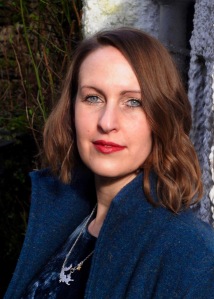
Anne Lauppe-Dunbar is a white woman with short-medium light brown hair. She is wearing glasses with clear lenses and a dark blue shirt. She is looking into the camera and smiling.

Anne Lauppe-Dunbar’s absorbing debut novel Dark Mermaids has been shortlisted for the 2017 International Rubery Book Awards, fiction category.
Set one year after the fall of the Berlin Wall, Dark Mermaids follows West Berlin police officer Sophia, who is called upon to investigate the violent death of childhood friend Käthe. As she reluctantly delves into the sordid Stasi secrets of those she grew up with, Sophia uncovers a web of horrors about her own abusive past as a child swimming star in the former GDR. But her hunt for the truth has not gone unnoticed by those close to her, people who still have too much to hide.
The category winners and 2017 Book of the Year will be announced soon. For more information see the Rubery Book Award website.


Posted on

Friday Poem – ‘To a Comrade in Arms’, Alun Lewis

Alun Lewis To a Comrade in Arms Friday Poem

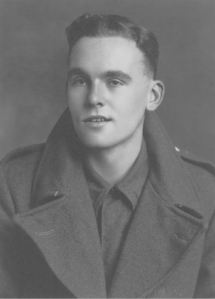
Our Friday Poem this week is ‘To a Comrade in Arms’, by our featured Legendary Author of the month, Alun Lewis.

Alun Lewis Collected Poems‘To a Comrade in Arms’ was originally published in Lewis’ first collection Raiders’ Dawn, which appeared during his period of service in Burma during World War Two. Raiders’ Dawn featured fourty-seven poems, and effectively answered the critics’ questions about the absence of war poets in that conflict. Alun Lewis is often seen as a poetic mouthpiece for the reality of the Second World War, his poetry faithfully communicating the mundane and sombre details he experienced.
In 2015, to celebrate the centenary of Lewis’ birth, we published Alun Lewis: Collected Poems, which contains this and other poems from Raiders’ Dawn, plus a selection from Ha! Ha! Among the Trumpets (1945), and uncollected poems. A body of work which has endured and which transcends the label ‘war poetry’, Collected Poems is complete in itself, and full of promise of greater things.


Friday Poem To a Comrade in Arms Alun Lewis


Alun Lewis: Collected Poems is available from the Seren website: £9.99

Join our free Book Club for 20% off every book you buy from us

Posted on

An Interview with Polly Atkin

Interview with Polly Atkin

From nature, to places we call home and poetic inspiration – today we talk to Polly Atkin about her debut collection, Basic Nest Architecture.

Polly Atkin interviewPolly Atkin lives in Cumbria. Her debut poetry pamphlet bone song (Clitheroe: Aussteiger, 2008) was shortlisted for the Michael Marks Award, 2009. Her second poetry pamphlet Shadow Dispatches (Seren, 2013) won the Mslexia Pamphlet Prize, 2012. In 2014 an extract from her first collection, Basic Nest Architecture, was awarded New Writing North’s Andrew Waterhouse Prize for ‘reflect[ing] a strong sense of place or the natural environment’. Polly has taught English and Creative Writing at Lancaster University and the Universities of Strathclyde and Cumbria.


Basic Nest Architecture Polly AtkinIn Basic Nest Architecture, the contrast between city and country, natural and unnatural, is at the forefront of many of the poems – did this theme emerge organically through the process of your writing, or was there a conscious fascination with the urban & rural you sought to explore from the outset?
I think the poems try to trouble the idea of these binaries – I’m not a fan of binaries generally; they always over-simplify – and especially the way people use terms like ‘natural’ or ‘unnatural’ or ‘rural’ or ‘urban’ to certain ends. The natural/unnatural dichotomy in particular is something that really bothers me. Natural to whom, or what? Unnatural how, and in what context?

There’s a very practical movement behind the appearance of some of those concerns in the poems – in 2006 I moved to Lancashire, and then to the Lake District – after seven years living in East London. People often think of the Lake District as a kind of little wilderness, but it’s actually one of the most populated national parks, with over 40, 000 people living within its boundaries. It contains towns and villages and a vast array of different kinds of managed lands, yet we are constantly encouraged to see it as wild and empty ‘Nature’, including by the Lake District National Park Authority themselves. People have a tendency to associate the rural with the past, and the urban with the future or with modernity. This association is as ancient as cities themselves, and hard to challenge. I don’t know what the best answers to our current environmental crises are, but re-examining some assumptions about how we live, and what we live with, seems pretty central to me. I’ve been doing that in a very small way in my own life, and I hope the poems are doing that too.

Which do you find a better source of poetic inspiration – the natural world or the urban one? Do you think your poetic style has shifted as you’ve moved from city to country?
I would never say one or other was more ‘inspirational’. A poet I respect a lot said to me a while ago ‘you’ve found your place’, and I think that’s the key, for me at least. I loved living in London whilst I was there, but when I left, it was coming out of a long fever or something. I had never loved a place I lived in before Grasmere, only the things a place provided for me, and the ways it allowed me to live. Really loving the place I woke up in every day was a radical difference for me.

As for style … I’m very much of the mind that it is important to keep learning and developing and changing, as a person, as an artist. What influences that change and growth can be many things, from what you read, to social and political changes, to changes in your environment. If I’m still writing the same way in ten years time that I am now, I’ll have to have a serious word with myself, if someone else doesn’t get there first.

In ‘Buzz Pollination’ we see a bee attempting to take pollen from a woman’s bracelet: ‘tricked by the blossom/ of my bracelet’s fat fake pearls, their delicious/ lustre’. The pearls are pretty yet useless – would you say this is indicative of the human preoccupation with aesthetics?
Partly … people can get very focused on the external without considering usefulness, and yes, that might suggest a preoccupation with aesthetics over function. But I wouldn’t say beauty didn’t have a purpose. Going back to the first question, those beads are something inorganic that is mistaken as organic. It’s not the fact that they’re not ‘natural’ that’s the problem, or that they’re fake pearls and not flowers, but that they’re in the wrong place. The bee needs flowers, and the flowers need the bee. But from my very selfish human perspective, the bee’s inappropriate attraction to my bracelet made me feel like the bee and I had some kind of connection. I liked it; liked the fact it kept coming back to me, as though that made me special, even though I knew on a larger scale that meant both the end of the bee, and the end of pollination. So maybe it’s really about human selfishness, and prioritising the human experience over the needs of the non-human.

Several of the poems seem to express the view that urbanization is destroying the natural world in the name of progress, particularly in the poem ‘The New Path’. Do you think that more should be done to protect British wildlife? Do you hope that your poetry inspires its readers to be more active in protecting it?
That’s a big ask for a poem, isn’t it? The most I can hope for is that some of these poem might make some readers question some of the ways they respond to the things around them, including, but by no means limited to, animals. There are a lot of debates about what animals should or should not be protected. I’m very aware of my status in Cumbria as an off-comer – an incomer, raised in an urban environment – exactly the kind of person who would sentimentalise foxes or badgers, and prioritise of the aesthetics of the landscape over practical concerns. ‘The New Path’ is literally about a new path, which seemed grotesque in its insistence on ease of movement, and in its inappropriateness in the landscape. But, like the road in the epigraph, ‘we take it nonetheless’. Why? Because it’s easier. If it allows access to someone who was unable to use the more aesthetically pleasing old path, maybe it’s not the new path that’s unreasonable.

Some of the poems capture the unease and discomfort at not feeling at home in either your location or your mind – for example ‘Dreams’ and ‘Colony Collapse Disorder.’ Did you find it difficult to write about such personal feelings, particularly when writing about your illness, or was this cathartic?
I wouldn’t say it was either particularly difficult or particularly cathartic, no more so than writing anything. Chronic illness, pain, and all the strange and marvellous things that come with them, are facts of my life. I write about them in the same way as I write about anything. Another way of looking at it is that all my writing is filtered through my mind and my body, my experience of the world, so I am always writing through those things, through personal and bodily feelings, whether they are the subject of the poem or not. Everything is both personal and totally impersonal in a poem. Once you write about it, it is outside you. It no longer belongs to you. I do joke a lot about ‘the Plath consolation’, that idea of ‘grit into art’, but it’s a very troubled concept, particularly where Disability is concerned. I recently heard David Constantine answer a similar question, and he said (in my poor paraphrase) that writing can’t be redemptive, or consolatory, that it can’t change the facts of real life, but that what it does instead is imagine different ways of being, different human possibilities. I thought that was very beautiful.

Lastly, what can we look forward to next? Are you working on any other exciting projects, or appearing at any events soon?
I’m working on new poems, but I’m not quite sure how they’ll come together yet. I’ve been working on a sequence about experiences of venesection (taking blood) as a treatment for Haemochromatosis, which will be included in a Wellcome Trust funded project called Books of Blood. Two of the poems from this sequence are going to be published in an anthology, Gush (Fronetac House, 2018), ed. by Rosanna Deerchild, Ariel Gordon and Tanis McDonald. I’ve got some other possible projects lining up but I can’t talk about them yet!

I’m lucky to have quite a few readings and events over the next few months including:

  • Guest Poet at The Garsdale Retreat, ‘Writing The Land: Crafting Poems from Inspired Communion’, Sedbergh, Wednesday August 23rd 2017.
  • Reading for Caught by The River at The Good Life Experience, Hawarden Estate, Flintshire, Saturday September 16th, 2017.
  • ‘Northern Poets’ event at Durham Book Festival, Saturday October 14th.
  • Reading with Elizabeth Jane Burnett at Kendal Mountain Festival, Brewery Arts Centre, Kendal, Saturday November 18th, 2017.

I put new events up on my website, so keep an eye on https://pollyatkin.com/events/ if you’re interested.


Basic Nest Architecture is available on our website: £9.99

Join our free, no obligation Book Club for 20% off every time you shop with us.


Posted on

Legend of the Month: Alun Lewis

Legend of the Month Alun Lewis

Each month we are celebrating one fantastic Seren author in honour of Wales’ Year of Legends. This month the spotlight falls on Alun Lewis.

Alun Lewis, the remarkable Second World War writer, died aged twenty-eight in Burma during the Second World War, but produced a vast number of poems and short fiction in the years previously.

Born and brought up near Aberdare in south Wales, Lewis read history at Aberystwyth and Manchester. After a brief period teaching and despite pacifist inclinations, he enlisted in the Royal Engineers. He later joined the South Wales Borderers and was posted to India.

Becoming a soldier had a stimulating effect on Lewis’s writing: Raiders’ Dawn, a collection of forty-seven poems, appeared in 1942 and early in 1943, The Last Inspection, a book of short stories, was published, both to considerable critical acclaim. Lewis died in an accident on active service in Burma in 1944. His second volume of poems, Ha! Ha! Among the Trumpets, was published in 1945 and his Indian short stories, together with some letters, in In The Green Tree (1948). Morlais, Lewis’ previously unpublished novel from the 1930s, was published by Seren in July 2015 to mark the centenary of his birth.

Find out more about Alun Lewis’ life and writing in John Pikoulis’ latest biography, Alun, Gweno & Freda, an illuminating account through the particular prism of Lewis’ relationships with his wife Gweno and Freda Aykroyd, an expatriate in India. If you’d like to read Alun Lewis’ poetry, we recommend Alun Lewis: Collected Poems, a body of work which has endured and which transcends the label ‘war poetry’.


Find a great selection of books by our other legendary writers on the Year of Legends page.

And don’t forget to sign up to our free, no-purchase-necessary Book Club for 20% off every book you buy from us.


Save

Save

Posted on

Win a copy of The Women of Versailles

Enter our giveaway to win a copy of The Women of Versailles, Kate Brown’s timeless and addictive debut novel.
To enter, simply sign up to the Seren newsletter before 1st August:https://www.serenbooks.com/newsletter/signup
 
About The Women of Versailles:In The Women of Versailles, the narrative slips between the decadent world of Versailles during the reign of Louis XV and the day, just before the French revolution in 1789, that Versailles is stormed by the women of Paris and Louis XVI is forced to move the court to the Tuileries.
Princess Adélaïde, daughter of Louis XV, is a young woman at odds with the etiquette of the French court. Adélaïde envies her brother, is bored with her sister and, when Madame de Pompadour, a bourgeoise, comes to court as her father’s mistress, she is smitten, with dangerous results. Adélaïde pushes against the confines of the court, blind to the difference between a mistress and princess, with tragic results.
Forty-four years later, under the looming shadow of the revolution, what has happened to the hopes of a young girl and the doomed regime in which she grew up?
 
The winner of this giveaway will be chosen at random from all our email subscribers on 1st August 2017, so make sure you sign up to Seren News before this deadline to be in with a chance of winning.
Feeling generous? Why not invite your friends to enter, by signing up using the link below:http://serenbooks.com/newsletter/signup


Posted on

Tony Bianchi dies aged 65

We are saddened to have the news that author Tony Bianchi has passed away. A novelist in Welsh and English, a cultural commentator and administrator of rare clarity and incisiveness, Tony’s contribution to the literatures of Wales will be long remembered and much valued. A warm and generous man, Tony was also a great campaigner for political causes of the left. Many of us will particularly remember his involvement in the Wales Anti-Apartheid Movement. A Geordie fluent in Welsh, a climber, a beautiful pianist, Tony’s was a multi-talented life for which the term ‘polymath’ might have been invented. We’ll miss him.