Posted on

Four Books to Celebrate International Jazz Day

Today is International Jazz Day, a worldwide celebration of jazz and its diplomatic role of uniting people in all corners of the globe. Here are four Seren titles you can celebrate with.

On the Beach with Chet Baker by Robert Seatter

“Presence and absence, some sort of together” (‘On the Beach with Chet Baker’). These are the three places that Robert Seatter’s second book of poems explores, with deftness, insight and artistry. They move from places of stasis and memory, through the uneasy proximities of love captured in the moody jazz trumpet of the title poem, and out to the uncharted spaces that loss and death can create.

“…emotional engagement in abundance”.  –Planet


Out of Nowhere by Roger Granelli

White British guitarist Frank Magnani arrives in fifties New York to break into the smoky world of jazz. Coming home from the austerity of post-war Europe to a land of plenty he finds there’s plenty to learn. His education is not confined to music alone, he also finds himself in a world where ego is everything, the musicians are black, and the drink and drugs are the fuel of creativity. Caught up in the violence of the city, Magnani flees on a journey through the southern provinces and his own mental state too. His personal odyssey is complete when he returns to the club scene of New York in a dramatic climax to his career and this atmospheric novel.


Sax Burglar Blues by Robert Walton

Sax Burglar Blues by Robert Walton is packed with memory, incident, observation, opinion, humour, outrage and elegy. Subjects include: woodlice, jazz, teachers, grandparents, a canary who runs for President, Sisley’s lovely painting of the Gower, the iconoclastic poet John Tripp, a night bus named after Dusty Springfield, a Dad who loves Cardiff City, the annoying closure of bookshops and much more.

​‘Dip into Walton’s jazzed-up version of the world and you will inevitably surface from the pages in a brighter hue.’ – Wales Arts Review


The Roots of Rock by Peter Finch

The Roots of Rock, from Cardiff to Mississippi and Back Peter Finch follows the trail of twentieth century popular music from a 1950s valve radio playing in a suburban Cardiff terrace to the reality of the music among the bars of Ireland, the skyscrapers of New York, the plains of Tennessee, the flatlands of Mississippi and the mountains of North Carolina. The Roots of Rock mixes musical autobiography with an exploration of the physical places from which this music comes. It is a demonstration of the power of music to create a world for the listener that is simultaneously of and beyond the place in which it is heard.


Find these and many more great titles on the Seren website

Don’t forget you can get 20% off when you sign up to be a member of our book club. 

Posted on

Short Story of the Month – ‘Scream, Scream’ by Glenda Beagan

Our new Short Story of the Month is ‘Scream, Scream’ by Glenda Beagan which features in The Green Bridge: Stories from Wales.

The Green Bridge is an entertaining anthology of classic stories from twentieth century Wales. From Dylan Thomas to Ifan Pughe, the familiar to the revived, from the rural west of Caradoc Evans to the industrial south of Gwyn Thomas, the politics of Emyr Humphreys to the relationships of Dorothy Edwards, all Wales and all human life is here.


This is an excerpt, read the full story for FREE on the Seren website here.

Scream, Scream

It is quiet on the ward. There are only three bed patients. Nurse

Sandra looks at her watch. It is so still. There is the faint hum of a

mechanical mower on lawns far away, that is all. No birds are singing.

Mrs Jessop is snoring quietly. She’s had a bad night. It is on the

report.

Linda is about to make her move. Nurse Sandra senses it. She

smooths her apron, flicks through a magazine with studied

carelessness watching sideways through her hair as Linda shifts her

slow carcase off the bed. Even now as those bare arms emerge Nurse

Sandra has to steel herself. She looks up, clenched. Sioned, the

anorexic girl in the top bed is semaphoring wildly. Linda begins.

“Is my heart still beating?”

“Yes, Linda.” Nurse Sandra sighs, tries to smile. How well she

knows this never ending litany.

“Are you sure?”

“Yes.”

“Can you hear it?”

“Not from here I can’t, no.”

“Come and listen.”

“Again, Linda?”

“Yes. I think it’s stopped.”

“No luv, silly. Course it hasn’t stopped. You wouldn’t be sitting

up talking to me if it had stopped, would you?”

“No.”

“There you are then.”

Now the familiar pause.

“Is my baby dead?”

This was the bit she dreaded. Day after day, hour after hour, the

same question. And still she dreaded it.

“It’s a long time ago now, Linda.”

“How long?”

“Two years.”

“I killed my baby didn’t I?”

“No, you didn’t kill your baby. You know you didn’t.”

“Heroin killed my baby.”

“Yes.”

“Not me.”

“No.”

“But I did really. I know I did.”

Nurse Sandra gulps. Linda never wants platitudes. Sometimes

she’ll accept them. Mostly she won’t.

Nurse Sandra still finds she winces inside at the sight of those

arms: the half healed scars she’d cleaned of pus months before are

still lurid among the tattoos, the roses, crowns and mermaids, the

names JIMMY and MOTHER, the waste, the pointlessness. Linda is

dying, her liver, which is all of twenty three years old, is ready to

pack up on her. She has respiratory problems. Her legs are hideously

ulcerated. She has come here to die because there is nowhere else for

her to go.

“Have you got a fag?”

“I don’t smoke, Linda.”

“Mrs Jessop smokes.”

“Mrs Jessop is asleep.”

“When she wakes up?”

“You can ask her when she wakes up.”

“Will she give me a fag?”

“She usually does, doesn’t she?”

“She always does.”

A giggle. The ghost of a giggle.

“She always gives me a fag to make me go away.”

Linda is not averse to exploiting the unnerving effect she has on

people, and Mrs Jessop is easily unnerved. So is Sioned. Linda

changes tack. She knows the answer before she asks the question but

she wants a reaction. She wants to see those dark eyes close, that pale

skull shake its negative.

“You don’t smoke, do you Sioned?”

Sioned is pretending not to be here. She does it well. She is now

so thin she hardly makes a ripple under the blankets. She is

disappearing. Tonic insulin seems not to have had the desired effect.

She is seventeen, always tiny, admittedly, but now she weighs just

four stone.

Mrs Jessop sputters into consciousness. Stretches, yawns, sits bolt

upright.

“Oh.”

“Good morning Mrs Jessop. For this relief much thanks.”

Nurse Sandra walks up to the bed.

“How are we this morning?”

Mrs Jessop can’t remember how she is. Bleary still from night

sedation, she blinks, owl-like, registers Linda’s looming presence and

makes an instinctive move for her handbag, proffering the packet.

Linda beams.

“Ta, Mrs Jessop. You’re alright, you are. You’ll be going home

soon.”

She slouches off to the top of the ward again.

“If you’re going to smoke you go to the sitting room, Linda.”

“Aw, just this once, Sandra.”

“Sitting room.”

“Can I go in the wheelchair, then?”

“You know I can’t push you. I can’t leave the ward.”

“There’s only Mrs Jessop and Sioned, Sandra. Nothing’s going to

happen while you push me that little way. It’s not far.”

“If you want to smoke you go to the sitting room and if you want

to go to the sitting room you have to walk.”

“You’re a tight bitch, Sandra.”

“Yeah, I’m a real hard case.”

“Can I have a light, Mrs Jessop?”

“Not on the ward, Linda.”

“I wasn’t talking to you. I was talking to Mrs Jessop.”

There is an edge in Linda’s voice but she no longer has the energy

to put that edge into action. Nurse Sandra gives her a look. Now it’s

a battle of wills and Sandra will win because she has the will to win

and Linda has not. The girl’s efforts have already exhausted her. She

wants her cigarette but she does not want to haul herself down the

corridor to smoke it. In the end the cigarette wins. It always does.

She starts to move down the ward again, painfully slowly for Sandra’s

benefit, holding on to the beds.

“Can I borrow your lighter, Mrs Jessop?”

“Get a light from someone down there.”

“There won’t be anyone down there. They’ve gone to OT.”

“Get a light from Sister Annie, then.”

“Where?”

“In the office.”

“Is that where she is?”

“Yes.”

“Are you sure? Is she on her own?”

“It’s not time for the doctors to make their round yet, Linda if

that’s what you’re worried about.”

“Is Dr Patel on today?”

“I don’t know.”

“She’s on holiday,” says Mrs Jessop.

“Is she? How do you know?”

“She told me.”

Linda looks sulky. She likes to think she has a special relationship

with Dr Patel, that she is her confidante. To compensate for not

having received this piece of information she makes an extravagant

balletic swoop towards Mrs Jessop, hands moulded into a parodic

impression of an Indian dancer’s.

“She’s promised me one of her old saris, Dr Patel has. She said I

could have one. She likes me.”

“You’ve been pestering her again, haven’t you?” Nurse Sandra

cuts in, wishing Linda would really get off the ward and go for her

smoke. Linda glowers.

“I like Dr Patel. She’s alright.”

In a moment of rare humour Mrs Jessop chuckles to herself.

“She’ll be going home soon.”

Nurse Sandra smiles. “She’s got a long way to go.”

Just then the scream.

A vehicle must have drawn up, but they didn’t hear it. The front

doors have opened and the scream has come in, has forced itself in,

breaking through their innocuous recitative. This is the aria, a full

blooded aria.

Continue reading ‘Scream, Scream’ on the Seren website here.


Posted on

Friday Poem – ‘What I’m Making With the World’ by Cath Drake

This week’s Friday Poem is ‘What I’m Making With the World’ by Cath Drake from her new collection The Shaking City.

The shaking city of Australian poet Cath Drake’s debut poetry collection is a metaphor for the swiftly changing precarity of modern life within the looming climate and ecological emergency, and the unease of the narrator who is far from home. Tall tales combine with a conversational style, playful humour and a lyrical assurance.​ The poet works a wide set of diverse spells upon the reader through her adept use of tone, technique, plot and form. She is a welcome new voice for contemporary poetry.
The Shaking City is available on the Seren website: £9.99

Create your free Seren account and enjoy 20% off every book you buy from us.

Posted on

Five Poems for Earth Day 2020

Today, Earth Day is marking its 50th anniversary. To celebrate, we’re sharing five poems from Seren authors who are writing about the natural world. Find out more about Earth Day and it’s aims here.

‘Prairie’ by Carrie Etter from The Weather in Normal


‘Beech’ by Ross Cogan from Bragr


‘Rabbit in morning’ by Polly Atkin from Basic Nest Architecture


‘Translating Tree’ by Philip Gross


‘Biophilia’ by Jane Lovell from This Tilting Earth

Find these and many more great books Seren website. Get 20% off when you sign up to be a member of our book club.

Other titles for Earth Day 2020:

Wild Places UK by Iolo Williams, £19.99

Television naturalist Iolo Williams picks his favourite 40 wildlife sites from the many nature reserves around the country.. From Hermaness on Shetland to the London Wetland Centre, from Dungeness in Kent to Loch Neagh, Williams criss-crosses the country. Lavishly illustrated, author and book aim to introduce a new audience to the delights of the UK.

Blood Rain by André Mangeot, £9.99

Resonant, complex, rich in heft and texture, these are mature poems that grapple with serious themes. Beautifully crafted, and partly inspired by his love of the Brecon Beacons and Snowdonia, they address the natural world, its endangerment and other pressing global issues from multiple perspectives, and with great lyrical power.

‘A thought-provoking book for turbulent times.’
– Matthew Caley

Once by Andrew McNeillie, £9.99

Once is the journey from boyhood to the threshold of manhood of poet Andrew McNeillie. From an aeroplane crossing north Wales the writer looks down on the countryside of his childhood and recalls an almost fabulous world now lost to him. Ordinary daily life and education in Llandudno shortly after the war are set against an extraordinary life lived close to nature. Continually crossing the border between town and country McNeillie relives his life in nature during a period of increasing urbanisation.

The Shaking City by Cath Drake, £9.99

The shaking city of Australian poet Cath Drake’s debut poetry collection is a metaphor for the swiftly changing precarity of modern life within the looming climate and ecological emergency, and the unease of the narrator who is far from home. Tall tales combine with a conversational style, playful humour and a lyrical assurance.​ The poet works a wide set of diverse spells upon the reader through her adept use of tone, technique, plot and form. She is a welcome new voice for contemporary poetry.

Posted on

Friday Poem – ‘Spring’ by Paul Deaton

This week’s Friday Poem is ‘Spring’ by Paul Deaton. Paul’s debut collection A Watchful Astronomy (Seren, 2017) was a Poetry Book Society Recommendation.

A Watchful Astronomy is a thoughtful poetry collection by a well-regarded author who has published his work in national magazines like The SpectatorLondon Magazine and the PN Review. It has a distinctive flavour. The author is a realist and a formalist, preferring simple, accurate language and use of formal meter. This makes for unusually clear and accessible work. A powerful underlying current of emotion also drives these poems and is contained and restrained by the more austere formal qualities.


 A Watchful Astronomy is available on the Seren website: £9.99

Create your free Seren account and enjoy 20% off every book you buy from us.

Watch Paul reading his poem ‘That Bang’ from A Watchful Astronomy.

Posted on

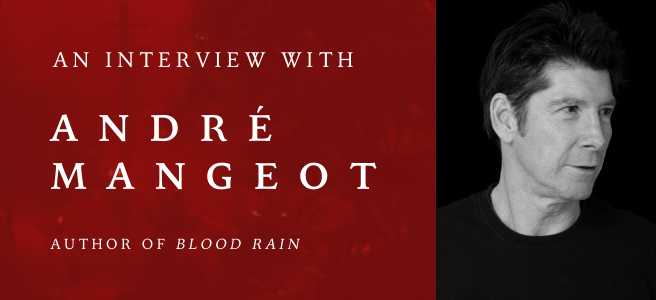
An Interview with André Mangeot

Resonant, complex, rich in heft and texture, these are mature poems that grapple with serious themes. Beautifully crafted, and partly inspired by the poet’s love of the Brecon Beacons and Snowdonia, they address the natural world, its endangerment and other pressing global issues from multiple perspectives, and with great lyrical power.

‘A thought-provoking book for turbulent times.’
– Matthew Caley

André Mangeot’s new collection Blood Rain confronts the degradation of the planet and individual lives and choices with a steely lyrical grace. In this interview, he discusses the relationship between nature and poetry and our own connection to the natural world.

Blood Rain features poems set in a variety of geographic and historic locations with several of them focusing on Welsh landscapes. What is the importance of these poems within the collection and what is your connection to them?

It’s often said that landscape is a character in itself and it’s true that location is often my starting-point. This is probably most evident in my books of short stories, True North and A Little Javanese, where almost all are set in different countries and an evocative urban or rural landscape is as vital in bringing the story to life as authentic protagonists. In Blood Rain, with one of its key themes being challenges to the planet, including the natural world, there are a number of poems set in locations that I know and value (North Wales, the Lake District, North Devon) – and habitats which are threatened in one way or another.  But ‘setting’ is equally important for poems set further afield or in other times (the trenches in WW1, occupied Europe in WWII, Romania under Ceaușescu) that touch on another form of ever-present threat – our propensity for violence and conflict.

Nature is a theme that runs deeply through the collection. What is the connection between nature and your poetry and what does poetry bring to your experience of nature?

I’ve always felt more comfortable at a distance from cities and the urban environment – though for much of the time they’re unavoidable, of course. And for now I do live in a city, so the contrast between noise/pollution/crowds and most rural settings makes time in the latter all the more special and vivid. Nature clearly works on the senses, on the unconscious, before any poem begins to emerge and evolve.  Thereafter, crafting a poem forces one to focus ever more closely on detail – both what’s being examined and for word-choices, imagery, form etc.

The poems in Blood Rain are often concerned with ideas of balance, particularly a sense of ‘counterpoise’- giving and taking between humans and nature. What role do exchange, and economy of nature and things play in the poems?

Ideally, any natural exchange between man and nature would be reciprocal and unthreatening. But we as a species have so clearly overstepped the mark – due to a frightening combination of arrogance, ignorance and greed, aided by globalisation – that almost everything is now scarily out of kilter. Levels of comparative wealth and poverty across the globe; degree and frequency of extreme/destructive weather patterns; competition for fertile and habitable land. It’s almost as if, because man has ridden roughshod over natural laws for so long, nature is now fighting back, reasserting itself, proving who has ultimate control.

What do the shifts between nature, war, and family mean to you? Does the quoted ‘warlikeness’ carry throughout the poems, even those not concerned with war itself?

Everything we know is connected, part of a larger, possibly infinite eco-system: each individual to their immediate family and community, the nation, wider world, the cosmos etc.  The natural world is no different: amoebas, plankton, myriads of insects are just the base of a survival chain essential for millions of species – including mankind.  In the natural world we’re used to considering the fight for survival as commonplace; now, perhaps for the first time, reality is dawning that we as a species are in the fight too, and that no law precludes our own extinction.  As far as ‘warlikeness’ goes as a human characteristic, I don’t want to overstate it, but I can see the same kind of mirroring of relationship conflicts within families (three or four poems in the book address mine with my late father, for example) with how resentments and misunderstandings on a national or global scale can escalate into something far more serious.

The title poem refers to the natural phenomena of ‘blood rain’ as ‘an augury of rust’. How would you describe the relationship between poetry and omens or symbols in the natural world?

Our response to poetry, literature – indeed, many things we encounter daily – is largely determined by past experience and the particular memories and sensations these things conjure up, positive or negative.  So this inbuilt, often unconscious association will determine different responses to the same word, phrase or image from one person to the next.  To me this is what’s so exciting about sending a new piece of work out into the world: not simply the act of connecting with others but the certainty that no two people will respond to a poem or sequence the same; each will bring their own experience, tastes and prejudices to it.  Some will find symbols or omens, but almost for sure in different places and forms.  But to return specifically to nature – full of wonder and terror in equal measure – all I’d say is that I’ve tried to keep this ambivalence constantly in mind.

What message do you hope readers will take away from reading the collection? Do you feel this message has become even more poignant amidst the situation we currently find ourselves in?

I didn’t set out to deliver any particular message, and would be hesitant about any collection that did. Blood Rain is just one person’s response to/meditation on current times that are clearly troubling and uncertain for many.  Covid-19 arrived after this sequence was written and published, but has simply underlined the global connection between us, and is a stark reminder of our vulnerability, no different to any other species.


Blood Rain is available on the Seren website: £9.99

Create your free Seren account and enjoy 20% off every book you buy from us.

Posted on

Friday Poem – ‘Iaith / llaeth’ by Katherine Stansfield

This week’s Friday Poem is ‘Iaith / llaeth’ by Katherine Stansfield from her new collection We Could Be Anywhere By Now.

In her second collection, We Could Be Anywhere by Now, Katherine Stansfield brings us poems about placement and displacement full of both wry comedy and uneasy tension. Stints in Wales, Italy and Canada, plus return trips to her native Cornwall all spark poems delighting in the off-key, the overheard, the comedy and pathos of everyday life.

‘multi-layered and full of surprising transitions’ – Patrick McGuiness

We Could Be Anywhere By Now is available on the Seren website: £9.99

You can now watch videos of Katherine reading from hew new collection on our Youtube channel! Here she is reading her poem ‘FOG’. 

Create your free Seren account and enjoy 20% off every book you buy from us.

Posted on

Guest Post: Cath Drake – Inside the shaking city

Cath Drake’s debut poetry collection The Shaking City is due to be published on the 14th April. In today’s guest post, she reflects on its unexpected comfort given the situation we find ourselves in.

Inside the shaking city

“… a guide to staying clear-eyed, combative and caring in unsettled times.”
Philip Gross

My debut poetry collection The Shaking City is due for publication in a fortnight’s time. I could never have dreamed how this endorsement from Philip Gross on the cover, and indeed the book itself, would suddenly take on such relevance in the time of Coronavirus.

While I was finishing writing it, the environmental crisis became increasingly urgent. And just as it is being printed, the global pandemic has also descended on our lives. Now everything is interpreted by the utter transformation and precarity of life in lockdown.

We are all in the ‘shaking city’ together. We all were before but now it’s more obvious. We’ve had to radically change in the face of the pandemic.  We still need to radically change in order to address the environmental crisis, and indeed to survive as a species.

My book explores endurance to change, personal and global – the ‘shaking’ is an energy that holds both the extremes of discomfort and opportunity.

Each poem in the ‘Shaky School Album’ sequence contain ‘shaking’ at a point of change – a release, a realisation, a time when you face the unknown and come out the other side. It can be unnerving and exhilarating.

Some poems explore shaking in the unearthing of trauma, personal and societal. It can take courage and forbearance to face this kind of shaking, essential for positive change, and not to become enveloped by it.

The stories and characters in the book find solace in ways that are helpful or less helpful, often in unusual places or unexpected ways. Both are worth voicing, in the very least to be able to have compassion for all the ways we find comfort.

There are poems about misfits who turn out to be more in touch with their own sense of ‘shaking’ or aliveness in the cracks and corners of society than those following the norm. I wanted to explore mundane and imaginative worlds in order to get closer to what no longer makes sense to me – how our way of life increasingly undervalues community and the natural world.

 ‘This joyful, exuberant, wildly imaginative collection exhorts us all to unmoor our minds, to ‘live’ among the strange and shining.’
– Kate Potts

There is joy in seeing the world anew, in seeing each incredible infinite detail. I believe an environmental lens is vital to wellbeing and survival. I’ve been flying that flag since I was a teenager and when working as an environmental writer, journalist and broadcaster for many years in Australia. It has been very dispiriting seeing this care slip so easily down our list of priorities in my lifetime (although these last couple of years it’s moved back up the agenda, at least before the pandemic.)

The absurdity of not putting our natural world first has always distressed and astonished me and in the book I turn to an Australian folkloric Bunyip to help express this for me.

Another theme in the collection is the difficulty of being so far from home living over the other side of the world. Right now, in lockdown, we feel physically distanced wherever we are. Most of us feel this yearning on a daily basis. I hope it is at least partly, yearning with gratitude – the moments I’ve been able to spend with friends from home are deeply precious memories.

Our city is shaking. Even if it takes all our ability, even if we are particularly vulnerable, can we stay alive to it and come out the other side making better sense of our fragile world? I hope my book can help in some small way to find new ways of seeing in this difficult time.


The shaking city of Australian poet Cath Drake’s debut poetry collection is a metaphor for the swiftly changing precarity of modern life within the looming climate and ecological emergency, and the unease of the narrator who is far from home. Tall tales combine with a conversational style, playful humour and a lyrical assurance.​ The poet works a wide set of diverse spells upon the reader through her adept use of tone, technique, plot and form. She is a welcome new voice for contemporary poetry.


The Shaking City is available to pre-order on the Seren website: £9.99

Create your free Seren account and enjoy 20% off every book you buy from us.