Posted on

Friday Poem – ‘Cream teas, Sunday’, Katherine Stansfield

Friday Poem Katherine Stansfield Cream tea, Sunday

This week our Friday Poem is Katherine Stansfield’s ‘Cream teas, Sunday’, from Playing House.

playing house katherine stansfield‘Cream teas, Sunday’ is a sickly-sweet vision of chaos in the pursuit of a cream tea. ‘Stampedes’ of customers interrupt the calm sophistication of a tea room, laying waste to the food and finery with not so much as a 50p tip on the way out.
Playing House is full of delightfully witty poems such as this, which present an unsettling view of the domestic; the author’s eye is satirical yet sympathetic, the voice distinctive.
‘Striking imagery, strange leaps of thought, wit and menace aside, the unmistakeable thrill of Katherine Stansfield’s poetry is in the voice. It addresses the world directly, takes it personally, and comes at the reader from constantly unexpected angles, a tangible, physical thing.’ Philip Gross


Cream teas, Sunday

The four o’clock rush stampedes in at three
to besiege us, heathens sweating scones
for Sunday’s sore visitor gods. Raging and raw
we keep out cats, flies, the customers
still crash right through with sugar in their eyes.
Quick – lay your hands on the cream
to banish mould and I’ll speak in tongues
of jam. Hell opens to burn the slovenly
and pour forth fruitcake and smoke.
I weep into my apron.There’s no change
or tips.Tea cosies drown in Lapsang floods,
exhausted pots shatter and teaspoons bolt,
menus make for the door and coffee jars
revolt.You spread the charm like soft butter
on a split and I’ll give sticky grace on not quite
clean plates.Will that appease them?
Our fake accents turn with the milk
come six. Prayers pass in a kettle’s pant,
returning to water and air: tomorrow
please rain, please rain, please rain.


Playing House is available from the Seren website: £9.99
Join our free, no-purchase-necessary Book Club for a 20% discount every time you shop with us


Posted on

Friday Poem – ‘Roadkill Season’, Polly Atkin

Friday Poem Roadkill Season Polly Atkin

Our Friday Poem this week is ‘Roadkill Season’, from Polly Atkin’s recently released debut, Basic Nest Architecture.

Basic Nest Architecture Polly AtkinA meshing-together of beauty and gore, ‘Roadkill Season’ is almost ritualistic in its depiction of food preparation and feasting. Sweet and savage images clash: the brutal origin of the meal is not placed at a distance but embraced, an essential element in the pleasure gained.
Basic Nest Architecture is Polly Atkin’s first collection of poetry, and follows her Mslexia Prize-winning pamphlet, Shadow Dispatches, and her Michael Marks nominated Bone Song. The complex, intelligent, densely metaphorical lyrics for which she is known are often inspired by the beauties of the Lake District, her home for the last decade.

Join Polly Atkin at the Lancaster Literature Festival for the Basic Nest Architecture launch tomorrow, Saturday 25 March.


Roadkill Season

In Eighteenth-Century House it was roadkill
season. Pheasant, hooked out from under
the dented bumper, last breath condensed
in a plastic bag, matured for a week
in the stainless steel back sink, to build up
flavour. Beautiful dead! I never
saw a thing alive so lovely.
The basin, silvered like the lake in winter,
swirled with colour, like dead trees and diesel.
You stank like the kill itself, like the mulchy
scrub you stumbled out of, stupid
and gorgeous, in love with the tarmac. Poorman’s
Peacock. Dumb bundle of plumage and flesh.
Laura popped your cooling heart
in her gob like a sweet; burst it between
her sharpening teeth. Kate and Anna
carved your breast to split together.
Your meat was purple as the sky at dusk.
We each hooked a finger to halve your wish-bone,
squeezed our eyes closed, and heaved.
We gathered scraps. Kate buried the shell
to dig up and sculpt into artefact later.
We dried out your feet on radiators.
You clutched hot air as they hardened to stars
we bent into brooches, gifts for each other,
then salvaged the best of your wings and fine tail
and stitched new faces of your feathers.


Basic Nest Architecture is available from the Seren website: £9.99
Join our free, no-purchase-necessary Book Club for a 20% discount every time you shop with us

Save

Posted on

Three Poems for World Poetry Day

In celebration of World Poetry Day, we are featuring three poems by Seren poets, which you can read below.

Coinciding with the start of Spring, World Poetry Day is the perfect opportunity for us to brighten up your week with some of our favourite poems. It has been dreadfully difficult to narrow it down, but we hope you enjoy our selections: poems from Kim Moore, Paul Henry, and Rhian Edwards.


The Art of Falling Kim MooreKim Moore: ‘And the Soul’
Taken from Kim Moore’s outstanding debut, The Art of Falling – which was shortlisted for the Cumbria/Lakeland Book of the Year – ‘And the Soul’ considers the animalistic nature of the soul, be it domestic (‘And if it be a cat, find some people/ to ignore’) or primal.


And the Soul
And the soul, if she is to know
herself, must look into the soul…
– Plato

And the soul, if she is to know herself
must look into the soul and find
what kind of beast is hiding.

And if it be a horse, open up the gate
and let it run. And if it be a rabbit
give it sand dunes to disappear in.

And if it be a swan, create a mirror image,
give it water. And if it be a badger
grow a sloping woodland in your heart.

And if it be a tick, let the blood flow
until it’s sated. And if it be a fish
there must be a river and a mountain.

And if it be a cat, find some people
to ignore, but if it be a wolf,
you’ll know from its restless way

of moving, if it be a wolf,
throw back your head
and let it howl.


Boy Running, Paul Henry

Paul Henry: ‘Moving In’
This poem is taken from Boy Running, Paul Henry’s latest collection, which reached the shortlist for the Wales Book of the Year Poetry Award (2016). Paul is currently touring with Stornoway singer-songwriter Brian Briggs as they perform their collaborative work, The Glass Aisle – a haunting piece which crosses the borders between poem and song lyric. Find the full list of events here.


Moving In
I cannot see the flowers at my feet…
Keats – ‘Ode to a Nightingale.’

They look and wonder what they’re doing here,
those who’ve moved with me across the years –
Dylan Thomas, Picasso, Nightingale Ann,
Goble, David Trevorrow, young Fanny Brawne…
all strewn about this flat where I hide.
(Did I dream, last night, of a tide
laying its artefacts on sand?) They stare
but do not judge, or change, or care.

Dylan’s just opened Manhattan’s cigar box.
‘Try one,’ he says, ‘before you die. Fuck books.’
Pablo’s still pushing against his pane.
He listens for a nightingale in vain.
Goble tilts back in his top hat.
He and Trevorrow could not have shared a flat
but I loved them both, and Fanny Brawne.
There are crows on my roof. The light has gone.


Rhian Edwards: ‘The Universal Doodle’
Taken from Rhian Edwards’ new poetry pamphlet, Brood, ‘The Universal Doodle’ carries on the pamphlet’s ever-present theme of birds by musing on the appearance of a murmuration cloud of starlings. Keep an eye on our website, as numerous launch events are on the horizon – and we would love for you to celebrate with us.


The Universal Doodle

A scattering corralled, lassoed
into the universal doodle of birds.
A mutable speech bubble

of pondering ‘m’s. This is the bombast
of starlings as they corkscrew the sky.
Each twist and fold is summarised

to a simile like iron filings,
flocked and flung across the sky
by the metaphorical whims of a magnet.

Can you hear the pathetic fallacy?
The siren song of a metal’s hum
crooning behind clouds, a bit like a God.


We hope you enjoyed our World Poetry Day selection. If it has inspired you to expand your poetry collection, then you can find our full list of Seren poetry books here.


Posted on

Friday Poem – ‘Translating Mountains from the Gaelic’, Yvonne Reddick

Friday Poem Translating Mountains from the Gaelic Yvonne Reddick

Our Friday Poem this week is ‘Translating Mountains from the Gaelic’ from Yvonne Reddick’s Mslexia Poetry Prize-winning pamphlet, Translating Mountains.

The difficulty and occasional humour of translating language is at the forefront of this poem, yet alongside this we see a daughter contemplating how she will take her lost father on one last memorialistic mountain trek.

The poems of Yvonne Reddick’s prize-winning pamphlet, Translating Mountains, are all multi-layered compositions. They tell of grief for a beloved father as well as a close friend, who both died in mountain-climbing accidents. These poems are also hymns to stunning landscapes, with mountains and place names often in a craggy, atmospheric Gaelic. Full of tension, emotion and action, this writing grips our attention.


Translating Mountains from the Gaelic

A pebble on the tongue –
my clumsy mouth stumbles their meanings:

I mumble Beinn Laoghail to Ben Loyal,
Beinn Uais to Ben Wyvis,

humble Beinn Artair
from King Arthur’s Hill to The Cobbler –

turn Bod an Deamhain
from Demon’s Penis to Devil’s Point,

stammer on An Teallach
with its rearing anvils and impossible spelling,

my throat a stream-gorge
where quartz chunks chatter against each other –

my English rolling off their sharp consonants.
Next summer, I’ll shoulder my red rucksack,
a Platypus bottle, and a vial of Dad’s ash

up Schiehallion –
Fairy-Hill of the Caledonians –
via the less-worn path.

A deerfly, its eyes peridot ringstones,
will pincer my skin for blood,

my voice a trespasser,
echoing charred moors and razed crofts.

Dad, I’ll pour your English dust
for the hungry roots of the hill’s oldest pine –

a speck of you will lodge in a walker’s boot-tread,
the breeze catching a mote of your collarbone,

the rain will seep through you,
mingle you with Aonach Bàn,
Loch Teimheil, Sìdh Chailleann.


Translating Mountains is available from the Seren website: £5.00
Join our free, no-purchase-necessary Book Club for a 20% discount every time you shop with us


Posted on

Friday Poem – ‘The shame of our island’, Siobhán Campbell

Friday Poem The shame of our island Siobhan Campbell

This week our Friday Poem is ‘The shame of our island’ from Siobhán Campbell’s brand new collection, Heat Signature.

Heat Signature Siobhan CampbellIn ‘The shame of our island’ we are confronted with a sense of contested history, in which the hunter’s tongue-in-cheek aim is to ‘see the steaming innards’ of his almost-extinct prey. The ‘shame’ of the title permeates the poem, with the speaker’s questions demanding justification, yet receiving no answer.
Heat Signature is Siobhán Campbell’s fourth full collection, and is composed in her characteristically spikey voice: infused with an intelligence that resists easy answers to the conundrums that have faced her Irish homeland, but also suffused with a grudging admiration for the citizens who have survived their tumultuous history. The blend of dark comedy, tragedy and politics is entirely typical of Campbell’s complex, thoughtful and profoundly entertaining poetry.


The shame of our island

is that we killed the wolf.
Not just the last
but the two before that.

I knew a man who met a man
who was the cousin removed
of the great-grandson of the man
who killed the third-last wolf
on the island.

Slit it he did,
to see the steaming innards –
how long they were, how tightly wound.

Had it a white paw to the fore?
That gene would have been recessive.
Was there a black bar across the yellow eye?
No time to notice its différence.

Is this a wolf with its bared teeth
and its lairy smell
and its fetlock tipped with white?

Is this wolfish?

 
Heat Signature is available from the Seren website: £9.99
Join our free, no-purchase-necessary Book Club for a 20% discount every time you shop with us


Attend the Heat Signature book launch in London

Join us at The Flying Horse on Wednesday 15 March, 7:30pm, where we will be celebrating the launch of Heat Signature with a poetry reading by the author and book signing opportunity. Refreshments will be provided and entry is free, so bring your friends for an evening of poetry and merriment.
Find out more


Save

Posted on

Friday Poem – ‘Big Sky’, Sheenagh Pugh

Friday Poem Big Sky Sheenagh Pugh

This week our Friday Poem is ‘Big Sky’, from Short Days, Long Shadows by Sheenagh Pugh.

Short Days Log Shadows Sheenagh PughIn ‘Big Sky’ the overwhelming vastness of the sky is viewed as if for the first time, at a distance from the claustrophobic trappings of the everyday. We are catapulted to the ‘great ragged brush-strokes of cirrus’ and further still, to the ‘cluster and prickle’ of planets.
Short Days, Long Shadows is Sheenagh Pugh’s twelth collection, and takes her into a new, northern landscape, the Shetland Islands, with poems steeped in the wilder weathers and views of rugged coastlines, sweeping sea-vistas and the hardy historical characters who have inhabited these lands.


Big Sky

Unbroken by forest or town, this skyline
all hills and ocean: you look up
and your gaze, stopped by no branch, no office block,
overflows with sky, too much to take in
even when you turn slowly in the circle
of green and blue. Who knew how vast
cumulus could boil over, or how sweeping
the great ragged brush-strokes of cirrus,
or, at night, how many bright worlds,
hundreds of years away, cluster and prickle
above our heads? It is as if,
having lived all your life in the jewelled oval
of a miniature, you stepped into a frame
the size of a gallery wall, a landscape
where a few small figures, lost against distance,
seem to be looking for the way out.


Short Days, Long Shadows is available from the Seren website: £9.99

Join our free, no-purchase-necessary Book Club for a 20% discount every time you shop with us

Posted on

Friday Poem – ‘Questions’, Kate Bingham

Friday Poem Questions Kate Bingham Infragreen

This week our Friday Poem is ‘Questions’, from Infragreen by Kate Bingham.

infragreen‘Questions’ unpicks the intricate imagined details behind moments of silence, as the speaker interrogates ‘your mouth’s unstated strategy / for the avoidance of speech’. The poem gives voice to the part inside us all that pleads for communication.
Infragreen is Kate Bingham’s third collection, with poems that are perceptive, persuasive and intricately made. Bingham takes the reader on a startling and unfamiliar journey through everyday experiences and phenomena. Her keen eye, reflectiveness and quiet wit endow her subjects with a shimmering freshness.


Questions from Infragreen Kate Bingham


Infragreen is available from the Seren website: £9.99

Join our free, no-purchase-necessary Book Club for a 20% discount every time you shop with us


Save

Posted on

Friday Poem – ‘Love Birds’, Paul Henry

Friday Poem Love Birds Paul Henry

As an early celebration of Saint Valentine’s Day, this week’s Friday Poem is ‘Love Birds’ from Paul Henry’s The Brittle Sea: New and Selected Poems.

the_brittle_sea72The ritualistic moments of connection in ‘Love Birds’ defy the couple’s physical separation, and we see a resilience and unification almost comical in its persistence. ‘The screws must laugh’ at this display, yet it is sombre and essential, an anchor against ‘the difficult, unreal dawns’ faced alone.

The Brittle Sea contains a substantial selection of Paul Henry’s beautifully crafted poems from the last two decades, plus new material. The individual human voice, the ragged vagaries of the heart and soul, the joys and sorrows of family life feature here but this poetry is personal without being confessional, preferring tender observation to sensationalism or didacticism.

Love Birds

They rendezvous each night, at ten,
for ten minutes, behind closed eyes,
he in his cell, she in the brown rocker.
And once a fortnight, for half an hour,
their fingers form a desperate nest,
remembering the robin he’d fed
that misses him at the back door,
its freedom disorientated.

The screws must laugh at these love birds,
each week’s confetti of letters,
or secretly gain faith from matching
her sentences to his.

He hears her singing Porgi Amor
in the difficult, unreal dawns
when the walls barge further into him
and terrible lights flash in his mind.
When the bars of his hands close tightly on
what might prove the last breath
of some precious, invisible creature.

She knows all this, waiting
in the early kitchen, lovingly timing
two cracked eggs in a saucepan.

Get your copy of The Brittle Sea: New and Selected Poems from the Seren website: £9.99

Join our free, no-purchase-necessary Book Club for 20% off every time you shop with us

Save

Save

Posted on

Friday Poem – ‘What We Talk About When We Talk About Motherhood’, Carolyn Jess-Cooke

Boom! Carolyn Jess-Cooke

This week our Friday Poem comes from Carolyn Jess-Cooke’s poetry collection Boom!.

Boom! Carolyn Jess-CookeBoom! is a brilliant contribution to the evolving archive of women’s experience, and its poems range from free-verse riffs on essential moments of joy and blame, to artful sonnets on the physical act of childbirth, to meditative and discursive pieces on the way that love for a child suffuses your being. The collection serves as an exploration into the profound impact motherhood can have upon creativity. Carolyn has continued to explore the relationship between motherhood and creativity as editor of Writing Motherhood, an anthology of poetry, interviews and essays, which is publishing 09 March, and is available for pre-order from our website (£12.99).


Boom! is available from the Seren website: £9.99

Join our free, no-purchase-necessary Book Club for 20% discount every time you shop with us
 

Save

Posted on

Friday Poem – ‘Her to Apollo’, Carol Rumens

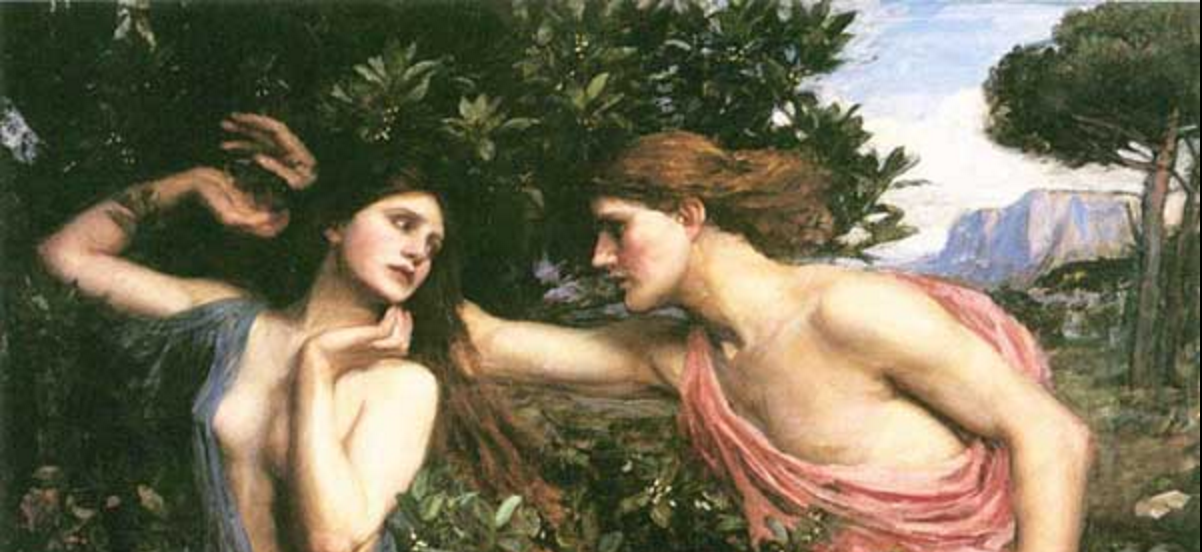
Image credit http://www.jwwaterhouse.com/view.cfm?recordid=93

Our Friday Poem this week is ‘Her to Apollo’ by Carol Rumens from her latest collection, Animal People.

animal people‘The title, ‘Her to Apollo’, contains a pun on Hymn to Apollo. I don’t have a particular Hymn in mind; it’s simply an allusion the classical genre. I wanted to signal a feminist ‘take’ on the theme. The speaker is a woman addressing the Sun God as her lover, though with no great reverence towards him.’ says Carol Rumens.
A power struggle sits at the heart of this poem, the spiky female voice biting back against the god figure’s assumed importance. Their dialogue, hard and violent in nature, breaks apart the classical base of the poem, and so although it opens with a mythological premise, ‘Her to Apollo’ instead turns out to be a sort of modern morality tale.


Her to Apollo

I fall in love and sunbathe less these days –
I must be old, the bark-legged woman says.
Stuff your Olympics. I’ll be in my black,
pissing on you, Apollo. But the star
that spikes earth’s drinks and rapes her slow, sings back,
my face is all you got, bitch, all you are.
The woman spreads her thighs. Such green light beckons,
and gods, however cracked, must claim their tokens

from flesh that knows it’s trees and cloud and slate,
and not too tall to stretch a prayer. Gold pieces
wink in her eyes like birch-leaves, ripple out
like baby cephalopods. And still he lies,
that god – I’m all you need, I’m all you are;
your genesis, baby, and your nemesis.
He oils her richly, and turns up the power;
she’s barbecued, and calls it paradise.

Iron insouciance that dawns with love’s
self-love, and gilds earth’s have-nots into haves,
you win, she thinks, and sees next autumn scatter
the little, light-stunned faces, plain as scars,
and as unique – each leaf uniquely spoiled
by cell-death, yet each death the same. Who’ll matter?
Apollo, know yourself – you’re gas, not gold,
and one of around two-hundred billion stars.


Buy your copy of Animal People from the Seren website: £9.99
Join our free Book Club for 20% off every time you shop with us


Save