Posted on

Friday Poem – ‘Big Sky’, Sheenagh Pugh

Friday Poem Big Sky Sheenagh Pugh

This week our Friday Poem is ‘Big Sky’, from Short Days, Long Shadows by Sheenagh Pugh.

Short Days Log Shadows Sheenagh PughIn ‘Big Sky’ the overwhelming vastness of the sky is viewed as if for the first time, at a distance from the claustrophobic trappings of the everyday. We are catapulted to the ‘great ragged brush-strokes of cirrus’ and further still, to the ‘cluster and prickle’ of planets.
Short Days, Long Shadows is Sheenagh Pugh’s twelth collection, and takes her into a new, northern landscape, the Shetland Islands, with poems steeped in the wilder weathers and views of rugged coastlines, sweeping sea-vistas and the hardy historical characters who have inhabited these lands.


Big Sky

Unbroken by forest or town, this skyline
all hills and ocean: you look up
and your gaze, stopped by no branch, no office block,
overflows with sky, too much to take in
even when you turn slowly in the circle
of green and blue. Who knew how vast
cumulus could boil over, or how sweeping
the great ragged brush-strokes of cirrus,
or, at night, how many bright worlds,
hundreds of years away, cluster and prickle
above our heads? It is as if,
having lived all your life in the jewelled oval
of a miniature, you stepped into a frame
the size of a gallery wall, a landscape
where a few small figures, lost against distance,
seem to be looking for the way out.


Short Days, Long Shadows is available from the Seren website: £9.99

Join our free, no-purchase-necessary Book Club for a 20% discount every time you shop with us

Posted on

Friday Poem – ‘Questions’, Kate Bingham

Friday Poem Questions Kate Bingham Infragreen

This week our Friday Poem is ‘Questions’, from Infragreen by Kate Bingham.

infragreen‘Questions’ unpicks the intricate imagined details behind moments of silence, as the speaker interrogates ‘your mouth’s unstated strategy / for the avoidance of speech’. The poem gives voice to the part inside us all that pleads for communication.
Infragreen is Kate Bingham’s third collection, with poems that are perceptive, persuasive and intricately made. Bingham takes the reader on a startling and unfamiliar journey through everyday experiences and phenomena. Her keen eye, reflectiveness and quiet wit endow her subjects with a shimmering freshness.


Questions from Infragreen Kate Bingham


Infragreen is available from the Seren website: £9.99

Join our free, no-purchase-necessary Book Club for a 20% discount every time you shop with us


Save

Posted on

Friday Poem – ‘Love Birds’, Paul Henry

Friday Poem Love Birds Paul Henry

As an early celebration of Saint Valentine’s Day, this week’s Friday Poem is ‘Love Birds’ from Paul Henry’s The Brittle Sea: New and Selected Poems.

the_brittle_sea72The ritualistic moments of connection in ‘Love Birds’ defy the couple’s physical separation, and we see a resilience and unification almost comical in its persistence. ‘The screws must laugh’ at this display, yet it is sombre and essential, an anchor against ‘the difficult, unreal dawns’ faced alone.

The Brittle Sea contains a substantial selection of Paul Henry’s beautifully crafted poems from the last two decades, plus new material. The individual human voice, the ragged vagaries of the heart and soul, the joys and sorrows of family life feature here but this poetry is personal without being confessional, preferring tender observation to sensationalism or didacticism.

Love Birds

They rendezvous each night, at ten,
for ten minutes, behind closed eyes,
he in his cell, she in the brown rocker.
And once a fortnight, for half an hour,
their fingers form a desperate nest,
remembering the robin he’d fed
that misses him at the back door,
its freedom disorientated.

The screws must laugh at these love birds,
each week’s confetti of letters,
or secretly gain faith from matching
her sentences to his.

He hears her singing Porgi Amor
in the difficult, unreal dawns
when the walls barge further into him
and terrible lights flash in his mind.
When the bars of his hands close tightly on
what might prove the last breath
of some precious, invisible creature.

She knows all this, waiting
in the early kitchen, lovingly timing
two cracked eggs in a saucepan.

Get your copy of The Brittle Sea: New and Selected Poems from the Seren website: £9.99

Join our free, no-purchase-necessary Book Club for 20% off every time you shop with us

Save

Save

Posted on

Polly Atkin poem shortlisted for Gregory O’Donoghue Poetry Prize

Poet Polly Atkin’s ‘Hope Cove’, one of the poems in her soon-to-be released debut collection, Basic Nest Architecture, has been shortlisted for the Gregory O’Donoghue International Poetry Prize 2017.
Judge Mary Noonan read over 2,200 entries before selecting the shortlist, and the poems selected will be published in an upcoming issue of Southward. You can see the full list of prize-winners and shortlisted poems on the Munster Literature Centre website.
Polly’s debut Basic Nest Architecture is publishing on 27 February, and is available to pre-order now from our website (£9.99). The collection follows Polly’s Mslexia Prize-winning pamphlet, Shadow Dispatches, and her Michael Marks nominated Bone Song. Atkin has already built up a loyal readership for her complex, intelligent, densely metaphorical lyrics, often inspired by the beauties of the Lake District where she has made her home for a decade. 


Posted on

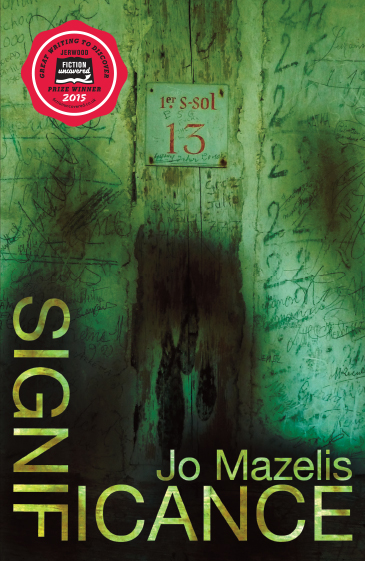
Win a copy of Significance, Jo Mazelis’ Jerwood Prize-winning novel

Enter our giveaway to win a copy of Jo Mazelis’ award-winning novel, Significance.
To enter, simply sign up to the Seren newsletter before 1st March:https://www.serenbooks.com/newsletter/signup
 
Significance was a Jerwood Fiction Uncovered Prize-winner, 2015. Up for grabs in this giveaway is a copy of the new edition of the book, printed to commemorate the Jerwood Fiction Uncovered announcement.
About Significance:Lucy Swann is trying on a new life. She’s cut and dyed her hair and bought new clothes, but she’s only got as far as a small town in northern France when her flight is violently cut short. When Inspector Vivier and his handsome assistant Sabine Pelat begin their investigation, the chance encounters of her last days take on a new significance.Lucy’s death, like a stone thrown into a pool, sends out far-reaching ripples, altering the lives of people who never knew her as well as those of her loved ones back home.
 
The winner of this giveaway will be chosen at random from all our email subscribers on 1st March 2017, so make sure you sign up to Seren News before this deadline to be in with a chance of winning.
Feeling generous? Why not invite your friends to enter, by signing up using the link below:http://serenbooks.com/newsletter/signup


Posted on

Friday Poem – ‘What We Talk About When We Talk About Motherhood’, Carolyn Jess-Cooke

Boom! Carolyn Jess-Cooke

This week our Friday Poem comes from Carolyn Jess-Cooke’s poetry collection Boom!.

Boom! Carolyn Jess-CookeBoom! is a brilliant contribution to the evolving archive of women’s experience, and its poems range from free-verse riffs on essential moments of joy and blame, to artful sonnets on the physical act of childbirth, to meditative and discursive pieces on the way that love for a child suffuses your being. The collection serves as an exploration into the profound impact motherhood can have upon creativity. Carolyn has continued to explore the relationship between motherhood and creativity as editor of Writing Motherhood, an anthology of poetry, interviews and essays, which is publishing 09 March, and is available for pre-order from our website (£12.99).


Boom! is available from the Seren website: £9.99

Join our free, no-purchase-necessary Book Club for 20% discount every time you shop with us


Save

Posted on

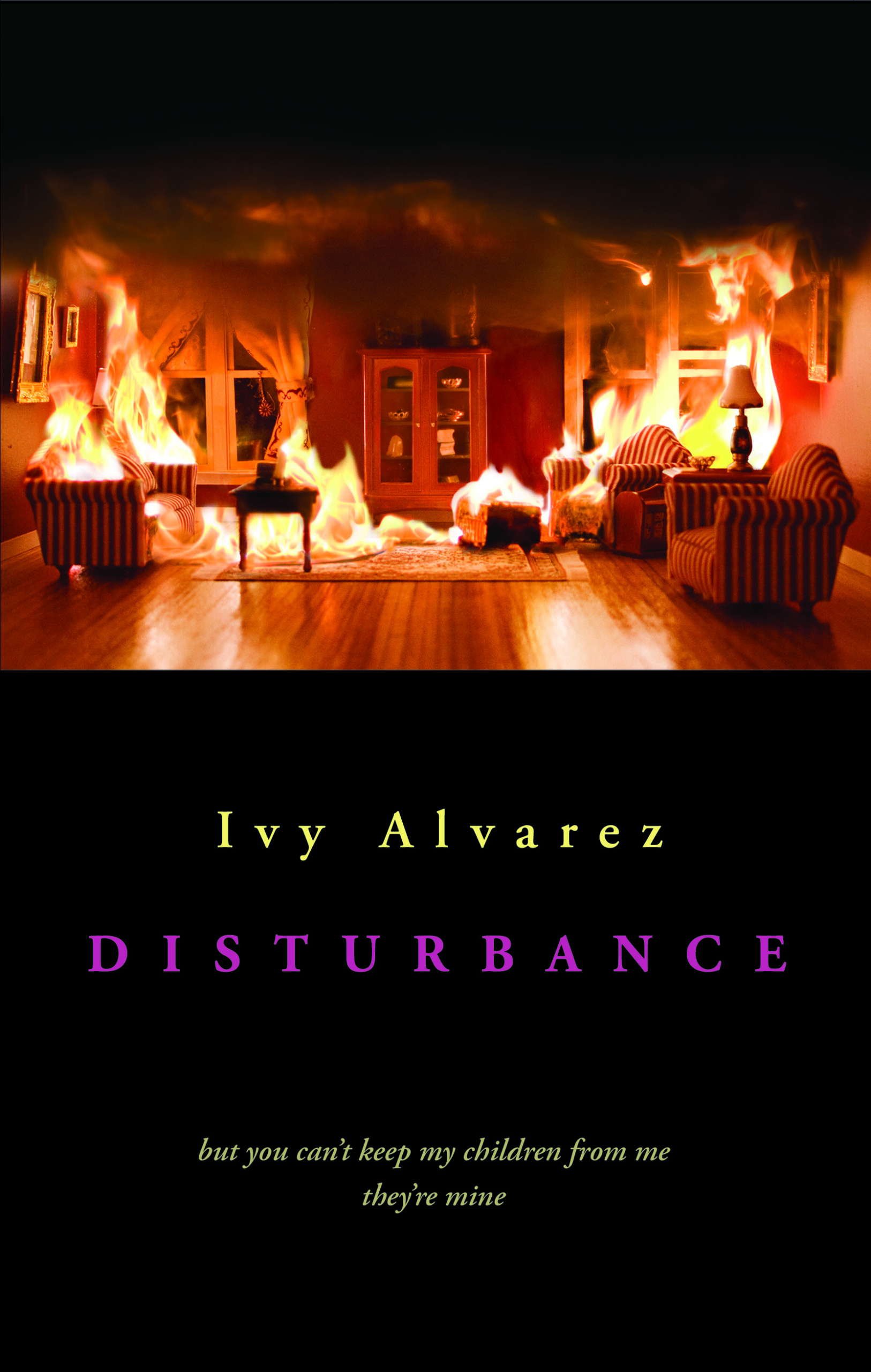
Disturbance by Ivy Alvarez one of Courtney LeBlanc’s Best Books of 2016

Ivy Alvarez’s poetry collection Disturbance has been named by Courtney LeBlanc as one of her best books of 2016, alongside authors such as Stephen King and Chimamanda Ngozi Adichie. You can see the full list on Courtney’s blog, Word Perv.
 
About Disturbance:
Disturbance is a novel in verse by Ivy Alvarez that chronicles a multiple homicide, a tragic case of domestic violence, where a family was gunned down by the husband and father. The book features poems in a kaleidoscope of voices from all the characters involved. We first meet the family itself and witness how the father’s controlling attitude gradually escalates into violence. Then we get the aftermath: the authorities, police and neighbours, who all might have helped to prevent this tragedy. This is a very dark book, but a courageous one, ultimately about evil and its presence in our everyday lives.

Posted on

Friday Poem – ‘Her to Apollo’, Carol Rumens

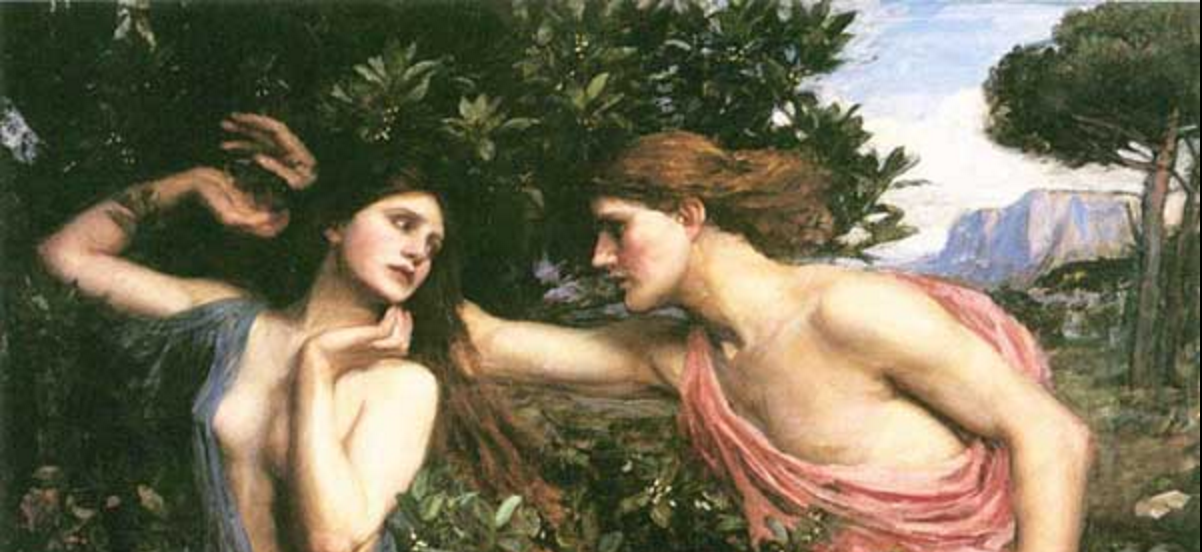
Image credit http://www.jwwaterhouse.com/view.cfm?recordid=93

Our Friday Poem this week is ‘Her to Apollo’ by Carol Rumens from her latest collection, Animal People.

animal people‘The title, ‘Her to Apollo’, contains a pun on Hymn to Apollo. I don’t have a particular Hymn in mind; it’s simply an allusion the classical genre. I wanted to signal a feminist ‘take’ on the theme. The speaker is a woman addressing the Sun God as her lover, though with no great reverence towards him.’ says Carol Rumens.
A power struggle sits at the heart of this poem, the spiky female voice biting back against the god figure’s assumed importance. Their dialogue, hard and violent in nature, breaks apart the classical base of the poem, and so although it opens with a mythological premise, ‘Her to Apollo’ instead turns out to be a sort of modern morality tale.


Her to Apollo

I fall in love and sunbathe less these days –
I must be old, the bark-legged woman says.
Stuff your Olympics. I’ll be in my black,
pissing on you, Apollo. But the star
that spikes earth’s drinks and rapes her slow, sings back,
my face is all you got, bitch, all you are.
The woman spreads her thighs. Such green light beckons,
and gods, however cracked, must claim their tokens

from flesh that knows it’s trees and cloud and slate,
and not too tall to stretch a prayer. Gold pieces
wink in her eyes like birch-leaves, ripple out
like baby cephalopods. And still he lies,
that god – I’m all you need, I’m all you are;
your genesis, baby, and your nemesis.
He oils her richly, and turns up the power;
she’s barbecued, and calls it paradise.

Iron insouciance that dawns with love’s
self-love, and gilds earth’s have-nots into haves,
you win, she thinks, and sees next autumn scatter
the little, light-stunned faces, plain as scars,
and as unique – each leaf uniquely spoiled
by cell-death, yet each death the same. Who’ll matter?
Apollo, know yourself – you’re gas, not gold,
and one of around two-hundred billion stars.


Buy your copy of Animal People from the Seren website: £9.99
Join our free Book Club for 20% off every time you shop with us


Save

Posted on

Short Story of the Month | ‘Spoiled’ by Jaki McCarrick

Short Story Spoiled by Jaki McCarrick

January’s Short Story of the Month is ‘Spoiled’ by Jaki McCarrick, an award-winning writer of plays, poetry and fiction – including The Scattering, one of our best-selling short story collections. ‘Spoiled’ takes us to Paris, where we see a troubled woman adrift, and an enigmatic priest whose sermons she attends.


Spoiled

This is an extract. Read the full short story for free on our website.


He had quoted from one of the Narnia chronicles, something she could clearly remember reading once, from Prince Caspian, in which Lucy, faced with a difficult river journey, asks Aslan to promise she will be safe and Aslan cannot promise. The priest had said that this was the meaning of faith: to go forth without a promise of anything. Mary had been astonished by him and by what she was listening to in the small bright chapel in Paris. During the week she had thought of his sermon often. And of how she had been encouraged by it not to dwell on the thing she had done, that ‘sin’ for which she knew she was truly sorry. She had cried in the church, but was somehow able to choke back the tears so that Susan and Yves and the children would not see. Though Tristan, Susan’s oldest, had seen.
Mary had not wanted to go to the service at all. For what kind of Catholic was she? Beyond lapsed, that was certain. Nonetheless, she went again with Susan and family on the following Sunday. This time she did not like the homily: something about St. Paul and the Jews which she hated because it smacked of anti-Semitism and she felt uncomfortable listening to it and had wanted to walk out. Tristan also saw this reaction in her, her face reddening with rage at the words spoken by the pompous-sounding reader who’d come up to the altar, and her nephew had nudged her, playfully. But then when he began to speak, Father Cal astonished her again. It was not what he said, but how. A couple and their children had been making noise in the front row and though people were openly telling them to hush, they continued. Rather than raise his voice above the rattle of the children and their equally distracted parents, Father Cal did the opposite: his voice quietened, so that Mary began to hear birdsong from outside in the courtyard, and it became the job of those amassed in the chapel to hear Father Cal and not his to reach out to them.
But then, Father Calum O’Neil had been always astonishing. A brilliant student, he shocked his family in his late-teens by declaring his vocation to God. The journey from seminary to curate in a small town in Tyrone to this Paris posting had taken him a mere fifteen years. Fluent in several languages, he had almost completed a PhD at Aberystwyth University and had published several papers, two books. He pursued brilliance and it, seemingly, had pursued him. He would only be in the city for a few months, had broken off his PhD studies to cover for the elderly chaplain whose brethren were this group of mostly Irish ex-pats, some of whom lived in the suburbs but who travelled all the way in by car or train each Sunday to attend the English-language mass in Trinite d’Estienne d’Orvres in the 9th arrondissement.
On the third Sunday, Susan decided they should all stay for the after-service tea and cake. The tea was from home and the cake was a freshly baked tea-brack. (Each Sunday an army of mostly middle-aged women – African, Irish, French – who worked voluntarily for the Church, would swan into the courtyard at the commencement of the service and silently dress and set the table, so that when the worshippers emerged a glorious spread would be ready for them as if by magic.)
Tristan nudged Mary as the priest finally appeared, his white and golden robes now gone in favour of a pale-blue short-sleeved shirt and dog-collar. He walked purposefully towards the congregation of thirty or so people gathered about the long table beneath the metal and glass awning of the chapel. Mary was about to chastise her nephew for teasing her yet again when Father Cal sidled up to them and stuck out his hand. She met Father Cal’s hand with hers and flashed a look up at him. She quietened the nervous movement of her mouth by biting her teeth together, even though she knew this action made her look old.
‘Susan’s sister?’ Father Cal said.
‘Yes,’ Mary answered.
‘Bonjour, Père Cal,’ Tristan said.
‘Bonjour, Tristan,’ the priest said, and smiled. He ran his hand through the boy’s hair in a rough but playful manner. Tristan laughed and ran towards another boy who was kicking a white football by a large pink-flowered chestnut tree at the back of the courtyard.
‘I’m Mary,’ Mary said.
‘How long are you in Paris for?’ he asked. She shuffled uncomfortably as she was not sure for how long she would continue to be in the city – but knew her sister’s invitation to have a change, forget about what had happened at home, was certainly not an open one. At most, Mary thought, they will only be able to stick me another month.

Continue reading ‘Spoiled’ for free here


Posted on

Seren awarded 3-year grant from Welsh Books Council

It may be Blue Monday but nevertheless it’s a bright day for new Welsh literature, as Seren, along with four other Welsh publishers, has received a 3-year grant from the Welsh Books Council.
The £250,000 grant, shared between Seren, Parthian, Gomer, Honno Press and (for the first time) Firefly Press, will provide funding for a wonderfully varied range of new titles, to be released over the next three years.
‘We thank the Welsh Books Council for their continued support, which will enable us to bring exciting new literature into print,’ said Seren Publisher Mick Felton. The grant enables Seren to plan our publishing schedule over a three year period, and supports key marketing activity, essential in a hugely competitive industry. After ten years of standstill funding, this year has seen a slight increase. Evidence perhaps of a wider appreciation of the value of cultural activity to the Welsh economy, of its role as an agent of economic regeneration, and how, in the Year of Legends, literature will attract visitors and explain Wales, through its stories, to the wider world.
Authors published by Seren have previously been long-listed for the Man Booker Prize, won the Costa Award, Forward Poetry Prize, Jerwood Fiction Uncovered Award, Cross Sports Book Award and the Edge Hill Prize.
The next three years look bright, and we can’t wait to reveal the new poetry, fiction and non-fiction soon to be added to the Seren list. They include Writing Motherhood, an anthology with essays on the theme of female creativity and the impact having a family has; Writing on Water, short stories ranging from the Caribbean to Britain and the wider world; and Dark Land, Dark Skies, where astronomer Martin Griffiths re-aligns the constellations according to Celtic rather than Classical mythology.