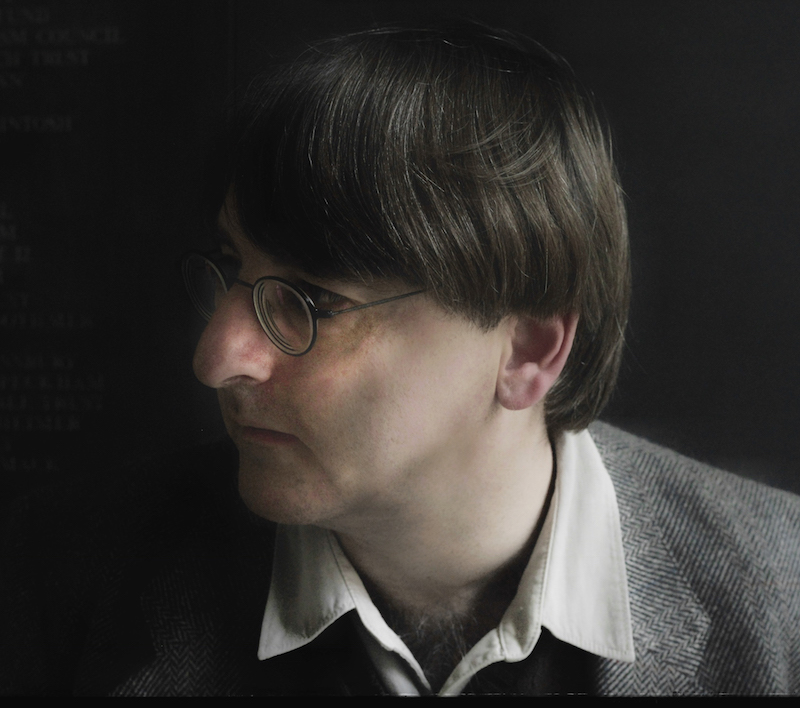
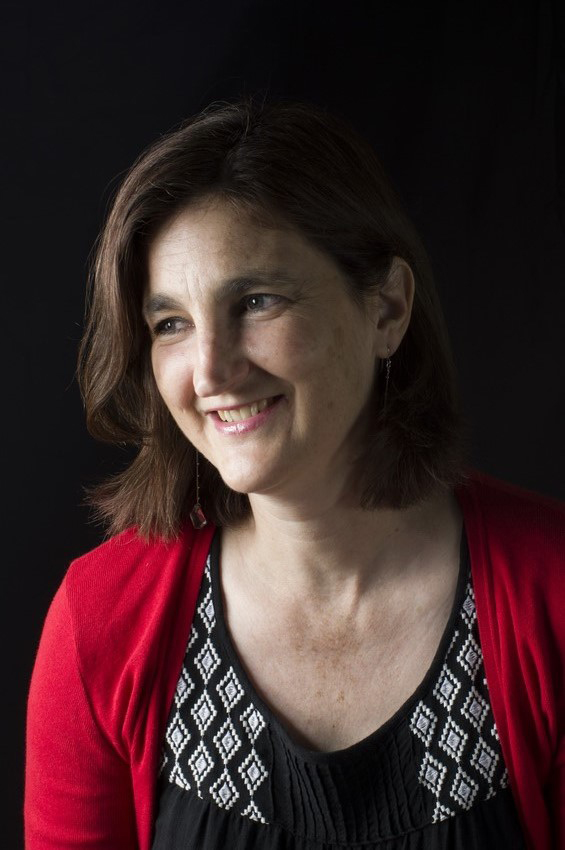
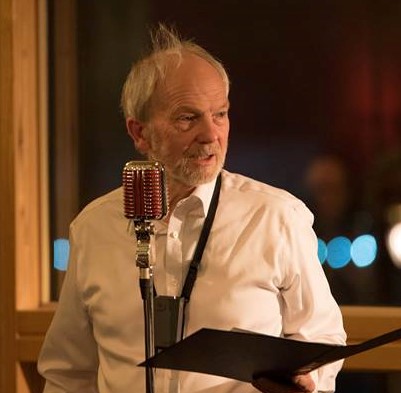
Congratulations to Siobhán Campbell who has won the Listowell Writers’ Week Poem of the Year in the An Post Irish Book Awards 2021. Siobhán won with her poem ‘Longboat at Portaferry’.
The initial entries were adjudicated anonymously by Ian McMillan who had the difficult task of choosing just four poems to make the shortlist. The winner was then chosen by public vote and announced in virtual ceremony which you can watch back on the An Post Irish Book Award website.
For more information about the award and the winners in all of the categories, visit www.irishbookawards.ie.
Seren poet Ross Cogan was recently awarded second place in the Nature and the Ecological Emergency International Poetry Competition 2021, sponsored by The Beaver Trust, with his poem ‘Reconsidering’. The 2021 prize was judged by Terry Gifford and the three prize-winning entries were chosen from a shortlist of 12 poems. You can read all three prize winning entries on the Beaver Trust website.
Ross also had recent success in the Sentinel Literary Quarterly Poetry Competition (July 2021), judged by Paul McDonald, where his poem ‘William Mervyn’ was highly commended. Find out more on The Sentinel website.
In Much With BodyI wanted to write into and around the relationship between us – as individuals, as humans – and the ecosystems we live in. I wanted explore to what Sarah Jaquette Ray and Jay Sibara call the ‘contingency between environments and bodies’ that is central to disability poetics, with a focus on the particular environment I have made my home.[1] In many ways this is an extension of conversations begun in my previous collection, Basic Nest Architecture, which revolve around questions of belonging, of location and dislocation, of co-habitation, of what it is to live in a sick body in an ailing world. I’ve always found it difficult to separate myself from my environment, to draw a clear line or apprehend a solid barrier between me and the rest of the world, to be certain what is internal or external. This sense of permeability, coupled with a complicated sense of bodily risk, determines all of my encounters with the world, all of my movements through it.
I wanted to bring that sense of permeability into these poems – from those drawn from Dorothy Wordsworth’s Rydal Journals, that place rain and pain in parallel, both leaching in an out of the body – to the poems about the frogs and toads who come into our house every summer. We are none of us able to call ourself separate from one another.
There is a kind of eco-poetry, and a broader kind of nature writing, that wants to remove the human observer from the observation, to cut out the body of the writer from the writing. It sees the human as degrading the nonhuman, as distracting, diverting essential attention. I can’t help seeing this tendency in nature writing to blot out the body of the writer as coupled to the tendency Virginia Woolf writes about in her essay ‘On Being Ill’ to present the body as a clear pane of glass to see the world through. I am not a clear pane of glass. My noisy, interrupting body never lets me forget its presence. As Woolf writes, ‘all day, all night, the body intervenes’. To me the relationship between the intervening body and the other outside is the poem. To pretend otherwise is the distraction.
I wanted to bring the intervention of the body into the foreground of these poems, whether they are centred on an encounter with a deer, or an owl that won’t be photographed, or a disappearing hospital, or the body’s internal machinations. I cannot write an owl, but I can write myself observing an owl, what observing it in my body gives me, what the co-presence of our bodies in the same space does, what it changes, what it enables. I wanted to write about co-habitation, about co-tenancy of a shared home, whether that is a woodland, society, or our bodies. Luckily for me, my co-tenants were obliging.
Polly Atkin
Much With Body is the startlingly original second collection by poet Polly Atkin. The beauty of the Lake District is both balm and mirror, refracting pain and also soothing it with distraction. Much of the landscape is lakescape, giving the book a watery feel, the author’s wild swimming being just one kind of immersion. There is also a distinct link with the past in a central section of found poems taken from transcripts of the journals of Dorothy Wordsworth, from a period late in her life when she was often ill. In common with the works of the Wordsworths, these poems share a quality of the metaphysical sublime. Their reverence for the natural world is an uneasy awe, contingent upon knowledge of our fragility and mortality.
Create your free Seren account and enjoy 20% off every book you buy direct from us.
[1] Sarah Jaquette Ray and Jay Sibara, ‘Introduction’, in Disability Studies and the Environmental Humanities Toward an Eco- Crip Theory, ed by Sarah Jaquette Ray and Jay Sibara (Lincoln & London: University of Nebraska Press, 2017), p.1.
This week’s Friday Poem is ‘6. That a man approached you in a nightclub’ by Kim Moore from her new collection All The Men I Never Married.
All The Men I Never Married, Kim Moore’s eagerly awaited second collection, is pointedly feminist, challenging and keenly aware of the contradictions and complexities of desire. The 48 numbered poems take us through a gallery of exes and significant others where we encounter rage, pain, guilt, and love.
Join us for the hybrid launch of All The Men I Never Married on Friday 15th October. The in person event at Castle Green Hotel in Kendal will be streamed live online. Register through Eventbrite here https://www.eventbrite.co.uk/e/172062632967. Registration for in person tickets closes at 4pm today (8 Oct).
Create your free Seren account and enjoy 20% off every book you buy direct from us.
Hello everyone. After a quite wonderful 30 years, I’ve decided to step down as Poetry Editor for Seren at the end of October. It has been a huge pleasure and a lifelong education to work with so many stunning artists over the years.
I’m please to say that it would take way too much space to name everyone I would like to thank. I have written a brief article outlining my time at Seren for The Friday Poem site.
I do thank my current colleagues: Simon Hicks, Jamie Hill, Sarah Johnson and Jannat Ahmed, Seren Founding Director Cary Archard and Managing Editor Mick Felton and all the staff and Board Members over the years who have been so helpful, particularly Penny Thomas and Rebecca Parfitt, and all the Editors of Poetry Wales magazine.
Seren (along with the Welsh Books Council) has been forward-thinking in allowing me to work from home for some years. I plan to relax and also to work on some of my own creative projects.
I would also like to thank all you readers who keep faith in the great art of Poetry.
I also think it is time to welcome a new generation of people to the arts in Wales. Seren will be appointing a new Editor, meanwhile, if you would like to honor my tenure as Editor, please just go ahead and order one of our recent collections ( there are no less than three out this week) from the Seren website or subscribe to Poetry Wales magazine.
Amy Wack
On behalf of Seren:
The poetry landscape of Wales and, more widely, of the UK, will change with the retirement of Amy Wack as editor at Seren, as it changed with her appointment as one of the first women poetry editors in UK publishing. For the past thirty years Amy has nurtured, promoted and championed poets from Wales and beyond. Her editing has been marked by her fine ear, her capacious knowledge of poetry past and present, her ability to see where a poet and a poem are going, her relationships with her poets, and an editorial élan in structuring and fine-tuning. These strengths gave the Seren poetry list a reputation for quality, breadth and innovation. It included two Costa Prize winners and numerous other prize-winning and shortlisted titles. Amy was a discoverer and encourager of new poets, the long list of which includes, most recently, Kim Moore, Jonathan Edwards, Rhian Edwards, Polly Atkin and Abeer Ameer.
In her broader contribution to poetry generally, Amy was co-editor of the influential anthology Women’s Work, and recognized the influence of locale in the Poems from pamphlet series. She was a long term judge of the annual Mslexia Poetry Pamphlet prize, and for many years has run First Thursday, a kind of poetry salon in Cardiff which has spread internationally when it shifted online during the pandemic. Alongside this, Amy also founded the Seren Cardiff Poetry Festival, a weekend of poetry events and workshops, which also migrated online.
All this then while contributing ideas to Seren’s other lists and helping to develop it generally. Amy’s going to be missed by many – her current colleagues, her poets, and the many people she touched through her work.
We’re delighted that Cath Drake’s debut collection The Shaking City has been longlisted for The Laurel Prize 2021.
Set up by UK poet laureate Simon Armitage in association with the Poetry School, The Laurel Prize is awarded annually for the best collection of nature or environmental poetry to highlight the climate crisis and raise awareness of the challenges our planet is facing, and potential solutions for saving it.
The 2021 award is judged by poets Maura Dooley (Chair) and Imtiaz Dharker and ClientEarth Founder, Lawyer and poet James Thornton. The winner will be announced in a ceremony at The Yorkshire Sculpture Park on Friday October 8 2021. A programme of readings and workshops will be announced soon.
The full longlist is as follows:
Ricky Ray The Sound of the Earth Singing to Herself (Fly on the Wall Press)Sean Hewitt Tongues of Fire (Penguin)Ash Davida Jane How to Live with Mammals (Victoria University Press)Anja Konig Animal Experiments (Bad Betty Press)Tim Cresswell Plastiglomerate (Penned in the Margins)John Kinsella Brimstone (Arc Publications)Rasiqra Revulva Cephalography (Wolsak & Wyn)Kristen Lang Earth Dwellers (Giramondo Publishing)Cath Drake The Shaking City (Seren Books)Gregory Leadbetter Maskwork (Nine Arch Press)Jen Hadfield The Stone Age (Picador)Will Burns Country Music (Offroad Books)J R Carpenter This is a Picture of Wind (Longbarrow Press)Kirsten Luckins Passerine (Bad Betty Press)Daisy Lafarge Life without Air (Granta)Natalie Diaz Postcolonial Love Poem (Graywolf Press)Thomas A Clark The Threadbare Coat (Carcanet)Barbara Kingsolver How to Fly (Faber)Sean Borodale Inmates (Penguin)Dom Bury Rite of Passage (Bloodaxe)
Congratulations to all those on the longlist, including 100 Poems to Save the Earth contributors Sean Hewitt, John Kinsella, Jen Hadfield and Dom Bury.
The Shaking City is available on our website: £9.99
This autumn, brothers Owen and Tom Morgan, founders of critically acclaimed, family-run restaurant group Bar 44 publish their first cookbook, Bar 44 Tapas y Copas, bringing a mouthwatering taste of modern Spain to kitchens up and down the UK.
To celebrate the book’s publication we’re hosting three in person launch events at the Bar 44 restaurants in Cardiff and Bristol. Tickets are on sale now.
Tuesday 19th October, 6-9pm – Bar 44 Cardiff
Tickets £40 per person (£60 for couples). Each ticket includes a copy of the book plus drinks and nibbles on the night. £10-15 from every ticket will also be donated to Velindre Cancer Centre. Find the full details here.
Thursday 4th November, 6-9pm – Bar 44 Bristol
Tickets £40 per person (£60 for couples). Each ticket includes a copy of the book plus drinks and nibbles on the night. £10-15 from every ticket will also split between the charities Llamau and Streetsmart. Find the full details here.
We hope to see you there!
Please note: These events will take place subject to the current Covid-19 guidelines in Wales and England remaining the same. Any changes to the event will be communicated to ticket holders as soon as possible.
Please contact [email protected] with any queries or concerns.
Robert Walton, author of Sax Burglar Blues, has won first place in the English Language Poem Competition at the North American Festival of Wales for his poem ‘On Clevedon Pier, June 2020’. Fellow Welsh poet Mike Jenkins was awarded first place in the Welsh language category for his poem ‘Nid Ffin’.
The two poetry composition competitions (Welsh and English language) are part of the festival’s Eisteddfod. This year the theme for both categories was “Hiraeth.” The winners were announced at the festival’s Opening Ceremony on 2nd September.
The prizes honor David Llewelyn Williams of Vancouver, BC, Canada (1937– 2021), a friend and former Trustee of the North American Festival of Wales and a longtime member of its Eisteddfod Committee. Originally from Prestatyn, Wales, he was highly knowledgeable of Welsh poets and poetry, and entered and adjudicated numerous competitions (composition and recitation) in North America and Wales alike. He was highly instrumental and influential in establishing these very competitions.
For more details about the festival and future competitions, visit festivalofwales.org.
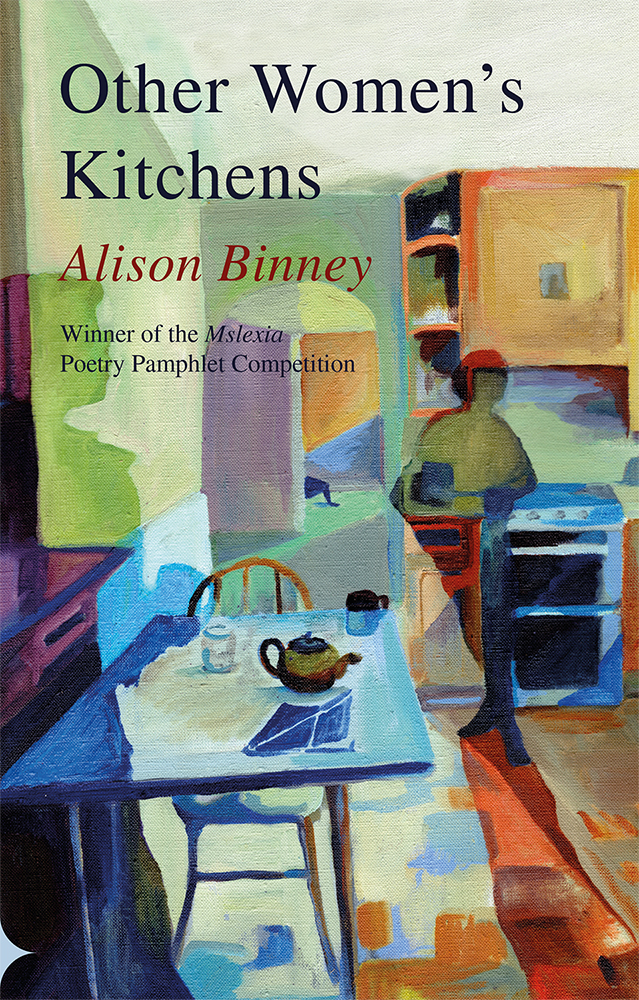
We are delighted to announce the publication of Other Women’s Kitchens by Alison Binney, the winner of the 2020 Mslexia Poetry Pamphlet Competition.
Seren poetry editor Amy Wack, who judges the competition said: “Heart-wrenching, succinct, lyrically musical, with a deeply personal theme, these poems won me over for their honesty and for educating me in this very particular politics of difference.”
Other Women’s Kitchens explores the challenges of discovering and owning a lesbian identity in the 1980s and 1990s and the joy of finding both love and increased confidence in that identity as an adult. Alison writes with flair and feeling about coming out and coming of age as a gay woman in 21st century Britain. Beautifully entertaining, pointedly political and very funny.
On winning, Alison said: “I’m so thrilled to have my debut pamphlet published by Seren – a publisher I’ve admired for a long time. This particular collection of poems is very close to my heart; I hope they will resonate with others, too.” Read more about ‘how she did it’ on the Mslexia website.
The Mslexia Poetry Pamphlet Competition is now open for entries for 2021. Closing date 6th December.
Other Women’s Kitchens is available now for £5.00.
This week’s Friday Poem is ‘Or With Open Window’ by Rosalind Hudis from her most recent collection Restorations. Rosalind was recently shortlisted for the Gladstone’s Writers in Residence Award 2022. Judging will take place in October.
Inspired by the art restorer’s keen eye and by a vivid empathy for people and events, Restorations, is a journey through memory. Suffused with colour, inspired by thoughts of people and places, by artefacts and how the passage of time shifts perspectives and erodes surfaces, these poems are beautifully complex explorations, full of curiosity and the adventure of seeing and listening.