
‘The Madonna of Oxfam’ from poet Judy Brown’s latest collection, Crowd Sensations, is September’s featured poem on the Poem a Month blog.
An Interview with Caroline Smith

Today we are joined by Caroline Smith, whose new poetry collection The Immigration Handbook weaves together stories of hope, frustration and pain, drawn from Smith’s experience as an Immigration Caseworker.
 Caroline Smith was born in Ilford and grew up in Hertfordshire. She originally trained as a sculptor at Goldsmith’s College. Her first publication was a 30-page narrative poem, ‘Edith’. Smith’s first full collection, The Thistles of the Hesperides (Flambard), is about the community of West Pilton in Scotland where Caroline lived in the 1980s when it was one of the most deprived housing estates in Europe. Using imagery and structure from Greek mythology, and direct stories from observed lives, the poet weaves a dense and dramatic tension between the harshness of reality and the lyricism of myth. Published widely in journals like Poetry Wales, Poetry Review, Staple, Orbis and Stand, she has twice won prizes in the Troubadour Poetry Competition. Smith has had work set to music, broadcast on the BBC and is also the author of a musical play, The Bedseller’s Tale, that was performed at the Edinburgh Festival Fringe. She lives in London with her family.
 Your new poetry collection, The Immigration Handbook, brings to life the stories from migrants and refugees that you hear every day in your work as an Immigration Caseworker. What made you choose to transcribe these deeply affecting stories, and was the process cathartic?
Writing thousands of letters to the Home Office over the years, I think about language, what turns a letter into a poem, the different functions of language and how by changing the angle or perspective on a subject you can show it afresh. My book is another way of contributing to the immigration debate, but it is primarily a book of poetry. It’s the stuff of my life so it’s what I make art out of.
When I was younger I couldn’t decide if I wanted to be a priest or a sculptor – so I campaigned for women’s equality and ended up as a poet! But in a sense these twin strands have come together in my poetry; my interest in social justice and my training as a sculptor who needs always to recreate the world in a different way.
I’ve never found writing cathartic. When I am most upset about something I want it to stop, I don’t write my way out of it. I see my work as an Immigration Caseworker and my poetry as separate. I get angry and try to change the system, but for poetry I need distance and reflection and I enjoy the creative process; the juxtaposition of odd fragments, creating something new, although I suppose it is cathartic in a Nietzschean way….. ‘Every art and every philosophy may be regarded as a healing… in that respect maybe.
Your poems are often (unsurprisingly) rather bleak, as they describe characters who have lost hope, who feel abused by the system, who don’t know where to turn. Do you hope the collection inspires people to see beyond the statistics and recognise the humanity of those seeking citizenship?
Yes that is exactly what I am hoping people will find in my poems – despite the bleakness, a celebration of humanity. My poetry contributes to the immigration debate; not by putting forward a set of arguments like I do in my letters to the Home Office, but by showing the humanity of people trapped in the system. Not every asylum seeker or refugee is a hero or angel. I have painted people as they are – with both frailties and resilience. We all have the same longings and desires to make something of our lives, it’s just that the people I see in our immigration surgery have a much tougher journey than most of us have ever had to bear.
You have a knack for finding humour in surprising places, for instance in your poem ‘Judgements’, which cleverly and comically portrays the bureaucracy behind judgements made on applications:
“… if the appellant claimed
that relevant matters did not happen I should not
exclude the possibility that they did not happen
(although believing that they probably did)”
Is humour an important part of poetry writing for you? And does it follow you into the workplace, and other aspects of your life?
Tragedy and comedy sit very close to each other. I’ve received so many misspelt letters…’I have been arrested by six uninformed guards’… ‘with wormiest regards’ … ‘I love your cuntry’!
Satire and the use of comedy is important in art. Slapstick and the absurd sharpen the truth of a situation. The most wildly improbable stories, can actually accentuate pathos and provide a break in the bleakness. Humour is also a great tool for showing up the absurdity and dysfunctionality of the Home Office which cruelly traps people without status and documents for years. It is the startling and unbelievable that is often true; whereas the predictable stories are most likely to be fabricated.
The Immigration Handbook was written over a number of years. Were these poems always destined to be released as a collection, or did the idea to publish these stories together come much later?
I always intended them to be a sequence of poems on the subject. I remember the night I started writing this collection. I filled a book with scrawling notes of incidents, characters and injustices. But it is one thing to have an idea for a poem, but then you have to wait for all the elements to come together and it often ends up going off in a completely different direction. Because I have so many stories fermenting in my head, unexpected elements mesh together.
Both my previous collections included sequences of poems. I’ve never been interested in writing a novel, but I love the opportunities presented by writing a number of individual poems that can work together and spark off each other to come at an idea from different angles and perspectives. Although I don’t write formally, the form of the poems are critical to me. I used to approach a sculpture from all angles as once. I would use different materials and found objects set against each other to break up the surface, juxtaposing different textures. And I think I do the same with poems using different intensities; some highly worked, some quick ‘line drawings’, some found reports. The difference today is that I’m carrying my studio of scraps and fragments and found objects around in my head!
And finally, tell us about your plans for the future- where will we see your name next, and are there any festival or events appearances you can tell us about?
I had a great time reading at the Ledbury Festival earlier this summer and my book launch at the Nehru Centre in London was just fantastic – courtesy of the Indian High Commissioner! I have a whole series of readings lined up for the autumn in Cardiff, London, Aberystwyth and I’m doing a couple of Festivals in Bristol and Chorleywood as well as a special event with Waterstones in Berkhamsted for National Poetry Day.
I am really enjoying giving readings and talking about my book but already the restlessness to create and my dissatisfaction with the world as it is, is pushing me back to my writing desk. When I have lots of ideas in my head I find it distracting to read. Now The Immigration Handbook is out I’m reading as much as I can, going to lots of poetry events and every play that I can get tickets for.
17th September: Free Verse, The London Poetry Book Fair.
3rd October: Poetry Can Festival, Bristol.
6th October: National Poetry Day, Waterstones Berkhamsted, Herts.
15th October: Chorleywood LitFest, 12 noon The Junction, Chorleywood, Herts.
18th October: Lumen Poetry Series, 19:00 Tavistock Place, London.
26th October: Aberystwyth University, English & Creative Writing Society.
27th October: Waterstones Aberystwyth.
30th October: Cardiff Book Festival.
24th November: 19:30 Waterstones Piccadilly.
The Immigration Handbook is available on our website. Buy your copy now: £9.99
Claim 20% off when you become a Seren Book Club member
Friday Poem – ‘In September’, John Ormond
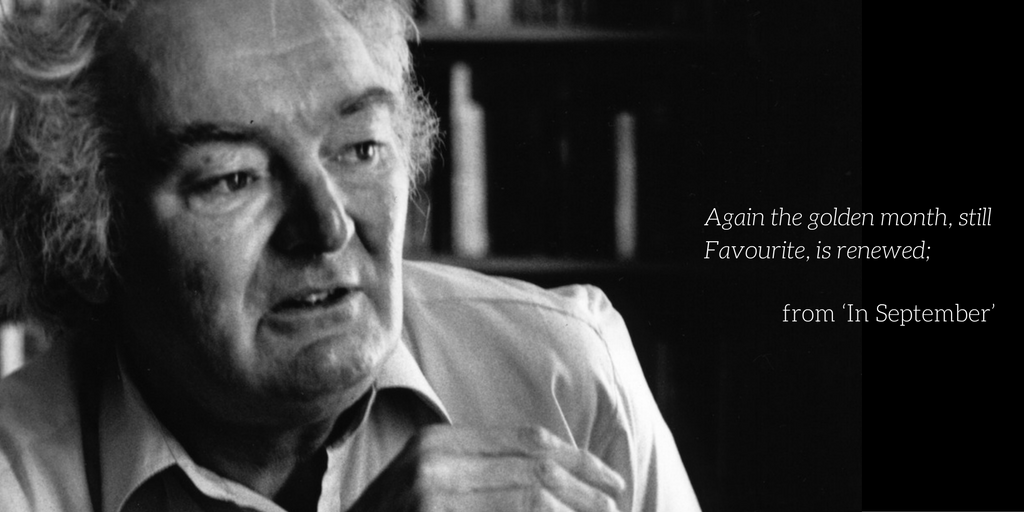
For this week’s Friday Poem we have ‘In September’ by John Ormond, from his Collected Poems, edited by Rian Evans. The poem was written for Glenys in celebration of their wedding anniversary, which fell on the 21st September. Since the two were married in 1946, that would have been 70 years ago.
 Penned late on the night of the 20th of September, probably 1970, because he’d forgotten to buy a card, it was deemed by them both to be infinitely preferable. Memories of key moments in their courtship are woven into the lines, while the storm door was the big black outer door of their home in Conway Road. The poem appeared in various anthologies: one which pleased Ormond was the Almanacco internazionale dei Poeti 1975 (La Pergola Edizioni) containing the Italian translation ‘In Settembre’ by the eminent translator, poet and critic Roberto Sanesi.
In September
Again the golden month, still
Favourite, is renewed;
Once more I’d wind it in a ring
About your finger, pledge myself
Again, my love, my shelter,
My good roof over me,
My strong wall against winter.
Be bread upon my table still
And red wine in my glass; be fire
Upon my hearth. Continue,
My true storm door, continue
To be sweet lock to my key;
Be wife to me, remain
The soft silk on my bed.
Be morning to my pillow,
Multiply my joy. Be my rare coin
For counting, my luck, my
Granary, my promising fair
Sky, my star, the meaning
Of my journey. Be, this year too,
My twelve months long desire.
John Ormond: Collected Poems draws together all of Ormond’s work, including unpublished material. It includes notes and commentary of the poems, and a bibliography of Ormond’s prose writing, films and writing about him. An index of titles and first lines completes this essential book.
Claim 20% off as a Seren Book Club member
Book nooks and beyond – where do you like to read?
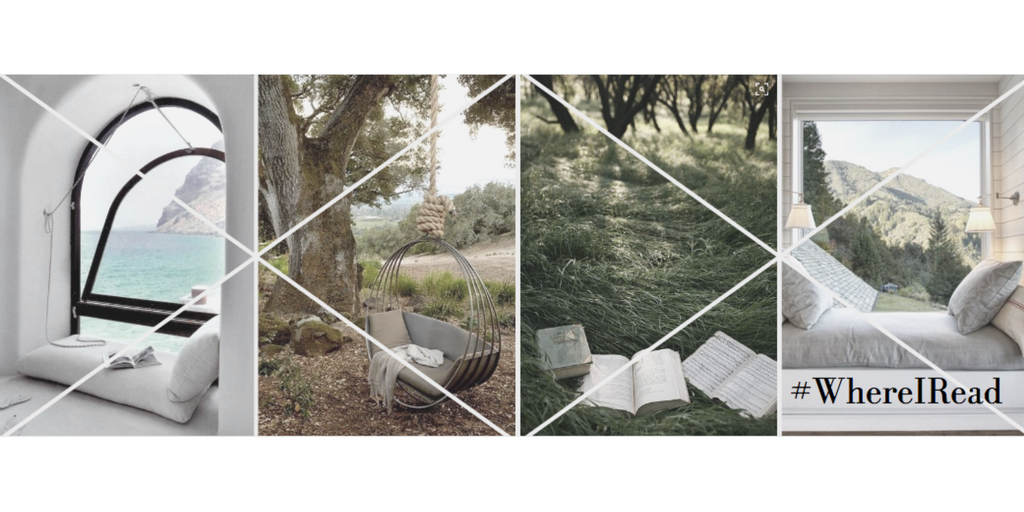
We all have our favourite place – or places – to settle down in with a good book. Is yours a book nook? A library? The garden (weather permitting)? Take a look below for some inspiration, and tell us about your favourite reading spot by leaving a comment on this blog post or sending us a tweet with the hashtag #WhereIRead.
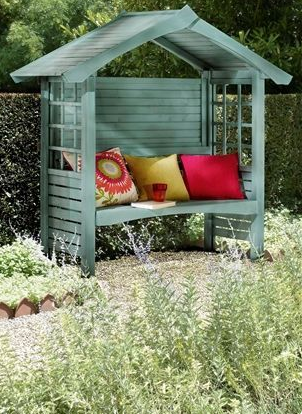
Book nooks
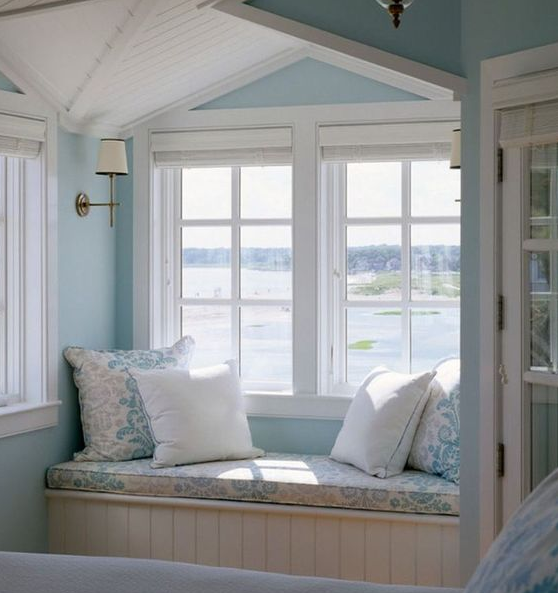
‘A lifelong dream of mine is to have a big cushioned windowsill to sit on with a great book, rain or shine – a world just outside my window and one in my hands too’
– Rosie, Marketing
Cosy corners in your house, decked with pillows galore, blankets and somewhere to put a mug of hot tea or coffee. What could be better?



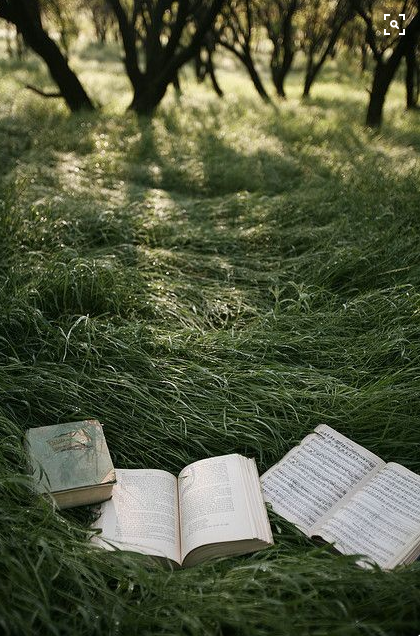
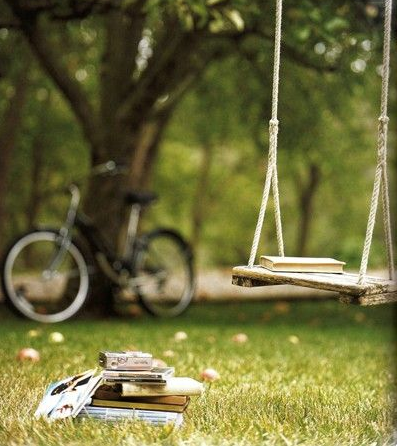
The great outdoors
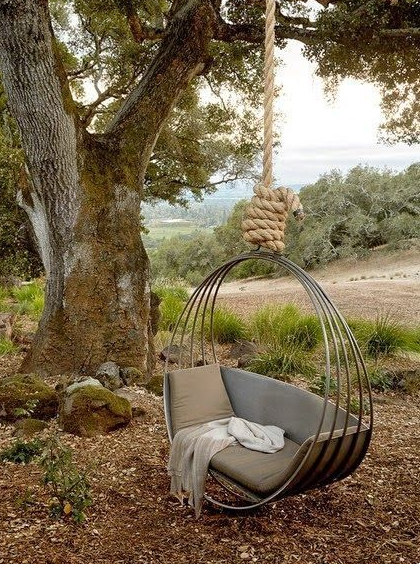
‘The Graveyard of St Mary’s Church is the best spot in Bridgend for a lunchtime read. Spent Bank Holiday Monday down Pobbles with surf, seagulls and David Mitchell. Winter’s days at home I huddle under blankets on a sun lounger in the garden, a gazebo on hand in case of rain.’
– Simon, Sales
Summer may be almost over, but we have many warm autumn days ahead – and what better way to spend them than by sitting in the garden, or even the graveyard (Simon!) with a book or two.
En route
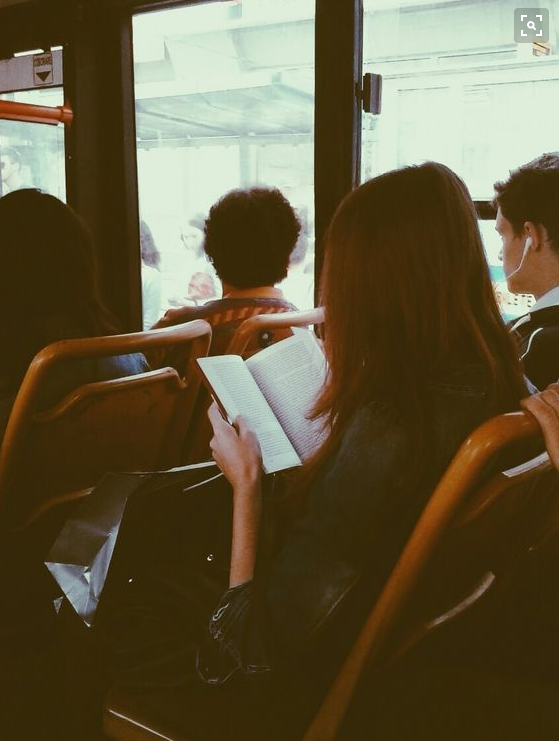
‘Especially since the arrival of the e-reader, reading on the go has never been more convenient. Perhaps this is why books such as The Girl on the Train have become such global bestsellers, as readers identify with the journey of the character. Reading on the go enables me to fit in a lot more reading that I would otherwise not be able to find the time for, and ensures that I spend that hour of commuting constructively. ’
– Ceri, Intern
Convenience is key. An un-put-downable book is a great distraction when you’re stuck on a long commute or journey – the only issue is having to put the book away when you reach your destination.
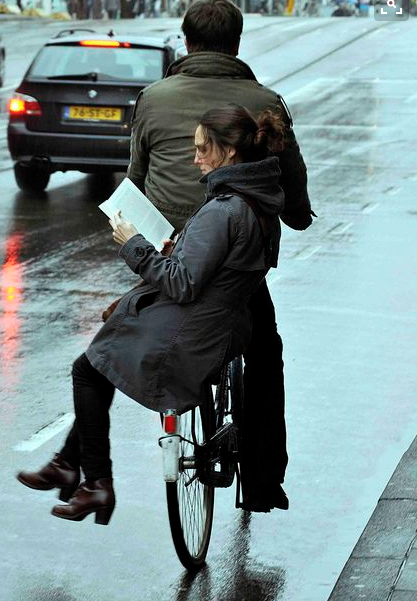
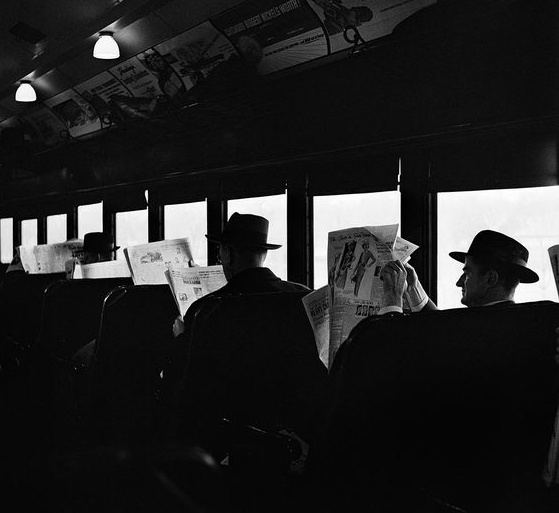
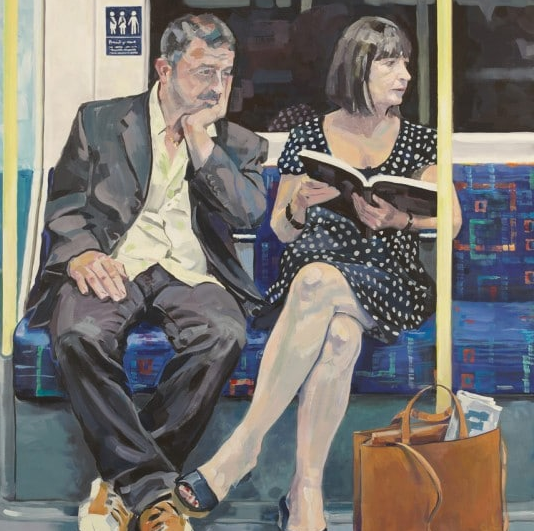
Where do you like to read? Tell us in the comments section, or tweet at us using the hashtag #WhereIRead
Follow us on Pinterest for more book nook and reading inspiration.


