Posted on

Deryn Rees-Jones is Highly Commended in the Forward Prizes

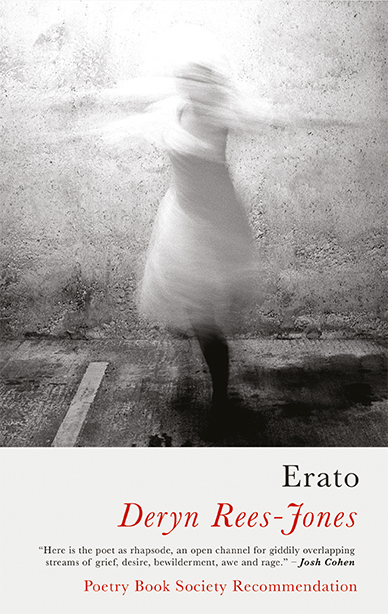
It was announced this week that ‘Firebird’ from Deryn Rees-Jones’ new collection Erato is amongst those highly commended by the judges in the Forward Prizes for Poetry. Other highly commended poets include Carol Ann Duffy, Inua Ellams, Hugo Williams, Ann Wroe and Morgan Parker.
Deryn’s poem can be found alongside a wide range of contemporary poetry in the Forward Book of Poetry 2020, which is available here.  
View the full list of highly commended poets on the Forward Arts Foundation website. 
About the book
Named after the Greek muse of lyric poetry, Erato combines documentary-style prose narratives with the passionate lyric poetry for which Rees-Jones is renowned. Here, however, as she experiments with form, particularly the sonnet, Rees-Jones asks questions about the value of the poet and poetry itself. What is the difference, she asks in one poem, between a sigh and a song? Erato’s themes are manifold but particularly focus on personal loss, desire and recovery, in the context of a world in which wars and displacement of people has become a terrifying norm.
Erato is available from the Seren website: £9.99

Posted on

More Good News for ‘A Simple Scale’

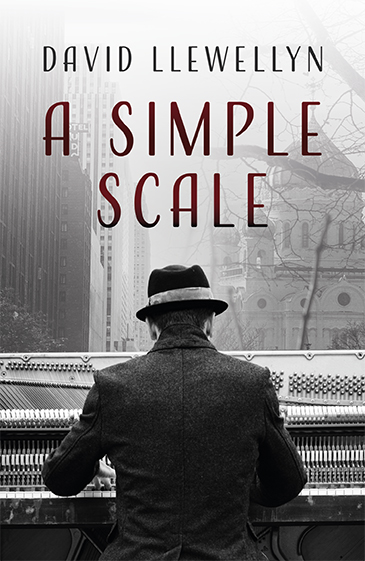
We are delighted to hear that A Simple Scale by David Llewelyn is amongst the six titles shortlisted for the Polari Prize 2019 after being longlisted for the award last month.
Speaking after the announcement, judge Paul McVeigh said: “What a rich and diverse body of LGBT themed work we had to read for this inaugural Polari Book of the Year. It was hard to select just 6 for this shortlist from work of such high quality.”
Fellow author and judge, VG Lee, added: “Six very different and exciting voices make up the shortlist for The Polari Prize, taking us from the English countryside to Soviet Russia and Post 9/11 New York, a Brighton garden to music-making in Berwick-on-Tweed, and a teenage rite of passage towards selfhood. Any one of these books is a potential winner because each is perfect in its own right.”
We wish the book every success and will be waiting with bated breath to hear who wins when it is announced on the 22 October at the London Literature Festival.
 
Read the full shortlist here. 
Book tickets for the Awards Ceremony here. 
 
About the Polari Prize
Now in its ninth year, the Polari Prize is a celebration of literature that gives a voice to the LGBT+ community whether it be a title written by an LGBT+ author or one exploring LGBT+ themes. 2019 is the first year they have run a prize focusing on the work of established authors alongside their First Book Prize.

Posted on

‘Erato’: An Interview with Deryn Rees-Jones

Deryn Rees-Jones is the author of four previous collections of poetry, shortlisted variously for the Forward (first collection), TS Eliot and Roland Mathias prizes. Last month, she returned with her new collection Erato, which is a Poetry Book Society Summer Recommendation, but where does she look to for inspiration and how do these themes come through in her work? In this interview,  we talk to her about the new book and find out more about the themes, artists and imagery that inspire her.


Song comes through in many of the poems in Erato. In ‘Líadain and Cuirithir’, a poem about tragic love between two 7th century Irish poets, even the woods are singing: “When we sang, the woods sang back”. Do you consciously seek inspiration from the outdoor world?

Throughout Erato, I am thinking through longstanding questions I have about the role of the lyric poem, so often criticised because of its potential for individualism, introspection, and solipsism. ‘Líadain and Cuirithir’ is a lyric which attempts to enjoy its own musical beauty. But – and this is the important thing — I also erase it, score it through — because I’m signalling early on in the book my uncertainty about writing about the complexities of a relationship in an elegiac, romanticised way.  Those erasures and errors continue to be explored as the book expands on its thinking through a series of repetitions. So yes, song is a central part of the book. And I’m trying out what that sense of correspondence between the self and the natural world might be.

As the book opens out I think about all sorts of songs—and test out my feelings and thoughts about and through them. There’s bird song, the little song of the sonnet, the seductive song of the siren, which is also in the modern world, a different sound of danger and distress than the song of the sirens when Odysseus binds himself to the mast of his ship so that he can hear them but not be lured to his death. There is for me, now, in the current political climate, a sense that I need to question, more than ever, what I am doing, with language, in my engagement with the world. The phrase ‘Look Up’ appears on several occasions. With poetry – and I think poetry is an inherently social act — comes responsibility. A long answer to your question! But yes, I do take deep pleasure in the natural world, but always with an awareness that the world exists in a complex web of interdependences.

The poems often juxtapose beautiful images with sombre ones of loss. Can dark moments contain their own moments of inner beauty?

How do we make the privacy of the lyric engage with, be ethical, and encompass the world? Terrible things are happening, and every day on the news or on my twitter feed, I, all of us, become sometimes, for a moment, aware of them. Uprootedness, war, climate emergency… There is always a chance for empathy, for action. But often, we do nothing. One small way I have attempted to deal with all this knowledge of pain and difficulty has been to experiment with the formal ‘beauty’ of poetic structures.  So there are a lot of prose-like pieces which I have tried to structure like a sonnet. They carry something of the sonnet’s ‘little song’ but also need to find a new way of carrying them. So form and ‘beauty’ become thrown into question as they are pulled to a point of impossibility and transform into something else.

“The water and reflection ask / no question of themselves” in ‘Great Crested Grebes’. Do you think that too much introspection can be a barrier to creativity?

We all need to think and feel as much as we can, don’t we? So much in our lives demands that we think and live within often damaging and coercive and reductive systems. Or learn not to feel at all. I feel lucky that the society I live in still feels safe, and relatively free. But what has happened over the course of the last four or five years is a reminder of how quickly things we have taken for granted, can change. Creativity should not be a luxury.

The poems in the Courtship section of Erato are a riot of colour, sound and actions seen through the lives of birds. How do you make your selections of which birds and which attributes to use?

Because of my name, which means bird,  birds are deeply written into a sense of my own identity. Some of the birds in the book hold particular personal resonances; some I went looking for in books and online. I also have in mind birds as creatures which move between worlds of the living and the dead. The wren of Burying the Wren was both here and not here. Sirens in Greek mythology are also half-woman, half bird….

We were compelled to take a deep breath when reading this in the poem ‘Walk’: “I remembered my son’s look. It’s a kind of scary beauty, mum, he’d said one day but I could no longer recall why. / I was scared now / and took a deep breath. It felt like a wounding. I said, But even in the darkness, you know you are alive.” What techniques do you use to let a poem breathe in order to sound alive?

Each poem happens differently. Increasingly poems seem to get harder to write. But Erato is a book that is less concerned with poems as individual objects and more concerned with the sweep and trajectory of a book as a vehicle for thinking something through. I experimented with that in my earlier book Quiver which also explored ideas through the creation of a narrative structure. I would say that I am increasingly interested in using the book form to create an imaginative landscape for thinking. Once I finished Erato I realised that really it is part of a bigger sequence. There’s a piece in Erato, ’Fires‘, which tries to explore the link between trauma and creativity. Later this year I am publishing a little lyric essay/ poetic fragment called ‘Fires’ with Shoestring Press that explores the idea of creativity further. For better or worse, I already have the next book after this mapped out in my head!  So I am thinking of Erato as the first part of a trilogy that explores, even in terrible times, a vital, hopeful universe.

What are you most particularly hoping to find when you look beneath the foliage, the plumes and the clothing, for material to create a poem from?

Just as each poem happens in a different way so, too, each poem has its own task. The important moment for me is in bringing a book together, and asking all those elements which are fizzing away, making their own plans, repeating and transforming themselves, to have a conversation so that they become part of a more meaningful whole.

Your connection to the visual arts, and artists such a Paula Rego and Francesca Woodman, are themes that run through many of your poems and collections. What is it about the visual arts that inspires you and which are your biggest influences?

Critical and creative work often for me go hand in hand. Sometimes I am making conscious connections, sometimes not, and what goes on unconsciously excites me, of course. In Burying the Wren I wrote a sequence to Rego’s incredible and moving dog women pictures as a way of trying to understand them, and also as a way of trying to understand, or at least put words to, my own feelings after the death of my husband. Rego’s pictures address agency, pain, grief but importantly, too, they are pictures of metamorphosis, scratched out with huge energy, in pastel on canvas. I have spent the last two years working intensively on a critical book Paula Rego: The Art of Story, which will be published later this year, and getting to know the trajectory of Rego’s work over the last sixty years so intimately has been a huge pleasure. She has taught me something, I hope, about how to develop imaginative structures, and has prompted me to think about the relationship between the personal and political, the moment, and the historical.  Rego creates a prism of meaning through image, and story, the personal and the fabular. I think this gave me a way of thinking about giving form to complexities of experience in time. Like Rego, like many women artists, Woodman is also interested in representing the frequently objectified female body in a complex way. The body is central to Erato too  – the memory of a beloved’s body, the bodies of saints, the bodies of the dead, observed bodies, dolls’ bodies, the political body…

When reading the poems in Erato we often found tears in our eyes. If they fell on the not yet gestated wildflower seeds in ‘Gardens’, what flowers would you hope they would grow into?

It’s important to me that people are moved by the book. And I am aware that on one level I am telling a very personal story.  I wanted that to be simple and accessible, and around that things are woven in.  ‘Gardens’ is a poem about wishes, about transformations. I would really like to think that the whole book, now it has been published,  is something generative, that is not mine, but which, in making a connection between writer and reader, takes the reader somewhere else.


Want to hear more? Deryn is appearing alongside Tess Gallagher and Nessa O’Mahoney at Books Upstairs in Dublin later this month. If you’re local to the area why not pop along? More details can be found here


Erato is available on the Seren website: £9.99

Enjoy 20% off every book you buy from us when you create your free Seren account.

Posted on

‘Basic Nest Architecture’ by Polly Atkin on the longlist for the Michael Murphy Memorial Prize 2019

We are delighted to hear that Polly Atkin’s debut collection Basic Nest Architecture is on the longlist for the 2019 Michael Murphy Memorial Prize.
The Michael Murphy Memorial Prize is a biennial prize for distinctive first book of poetry in English published in Britain or Ireland. This year marks the fifth biennial prize and the winner will receive £1000. The intention of the prize is to give recognition to a new poet, in the same way that Michael Murphy, after whom the prize is named, was awarded recognition in 2001 when he received the Geoffrey Dreamer Prize from Poetry Review as ‘New Poet of the Year’.
Polly is one of 11 poets to have been named on the list and the short list will be announced on Tuesday 9th July, with the winner being announced on National Poetry Day.
View the full longlist here.
 
About the Book:
Polly Atkin’s debut poetry collection, Basic Nest Architecture, is complex, vivid and moving. Based in Grasmere, in the Lake District, the author is inspired by the landscape and by the famous Romantic poets such as Wordsworth and Keats, who have walked there and written about the fells and lakes. Nature is a guiding presence, but the author’s personal story, of enduring a little-known and sometimes debilitating illness, is also the backdrop to this striking poetry. Formally, this work is more akin to the metaphysical poets in its fervent use of metaphor, in its multiple layers of meaning and in its quest for answers to the most pressing questions of mortality.
Basic Nest Architecture is available from the Seren website: £9.99
 

Posted on

Maria Donovan Shortlisted for Hall & Woodhouse DLF Writing Prize

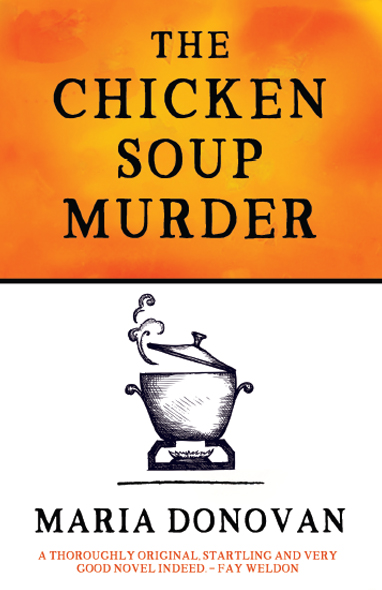
This cover shows a line illustration of a soup pot boiling on a stove. The top of the cover has an orange background with the words The Chicken Soup Murder over the top. By Maria Donovan.

We’re delighted to hear that The Chicken Soup Murder was named the runner-up at the awards ceremony held in July. 
Seren author Maria Donovan has been shortlisted for the Hall & Woodhouse DLF Writing Prize. The prize, which runs as part of the Dorchester Literary Festival, carries on the festival’s long tradition of celebrating and investing in it’s ‘homegrown talent’ and is open to any published author based in or with a close connection to Dorset, Somerset, Wiltshire, Devon or Cornwall. It’s therefore no surprise that Dorset based Maria’s debut novel The Chicken Soup Murder has been chosen alongside books by Susmita Bhattacharya, Dee La Vardere and Emma Timpany.
Read about Maria’s reaction on her blog here.
About the book:
Maria Donovan’s debut novel, The Chicken Soup Murder, subverts the crime and murder mystery genres in a meditation on bereavement, friendship and the meaning of family. This emotionally involving coming-of-age narrative is told with resilience and humour by eleven-year-old Michael, a thoughtful boy who tests the boundaries of his own behaviour as he carries a burden of knowledge no one else seems willing to share.
Praise for The Chicken Soup Murder:
‘This is a great story, told with sensitivity, and a first class an eye for comedy. A memorable read.’ – Rubery Book Award
‘Handled with great sensitivity, this has great comedy, exciting developments and very moving moments, right through until the nicely worked solution to the mystery.’ – The Daily Mail
‘The Chicken Soup Murder is a thought provoking, yet gentle heartfelt hug of a tale, and a very lovely read indeed.’ – Love Reading
The Chicken Soup Murder is available on the Seren website: £9.99 

Posted on

Jonathan Edwards wins the People’s Choice Award at Wales Book of the Year

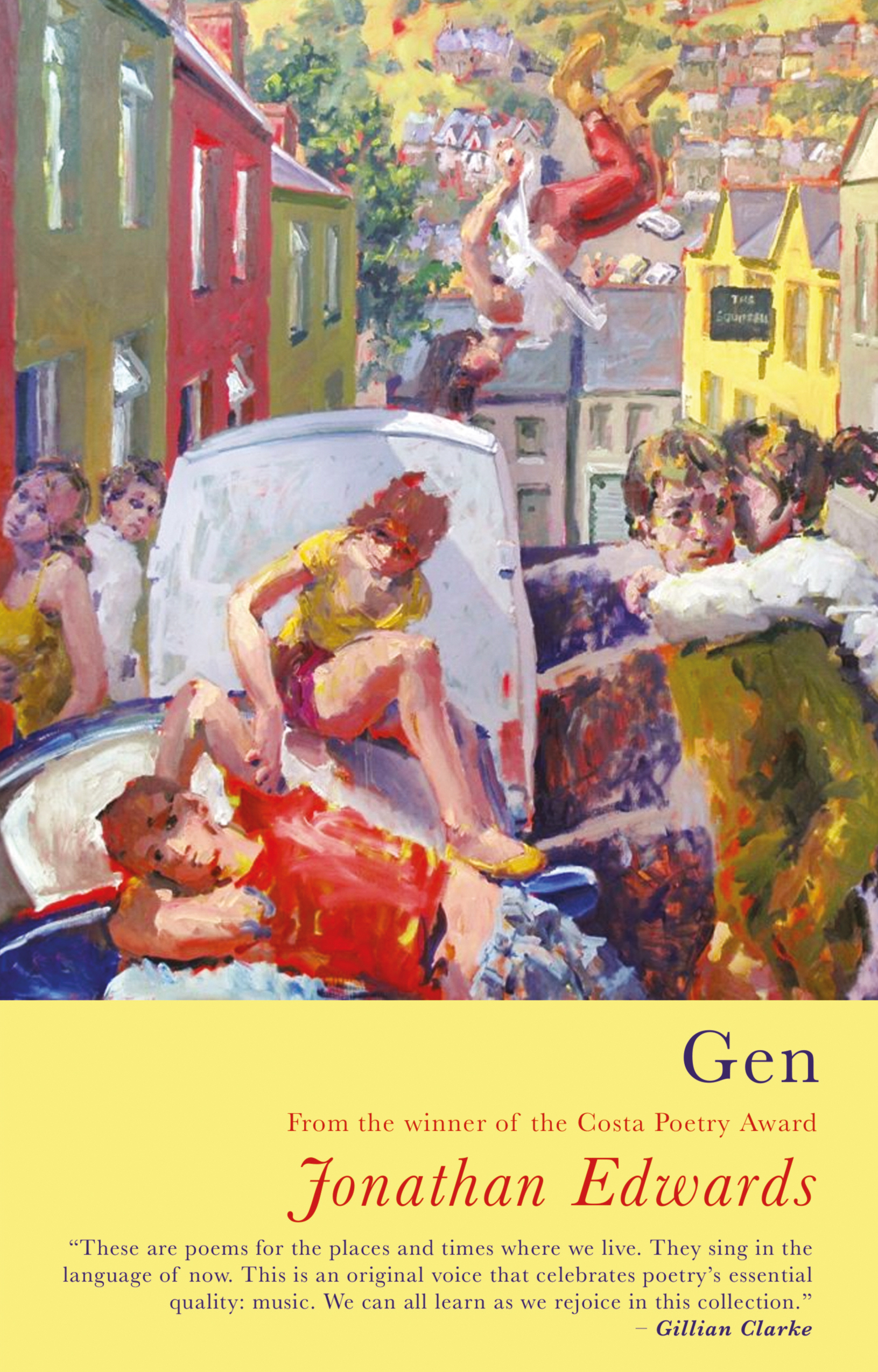
In a ceremony held on then 20th June 2019, it was announced that poet Jonathan Edwards has captured the imagination of the public, once again, to win the Wales Book of the Year People’s Choice Award with his latest collection Gen. The public had until the 7th June to vote for their favourite book from the full Wales Book of the Year shortlist which included poetry, fiction and creative non-fiction titles.
“The one thing that every poet dreams of when they sit down to write is that one day a reader will connect with, enjoy and be moved by their work, so an award like the Wales Arts Review People’s Choice Award is an absolutely wonderful thing to receive,” says Edwards. “I am hugely grateful to everyone who took the time to vote and to all of the organisers of festivals, readings and workshops who have given me the opportunity to get this book out to readers. Enormous thanks to Literature Wales for organising such a brilliant celebration of writing from Wales.”
Gen is Jonathan’s second collection of poetry with Seren, his first My Family and Other Superheroes having won the Costa Poetry Prize in 2014.
Poetry editor, Amy Wack said, “We love smart at Seren but we also embrace the smart AND the popular! Congratulations to Jonathan Edwards and his wonderful collection Gen.”
Gen is available from the Seren website: £9.99

Posted on

Jonathan Edwards shortlisted for the Gladstone’s Library Writers in Residence Award

We are delighted to hear that Seren poet Jonathan Edwards has made the shortlist for the prestigious Gladstone’s Library Writers in Residence award with his latest collection Gen, one of 12 titles to be selected from a pool of over 60 entries from all over the world.
Now in its ninth year, Gladstone’s Library’s Writers in Residence programme was set up to support contemporary novelists, poets, and publishing industries in the UK. With this in mind the shortlist includes titles from a range of genres including historical fiction, crime fiction, creative non-fiction, literary fiction, dystopian fiction and of course poetry.
The winners will be announced at the Gladfest 2019 launch on Friday, 6th September; and the programme will be officially launched on Monday, 25th November at the National Liberal Club in London when the winning authors will read from their work.
View the full shortlist here.
 
About the book:
Gen is Edwards’ second collection of poetry. His first, My Family and Other Superheroes won the Costa Poetry Award in 2014 with the judges saying it was “joyful and dynamic – a collection that’ll make you laugh and make you think”.
A book of lions and rock stars, street parties and servants, postmen and voices, Gen begins with an exploration of youth and young manhood as the author sets his own Valleys upbringing against the ‘50s youth of his parents and the experience of a range of pop culture icons, including Kurt Cobain and Harry Houdini. With his characteristic humour, warmth, formal range and swaggering music, it is a worthy follow-up to his popular and critically-lauded debut.
Praise for Jonathan Edwards and Gen:
“How fluently these poems capture the place and time we call now! This is an original voice that celebrates poetry’s essential quality: music. We can all learn as we rejoice in this collection.” – Gillian Clarke
 
Gen is available from the Seren website: £9.99

Posted on

Friday Poem – ‘Boom!’ by Carolyn Jess-Cooke

This week’s Friday Poem is ‘Boom!’ by Carolyn Jess-Cooke, the title poem from her collection of the same name, and appears in the anthology Writing Motherhood.

A celebration of parenthood, the poems chronicle all the ups and downs of raising a family, from the rapturous moments, such as ‘Wakening’ where the baby is observed: ‘the seedling eyes stirred by sunlight’. To the tragi-comic ‘Nights’ full of ‘small elbows in the face’ and ‘assailed by colds and colic’ and the darker fears and depressions that can afflict parents.

As we comtemplate the feelings of wonder and love evoked by ‘Boom!’ We dedicate the weekly poem to Seren poets who have recently become new mothers: Kim Moore (May 24th) and Emily Blewitt (May 31st).


BOOM! is available from the Seren website: £9.99

Writing Motherhood is available on the Seren website: £12.99

Create your free Seren account and enjoy 20% off every book you buy from us.

Posted on

‘A Simple Scale’ by David Llewellyn longlisted for the Polari Book Prize 2019

Update: A Simple Scale is also amongst the 6 names shortlisted for the prize! Read more here.
Publisher Mick Felton said: ‘We’re absolutely delighted that A Simple Scale has been shortlisted. It’s his best book yet, a page turning story of sensitivity and drama.’
 
At an event held at the Southbank Centre on the 10th of June, the longlists for the 2019 Polari Prizes were announced and Seren author David Llewelyn is amongst the names in contention for the new Polari Book Prize with his novel A Simple Scale.  
Now in its ninth year, the Polari Prize is a celebration of literature that gives a voice to the LGBT+ community whether it be a title written by an LGBT+ author or one exploring LGBT+ themes. 2019 is the first year they have run a prize focusing on the work of established authors alongside their First Book Prize and together with Llewellyn, the list for the new Polari Book Prize includes the likes of Sarah Moss, Patrick Gale and Andrew McMillan.
Announcing the names of the 24 writers in contention for this year’s awards, Paul Burston, author, award founder and chair of the judges said: “The books on this year’s longlists celebrate LGBT lives in their many varieties. At a time when reactionary forces are on the rise and political battles won many years ago are being fought all over again, books that tell the truth about who we really are serve a powerful purpose. Stories about trans lives and gender identities feature heavily. There are also books about the changing landscape of our collective experiences, from gay shame to equal marriage. Together these longlists represent the very best in emerging and established LGBT literary talent today.”
The shortlists will be announced on July 26th at a special Polari Literary Salon also held at the Southbank Centre with the winners being announced at the London Literature Festival in October.
View the full longlists here.
 
About the Book:
In A Simple Scale, a piece of music starts a story that will range across Soviet Russia, McCarthyite Hollywood and post-9/11 New York, as the mystery of the lives of two gay composers is uncovered. David Llewellyn explores the points at which the personal and the political meet as narratives of love, death, deceit, the CIA, atomic bombs and classical music unfold.
A Simple Scale is available from the Seren website: £9.99

Posted on

Friday Poem – ‘Luminosity’ by Rhiannon Hooson

Our Friday Poem this week is ‘Luminosity’ by Rhiannon Hooson, which appears in her collection The Other City, and Poems from the Borders pamphlet.

Rhiannon Hooson is a gifted young poet born in mid-Wales and currently living in the Welsh Marches. The Other City, her debut collection of poems, was shortlisted for the Roland Mathias Prize.

Sharply focused, beautifully resonant, deeply felt,  some poems reference and re-make narratives from classical Greek myth, some rework elements of Welsh history, ancient and modern.

‘Luminosity’ contemplates Alfred Watkins’ moment of inspiration in Herefordshire, when he proposed the existence of ley lines.


The Other City is available from the Seren website: £9.99

Poems from the Borders is available from the Seren website: £5.00

Create your free Seren account and enjoy 20% off every book you buy from us.