Poetry
Category: Individual Collections, Poetry
Number of pages: 64
ISBN: 9781781724583
Publication date: October 31, 2018
Price: £9.99
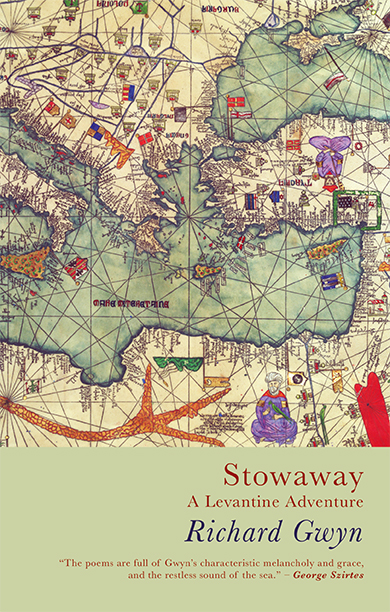
Richard Gwyn offers us a rich mix of history and memory in his new poetry collection, Stowaway: A Levantine Adventure. The author says:
This collection, held together by a loosely knitted narrative around an unnamed protagonist, a kind of anti-Ulysses, is based on a number of journeys that the central character takes around the eastern Mediterranean: journeys that I myself might have taken. However the speaker in the poems – whether first or third person – seems to transcend historical time-zones and incorporates elements of the mythic, and even the magical (shades of The Thousand and One Nights), as well as certain historical phenomena, such as Cavafy’s Alexandria, the Greek diaspora, the geography of the Aegean islands, the Greco-Turkish War (1919-22) the disaster of Smyrna 1922, The deportation by the Germans in WW2 of the Jews from Thessalonika (called throughout by its Greek name, Saloníki); the Arab-Israeli conflict, the Lebanon war (1981-2), the Balkan wars of the 1990s, the invasion of Iraq, the Syrian civil war and the rise of Islamic State or Da’ish. At the same time, the reader is conscious of the fact that this collection is being composed retrospectively, and subject to all the frailties of memory. Around half of the 46 poems are in prose poem form, the others in a more lyrical, traditional format. Five of the poems form a sequence, scattered throughout the first half of the book, and refer to the ‘Stowaway’ central to the narrative of the collection, although the protagonist of the Stowaway (and the book) continues on his journeys, settles down in Smyrna (Izmir) and witnesses many of the catastrophes of the region over the 20th and early 21st centuries mentioned above. The reader will come to an understanding that the stowaway’s story transcends linear time, and the character himself is of a semi-mythological status. The stowaway poems are intermixed with first person poems: sometimes it seems the speaker there is the stowaway, sometimes more a retrospective narrator (or meta-narrator). In this way his story and the telling of it merge.
Gwyn is the laureate of ‘Reckless Travel’ – one of the poems in this richly imagined new collection. Winner of the Wales Book of the Year for his memoir, Vagabond’s Breakfast, Gwyn is also noted for his inventive prose-poems, lyrical fiction and artful translations.
Richard Gwyn
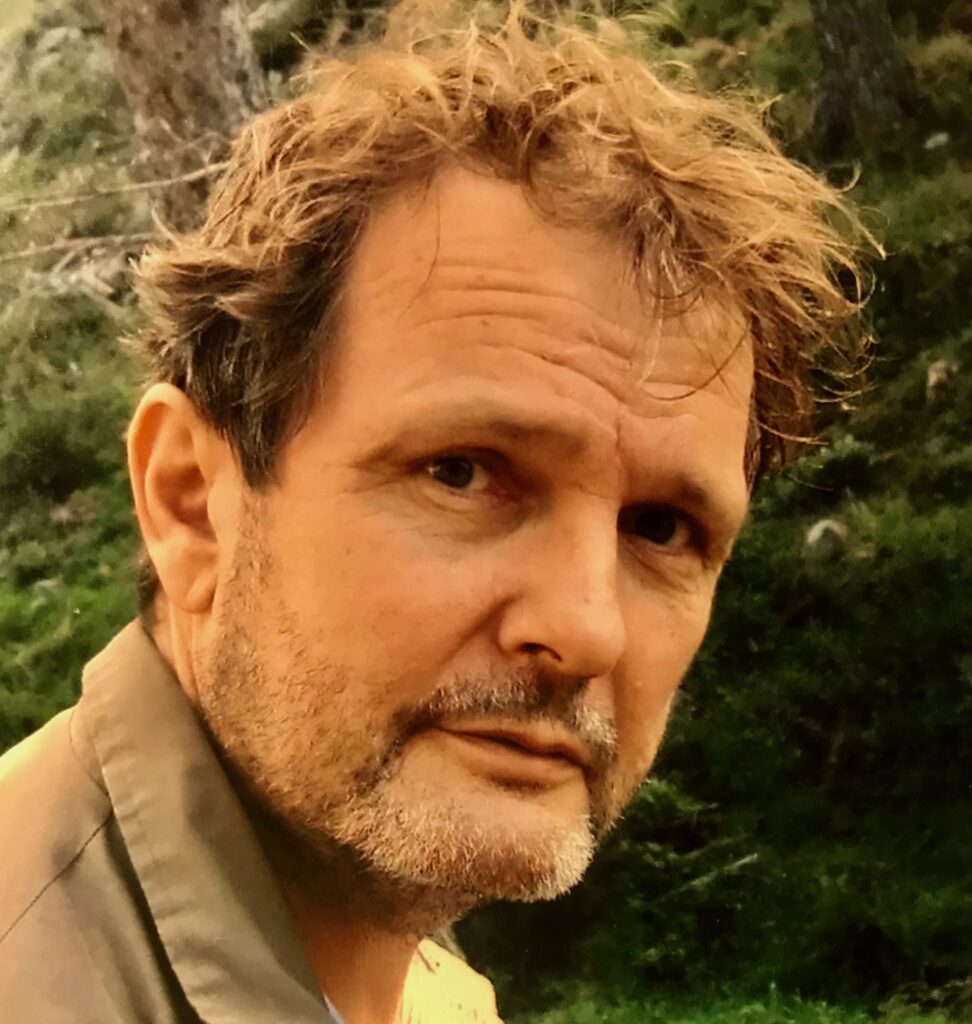
Richard Gwyn grew up in Breconshire. He studied anthropology at the London School of Economics, but dropped out after two years and after a brief career as a punk poet spent the decade of the 1980s travelling around the Mediterranean, working on fishing boats and as a waiter in Greece, and as an agricultural labourer in France and Spain. Following several years of alcoholic vagabondage he fell seriously ill in Barcelona. His account of these years appears in The Vagabond’s Breakfast (which won Wales Book of the Year for non-fiction in 2012). Gwyn started out as a poet, and has published four collections, most recently Stowaway: A Levantine Adventure (2018), and is editor of an anthology of work by Welsh poets, The Pterodactyl’s Wing (2003). His first novel, The Colour of a Dog Running Away (2005), set in Barcelona, was translated into many languages and brought him international recognition. His other novels include Deep Hanging Out (2007)) and, most recently, The Blue Tent (2019), which appeared in French translation as Les Invités (Gallimard 2022). He is a translator from Spanish, specialising in poetry and short fiction. Between 2011 and 2016 he travelled widely in South America, which resulted in The Other Tiger, a major anthology of contemporary Latin American poetry (2016). His other translations from Spanish include Impossible Loves by Darío Jaramillo and Invisible Dog by Fabio Morábito. For ten years he was Professor of Creative and Critical Writing at Cardiff University. He is the author of Ricardo Blanco’s Blog, which can be found at richardgwyn.me.
“Elegant and edgy, Gwyn gives a picturesque description of his travels as he rubs elbows with mercenaries, drunkards, custodians of Golems and men of unclear allegiances—all versions of himself?—while seeking to travel above all into his own interior and into his poetry.”
Jessica Sequeira, berfrois
“
This poetry collection by Richard Gwyn conjures up a dreamlike realm in which borders are traversable, identity is hazy – or even false, and origins are entirely besides the point. It’s not even the destination that is of concern, for the most part, but rather the journey itself. Characters rarely figure out who they are, or where they are, or why they are.
Gwyn stokes all this incertitude with superb poise, blending myth, history, comedy, and seemingly his own experiences of exploring the Levantine for a decade.”
Sophie Baggott, Wales Arts Review