Books Books
Category: Ebooks, Individual Collections, Poetry
Number of pages: 72
ISBN: 9781781724934
Publication date: February 28, 2019
Price: £9.99
Category: Ebooks, Individual Collections, Poetry
Number of pages: 72
ISBN: 9781781724941
Publication date: February 28, 2019
Price: £7.99
Out of stock
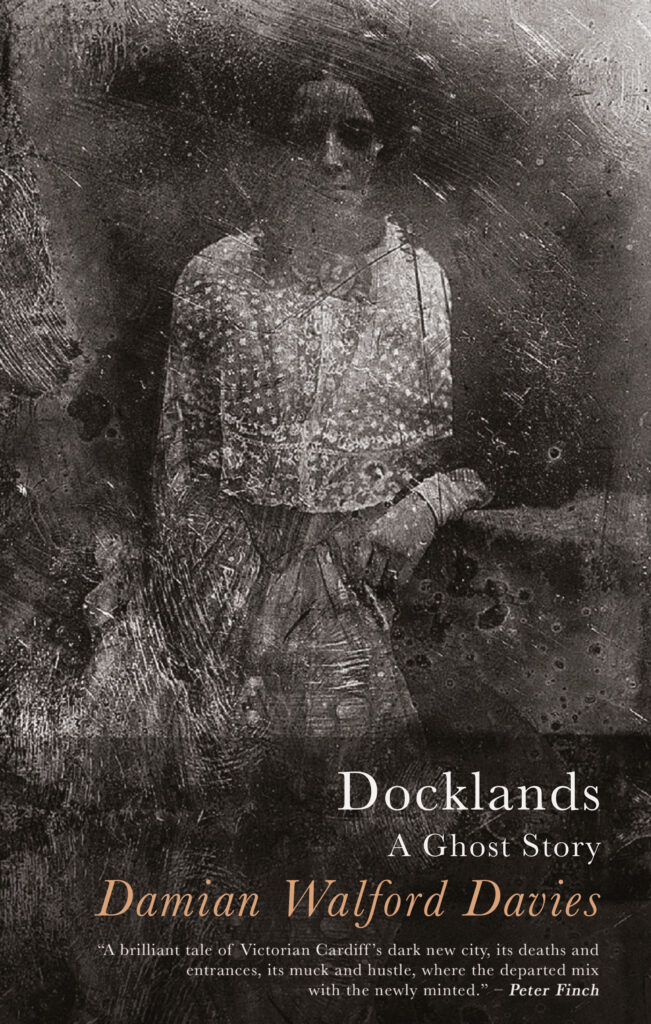
Victorian Cardiff –the world’s busiest port, booming on the back of the coal mined in the Welsh valleys – is vividly imagined through the eyes of the speaker of Damian Walford Davies’ new poetry collection, Docklands: A Ghost Story.
It is 1890, and three dark terraces down the docks are to be levelled to make way for a new square. The commission is given to the chief partner in a successful Cardiff architectural firm –a man supremely sure of himself. Yielding to docklands’ temptations, he becomes ever more estranged from a wife tormented by the death of their child. As the square rises from the ruins of the terraces, the louche architect encounters ‘the girl’.
Seen through the architect’s eyes, the well-to-do streets of an expanding Cardiff and the shady spaces of the docks become the stage for a haunting play of presences that threaten to unravel his uneasy bourgeois world. Among his designs – churches, neo-gothic villas and gargoyles – is a mermaid-figure fountain that becomes a totem of dark desire. The architect’s broken wife, Eleanor, is a central and unsettling presence. Among the architect’s acquaintances – conjured as characters in their own right – is the Irish cabbie, O’Driscoll, who regularly ferries him to dark assignations and who confirms rumours of a ghostly girl; the ‘ladybirds’ or street walkers with whom the architect consorts; and Cardiff’s trade magnates. Also making an appearance in the architect’s social circle are the Dahls –the parents of the famous Cardiff-born children’s author.
A disquieting fin-de-siècle ghost story in verse, Docklands explores grey worlds at the edges of the eye, conjuring late-Victorian Cardiff’s hustling, booming, sullied docks –and the horrors they conceal. A study of the violences perpetrated against wives and daughters, and of patterns of grief and longing, this disturbing sequence summons lost children and dark desires.
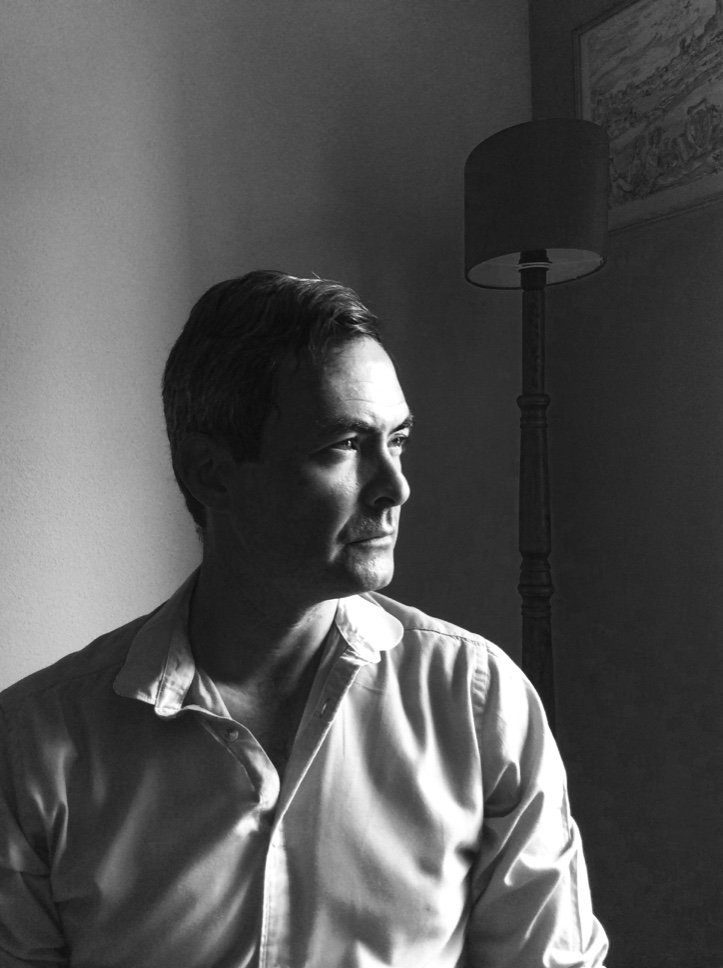
Damian Walford Davies
Damian Walford Davies was born in 1971 in Aberystwyth. He is Deputy Vice-Chancellor at Cardiff University and was formerly Head of the Department of English and Creative Writing at Aberystwyth University. A poet, librettist and academic specialising in the intersections between literary and political culture in the Romantic period, he is the author of several Seren collections. He writes creatively and critically in both English and Welsh. His academic interests and creative methods intermix: narrative and an interest in counterfactuals are key to the former as research is to the latter. His poetry is prompted and informed by deep histories of place, cartography and psychogeography. His work to date is a concerted exploration of historical terror and trauma, marginalised voices, gaps in the record and the availability of the past through the use of the single-voice perspective of the dramatic monologue, through which troubled social and psychological worlds are conjured. He also has a keen interest in the relation between poetry and visual art. A broadcaster and presenter, he regards performance as a core element of his poetry.
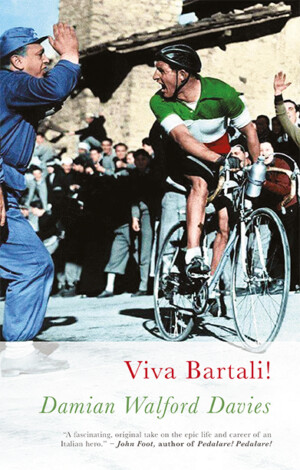
His collection Viva Bartali!, a biography-in-verse of the great Italian cyclist Gino Bartali was published by Seren in 2023.
“I relished the complexity of these poems’ language and their references. Sometimes their syntax skillfully takes you to the brink of incomprehension – then catches you up on a line or stanza break to lead you more deeply into a world that is remote, yet here made satisfyingly plausible and intriguing.”
Jenny Hockey, Write Out Loud
“Never have I read such eloquent descriptions of Cardiff’s streets … a well-researched insight into our city’s past, as well as a thoroughly engaging tale of abuse, and grief that will send a shiver down your spine.”
Chris Andrews, Buzz Magazine
“A meticulous study of place, time and atmosphere, which opens the reader’s eyes to a city behind the city, and to lives behind our own.”
Anna Lewis, Wales Arts Review
‘When much new poetry looks no further than the poet’s navel, this kind of imaginative leap is a tonic.’
The Telegraph