This week’s Friday Poem is ‘Fish. Oh. Fish’ by Judy Brown from her forthcoming collection Lairs.
Lairs brings together something primal and secret – the lair as haven for a wild or feral animal – with the poem framed as a mathematical equation. In these terms, the ‘lair’ is a kind of nest, a beautiful accumulation of dense detail. The poems are introspective, by turns mocking, fearful and analytical. Judy Brown’s use of language is innovative, while maintaining moments of vulnerability and moving self-awareness. In these exquisite poems, the lair is both the community at large and a dark and intricate interior space where something wild still survives.
This week’s Friday Poem is ‘The meaning of employable’ by Bryony Littlefair from her forthcoming debut collection Escape Room which will be published on National Poetry Day.
Escape Room is the long-awaited debut collection by Bryony Littlefair. This is a collection exploring the possibilities of freedom, goodness, meaning and connection under late capitalism. Can we escape the imperatives of money, gender and human fallibility to freely construct our own identities – should we even try This complexity is balanced with a resolute joy, humour and irony. If you’ve ever grappled with ‘a desire you could not understand / like wanting to touch dark, wet paint’, had an identity crisis at a corporate away day, or just not known what to do with your Sunday morning, the Escape Room is open for you.
We’re excited to announce that on National Poetry Day, 6th October, we’re launching The Seren Poetry Podcast; nine interviews across nine weeks with Seren poets about their craft and inspiration.
Recorded on location at the Seren office, in the poets’ homes and at Wordsworth Grasmere, each episode will delve beneath the surface of the poets’ latest books with a healthy dose of poetry mixed in. Featured poets for series 1 include Polly Atkin, Kim Moore, Ben Wilkinson, Rosalind Hudis, Carolyn Jess-Cooke, Christopher Meredith, Rhian Edwards, Ilse Pedler and Eric Ngalle Charles.
To subscribe, simply search for ‘The Seren Poetry Podcast’ in your favourite podcast app. We’re available on all podcast platforms including Apple Podcasts, Spotify and Google Podcasts. Several previews of what’s to come are already available to listen to and download.
Special thanks goes to Chris Gregory from audio production company Alternative Stories for working with us to produce series 1.
This week’s Friday Poem is ‘Prayer’ by Grahame Davies from his collection Lightning Beneath the Sea.
Lightning Beneath the Seais the first collection of poems in English by Grahame Davies, featuring the work that he has honed over the years as he has read them at literary festivals, conferences and events world-wide. Well-known for his prize-winning Welsh-language poetry and fiction, and for his scholarly non-fiction, he brings a native warmth, an intimate, conversational tone, and a raised civic awareness to these poems.
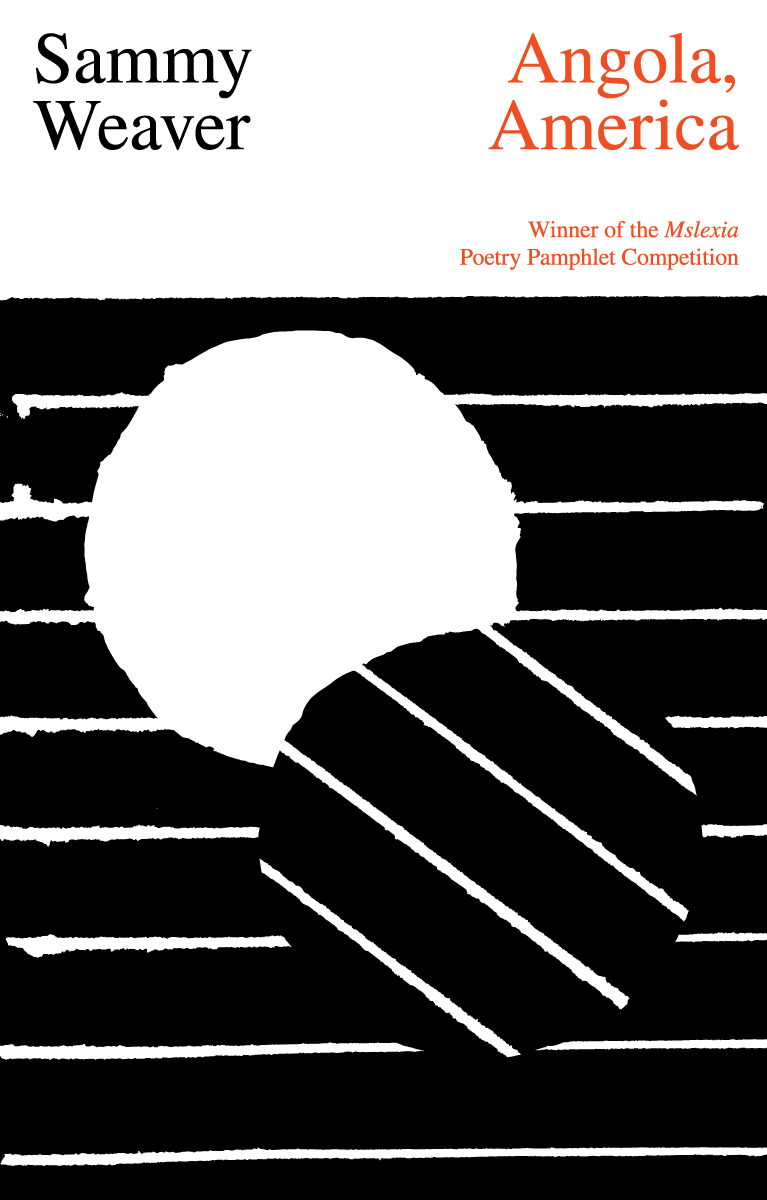
This week’s Friday Poem is ‘[ search ]’ by Sammy Weaver from her pamphlet Angola, America which won this year’s Mslexia Poetry Pamphlet Prize.
Angola, America, winner of the Mslexia Poetry Pamphlet Prize 2021, takes its name from a prison in Louisiana in the southern United Sates. In these strikingly original, thoroughly contemporary, and deeply moving poems, we are immersed in the world the inmates must endure. From the first poem, when we witness a home-made tattoo and understand that this scarring and incision is a “map in the connective tissue of pain and loss”, we are drawn into this world in a way that is carefully observed and beautifully empathetic.
We’re delighted to once again publish the winner of the Mslexia Poetry Pamphlet Prize. The 2021 winner, chosen by our former poetry editor Amy Wack, is Sammy Weaver with her pamphlet Angola, America.
Angola, America takes its name from a prison in Louisiana in the southern United Sates. In these strikingly original, thoroughly contemporary, and deeply moving poems, we are immersed in the world the inmates must endure. From the first poem, when we witness a home-made tattoo and understand that this scarring and incision is a “map in the connective tissue of pain and loss”, we are drawn into this world in a way that is carefully observed and beautifully empathetic. Read Sammy’s poem ‘[ exhibit : electric chair ]’ and a comment from Sammy on ‘How she did it’ on the Mslexia website.
The Mslexia Poetry Pamphlet Prize is awarded annually for an unpublished pamphlet written by someone who self-identifies as a woman. The 2022 prize is now open for entries. The new judge is Imtiaz Dharker and the winning pamphlet will be published by Bloodaxe Books. Find out more here.
This week’s Friday Poem is ‘Navigation Points’ by Emily Blewitt from her collection This Is Not A Rescue.
In This Is Not A Rescue we are introduced to a poet whose voice is fresh and striking, who writes both forcefully and tenderly about refusing to be rescued, rescuing oneself, and rescuing others. This book is about finding love and keeping it, negotiating difficult family and personal struggles, and looking at the world with a lively, intelligent and sardonic eye.
Seren poet Polly Atkin has been longlisted for the prestigious Laurel Prize 2022 with her second collection Much With Body.
The Laurel Prize, established by Poet Laureate Simon Armitage, is an international prize awarded annually to the best work of nature poetry published in English.
The prize said that this year’s judges Glyn Maxwell, Elena Karina Byrne and Tishani Doshi enjoyed submissions from all over the planet with the very best in nature and ecopoetry being represented.
Much With Body, which considers nature and the environment through its relationship to the body, is longlisted alongside 20 other collections. The full longlist can be viewed on the Laurel Prize’s Twitter account. @laurelprize.
The shortlist will be announced later this month and the prize ceremony is due to take place on Friday 9th September at the Birmingham Hippodrome as part of the BBC Contains Strong Language Festival.
Fiind out more about the prize at www.laurelprize.com.
A Last Respect celebrates the Roland Mathias Prize, awarded to outstanding poetry books by authors from Wales. It presents a selection of work from all eleven prize-winning books, by Dannie Abse, Tiffany Atkinson, Ruth Bidgood, Ailbhe Darcy, Rhian Edwards, Christine Evans, John Freeman, Philip Gross, Gwyneth Lewis, Robert Minhinnick, and Owen Sheers. It is a who’s who of contemporary poetry which shows the form in good health in Wales.
The fifty-four poems included are wide-ranging in style and subject – relationships, nature, environmental issues, mortality, time, war, Wales, poetry itself, even the minefield of parents’ evenings. They are inventive, experimental, formal, original and, as prize-winners, of the highest quality.
Two accompanying essays provide the context in which the poets work. In her Introduction, Jane Aaron writes about Roland Mathias: a poet himself, but also an influential editor and cultural commentator who did much to foster and develop poetry in Wales. A Last Respect is a continuation of his legacy. Daniel G. Williams’ Afterword is an incisive discussion about poetry in Wales over the past sixty years: where it started from and how it changed.
This combination of prizewinning poems and informative commentary makes A Last Respect a must-have book of writing from Wales.
A Last Respect celebrates the Roland Mathias Prize, awarded to outstanding poetry books by authors from Wales. It presents a selection of work from all eleven prize-winning books, by Dannie Abse, Tiffany Atkinson, Ruth Bidgood, Ailbhe Darcy, Rhian Edwards, Christine Evans, John Freeman, Philip Gross, Gwyneth Lewis, Robert Minhinnick, and Owen Sheers. It is a who’s who of contemporary poetry which shows the form in good health in Wales.
The fifty-four poems included are wide-ranging in style and subject – relationships, nature, environmental issues, mortality, time, war, Wales, poetry itself, even the minefield of parents’ evenings. They are inventive, experimental, formal, original and, as prize-winners, of the highest quality.
Two accompanying essays provide the context in which the poets work. In her Introduction, Jane Aaron writes about Roland Mathias: a poet himself, but also an influential editor and cultural commentator who did much to foster and develop poetry in Wales. A Last Respect is a continuation of his legacy. Daniel G. Williams’ Afterword is an incisive discussion about poetry in Wales over the past sixty years: where it started from and how it changed.








![[ search ]
In the beginning the guard’s gloved hands
pat you down, searching for weapons,
his touch is weaponized, the muted duty
of his movements smooth along each of your arms.
Soon the guard’s touch is the only touch
from another
and you think of your mother
after bath time, the harbour of her chest
against yours, the rough-love of her towelling
you dry, reaching into all the nooks
and crannies, no cabbages behind the ears
she says. And yes, I guess searching the body
is another way of saying the body is a trove
of treasure and your touch a torch.](https://serenbooks.files.wordpress.com/2022/09/search-sammy-weaver.png)