Posted on

Friday Poem – ‘Giraffe’, Bryony Littlefair

Friday Poem Giraffe Bryony Littlefair

Our Friday Poem this week is the title poem from Bryony Littlefair’s Mslexia Prize-winning debut pamphlet, Giraffe.

Giraffe Bryony LittlefairPoems need head, heart, and soul but this particular pamphlet has an extra ingredient – a feminist kick. There is a good deal of wit on display, but also a wonderful humanity. There are also other novelistic qualities: clarity of language and the use of realism, a feeling for plot and incident, an eye and ear for character. The author indicates emotion and relationships in a myriad of subtle ways: heartbreak can be summarised by one glance at the ‘Lido’. Love can be inferred by the tender description of someone from the back, as they are walking away.
Giraffe, the title and a euphemism for happiness, is a beguiling, beautiful and entertaining debut pamphlet of poems.


Giraffe Bryony Littlefair


Giraffe is half price in the Seren January Sale until 11 January: £2.50

Join our free Book Club for 20% off every book you buy from us after the sale ends.


Posted on

All our books are half price for one week only

2018 has arrived and with it, our January sale. For one week only, please enjoy 50% off all our books!
If you’re a poetry reader, then why not buy a copy of Kim Moore’s award-winning The Art of Falling, and a copy of Paul Deaton’s PBS-recommended debut, A Watchful Astronomy.
For nature lovers, Iolo Williams’ Wild Places: Wales’ Top 40 Nature Sites will reveal our stunning local wilderness as you’ve never seen it before.
If you’re on the hunt for new fiction, then Maria Donovan’s critically acclaimed The Chicken Soup Murder is sure to thrill. So too is The Women of Versailles, Kate Brown’s gripping historical novel set in the licentious court of King Louis XV.
And for a dose of cultural history, discover Norena Shopland’s Forbidden Lives, which shines a light on the fascinating LGBT figures in Wales’ history.
 
The sale ends at midnight on Thursday 11 January, so don’t wait to take advantage of this fleeting offer.


Posted on

Seren & Cornerstone present: Cardiff’s first poetry festival

Seren is thrilled to announce a new winter weekend poetry festival, featuring some of the finest poets of their generation, with readings, films, artwork, music and celebratory lunches at the beautifully restored church venue of Cornerstone in Charles Street, Cardiff.
The festival will open on Friday 16 February with a buffet and reading from Costa Prize-winning poet Jonathan Edwards, and will conclude on Sunday 18 February with a celebratory Sunday Lunch, hosted by renowned Cardiff poet Gillian Clarke.
Come along and discover a chorus of voices, new and established, formal and experimental:
Jonathan EdwardsPaul HenryBrian BriggsPhilip GrossCyril JonesDamian Walford DaviesRhian EdwardsGillian ClarkeGwyneth LewisRichard GwynClare E. PotterSusie WildEmily BlewittKatherine StansfieldStephen PayneDavid Foster-MorganRobert WaltonPaul DeatonClaire WilliamsonElizabeth ParkerLittle RêdRobert Minhinnick
​Download the festival programme here.​
​Tickets are now available to book from the Seren / Cornerstone Festival website.
Thank you to our sponsors: Rhys Davies TrustTidal Lagoon PowerCatholic Archdiocese of Cardiff


Posted on

Short Story of the Month | ‘The Pheasant’, Glenda Palmer Vibert

The Pheasant Short Story of the Month

December’s Short Story of the Month, ‘The Pheasant’, is published in memory of the author, Glenda Palmer Vibert, and is based on a true account of one of her grandfather’s experiences as a poacher in Llanelli.

A man faces harsh justice for stealing a bird – but will the law prevail?


The Pheasant

This is an extract. Read the full short story for free on our website.


Elizabeth Francis made no concessions to the twentieth century. As far as she was concerned, Victoria was still very firmly planted on the throne of England. The calendar may say nineteen twenty, but that was ignored by Elizabeth. She was a tiny woman, small and finely boned, but having a strength that belied her apparent delicacy. Her dark, Indian-straight hair was hardly streaked with white, while her black eyes looked boldly on life.
The burly police constable hesitated, foot on step, nervously fingering his note book and pencil. Elizabeth Francis’ sharp tongue was well known in the small, fiercely Welsh industrial town. Many a would-be complaining customer had been shrivelled by Elizabeth as she stood, hands on hips, barely visible behind the mound of home grown vegetables on the market stall. This was the stance that met Constable Parry’s wilting gaze now.
“Who says that my Richard was poaching?”
“Well, er- that is…”
David Parry grew more nervous.
“Witnesses you must have, not some old gossip.”
‘Wil Toplis saw him, he did, with that old pheasant in his–”
Elizabeth Francis cut him short.
“Wil Toplis?” she spat sneeringly.  “He couldn’t see a cow in a field!”
David Parry backed away.  He had delivered his message, he had done his duty.
Elizabeth Francis went in and slammed the front door shut. She stood for a few seconds in the long dark passage of the house. The grandfather clock with its silly swan face ticked with a comfortable velvet tick. Poaching again, she thought. Why can’t that wife of his control him?
She made her way into the cramped kitchen with its glowering range and its high-backed settle, upon which a small, red-haired child was curled reading a comic.
“Come here child. Take a message to your idle father.”
The child stood before her grandmother. Their eyes met, the same dark, deep eyes, the grandmother’s hard, the child’s wide and questioning.
“Yes Mamgu?”
“Tell your father that I want to see him – and not when he feels like it, but now.”
“But he’ll be in work now.”
“Nonsense!  He’ll be in the West End; your father never wastes good drinking time by working.”
The child slammed the little gate of the house shut and set off down Sandy Road. “Always me,” she grumbled to herself, “always me running messages.” Her small hands were red from helping Mamgu with the washing and her arms ached from working the washing dolly.
A car swooshed past her going all of twenty miles an hour, mud splattering the hem of her too big dress.
The pub was crowded with noise and smoke as the child pushed her way past sweating, furnace-begrimed men, slaking the thirst of red hot ingots with the strong, thick ale brewed locally.
“Have you seen my father?” she asked no one in particular. A furnace blasted face looked down at her above a white sweat-cloth.
“Draw fana,” he said to her in Welsh, “over there bach.”
He pointed to a corner of the bar where a tall, red-haired man was holding court, talking in rapid Welsh to a spell-bound audience of three or four tin-plate workers in their metal-soled clogs. Dick Francis saw his youngest daughter and, mellowed by beer, lifted her in his arms and swung her above his head.
“Fy merch I,” he announced proudly, “my daughter.”
“No need to say that man. With that red hair she couldn’t be anyone else’s child.”
The men laughed and made a fuss of the girl, who was oblivious to their laughter and teasing.
“Mamgu wants you,” said the child breathlessly and a little afraid.
“Tell her I’ll come at stop-tap,” said Dick, placing the child on the bar counter.
“But she said now,” said the child urgently.
Something in her tone convinced him this was not a request from Elizabeth, but a command.
Dick swore softly to himself. What right had his mother to treat him like a child? After all, he was married now with four daughters of his own, and a wife that had much the same spitfire quality as his mother – far too much he sometimes thought.
Nevertheless, he bade farewell to his mates and walked unsteadily towards his maternal home, the child trotting at his side.
Mother and son faced each other in the little parlour.
“Well?” said Elizabeth, questioningly.
“Well what?” answered her son sullenly.
“You know very well what. I’ve just had a visit from David Parry – it’s poaching you’ve been again!”
“Who says I’ve been poaching?”
“Wil Toplis, you fool, he’s been after you for years, swore he’d see you behind bars and this is his chance.”
“Damn Mam, he’s always saying that but he’s not done it yet.”

Continue reading ‘The Pheasant’ for free here.


Posted on

Friday Poem – ‘Shapes in Ice’, Ruth Bidgood

Friday Poem Ruth Bidgood Shapes in Ice

Our Friday Poem this week is the delightfully wintery ‘Shapes in Ice’ by Ruth Bidgood, from her New & Selected Poems.

New & Selected Ruth Bidgood Friday Poem Bluetit FeedingRuth Bidgood’s New & Selected Poems features work from her five early collections, starting with The Given Time (1972) through Kindred (1986) along with selections from The Fluent Moment (1996) and Singing to Wolves (2000). The final section is devoted to over fifty pages of new poems.
This generous selection of work highlights the steady accumulation of a significant oeuvre. Bidgood’s ostensible subjects are the storied landscape and history of her region of mid-Wales, the hills and valleys of Powys and Breconshire, but her themes frequently have a wider reach, a spiritual depth that is often darkly suggestive and mysterious.


Ruth Bidgood Shapes In Ice


New & Selected Poems is available from the Seren website: £9.99

Join our free Book Club for 20% off every book you buy from us.


Posted on

Katrina Naomi is named Poet in Residence at Leach Pottery, St Ives.

It is has just been announced that Katrina Naomi will be poet in residence at the Leach Pottery in St Ives, Cornwall in 2018. This is the first time that the Leach Pottery, one of the most respected and influential potteries in the world, has held a residency for a writer. Katrina has recently returned from an Arts Council-England funded visit to Japan, where she spent six weeks writing in response to a journey in the haiku poet Basho’s footsteps.  The Leach Pottery has strong links to Japan, having been founded in 1920 by potters Bernard Leach and Shoji Hamada, and Katrina is looking forward to exploring the Cornwall-Japan connection, as well as the links between pottery and poetry. For further information visit the Leach Pottery website: www.leachpottery.com Katrina’s collection The Way the Crocodile Taught Me was published by Seren in 2016.

Posted on

Friday Poem – ‘On the Alaskan Peak We’ve Never Climbed’, Yvonne Reddick

Yvonne Reddick Friday Poem Alaska

This week our Friday Poem is ‘On the Alaskan Peak We’ve Never Climbed’ by Yvonne Reddick, from her debut pamphlet Translating Mountains.

Yvonne Reddick Translating MountainsChosen recently as one of Leaf Arnuthnot’s favourite twenty poetry pamphlets in The TLS, Translating Mountains is an emotionally rich and memorable selection of poems that recount the disappearance and death of a beloved father, and the grief felt for a close friend, who both died in mountaineering accidents. These poems are also hymns to stunning scenery, with mountains and place names often in a craggy, atmospheric Gaelic. Full of tension, emotion and action, the poems grip our attention. The author searches for ways to grieve and come to terms with the trauma of her father’s death, whilst echoing his love for adventure, and imprinting his memory upon newly discovered or imagined landscapes, as in ‘On the Alaskan Peak We’ve Never Climbed’.


Yvonne Reddick Alaska


Translating Mountains is available from the Seren website: £5.00

Join our free Book Club for 20% off every book you buy from us.


Posted on

Win a copy of Sax Burglar Blues by Robert Walton

Enter our giveaway to win a copy of Sax Burglar Blues, Robert Walton’s lively and complex new collection of poetry.
To enter, simply sign up to the Seren newsletter before 1st January:https://www.serenbooks.com/newsletter/signup
About Sax Burglar Blues:Not so much a discovery as a re-discovery, Robert Walton’s new book of poems, Sax Burglar Blues, is his first full collection since winning a Welsh Arts Council Prize in the 70s. Walton riffs on a range of subjects from rogue alligators in the Bristol docks to a bus named after Dusty Springfield. Years of experience give his work both a spiky mien and an artful complexity.
 
The winner of this giveaway will be chosen at random from all our email subscribers on 1st January 2018, so make sure you sign up to Seren News before this deadline to be in with a chance of winning.
Feeling generous? Why not invite your friends to enter, by signing up using the link below:http://serenbooks.com/newsletter/signup
 
Congratulations to last month’s winner, who is now enjoying a copy of Dark Land, Dark Skies by Martin Griffiths.


Posted on

Kim Moore wins Geoffrey Faber Memorial Prize

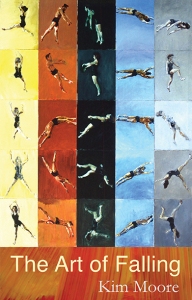
Kim Moore has scooped up the prestigious Geoffrey Faber Memorial Prize for her debut collection of poetry, The Art of Falling.
The Art of Falling covers everything from Moore’s experiences as a trumpet teacher to her father’s profession as a scaffolder, as well as the suffragettes and a tattoo inspired by Virginia Woolf’s A Room of One’s Own. In ‘My People’, she writes of how some “swear without knowing they are swearing … scaffolders and plasterers and shoemakers and carers, the type of carers paid pence per minute to visit an old lady’s house”. The quietly devastating central sequence, ‘How I Abandoned My Body To His Keeping’, is the story of a woman embroiled in a relationship marked by coercion and violence. These are close-to-the-bone pieces, harrowing and exact, inspired by personal experience.
The judges, poets Gillian Clarke and Katharine Towers, and the New Statesman’s Tom Gatti, said that Moore’s poems “accrue force and vigour as they speak to each other across the pages, delivering a thrilling encounter with language at its most irresistible and essential”.
The Geoffrey Faber prize, which is worth £1,500, is given in alternate years to a volume of verse and a volume of prose fiction “of the greatest literary merit”. It has been won in the past by Seamus Heaney, Tony Harrison, JM Coetzee and Eimear McBride.


Posted on

Friday Poem – ‘Followed’, Kim Moore

Friday Poem by Kim Moore - Followed

We are still taking in the news that Kim Moore has won the Geoffrey Faber Memorial Prize for The Art of Falling – so we couldn’t help but feature one of Kim’s poems on the blog today. ‘Followed’ is one of the deeply personal central poems which explore an experience of domestic violence.

The Art of Falling Kim MooreKim Moore, in the opening poems of her lively debut poetry collection, sets herself firmly in the North amongst ‘My People’: ‘who swear without knowing they are swearing… scaffolders and plasterers and shoemakers and carers’. The poet’s voice is direct, rhythmic, compelling. The lives of others also feature throughout, and revolve around a quietly devastating central sequence, ‘How I abandoned My Body To His Keeping’: the story of a woman embroiled in a relationship marked by coercion and violence. ‘Followed’ is taken from this darkly personal sequence, and shows a snapshot, a glimpse, of a figure – ‘everything black/ about him’ – who weighs heavy on the speaker, drawing her into shadowy places.
The judges for the Geoffrey Faber Memorial Prize, poets Gillian Clarke and Katharine Towers, and the New Statesman’s Tom Gatti, said that Moore’s poems “accrue force and vigour as they speak to each other across the pages, delivering a thrilling encounter with language at its most irresistible and essential”.


Kim Moore 'Followed' The Art of Falling


The Art of Falling is available from the Seren website: £9.99

Join our free Book Club for 20% off every book you buy from us.