Books Books Books

Category: Bestsellers, Ebooks, Individual Collections, Poetry
Number of pages: 72
ISBN: 9781781726457
Publication date: October 18, 2021
Price: £10.99
Category: Bestsellers, Ebooks, Individual Collections, Poetry
Number of pages: 72
ISBN:
Publication date: October 18, 2021
Price: £7.99
Out of stock
Longlisted for the Laurel Prize 2022
Poetry Book Society Winter Selection 2021
Much With Body is the startlingly original second collection by poet Polly Atkin. The beauty of the Lake District is both balm and mirror, refracting pain and also soothing it with distraction: unusual descriptions of frogs, birds, a great stag that ‘you will not see’. Much of the landscape is lakescape, giving the book a watery feel, the author’s wild swimming being just one kind of immersion. There is also a distinct link with the past in a central section of found poems taken from transcripts of the journals of Dorothy Wordsworth, from a period late in her life when she was often ill. In common with the works of the Wordsworths, these poems share a quality of the metaphysical sublime. Their reverence for the natural world is an uneasy awe, contingent upon knowledge of our fragility and mortality.
Polly Atkin
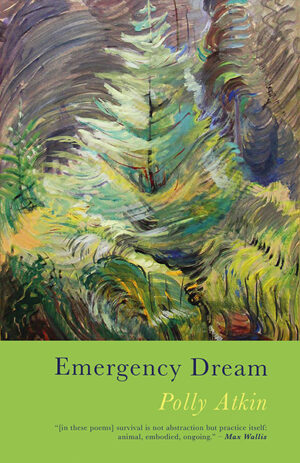
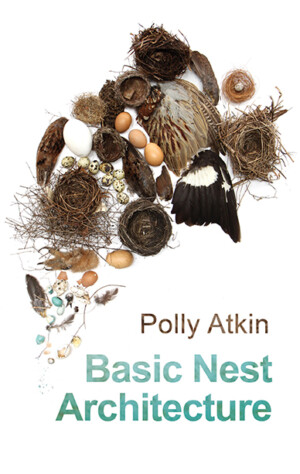
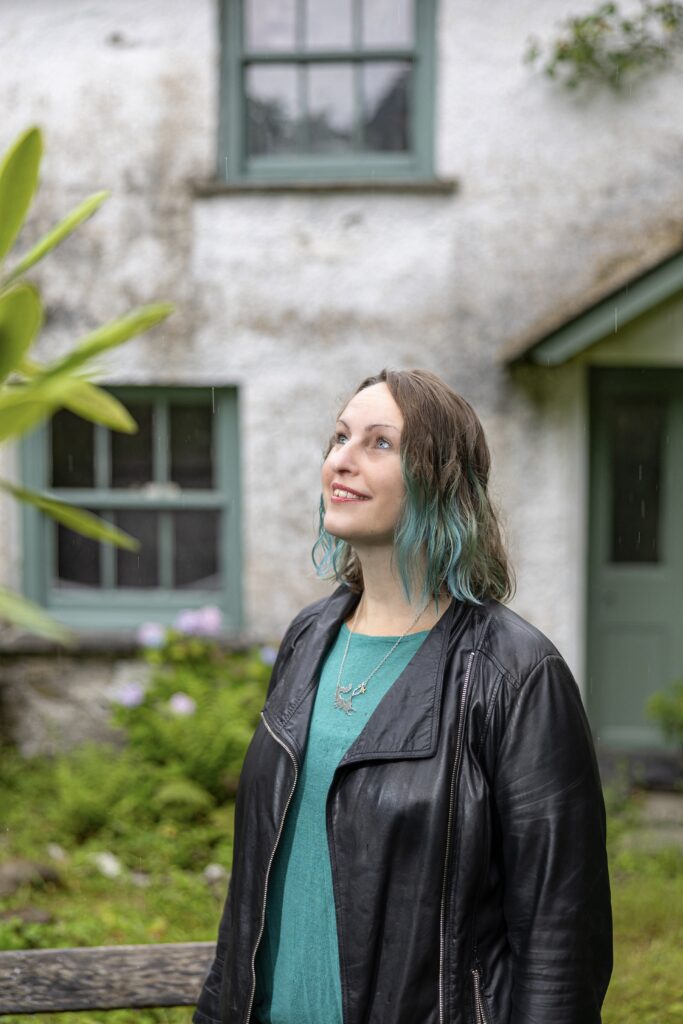
Polly Atkin (FRSL) is a poet and non-fiction writer whose work focuses on nature, place and disability. Her poetry collections are Basic Nest Architecture (Seren Books, 2017), Much With Body (Seren Books, 2021) and Emergency Dream (Seren Books, 2026). Her non-fiction books include Recovering Dorothy: The Hidden Life of Dorothy Wordsworth (Saraband, 2021), Some Of Us Just Fall: On Nature and Not Getting Better (Sceptre, 2023) – Lakeland Book of the Year 2024 and longlisted for the Wainwright Prize for Nature Writing 2024 – and The Company of Owls (Elliott and Thompson, 2024). Her poetry and prose appears in various anthologies and academic editions.
She grew up in Nottingham then lived in East London for seven years before moving north to Cumbria. She has a phd from Lancaster University and has taught English and Creative Writing at QMUL, Lancaster University, and the Universities of Strathclyde and Cumbria. She now works as a freelancer from her home in the English Lake District, where she co-owns historic Grasmere bookshop Sam Read Bookseller.
Photo credit: Alex Muir Photography
“From frogs and toads ambling into her home to the herons glimpsed nearby to the imposed quieter times of lockdown, Much with body by Polly Atkin is a reminder to take a breath, open your eyes and observe … refreshingly, the poet doesn’t take herself too seriously, but seems instead to invite us to join her in marvelling at nature’s beautiful oddities, including our unknowable selves.”
Judy Darley, SkyLightRain
“I was moved by this collection which places the joy of nature alongside the lived experience of those who suffer, the wild and free next to images of confinement and inaccessibility. The work creeps up on you, surprising the reader by stalking and hiding in the undergrowth. It then jumps out from hidden places and attacks the vulnerability of the unsuspecting reader. Atkin has crafted poems in both traditional and highly experimental forms with huge success, and I am sure to re-visit them and talk about them as fine examples of the power of poetry to express important contemporary messages.”
Pat Edwards, London Grip
“Polly Atkin’s second collection ‘Much With Body’ is one to spend time with. What makes it so brilliant are the layers in the poems which reveal themselves over several readings … Atkin is a poet in full control of language and the line, her poems command the page so the reader knows they are in safe hands … this collection is a keeper, I can’t recommend it highly enough.”
Caroline Bracken, Nation Cymru
“Much With Body subsumes the reader into the Lake District, with many of the poems possessing a strong watery feel. Even out of the lakes themselves, there are ponds, rain, veins (those liquid-carrying inlets), and ‘wet’ creatures such as frogs and leeches. Additionally, there are bears and brambles, because Atkin is a fine observer of nature in all its forms, but the fluidity and fluency of the language, and that solvent sense, flows throughout.”
Mab Jones, Buzz Magazine
“This is a versatile collection, with a range of different styles of poetry. Many of the poems invite us to ponder on how we interact with the natural world, in both a physical and a metaphorical sense. They also depict, in new and interesting ways, what it means to be ill, in a world where sickness tends to be hidden away and forgotten.”
Rachel Carney, Created to Read
“The realm of nature is the bread and butter of the poet, even in the brave new world of the 2020s, and Polly Atkin’s collection Much With Body is a sublime and skilful iteration of this time-honoured poetic practice … a collection that exposes the closeness we share with the natural world, and is packed with insights not to be missed.”
Isobel Roach, Wales Arts Review
““I am all sensibility,” declares the speaker in Polly Atkin’s collection of poems, Much With Body. As we learn, this sensibility includes a seemingly microscopic vision and an almost supernatural capacity to feel … These poems don’t sit still and neither does the speaker—or, for that matter, the reader. Instead, we are caught in the motion of Atkin’s stunning imagination, again and again. “
Megan Fernandes, Poetry Foundation
“Polly Atkin writes daring, compelling poems. This new collection, rooted in the notion of the body as ‘Ludicrous, unrepeatable myth’ crackles with searing insight into what it means when a person’s own flesh and bones create in landscapes ‘unpaths, unlines / of desire’. Much With Body is an important book that spotlights at last difficult and nuanced experiences so often made invisible by the actions of enabled bodies. I urge you to read it.”
John McCullough
“These brilliant poems authentically offer the psychogeography of a known and lived landscape from the common but less-represented perspective of a body that is in many ways ‘queer’ to the ableism and gendering of ‘nature writing’. It is eager and ferociously appetitive about embodiment, poetics, and place, taking the long view: engaging with local tradition (Dorothy Wordsworth) and contemporary visions of interest (ecopoetics, disability writing). Readers will appreciate a poet with a rare gift of humour: the ‘tiny frogs’ chased in ‘Habitats’; the funny but chilling litany of horror traditions in ‘Borders Gothic’. This is serious play indeed.”
Vahni Capildeo