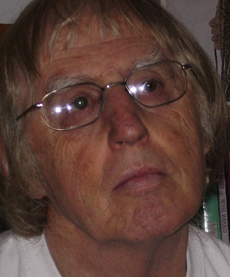
We are very sorry to have the news of the passing of John Haynes, a lovely person and a fine poet. John lived a various and active life and published a number of equally various books, on teaching, language theory, African poetry, stories for African children and two extraordinary volumes of poetry. He was for many years a lecturer in Nigeria, where he founded the literary journal, Saiwa, returning to the UK in the eighties.
Seren was honoured to publish two book length poems by John, both embodying technical brilliance with all the richness of life meeting poetry that could be wished for. You (2010) is his hymn to his wife Afiniki, a celebration of, and meditation on, personal love, and how that love transmits into community and the wider world.
You was preceded by Letter to Patience (2006), which ranges between England, to which Haynes had returned, and northern Nigeria where Patience, a former politics lecturer forced out of university by junta pressure, ran a bar called Patience’s Parlour. Part autobiographical, part essay on post-colonialism, the poem is an epic portrayal of a beautiful but troubled country and of the search for meaning in difficult times.
Letter to Patience won the Costa Prize for Poetry and made John’s reputation, the equal of Muldoon, Heaney and Hill as a poet of autobiographical realism, according to one reviewer. This sad time certainly calls for a re-reading of these two books, and remembrance of John Haynes.
As the last Friday Poem of 2021, this week’s Friday Poem is ‘Offering’ by Alexandra Davis from the festive pamphlet Twelve Poems for Christmas.
Christmas Closing dates
The Seren Offices will be closed for Christmas from Thursday 23rd December until Monday 4th January. We wish you all a very Merry Christmas and a Happy New Year.
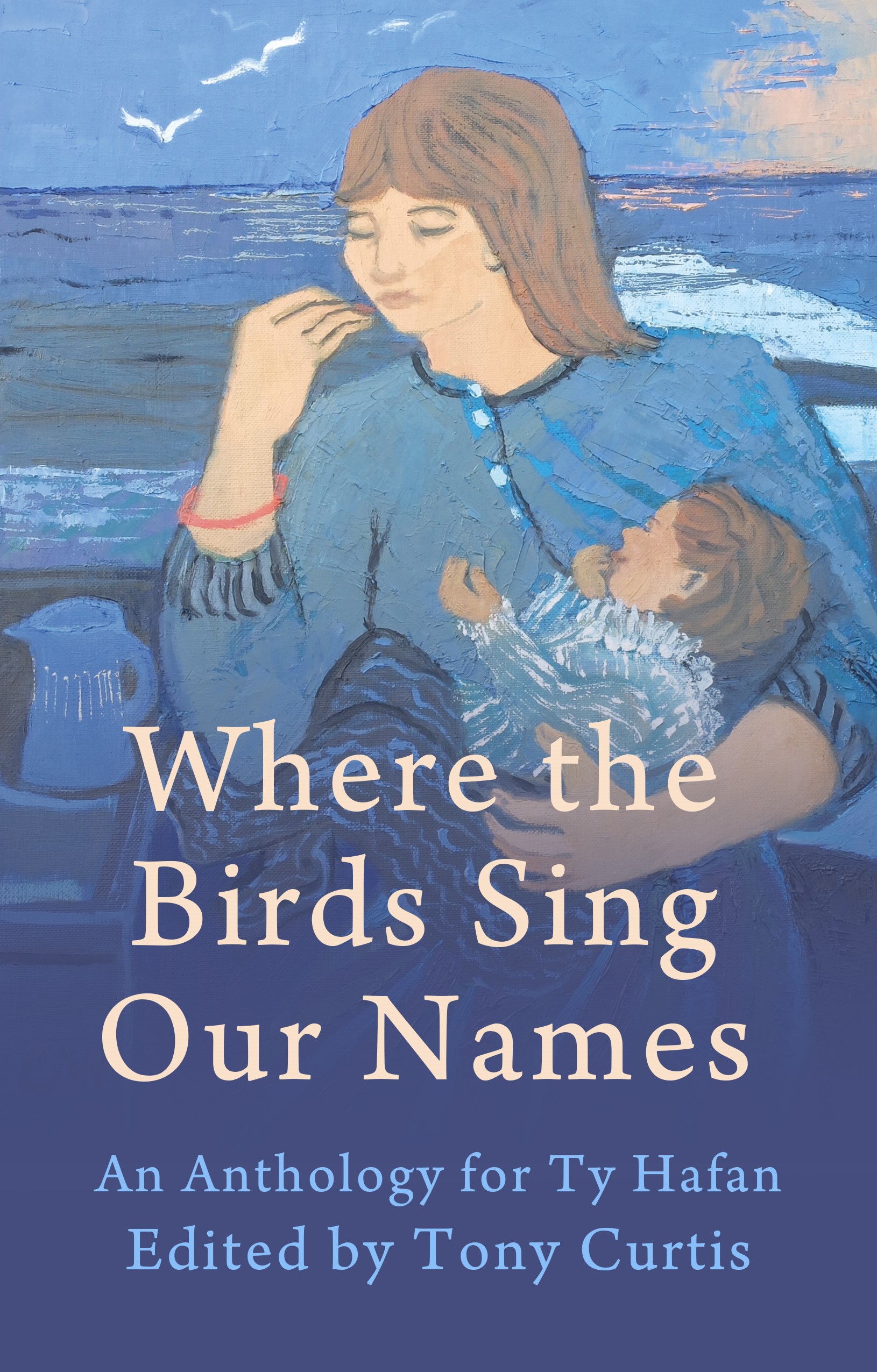
Earlier this month, we published Where The Birds Sing Our Names, a new anthology published to raise money for Tŷ Hafan Childrens’ Hospice in Sully, South Wales.
Edited by Tony Curtis, the book includes poems and lyrics in English and Welsh by a variety of poets, including four National Poets – Gillian Clarke, Jackie Kay, Michael Longley and Gwyneth Lewis, as well as some of the best-known writers in the UK and beyond – from Max Boyce and Lord Rowan Williams to the young singer-songwriter Kizzy Crawford.
Tŷ Hafan provides care and support for children with life-limiting conditions, and their families, across Wales. All proceeds from the sale of this anthology will go to the charity. No publication fees or other charges will be deducted.
“This anthology enriches the reader. It is a book to be savoured and enjoyed – the celebration of each wonderful moment from conception through a toddler’s first steps and all the family dynamics of life: the simplest of encounters, of depth and beauty.” – Baroness Finlay of Llandaff
Where The Birds Sing Our Names is available directly from Tŷ Hafan online (www.tyhafanshop.org) or in their shops.
This week’s Friday Poem is ‘The Calving’ by Ilse Pedler from her debut poetry collection Auscultation.
Ilse Pedler is a veterinary surgeon who works in Kendal. Her debut collection is Auscultation, which means listening and specifically, in medicine, listening to sounds that come from the body’s internal organs. If listening is a central theme of this collection, it is also about being heard. There are poems about vets waiting rooms and surgical instruments, about crisis calls, about overhearing farmers and pet owners and colleagues. There are also poems about surviving a stern childhood and a heartbreaking sequence about being a stepmother.
It’s not too late to order on the Seren website in time for Christmas. If you’re still struggling for inspiration why not look through our Christmas Gift Guide? Or check out the new Seren Gift Subscription.
Create your free Seren account and enjoy 20% off every book you buy from us.
Congratulations to Robert Walton, author of Sax Burglar Blues, whose poem ‘Dun’ has been highly commended in the Troubadour International Poetry Prize 2021. This is the second year in a row that one of Robert’s poems has been highly commended in the prize.
This year’s entries were judged by Linda Gregerson and John McAuliffe. Robert is one of 20 commended poets. First place was awarded to Sam Garvan for his poem ‘Balthazar’. The full list of winners and highly commended poems can be found on the Coffee-House Poetry website.
Of the entries, judge Linda Gregerson wrote: ”The great joy of judging such a prize as this is twofold: first, the encounter itself, on the page, with compelling poetic voices, in all their distinctiveness and variety; second, the opportunity for in-depth conversation with a fellow judge about the art form to which we are both devoted… From the Northern Isles to the cornfields of Nebraska, from antiquity to the paradoxical timelessness of the live cam, from the plenitude and bustle of a street market to the stillness of a gable window, the sites and temporalities that occasion the poems in our short list have been bathed in the light of lyric transformation. This is not to say that the tones are always gentle or the vistas reassuring. There is darkness in these pages, as in our world: the suffering of displacement, the treacheries of history, the mortal fallibility of flesh. Anything less would be less convincing. Which is why, I think, I find the poems, each of them, so heartening.“
You can read the judges full comments and each of the prize-winning and commended poems on the Coffee-House Poetry website.
This post features an extract from the opening chapter of Just You and the Page by Sue Gee. Part biography, part memoir, she has interviewed twelve distinctly different writers about their craft. As she examines what has shaped them and their careers, several themes emerge: struggle, inspiration, dedication, and above all, resilience.
Just You and the Page opens in 1971, with the dramatist Michael Wall hammering out his plays on a portable typewriter. It concludes in 2020, when the novelist and academic Josie Barnard is teaching students to compose novels on Instagram. Between them are Booker prize winners; a poet whose life was changed by a profound religious conversion; a translator for whom Pushkin has meant everything; a distinguished environmental journalist; a famous diarist; a nature writer who restored a wood, and a political activist who fled her country and is writing now in exile. The perfect gift for aspiring writers this Christmas.
At New Year in 1972 I answered an advertisement and moved from an attic room to a rambling great flat overlooking Highbury Fields, north London. I was living with six strangers, who became close friends: all of us young and idealistic, thinking of money as a necessity, not an end in itself.
It was a turning point in my life, an exceptionally vivid period, and I always knew that one day I would want to write about it. Just You and the Page began as a novel about that time and place but it didn’t work, and one person in particular refused to turn into a fictional character: he was too vividly himself. This was the dramatist Michael Wall, who became the subject of a long essay: this, I found, was a form that worked.
In the end, commissioned by Mick Felton, Seren’s publishing director, I wrote twelve essays, exploring the life and work of writer friends I’ve known for a long time. Some are famous. All, working within different genres, are distinctive. But it is Michael Wall, brilliant, idiosyncratic and very funny, who opens the book.
Sue Gee
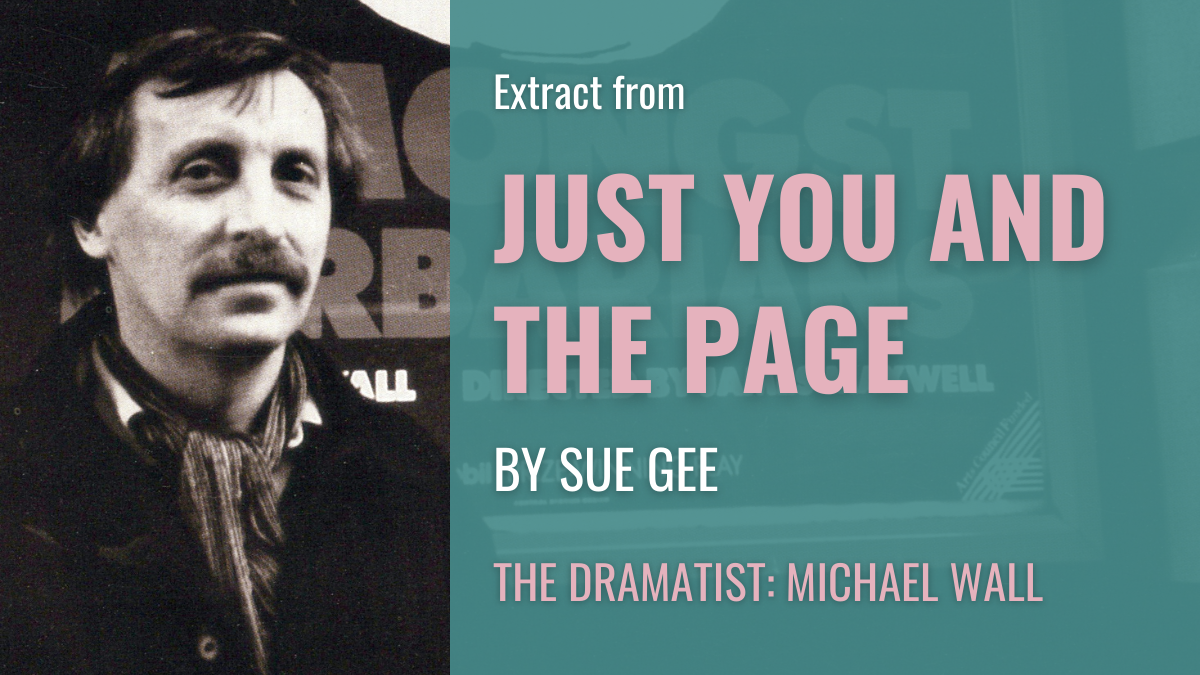
Michael Wall outside The Royal Exchange Theatre, Manchester, 1989.
The Dramatist: Michael Wall
‘When I write, I want to smash through something – lack of feeling, indifference, cruelty. I’m shocked by callousness or indifference.’
I
Someone is talking to himself in the bath. It seems that a soldier has returned from the front to find his wife in the arms of another man.
‘But what ees zis?’
Falsetto: ‘I vas going to write you a letter, darling.’
There follows much laughter, and splashing about, then the taps are turned on and the geyser roars. Eavesdropping on the long dark landing outside the bathroom door, I can’t hear what became of this doomed wartime couple, though I’m dying to know.
It is the spring of 1972. We are still in the age of the geyser, and the dreaded pilot light. We are deep in the age of Time Out, with its yards of small ads, and five of the seven of us now sharing a vast two-floor flat on Highbury Fields, north London, have each answered one. We’ve been through a long selection process, as Clare and Anna, old university friends, made their choices.
We each have an airy bedroom. I paint mine purple. With a lowly job in publishing, I’ve come from a tiny attic in a rambling, run-down place overlooking Hampstead Heath, even larger than the one in which I now find myself, sharing with six people I’m getting to know.
Clare – dark curly hair, appealing blue gaze – has a much more impressive job in publishing. It’s the age of Tom Maschler at Jonathan Cape, and she’s copy-editing The Rachel Papers, a first novel by someone called Martin Amis. ‘He’s Kingsley’s son.’ She’s also proof-read Kingsley himself. ‘He won’t let you change a comma.’
Anna has a Pre-Raphaelite cloud of red hair and lovely skin; she’s teaching at Goldsmith’s College, right across the city. Cultural studies, though it wasn’t called that then.
Who else have she and Clare selected to live here?
Jackie is a potter, tiny, pale, with wistful-looking dark brown eyes. Improbably, she has married Jay, a tall, lanky American photographer, who yodels at the kitchen sink and at thirty is older by far than any of us.
Patrick is a post-graduate art student, treating his bedroom as a studio. Tall and loose-limbed, with long curly hair and a gorgeous smile, he spends hours listening to music with Mike: Bob Dylan, the Beatles, the Bonzo Dog Doo Dah Band, Pink Floyd.
It is Mike who talks to himself in the bath. He talks to himself all the time: we can hear him trying out scenes in his room. Brought up on a council estate in Hereford, he left school at sixteen and is the only one of us without a job, living on toast and the dole, and announcing himself as a writer.
There are books on his shelves by writers I barely know, or have never heard of: Jean Genet, Richard Brautigan. On the table there’s a heap of manuscripts in ancient folders. There’s also a chess set, spirited away from his last job: a packer in a giftshop factory. On Sunday afternoons, he teaches me to play. He’s good, and chess means a lot to him.
Mike is of middle height, tow-haired, with little round specs and a moustache. There’s something of E.M. Forster about his appearance. His clothes are ordinary – jeans and old shirts and jumpers – but he has a wine-coloured velvet jacket for special occasions. Wearing this, with newly-washed hair, he’s adorable.
The first time we kiss, the morning after a party, I remark upon the moustache – and is that a bit of a denture? He tells me that he lost a number of teeth while hitch-hiking in Europe without a toothbrush. It’s not until much later that he reveals that he was born with a cleft palate and a hare-lip: the shaggy moustache conceals the scar; the denture hides the wounded, toothless palate.
I have forgotten the cat. The cat is lithe and black and adopts us from who knows where. It’s Mike who gives him his name: Spassky, after the Russian chess champion. It is Mike who puts him down on the electoral roll as a merchant seaman.
But he’s a serious person. ‘I can’t see the point of life without writing,’ he said once.
It’s Mike who will be the first of us to die.
This essay about those distant Highbury days is about him.
This week’s Friday Poem is ‘Going to Liverpool’ by Sheenagh Pugh from the anthology Newspaper Taxis: Poetry After The Beatles. Congratulations to Paul McCartney’s The Lyrics which won Waterstones Book of the Year 2021.
January 1963. ‘Please, Please Me’ by The Beatles shoots to number one. So begins a new era, in which one band transforms the face of music, youth and popular culture. Taking in everything from the music, their influence, the way we lived then and the way we live now, Newspaper Taxis is a response to the Beatles’ creativity and capacity to influence successive generations. Beatles fans young and old will want this anthology to add to their collection.