This week’s Friday Poem is ‘The Storyteller’ by Abeer Ameer from her debut collection Inhale/Exile. This poem is also featured in 100 Poems to Save the Earth.
Abeer Ameer writes of her forebears in her first collection, Inhale/Exile. Dedicated to the “holders of these stories”, the book begins with a poem about a storyteller on a rooftop in Najaf, Iraq, follows tales of courage and survival, and ends with a woman cooking food for neighbours on the anniversary of her son’s death.
“…these poems remind us that even in the darkest times, there is light, and there is love.” – Katherine Stansfield
Inhale/Exile is currently half-price in our bank holiday summer sale. Buy before midnight on Monday 30th August and get your copy for just £4.99! Buy now.
Zoë Brigley and Kristian Evans, co-editors of 100 Poems to Save the Earth, are joining us at Virtual First Thursday on Thursday 2nd September. Tickets are £2.74 (inlc. admin fee) and available through Eventbrite https://www.eventbrite.co.uk/e/168074853411. We’ll also hear some of the contributors read their poems.
This bank holiday weekend, get 50% off all books on our website* in our half-price summer sale. Ends midnight Monday 30th September.
This week’s Friday Poem is ‘The Glorious Fellowship of Migraineurs’ by Polly Atkin from her collection Basic Nest Architecture. Polly’s new collection Much With Body is forthcoming this October.
Polly Atkin’s debut poetry collection, Basic Nest Architecture, is complex, vivid and moving. It opens with poems inspired by her home in the Lake District, and the landscape and famous Romantic poets such as Wordsworth and Keats, who have walked there and written about the fells and lakes. Nature is a guiding presence, but the author’s personal story, of enduring a little-known and sometimes debilitating illness, is also the backdrop to this striking poetry. Formally, this work is more akin to the metaphysical poets in its fervent use of metaphor, in its multiple layers of meaning and in its quest for answers to the most pressing questions of mortality.
This week’s Friday Poem is ‘Or With Open Window’ by Rosalind Hudis from her most recent collection Restorations. Rosalind was recently shortlisted for the Gladstone’s Writers in Residence Award 2022. Judging will take place in October.
Inspired by the art restorer’s keen eye and by a vivid empathy for people and events, Restorations, is a journey through memory. Suffused with colour, inspired by thoughts of people and places, by artefacts and how the passage of time shifts perspectives and erodes surfaces, these poems are beautifully complex explorations, full of curiosity and the adventure of seeing and listening.
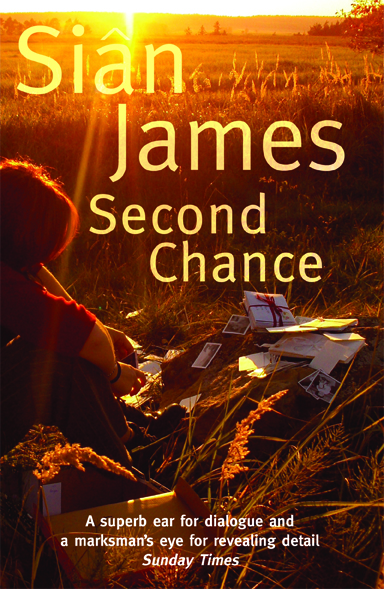
We were greatly saddened by the recent news of the passing of Siân James, after a long illness. A leading popular novelist in the UK for many years, Siân was fiercely Welsh. Her background was literary, Welsh-speaking, political; she delivered her views and thoughts with vigour and grace, her intellect inclusive and engaged. Beyond publishing five of her wonderfully insightful and beautifully written novels, and her translation of a novel by Kate Roberts, we at Seren have a particular and special reason to remember Siân with fondness. When, back in the 1980s, we were serching for a name which more accurately reflected the breadth of our publishing than the Poetry Wales Press with which we began, it was Siân (a bright star herself) who suggested Seren.
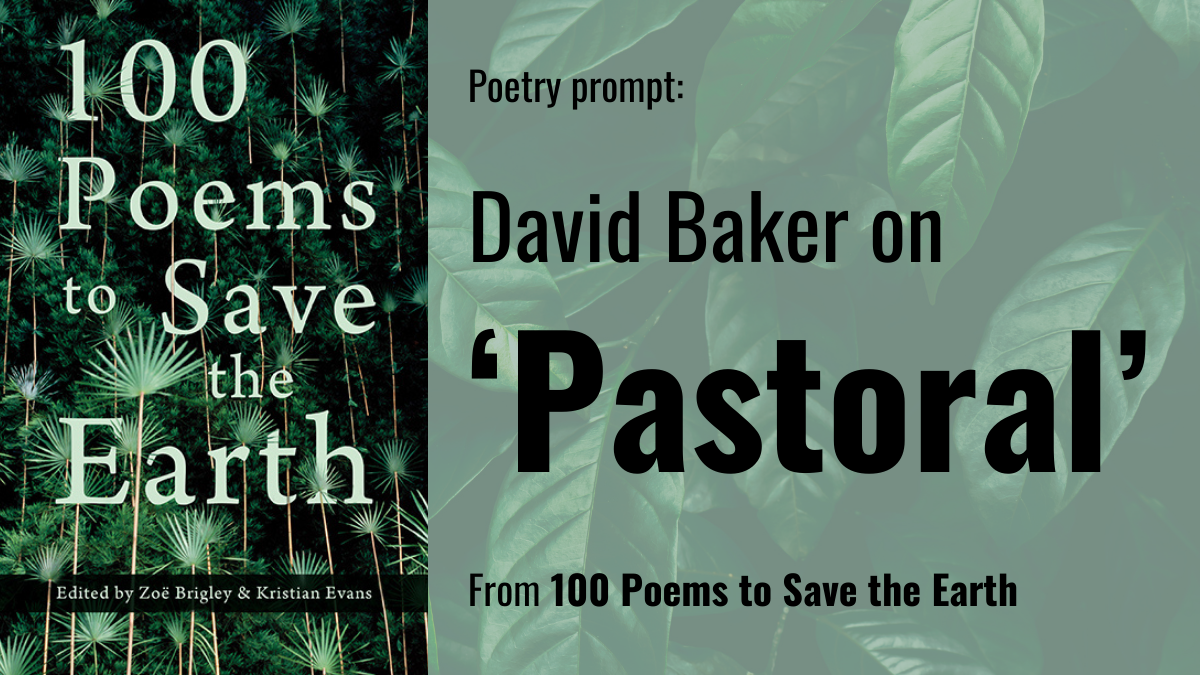
In this video, David Baker reads his poem ‘Pastoral’ which is featured in the anthology 100 Poems to Save the Earth. At the end of the video he suggests two prompts to inspire your own responses to the poem and the topics of the anthology. Share your responses with us on social media – @SerenBooks on Twitter, Instagram or Facebook – using the hashtag #100PoemsPrompts.
David Baker on ‘Pastoral‘
Poems happen for me–when they happen–not in the writing but in the rewriting. They emerge. This little poem, “Pastoral,” began as a sonnet, as a section of a long poem, “Scavenger Loop,” which I was writing about Midwestern landscapes and in memory of my mother.
Soon enough I pried this piece out of the big poem and began the work of rediscovery. It became an elegy, and I knew it should be outdoors–at first in a woodland, but then, as here, in a field, wind-swept, expansive, more empty than not.
The sonnet became half a sonnet. I drew open the blank verse line, with double caesuras–more space, more speechlessness, a wider field–and I abbreviated the final line by a few syllables. There’s more hush than sound, I think, more wind than substance. Someone said, it’s a love poem. Someone told me it was a pastoral elegy for the earth. Someone said, it’s all of those.
Prompt 1
Write a poem that floats among the forms, more ghost than substance. Let your ode grieve, say, where it might more conventionally extol; let your love poem think about a political conundrum. Let your reader discover those forms you have tucked away–like intimate messages, bits of song within a song–inside the apparent body of your poem.
Prompt 2
Go somewhere and stand still. Listen. Sniff the air. Feel your heartbeat. Let the whole universe of being revolve around that stillness for a moment, for two moments. Now write it down, and make it sing. That’s what I tried to do in “Pastoral.”
Our climate is on the brink of catastrophic change. 100 Poems to Save the Earth invites us to fine-tune our senses, to listen to the world around us, pay attention to what we have been missing. The defining crisis of our time is revealed to be fundamentally a crisis of perception. For too long, the earth has been exploited. With its incisive Foreword, this landmark anthology is a call to action to fight the threat facing the only planet we have.
“These achingly beautiful poems… remind us how to refind ourselves amid the landscape we call home.” – Sonya Huber
Our climate is on the brink of catastrophic change. 100 Poems to Save the Earth invites us to fine-tune our senses, to listen to the world around us, pay attention to what we have been missing. The defining crisis of our time is revealed to be fundamentally a crisis of perception. For too long, the earth has been exploited. With its incisive Foreword, this landmark anthology is a call to action to fight the threat facing the only planet we have.
“These achingly beautiful poems… remind us how to refind ourselves amid the landscape we call home.” – Sonya Huber
Carrie Etter is known for beautifully expressive and formally inventive verse. The Weather in Normal, her fourth collection, explores the changes to her hometown of Normal, Illinois following her parents’ deaths, the sale of the family home, and the effects of climate change on Illinois’ landscape and lives.
”It’s well-nigh impossible to convey with quotation how Etter’s use of language, form, restraint and space combine to such impressive effect.” – Stride magazine
We’re delighted to hear that Seren poet Rosalind Hudis, whose collection Restorations was published earlier this year, has been shortlisted for the Gladstone Library Writers in Residence award for 2022.
Every year, Gladstone Library hosts four authors as part of this highly competitive and prestigious award, which is designed to support emerging and established novelists and poets working within a broad spread of literary genres. The award is now in its eleventh year. Every applicant is required to have published a book within the last three years and is asked to write a short piece of writing in which they discuss liberal values.
The 12 shortlisted writers for 2022 are:
Sarah Watling, The Olivier Sisters Carys Bray, When the Lights Go Out Glen James Brown, Ironopolis Rosalind Hudis, Restorations Francesca Haig, The Cookbook of Common Prayer Rebecca Watts, Red Gloves Victoria Gosling, Before the Ruins Suji Kwok Kim, Notes from the North Amy Sackville, Painter to the King Alice Jolly, The Aspergers’ Dilemma Caoilinn Hughes, The Wild Laughter Guy Stagg, The Crossway
Winning authors will be offered a residency extending up to a month at Gladstone’s Library in Hawarden which is the UK’s only residential library. It has provided quiet and comfortable spaces for writers and researchers for more than a century.
Previous winners of the award include poets Katrina Naomi, (anoter Seren poet and author of Wild Persistence), Rowan Hisayo Buchanan (Harmless Like You), and Angela Topping (Grimm Rules), novelists Sarah Perry (The Essex Serpent, Essex Girls) and Jessie Burton (The Miniaturist), and nonfiction writers such as William Atkins (The Immeasurable World: A Desert Journey) and Richard Beard (The Day that Went Missing).
The judging panel for 2022 consists of Freddie Baveystock, Trustee of Gladstone’s Library and teacher at Harris Westminster Sixth Form, alongside previous Writer in Residence winners; journalist and non-fiction author Charlotte Higgins, award-winning poet Jonathan Edwards, and writer, reporter, and editor Cal Flyn.
Peter Francis, Warden of Gladstone’s Library, said:
“The past eighteen months have demonstrated how crucial time, space and support are in terms of fostering creativity. We know our residency programme is valued by our award applicants, and we are looking forward to offering that support once again.”
Judging will take place on October 4.